Scientific Texts Worksheets
About This Worksheet Collection
This collection of scientific texts worksheets helps students build the specialized reading skills needed to understand, analyze, and evaluate science-related informational texts. Through engaging activities that explore experiments, scientific explanations, data tables, procedures, evidence, and research practices, learners develop a deeper understanding of how scientific information is communicated. These worksheets provide meaningful opportunities to connect literacy instruction with STEM learning, making them valuable resources for classrooms, intervention programs, enrichment activities, and homeschool settings.
As students work through the collection, they strengthen reading comprehension, scientific reasoning, evidence evaluation, critical thinking, data interpretation, summarization, and analytical writing skills. The activities encourage learners to examine scientific claims carefully, interpret information from multiple formats, evaluate the quality of evidence, and communicate conclusions clearly. By developing these skills, students become more confident readers of scientific texts and better prepared to engage with increasingly complex academic content.
Detailed Descriptions Of These Worksheets
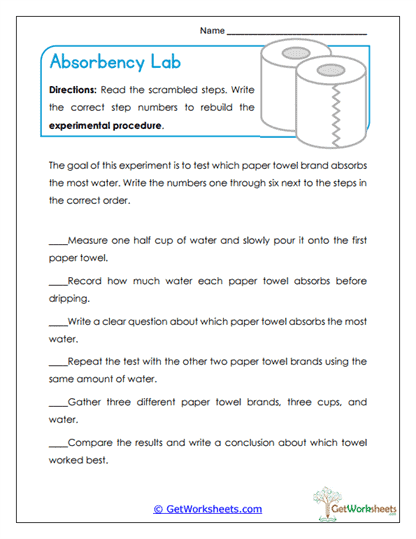
Absorbency Lab
Students reconstruct a scientific experiment by arranging scrambled procedural steps into the correct order. The activity requires learners to identify logical sequences and understand how each step contributes to a successful investigation. By analyzing procedural language and scientific methods, students strengthen both comprehension and organizational skills. This worksheet provides valuable practice reading and interpreting experimental instructions.
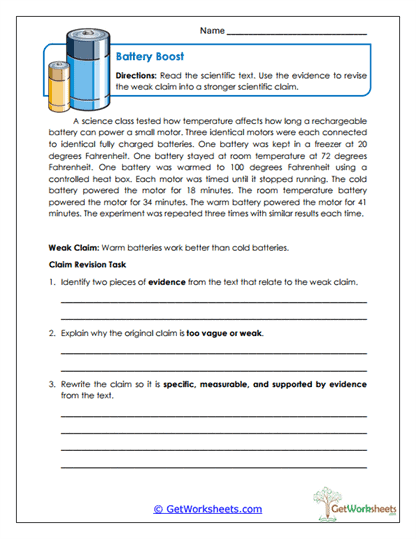
Battery Boost
This activity challenges students to improve weak scientific claims by incorporating evidence gathered from an experiment. Learners examine results, identify relevant data, and revise conclusions to make them more accurate and precise. The process reinforces the importance of evidence-based communication in science. Students also develop stronger analytical reading and writing skills through careful evaluation of experimental findings.
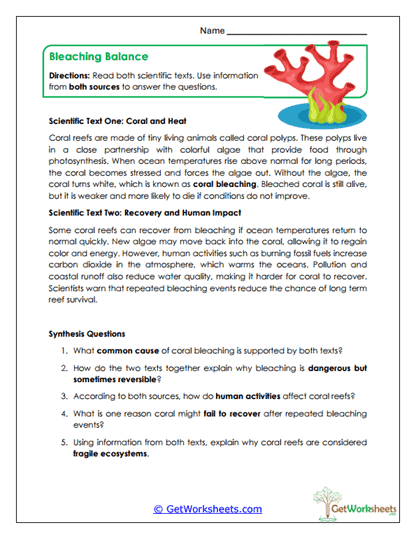
Bleaching Balance
Students read two related scientific texts and combine information from both sources to answer complex comprehension questions. The worksheet encourages learners to identify connections, compare ideas, and draw conclusions supported by evidence from multiple passages. This type of synthesis helps students move beyond single-text analysis and develop more advanced reading skills. The activity strengthens scientific literacy and critical reasoning.
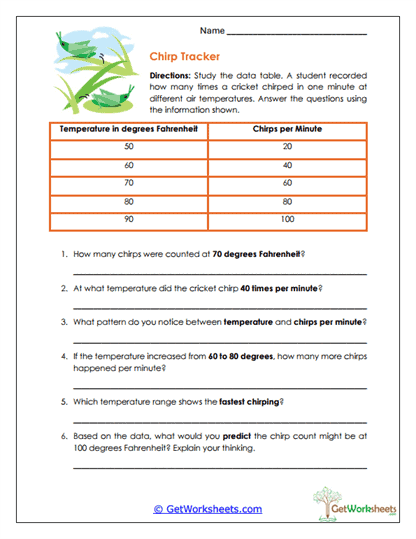
Chirp Tracker
Learners analyze a scientific data table and use the information to answer questions, identify trends, and make predictions. The worksheet introduces students to a format commonly used by scientists to communicate findings. By interpreting data and supporting conclusions with evidence, students strengthen analytical thinking and scientific reasoning. This activity also builds confidence working with tables and quantitative information.
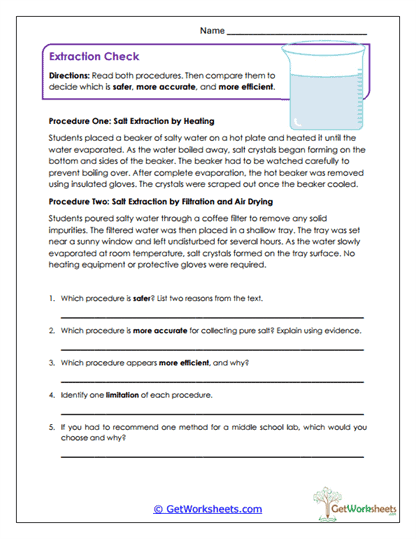
Extraction Check
Students compare two scientific procedures and evaluate their effectiveness, safety, accuracy, and limitations. The activity encourages learners to examine methods carefully rather than focusing only on results. By weighing strengths and weaknesses, students develop stronger evaluation and comparison skills. The worksheet promotes evidence-based reasoning and thoughtful scientific analysis.
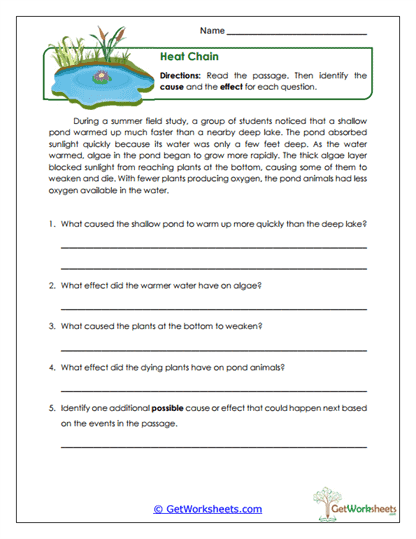
Heat Chain
This worksheet helps students trace cause-and-effect relationships within scientific systems and environmental processes. Learners identify how one change can trigger a sequence of related outcomes and explain the connections between events. The activity strengthens logical thinking while reinforcing important science concepts. Students gain experience interpreting informational texts that describe complex systems.
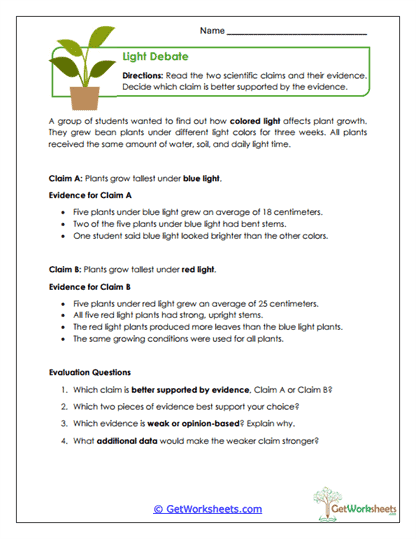
Light Debate
Students examine competing scientific claims and evaluate the evidence presented for each position. The activity teaches learners to rely on data and observations rather than personal opinions when making judgments. By comparing arguments and assessing supporting evidence, students strengthen critical thinking and scientific literacy. The worksheet promotes a deeper understanding of how scientific conclusions are formed.
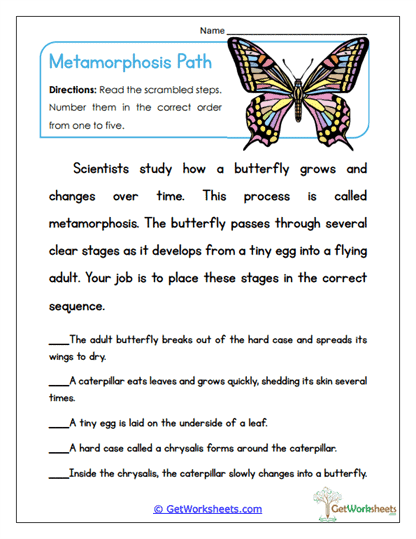
Metamorphosis Path
Students read about the stages of butterfly development and place the events in the correct chronological order. The activity reinforces sequencing skills while helping learners understand scientific processes that occur over time. Careful reading and logical organization are necessary to complete the task successfully. This worksheet combines life science content with important comprehension strategies.
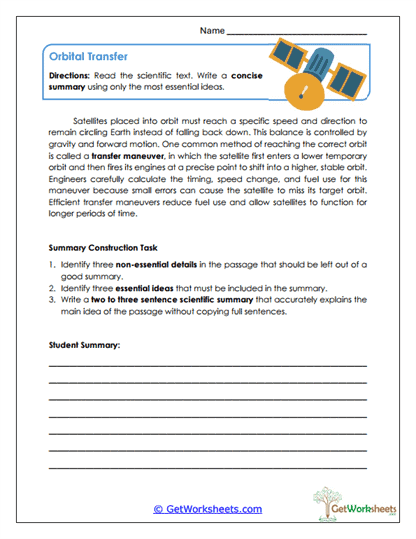
Orbital Transfer
This activity asks students to condense a scientific passage into a clear and concise summary. Learners identify the most important ideas, eliminate unnecessary details, and communicate information accurately in their own words. The process strengthens comprehension while promoting effective written communication. Students gain valuable practice determining what information is essential in a complex text.
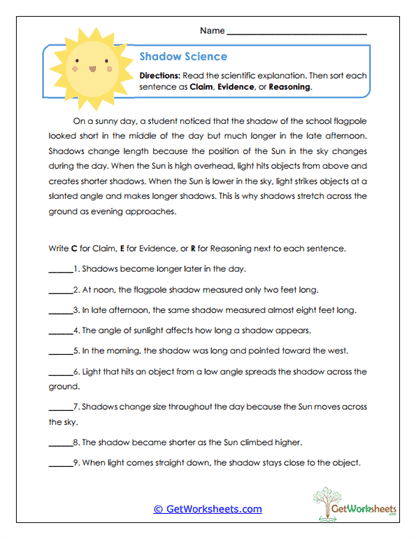
Shadow Science
Students analyze scientific explanations by sorting statements into claims, evidence, and reasoning categories. The activity introduces a framework commonly used in science education and helps learners understand how conclusions are supported. By examining the relationship between observations and explanations, students develop stronger analytical reading skills. This worksheet promotes scientific literacy and evidence-based thinking.
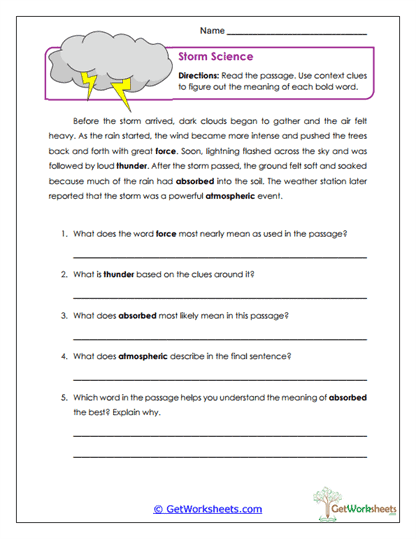
Storm Science
Learners use context clues within a science passage to determine the meaning of unfamiliar vocabulary. Rather than relying on memorization, students practice using surrounding information to unlock word meanings. The activity builds independence and confidence when reading complex nonfiction texts. It also strengthens vocabulary development and overall comprehension.
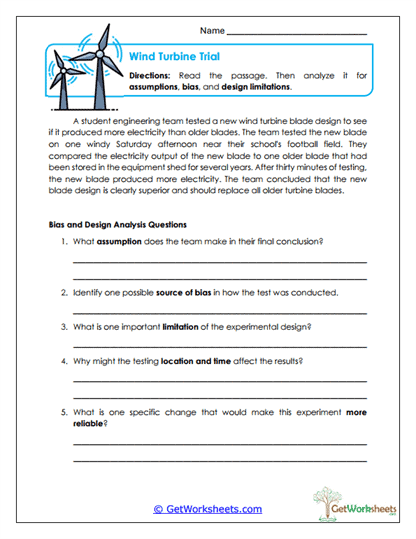
Wind Turbine Trial
Students evaluate the design of a scientific investigation by examining its methods, reliability, limitations, and possible sources of bias. The worksheet encourages learners to think critically about how experiments are conducted and whether conclusions are well supported. Through careful analysis, students gain insight into the importance of fairness and accuracy in scientific research. This activity develops higher-level reasoning skills while reinforcing scientific literacy.
Bookmark Us Now!
New, high-quality worksheets are added every week! Do not miss out!