Illustrating Reading Passages Worksheets
About This Worksheet Collection
This collection of illustrating reading passages worksheets helps students interact with text in creative and meaningful ways by turning reading comprehension into visual learning experiences. Each activity encourages learners to move beyond simply answering questions and instead demonstrate understanding through drawing, mapping, designing, and interpreting what they read. Suitable for classroom instruction, intervention groups, enrichment activities, and homeschool settings, these worksheets provide engaging opportunities for students to connect literacy skills with artistic expression.
As students complete the activities, they strengthen essential reading comprehension skills such as visualization, inference, sequencing, character analysis, theme identification, point of view, and evidence-based reasoning. The collection also promotes critical thinking, close reading, interpretation, and communication by requiring learners to explain and defend their creative choices using details from the text. Through a combination of analysis and creativity, students develop deeper comprehension while building confidence in their ability to interpret and respond to literature.
Detailed Descriptions Of These Worksheets
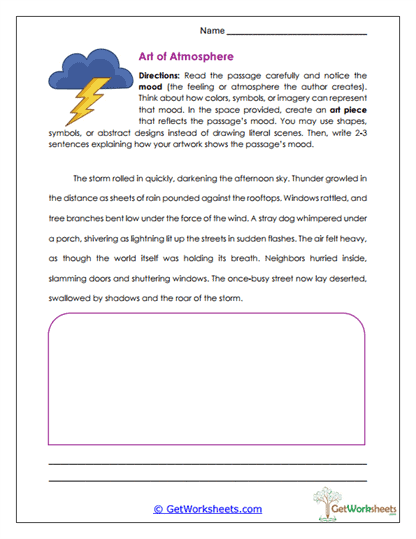
Art of Atmosphere
This worksheet invites students to examine how an author creates emotional impact through descriptive language and imagery. Learners produce artwork that reflects the feeling and atmosphere of a passage rather than focusing only on plot details. The activity encourages thoughtful interpretation of tone, mood, and literary elements while strengthening inference skills. Written explanations require students to connect their artistic decisions directly to evidence found in the text.
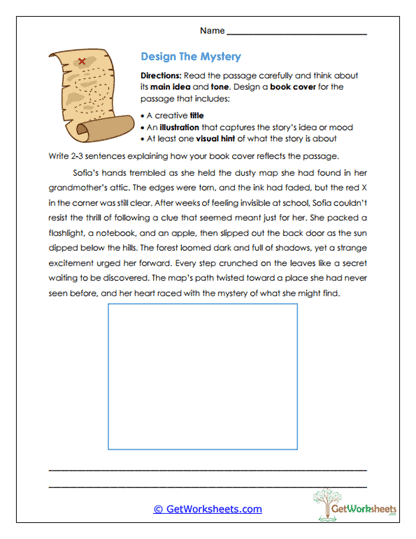
Design the Mystery
Students analyze a suspense-filled passage and create a book cover inspired by the story's clues, setting, and conflict. As they work, they identify important features commonly associated with mystery fiction and use them to guide their design choices. The task promotes close reading by encouraging attention to subtle details that reveal mood and plot direction. Learners also justify their cover designs through written responses supported by textual evidence. This combination of creativity and analysis helps deepen understanding of genre and story structure.
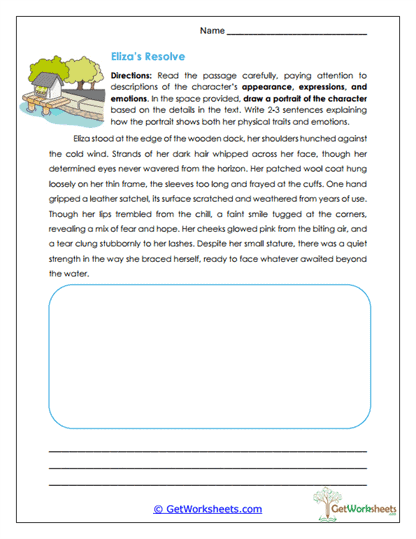
Eliza's Resolve
This activity encourages learners to explore a character's emotions, motivations, and personality traits through visual representation. Students study descriptive clues within the passage and translate their understanding into an illustration that reflects the character's inner world. The process strengthens inference and characterization skills while promoting careful reading. Written reflections help students explain how specific details from the text influenced their interpretation.
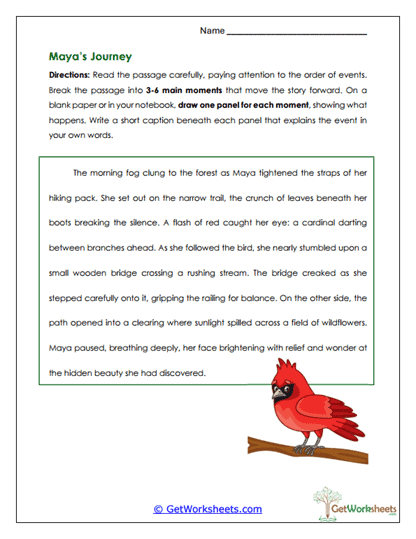
Maya's Journey
Learners identify the major events in a narrative and organize them into a logical sequence using illustrations and captions. By focusing on the moments that drive the story forward, students gain a stronger understanding of plot development and chronology. The worksheet reinforces summarization skills by encouraging attention to essential information rather than minor details. It also provides a creative way for students to demonstrate comprehension of cause-and-effect relationships within a story.
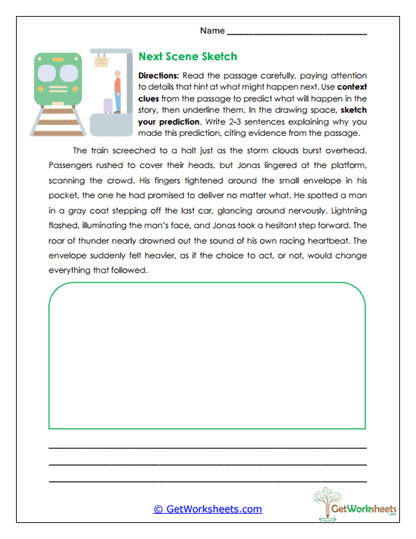
Next Scene Sketch
Students use clues from a reading passage to develop a thoughtful prediction about what could happen next. After analyzing character actions, conflicts, and story developments, they create an illustration representing their forecast. The activity reinforces the habit of using evidence rather than guesswork when making predictions. Learners then explain the reasoning behind their ideas by citing details from the text.
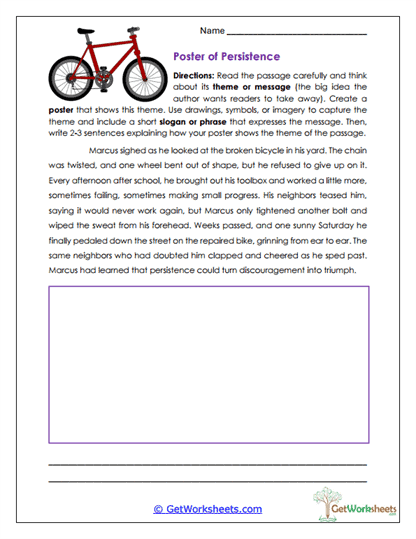
Poster of Persistence
This worksheet challenges students to identify a story's central message and communicate it through a motivational poster. Learners combine imagery, slogans, and design elements to represent themes related to perseverance and determination. The activity encourages deeper reflection on how literary themes connect to real-life experiences. Students also explain how their creative choices relate to specific events and ideas presented in the reading passage.
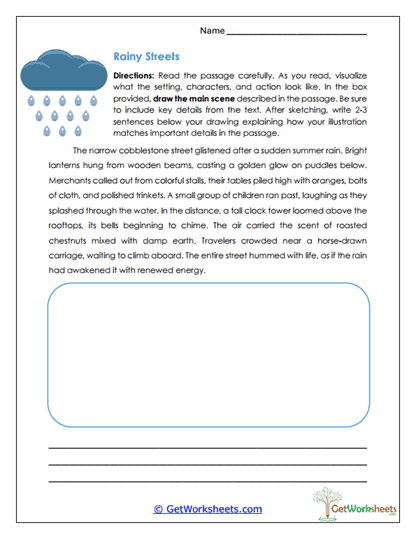
Rainy Streets
Students transform a descriptive reading passage into a detailed illustration that reflects important information from the text. Careful attention to setting, actions, and sensory details is necessary to create an accurate visual representation. The task strengthens visualization skills while encouraging close reading and thoughtful interpretation. Learners also support their illustrations with written explanations grounded in textual evidence. This process helps build stronger connections between reading and comprehension.
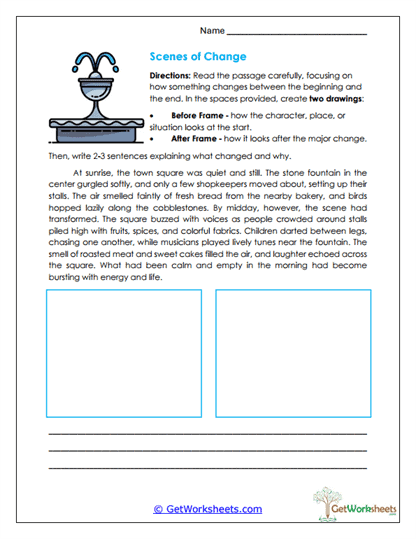
Scenes of Change
This activity focuses on how environments and settings evolve over the course of a passage. Students create illustrations showing the setting at two different points and analyze the differences between them. By examining descriptive details closely, learners develop stronger observation and comparison skills. Written responses encourage them to explain how and why the changes occurred using information from the text.
Symbols of Change
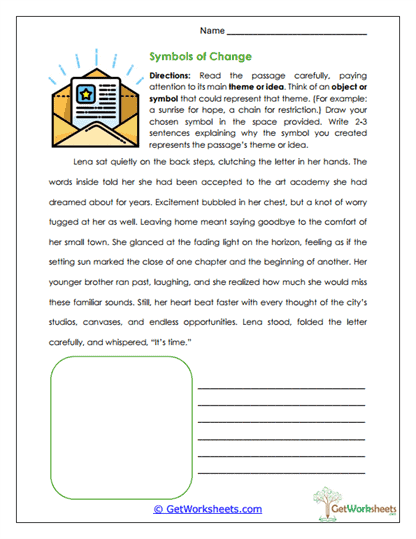
Students move beyond literal interpretation by creating a symbolic image that captures the deeper meaning of a story. The worksheet encourages analysis of themes and messages while introducing learners to the concept of symbolism. Rather than drawing a scene from the passage, students represent abstract ideas through carefully chosen visual elements. They then explain how their symbol connects to the text and supports their interpretation. This approach helps strengthen literary analysis and higher-order thinking skills.
Two Sides of a Race
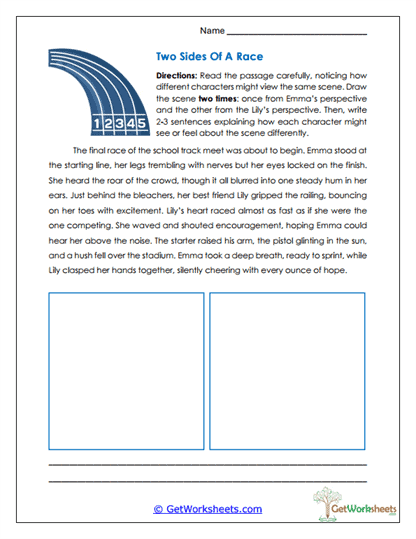
Learners examine how two characters experience the same event in different ways and illustrate each viewpoint. The activity highlights the role of emotions, motivations, and personal experiences in shaping perspective. Through comparison and analysis, students gain a deeper understanding of point of view and character development. Explanatory writing encourages the use of textual evidence to support each interpretation. The result is a richer appreciation for how authors present multiple perspectives within a narrative.
Village Blueprint
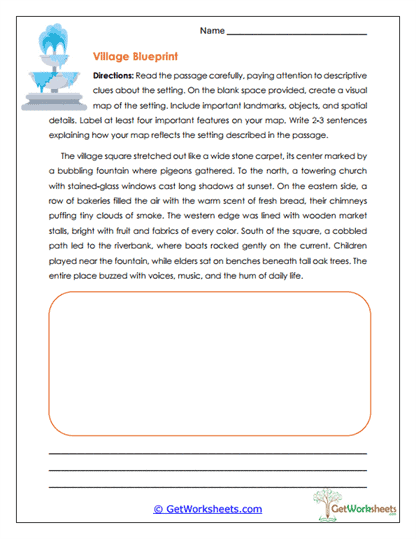
Students read a detailed passage and construct a labeled map based on the information provided by the author. The task requires close attention to landmarks, locations, and spatial relationships described in the text. As learners organize the setting visually, they strengthen comprehension and spatial reasoning skills. Written explanations allow them to demonstrate how their map reflects specific textual details.
Windy Outcome
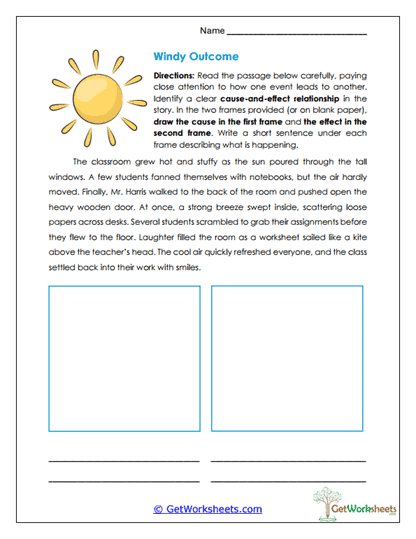
This worksheet helps students recognize how events within a passage are connected through cause-and-effect relationships. Learners create illustrations showing both the initiating event and the resulting outcome. The visual format makes it easier to understand how actions influence later developments in a story. Students reinforce their reasoning by explaining the relationship between the two events using evidence from the reading passage.
Bookmark Us Now!
New, high-quality worksheets are added every week! Do not miss out!