Literal Comprehension Worksheets
About This Worksheet Collection
This collection of literal comprehension worksheets gives students focused practice with reading carefully and finding information that is directly stated in a passage. The activities use a variety of engaging formats, including sequencing tasks, text evidence practice, vocabulary hunts, dialogue tracking, and true-or-false analysis to keep learners interested while reinforcing essential reading habits. Each worksheet is designed to provide structured support for developing readers while remaining flexible enough for classroom instruction, literacy centers, intervention groups, homework, or homeschool use. The approachable layouts and clear expectations help students build confidence as they strengthen comprehension skills step by step.
Throughout these activities, students develop stronger close reading abilities, attention to detail, vocabulary awareness, and evidence-based thinking. Learners practice rereading passages, identifying key facts, organizing story events, and supporting answers with information directly from the text instead of relying on guesses or assumptions. The collection also reinforces important writing and reasoning skills through complete sentence responses, logical analysis, and comprehension monitoring. As students work through these worksheets, they become more accurate, independent, and thoughtful readers across a wide range of academic subjects.
Detailed Descriptions Of These Worksheets
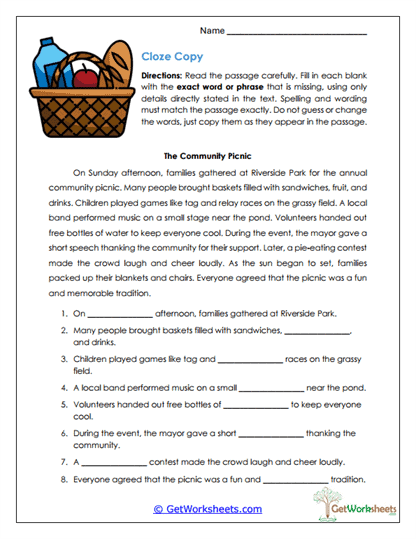
Cloze Copy
Students reread a short passage and carefully fill in missing words using the exact wording from the text. This activity encourages stronger focus and helps readers pay closer attention to sentence structure and important details. Learners also build confidence with vocabulary recognition and evidence-based comprehension skills. The simple format makes it especially useful for independent practice or literacy centers.
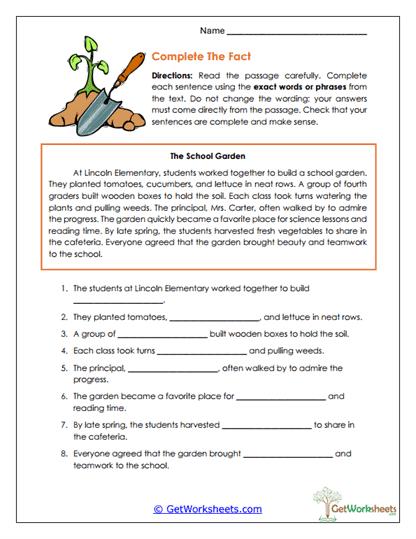
Complete the Fact
This worksheet guides students through identifying factual information that is clearly stated within a reading selection. Learners complete unfinished sentences by locating the correct details directly from the passage. The activity supports comprehension growth by encouraging careful rereading and stronger attention to important information. It also helps students improve reading fluency and develop better habits for working with informational text. Teachers and parents appreciate the structured format that keeps developing readers focused and successful.
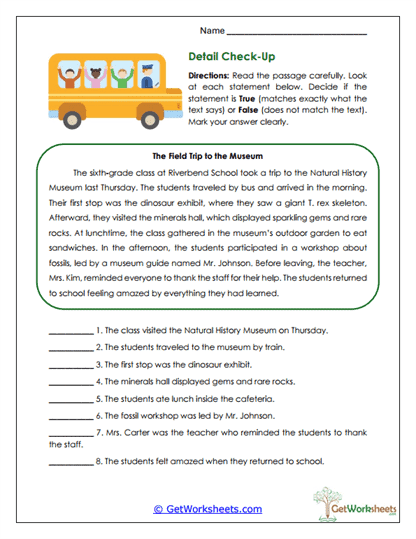
Detail Check-Up
Readers examine statements about a passage and determine whether each one is true or false according to the text. The activity teaches students how to verify details carefully instead of making assumptions based on memory or opinion. As they compare statements against written evidence, learners strengthen close reading and critical thinking skills. This format also supports stronger comprehension monitoring and improved reading accuracy in upper elementary classrooms.
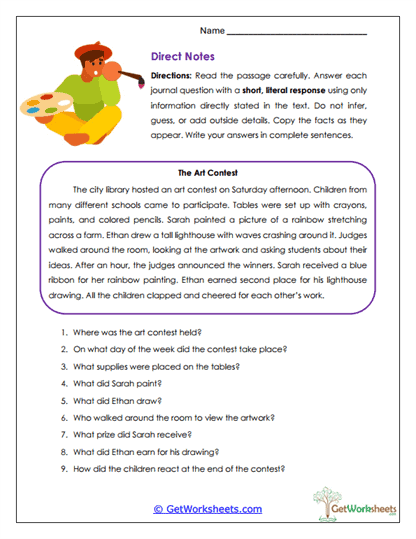
Direct Notes
Students answer comprehension questions using only information that appears directly in the reading passage. The worksheet encourages thoughtful rereading while reinforcing complete sentence writing and factual recall skills. Learners practice identifying key details without adding outside ideas or personal opinions. The structured approach helps build confidence for students who need extra support with informational reading tasks. It is a practical resource for literacy groups, homework, or independent classroom work.
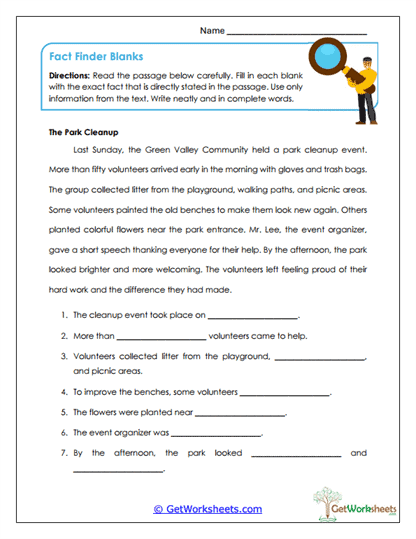
Fact Finder Blanks
This fill-in-the-blank reading activity teaches students how to locate exact information within an informational passage. Learners strengthen comprehension skills by returning to the text and carefully selecting the correct words to complete each sentence. The worksheet promotes stronger reading accuracy and encourages students to double-check their work before responding. It also supports vocabulary growth by exposing readers to context-based language and descriptive details. The approachable structure makes it an effective choice for intervention groups and everyday literacy practice.
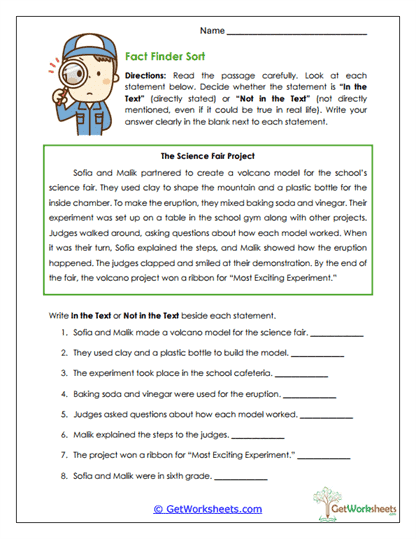
Fact Finder Sort
Students decide whether statements are directly supported by the text or not included in the passage at all. This activity teaches readers how to separate evidence from assumptions while building stronger analytical thinking skills. By checking details carefully, learners improve comprehension accuracy and become more thoughtful when answering questions. The worksheet also reinforces the importance of using proof from the text before drawing conclusions.
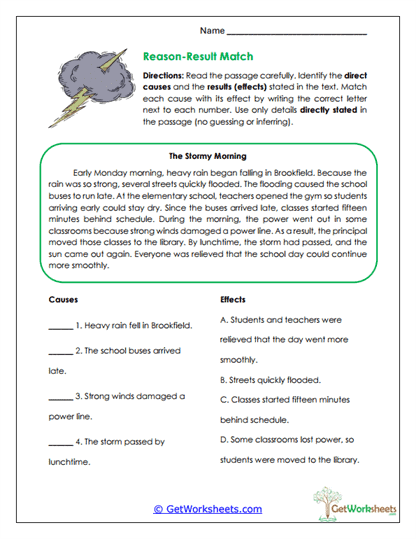
Reason-Result Match
Learners connect causes with their matching effects by analyzing events within a reading passage. The activity helps students recognize how actions and situations lead to specific outcomes in both stories and informational texts. As they work through the matching format, readers strengthen sequencing, reasoning, and comprehension skills. The structured design keeps students engaged while providing meaningful practice with an important reading concept. It is especially helpful for supporting deeper understanding of event relationships in text.
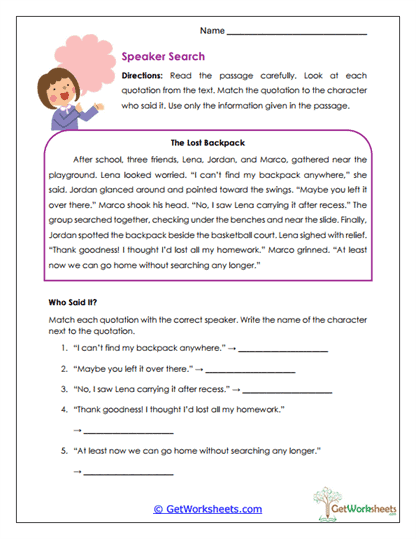
Speaker Search
This worksheet helps students identify which character is speaking by using dialogue clues and nearby text details. Readers practice following conversations carefully while improving understanding of quotation marks and dialogue structure. The activity also strengthens character comprehension and encourages close attention to narrative details. Developing readers benefit from the guided practice with tracking speakers and interpreting conversations within stories.
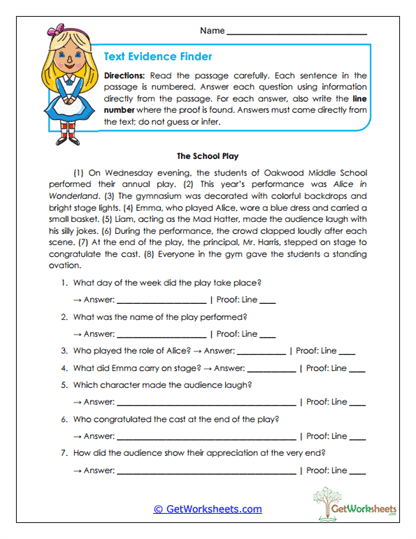
Text Evidence Finder
Students answer reading comprehension questions and then locate the exact line in the passage that proves each response. This activity encourages readers to support their thinking with evidence rather than relying on memory alone. Learners strengthen close reading, detail analysis, and written response skills while becoming more accountable readers. The worksheet also prepares students for upper-grade reading assessments that require text-based explanations. Teachers value the clear structure that helps students practice evidence gathering in an organized way.
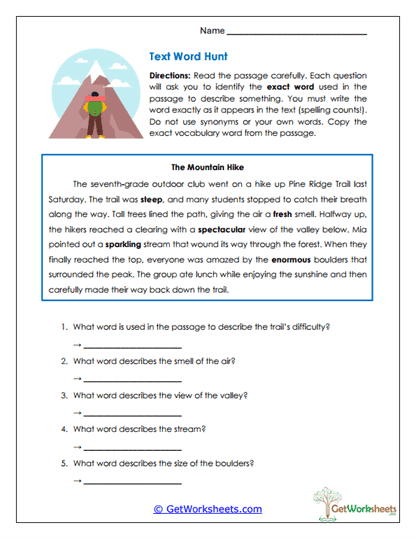
Text Word Hunt
Readers search through a passage to find specific descriptive vocabulary words used by the author. The activity strengthens close reading and helps students become more aware of how word choice shapes meaning within a story. As learners locate and copy exact language from the text, they improve comprehension accuracy and vocabulary recognition. The worksheet also encourages careful scanning and rereading habits that support stronger independent reading skills.
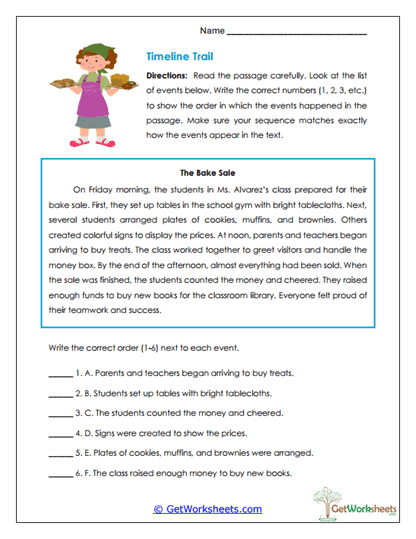
Timeline Trail
Students organize story events into the correct chronological order using details from the passage. This activity helps readers better understand story structure while reinforcing beginning, middle, and ending concepts. Learners strengthen sequencing abilities, logical thinking, and comprehension skills as they connect events accurately. The format also supports retelling practice and encourages careful attention to transitions and important details. It is a helpful resource for building foundational reading organization skills.
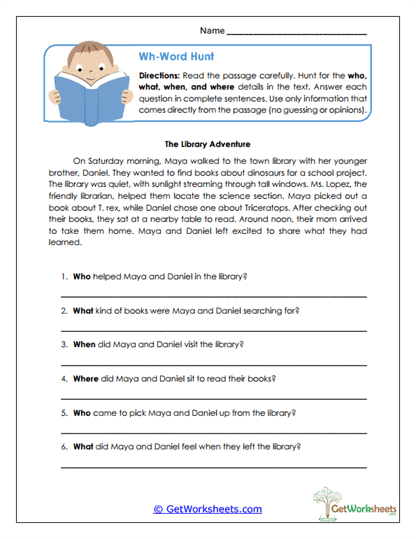
Wh-Word Hunt
This worksheet gives students practice answering who, what, when, and where questions using direct evidence from a reading passage. Learners improve comprehension by locating important details and responding in complete sentences. The activity encourages slower, more careful reading habits while reinforcing text-based thinking skills. Students also build confidence with identifying story events and supporting answers with accurate information from the text.
Bookmark Us Now!
New, high-quality worksheets are added every week! Do not miss out!