Reading for Purpose Worksheets
About This Worksheet Collection
This collection of reading for purpose worksheets helps students understand that every piece of writing is created with a specific goal in mind. Through a variety of engaging activities, learners explore how authors inform, entertain, persuade, explain, and instruct readers across different text types and situations. The worksheets provide meaningful practice with identifying purpose, analyzing audiences, evaluating genres, and comparing texts, making them valuable resources for classrooms, literacy centers, intervention programs, and homeschool instruction.
As students work through the collection, they strengthen essential comprehension skills such as inference, critical thinking, textual analysis, evidence-based reasoning, and audience awareness. The activities encourage learners to look beyond surface-level content and consider why a text was written and how that purpose influences its structure, language, and message. By developing a deeper understanding of author intent, students become more thoughtful readers who can approach a wide range of texts with greater confidence and insight.
Detailed Descriptions Of These Worksheets
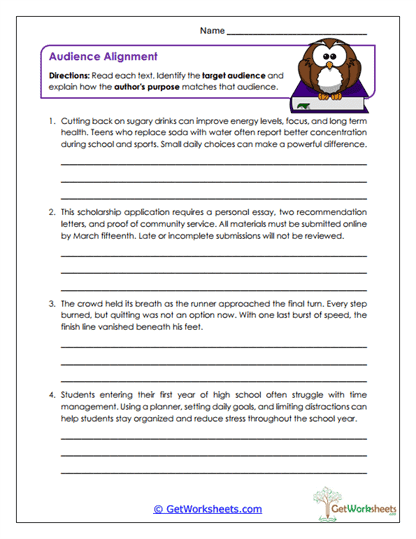
Audience Alignment
Students examine short passages to determine who the intended readers are and how the author's goals connect to those readers. The activity encourages learners to analyze tone, content, and language choices for clues about audience. By explaining their reasoning with evidence, students strengthen both inference and comprehension skills. This worksheet promotes a deeper understanding of how effective communication depends on matching a message to the right audience.
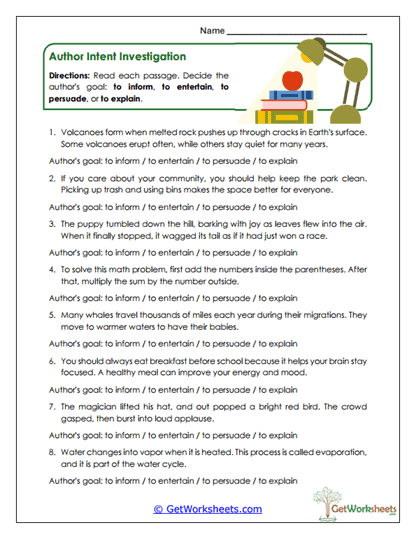
Author Intent Investigation
This activity presents students with a variety of passages and asks them to identify the writer's primary objective. Learners explore how authors use different approaches when they want to teach, explain, entertain, or persuade. Careful analysis of wording and structure helps students recognize subtle differences between purposes. The worksheet strengthens close reading and encourages thoughtful evaluation of texts.
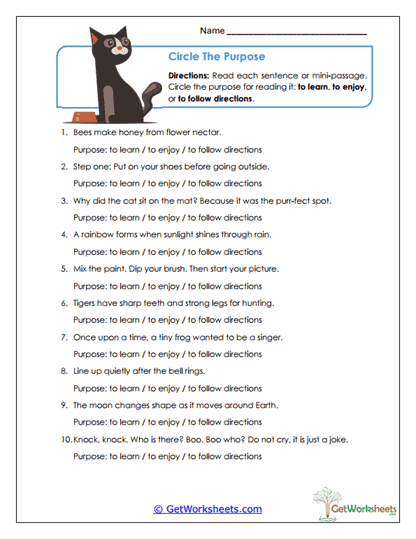
Circle the Purpose
Students read short selections and decide whether each one was written to inform, entertain, or provide directions. The straightforward format offers repeated opportunities to practice identifying author intent. As learners search for clues within each passage, they build confidence recognizing common reading purposes. This foundational activity supports the development of strong comprehension habits.
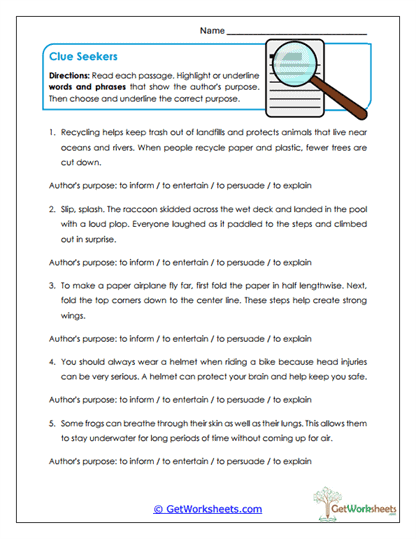
Clue Seekers
Learners investigate passages to uncover the specific words and phrases that reveal an author's purpose. Rather than relying on guesses, students must point to evidence that supports their conclusions. The worksheet encourages careful reading and attention to detail while strengthening analytical thinking. It also helps students understand the importance of using textual proof when making interpretations.
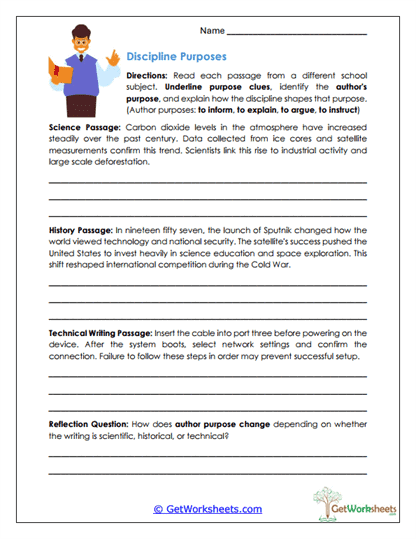
Discipline Purposes
Students explore how writing differs across academic subjects by analyzing passages from multiple disciplines. The activity highlights how authors adjust their approach depending on whether they are informing, explaining, instructing, or presenting arguments. Through comparison and discussion, learners gain insight into the unique characteristics of content-area reading. This worksheet helps prepare students for literacy demands across the curriculum.
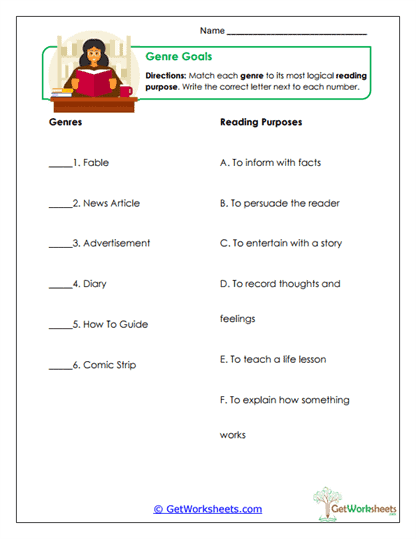
Genre Goals
This worksheet helps students connect common genres with the purposes they typically serve. Learners categorize text types and examine how structure and content reflect an author's intentions. The activity builds genre awareness while reinforcing important reading comprehension concepts. Students gain a clearer understanding of how different forms of writing communicate with readers.
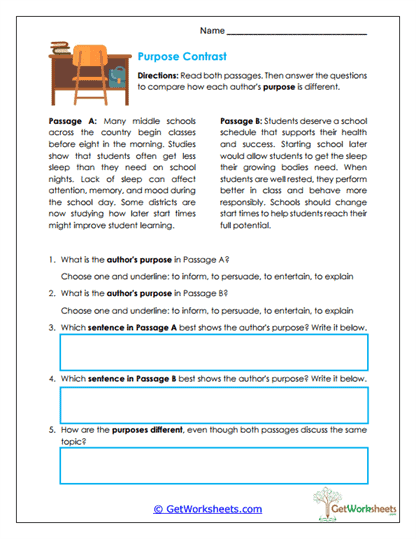
Purpose Contrast
Students compare two passages on a similar topic and examine how differing purposes shape the way information is presented. The task encourages learners to analyze tone, content, and organization while identifying evidence that supports their conclusions. Through side-by-side comparison, students develop stronger critical reading and analytical skills. The activity also demonstrates that the same topic can be approached in very different ways.
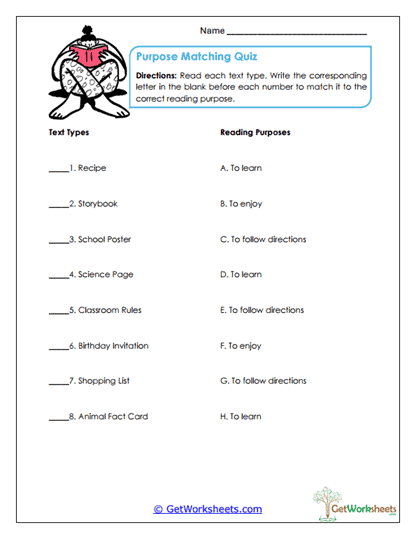
Purpose Matching Quiz
Learners match various text types with the purposes they are most likely designed to serve. This activity introduces students to a range of genres while reinforcing the concept of author intent. By sorting and categorizing information, students strengthen both comprehension and classification skills. The worksheet provides accessible practice that supports foundational literacy development.
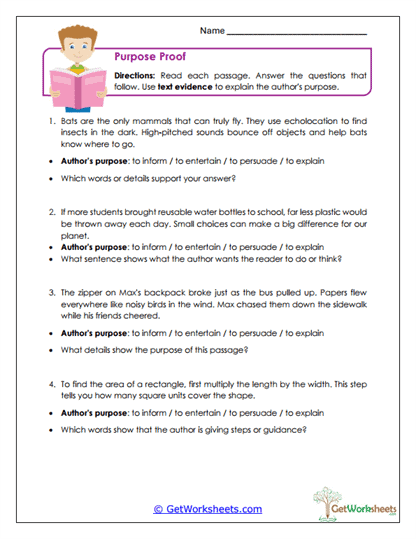
Purpose Proof
Students determine an author's purpose and then explain the evidence behind their choice. The requirement to justify answers encourages deeper thinking than simple identification tasks. Learners strengthen their ability to communicate reasoning clearly while supporting ideas with details from the text. This activity combines reading comprehension with written explanation and critical analysis.
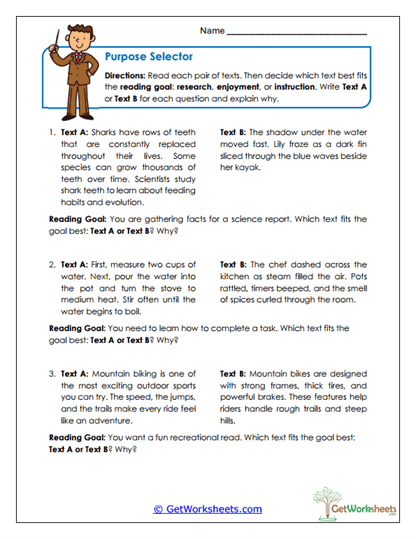
Purpose Selector
Students evaluate paired passages and decide which one best fulfills a particular reading goal. The activity encourages strategic thinking by requiring learners to consider both content and purpose when making choices. Evidence-based explanations help reinforce analytical reading habits. Through this process, students learn how successful readers select texts that match their objectives.
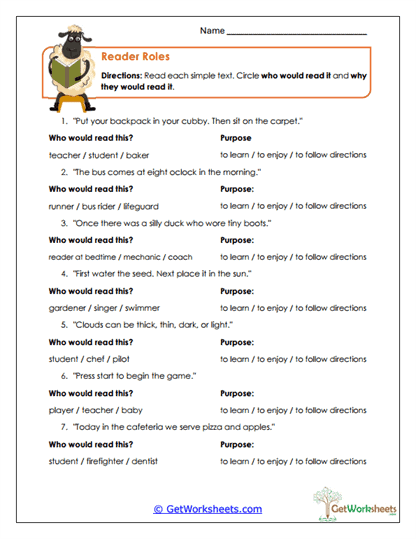
Reader Roles
This worksheet asks students to identify who would most likely read a particular text and why. Learners consider audience, purpose, and context as they analyze short reading selections. The activity promotes inference skills and helps students recognize the connection between readers and the materials written for them. It also reinforces understanding of common author purposes.
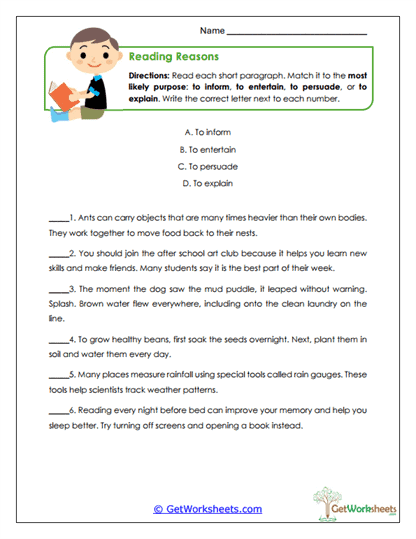
Reading Reasons
Students review a variety of passages and classify each one according to its primary purpose. The repeated exposure to different writing styles helps learners recognize patterns that reveal author intent. By examining facts, opinions, descriptions, and explanations, students develop stronger analytical reading skills. The worksheet provides valuable practice identifying purpose across diverse text types.
Bookmark Us Now!
New, high-quality worksheets are added every week! Do not miss out!