Reading Recipes Worksheets
About This Worksheet Collection
This thoughtfully designed collection of recipe-reading worksheets helps students strengthen comprehension skills through engaging, real-world cooking activities. From sequencing recipe steps to analyzing confusing directions and adjusting ingredient measurements, each worksheet encourages learners to interact with procedural text in meaningful and practical ways. The collection blends literacy, logic, and problem-solving while using familiar food-based topics that naturally capture student interest. Teachers, parents, and homeschool educators will appreciate the variety of activities that support independent learning, classroom discussion, enrichment, and intervention practice.
As students work through these worksheets, they develop important literacy and academic skills that extend beyond the kitchen. Learners practice sequencing, close reading, vocabulary development, inference, editing, analytical thinking, procedural writing, and evidence-based reasoning while also reinforcing math concepts such as fractions, conversions, and measurement. Many activities encourage students to revise unclear instructions, compare procedural texts, and explain their thinking using details from the reading. Together, the worksheets help children become more careful readers, stronger communicators, and more confident problem-solvers in both academic and everyday situations.
Detailed Descriptions Of These Worksheets
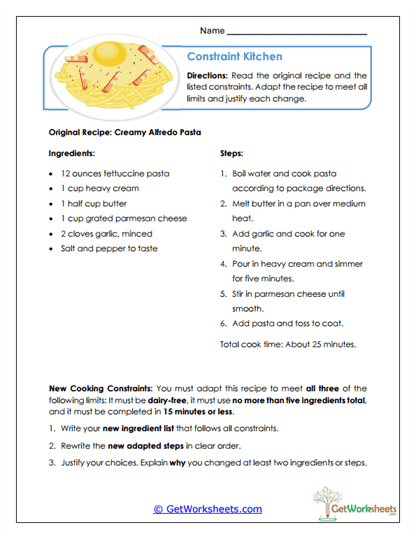
Constraint Kitchen
Students redesign an Alfredo pasta recipe to fit a variety of cooking limitations, including dietary needs and ingredient restrictions. The activity challenges learners to think critically about substitutions while maintaining logical recipe steps and workable instructions. As they revise the recipe, students strengthen procedural comprehension, organization, and reasoning skills. The task also encourages creativity by allowing multiple possible solutions within clear boundaries. It is an excellent higher-level literacy activity that combines practical thinking with structured writing practice.
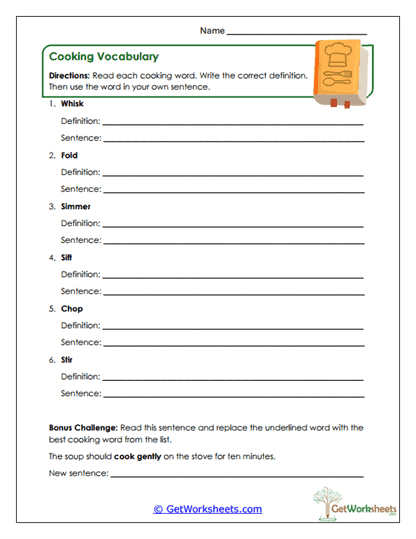
Cooking Vocabulary
This worksheet helps students build a stronger understanding of common cooking terms often found in recipes and procedural text. Learners define words such as whisk, simmer, fold, and sift before applying them correctly in sentences. The activity strengthens vocabulary development while also improving reading comprehension and written communication skills. By connecting language to practical situations, students gain confidence reading instructional text independently.
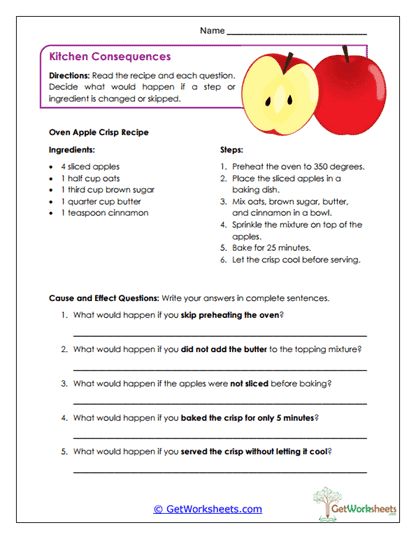
Kitchen Consequences
Students explore cause-and-effect relationships by analyzing what might happen if recipe directions are skipped, changed, or completed incorrectly. Using an apple crisp recipe, learners think through how small mistakes can affect the final result. The worksheet promotes thoughtful reading and encourages students to explain their reasoning with evidence from the text. It also strengthens sequencing and prediction skills through practical, relatable scenarios.
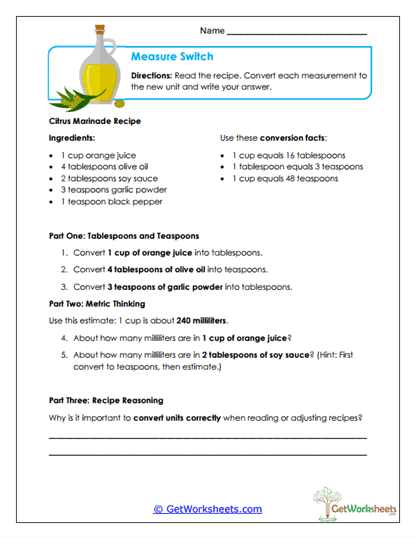
Measure Switch
This recipe-based activity gives students practice converting kitchen measurements such as cups, tablespoons, teaspoons, and milliliters. Learners apply mathematical reasoning while reading procedural text and solving realistic cooking-related problems. The worksheet combines literacy and math skills in a highly functional format that feels meaningful and approachable. Students also build accuracy and precision as they work through measurement conversions carefully. It is especially useful for reinforcing real-world applications of fractions and multiplication.
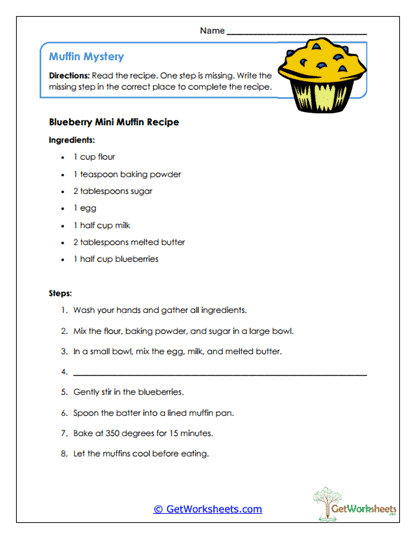
Muffin Mystery
Students investigate a blueberry muffin recipe to determine which instruction is missing and where it belongs within the sequence of steps. The mystery-style format encourages learners to think logically about how recipes are organized and why procedural order matters. As students analyze clues from surrounding directions, they strengthen sequencing, inference, and comprehension skills. The engaging setup makes procedural reading feel more interactive and enjoyable than traditional comprehension exercises.
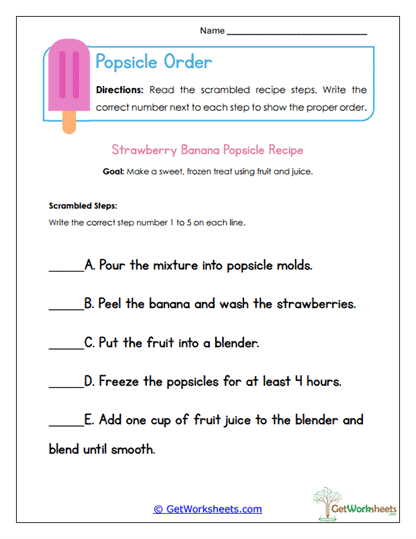
Popsicle Order
This worksheet challenges students to place scrambled popsicle recipe steps into the correct order. Learners must carefully think through preparation, blending, freezing, and serving actions so the instructions make sense from beginning to end. The activity strengthens sequencing and procedural reading while encouraging students to slow down and pay attention to details. Its simple structure makes it especially supportive for younger readers building foundational comprehension skills.
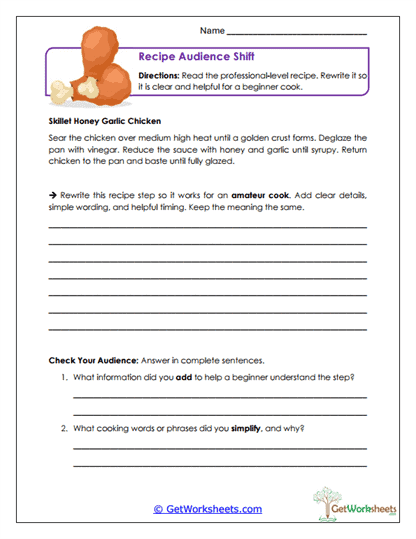
Recipe Audience Shift
Students rewrite a chef-style recipe so it becomes easier for beginners to understand and follow. The activity encourages learners to simplify advanced vocabulary, clarify directions, and organize information more effectively for a different audience. Through the revision process, students strengthen procedural writing, paraphrasing, and audience-awareness skills. It also helps learners recognize how strong communication depends on the needs of the reader, not just correct grammar.
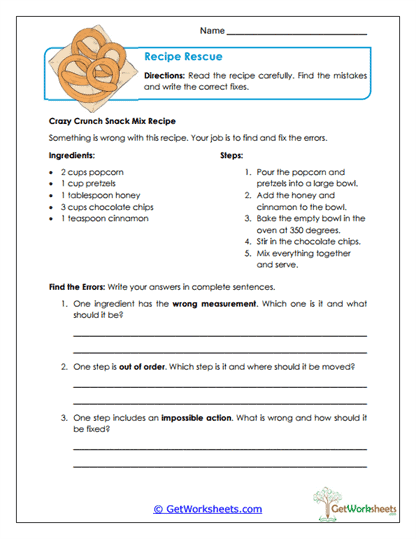
Recipe Rescue
Learners read a flawed snack recipe filled with sequencing problems, unrealistic directions, and incorrect measurements. Their task is to identify the mistakes and revise the recipe so it works logically from start to finish. The worksheet promotes analytical thinking and encourages students to actively question whether instructions make sense. It also reinforces editing and revision skills while helping students become more thoughtful readers of procedural text. The interactive format keeps students engaged as they solve each recipe problem.
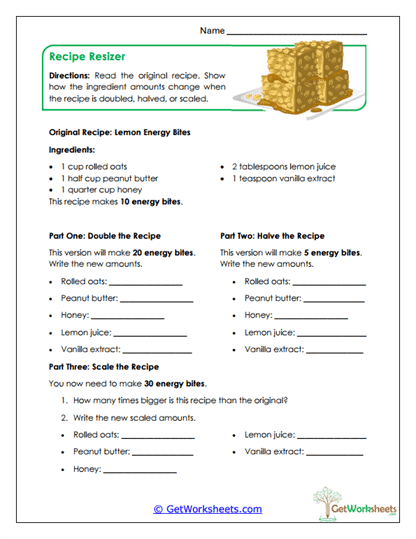
Recipe Resizer
This activity combines reading comprehension with applied math as students adjust ingredient amounts for different serving sizes. Learners practice doubling, halving, and scaling measurements while carefully analyzing recipe details. The worksheet strengthens fraction understanding, multiplication, and procedural reading in one practical task. Students also gain valuable problem-solving experience by applying math concepts in a realistic kitchen context.
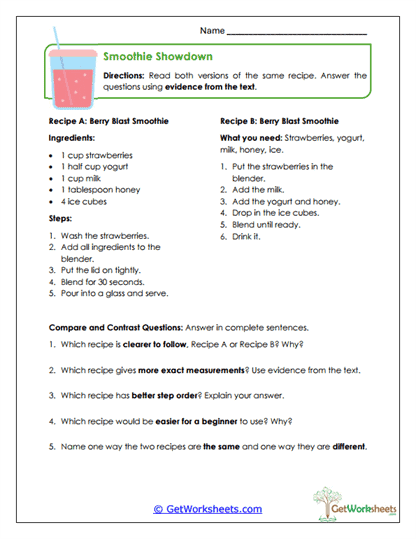
Smoothie Showdown
Students compare two smoothie recipes for the same drink and evaluate which set of instructions is clearer and easier to follow. The worksheet encourages close reading as learners analyze sequencing, organization, measurements, and missing details. Students must support their opinions with evidence from the text, strengthening analytical reasoning and written response skills. This activity provides excellent practice with compare-and-contrast comprehension in a highly relatable format.
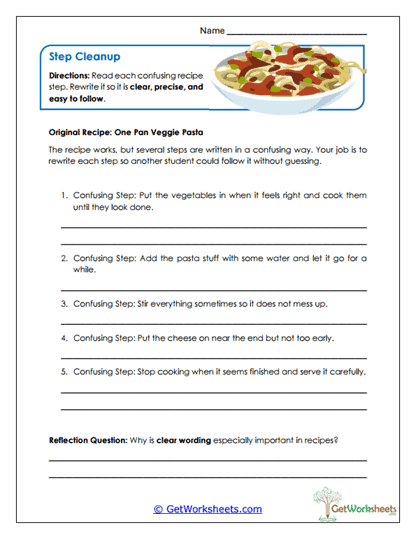
Step Cleanup
Learners revise messy and confusing recipe instructions so they become organized, clear, and beginner-friendly. Students identify vague wording, missing details, and sequencing problems before rewriting the directions more effectively. The activity strengthens editing, communication, and procedural writing skills while teaching students to think from the reader's perspective. It also reinforces the importance of clarity in everyday communication and instructional text.
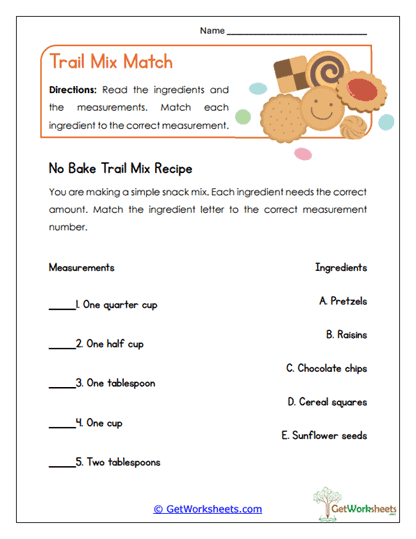
Trail Mix Match
Students match trail mix ingredients with their correct measurement amounts by carefully reading recipe details and cooking vocabulary. The worksheet reinforces attention to detail while helping learners practice understanding quantities such as cups and tablespoons. Its approachable format makes procedural reading feel manageable for younger students building confidence with informational text. The activity also introduces real-world literacy skills connected to cooking and measurement in everyday life.
Bookmark Us Now!
New, high-quality worksheets are added every week! Do not miss out!