Reading Menus Worksheets
About This Worksheet Collection
This collection of reading menus worksheets helps students build practical literacy skills by using restaurant menus as engaging informational texts. Through a variety of real-world activities, learners practice locating details, comparing options, interpreting prices, following directions, evaluating evidence, and making informed decisions. The familiar context of food and dining helps make reading practice meaningful while showing students how literacy skills are used in everyday situations outside of school.
As students work through the collection, they strengthen reading comprehension, critical thinking, problem-solving, inference, budgeting, decision-making, and informational text analysis skills. Many activities also integrate mathematics, requiring learners to calculate totals, compare costs, and work within spending limits. By applying reading skills to authentic scenarios, students develop confidence navigating real-world texts and become more thoughtful, independent readers.
Detailed Descriptions Of These Worksheets
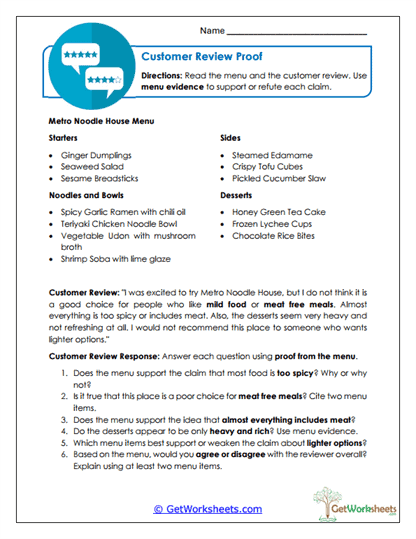
Customer Review Proof
Students analyze a restaurant menu alongside a customer review to determine whether the review's statements are supported by factual information. The activity encourages learners to separate opinions from evidence and verify claims using details from the menu. By comparing sources and defending their conclusions, students strengthen critical reading and analytical thinking skills. This worksheet helps build habits of careful evaluation rather than accepting information at face value.
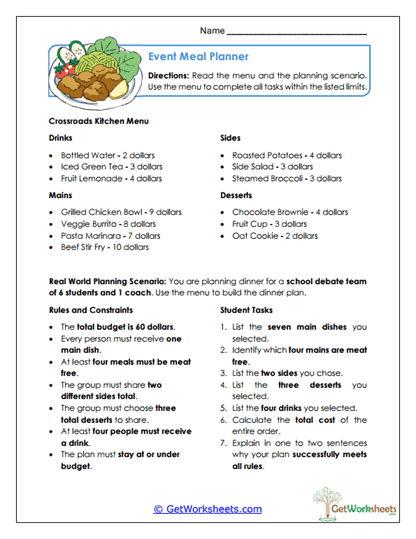
Event Meal Planner
This activity challenges students to organize a complete meal plan while following multiple rules, restrictions, and budget requirements. Learners must track details, compare options, calculate costs, and ensure every condition is satisfied. The task promotes strategic thinking and careful reading throughout the planning process. It provides meaningful practice with both literacy and real-world problem-solving skills. Students gain experience managing complex information in an organized way.
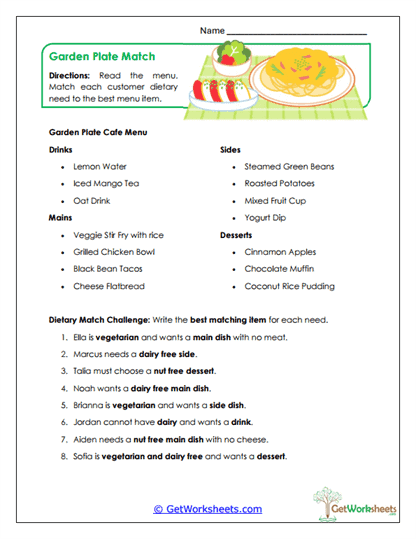
Garden Plate Match
Students use menu information to identify the most suitable choices for customers with specific dietary preferences or needs. The worksheet encourages learners to analyze ingredients, descriptions, and menu categories before making decisions. Careful evaluation of available options helps strengthen comprehension and reasoning skills. Through realistic scenarios, students see how reading supports informed decision-making.
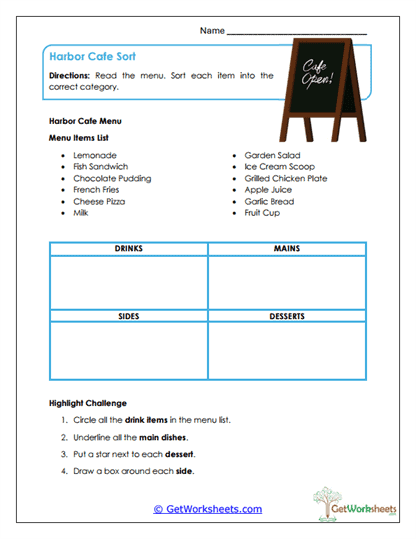
Harbor Cafe Sort
Learners examine menu items and organize them into appropriate categories such as drinks, desserts, sides, or main dishes. The activity develops classification and organizational skills while reinforcing understanding of menu structure. Students practice analyzing item characteristics and making logical groupings based on information presented. This engaging format helps strengthen both vocabulary and comprehension.
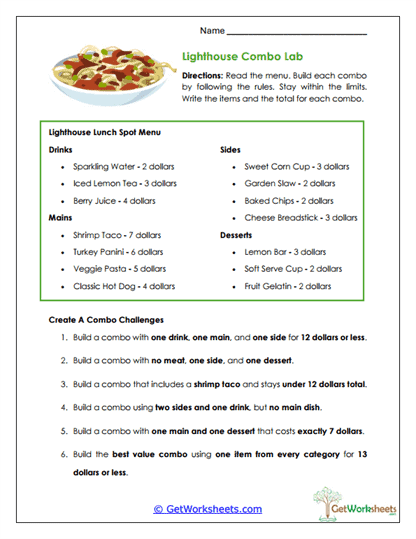
Lighthouse Combo Lab
Students create meal combinations that satisfy a variety of requirements, including category rules and spending limits. The worksheet requires careful analysis of menu information, thoughtful planning, and accurate calculations. Learners must evaluate different possibilities and determine which combinations successfully meet all conditions. The activity strengthens higher-level thinking while connecting literacy skills to practical situations.
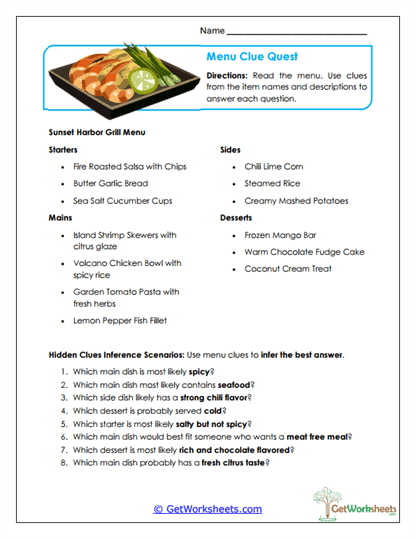
Menu Clue Quest
This worksheet encourages students to use menu descriptions and context clues to answer questions that require inference. Learners draw conclusions based on implied information rather than relying solely on facts that are directly stated. The activity promotes critical thinking, vocabulary development, and deeper comprehension. Students gain valuable experience interpreting information and supporting conclusions with evidence.
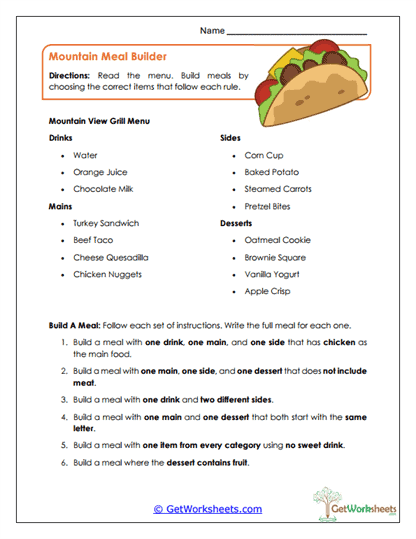
Mountain Meal Builder
Students read menu information and follow detailed directions to assemble meal combinations that meet specific criteria. Success requires attention to detail, logical reasoning, and careful application of information from the text. The worksheet encourages learners to actively use what they read rather than simply locate answers. Through problem-solving and decision-making, students strengthen important informational reading skills.
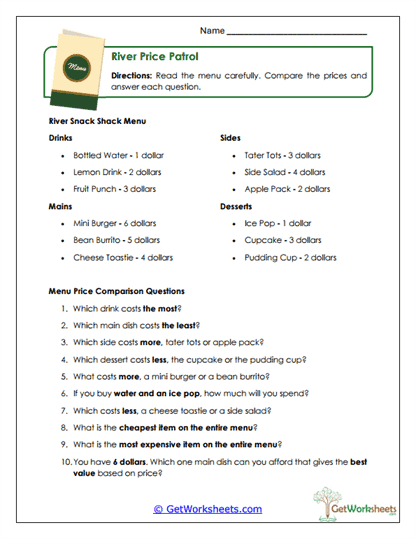
River Price Patrol
Students compare menu prices, evaluate value, and answer questions that require thoughtful analysis of costs and options. The activity blends reading comprehension with practical math skills as learners examine menu information and justify their decisions. Careful comparison helps students build confidence interpreting everyday texts. The worksheet demonstrates how literacy and reasoning work together in real-world situations.
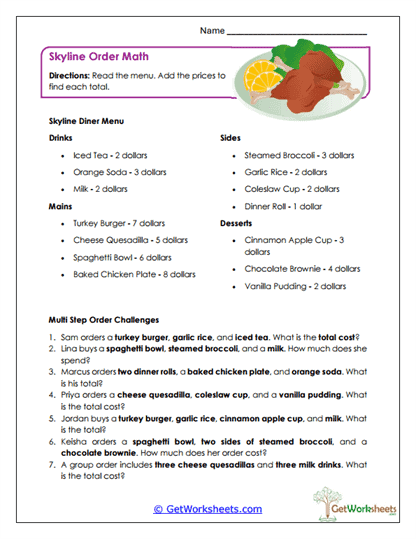
Skyline Order Math
Learners calculate meal costs by combining menu items and determining total prices. The activity integrates reading and mathematics as students locate information, organize details, and solve realistic ordering problems. Careful attention to menu categories and pricing is essential for success. This practical approach helps students see how academic skills apply to everyday experiences.
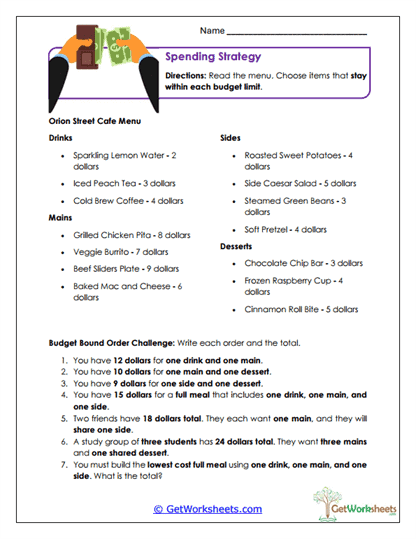
Spending Strategy
Students plan meals while staying within specific budgets and financial limits. The worksheet encourages thoughtful comparison of prices, strategic decision-making, and accurate calculations. Learners strengthen budgeting skills while practicing careful reading and analysis of menu information. Through realistic purchasing scenarios, students gain a stronger understanding of how literacy supports financial decision-making.
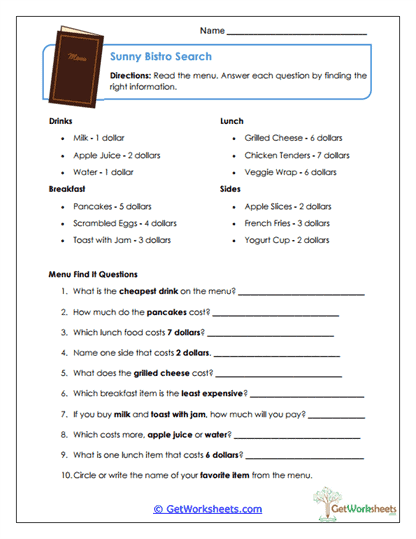
Sunny Bistro Search
Students use a restaurant menu to locate details, compare items, and answer questions based on information presented in different sections. The activity develops scanning skills and teaches learners how to efficiently find relevant information within an informational text. By working with prices, categories, and descriptions, students strengthen comprehension and attention to detail. The familiar restaurant setting helps make reading practice both engaging and practical.
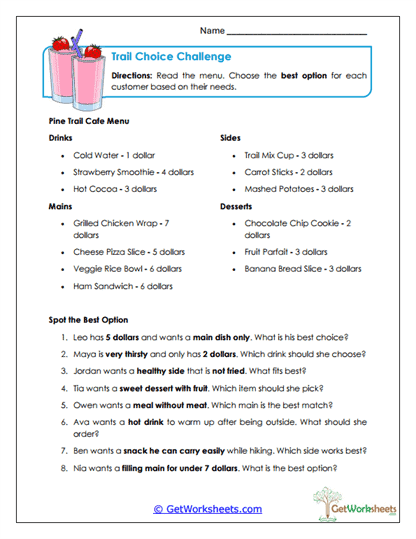
Trail Choice Challenge
Students evaluate menu options and select the best choices based on customer preferences, dietary considerations, and budget requirements. The activity encourages learners to weigh multiple factors before making decisions and defending their answers. Through careful analysis of menu details, students strengthen reasoning and informational reading skills. This worksheet demonstrates how reading can be used to solve realistic problems and make informed choices.
Bookmark Us Now!
New, high-quality worksheets are added every week! Do not miss out!