Math Worksheets
Math Worksheets Collection
Math is more than just numbers on a page-it's a language for solving problems, recognizing patterns, and making sense of everyday situations. This Math Worksheets collection is designed to walk learners from concrete, hands-on practice toward confident, flexible thinking with numbers and operations. Rather than presenting math as a list of rules to memorize, these worksheets invite students to explore, notice relationships, and build strategies they can use again and again.
Each worksheet set blends computation with conceptual understanding: students might use pictures and number lines, then move into equations, word problems, and multi-step tasks that mirror real-life situations. They practice accuracy and fluency, but also explanation and reasoning-showing how they know an answer is correct. Over time, these repeated, structured experiences strengthen number sense, mental math, perseverance, and mathematical communication.
The subtopic worksheet collections below focus on specific strands of elementary math-addition, subtraction, multiplication, division, measurement, money, and mixed operations. Educators and families can use them to target particular skills or to build a well-rounded math pathway that supports learners as they grow. Taken together, they help students see math as a powerful toolkit they can carry into every subject and everyday life.
Subtopic Worksheet Collection Descriptions
Addition
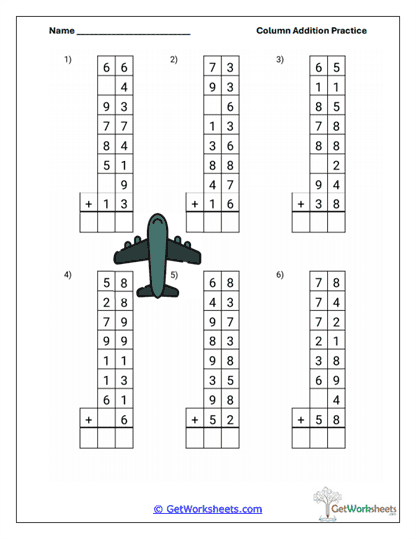
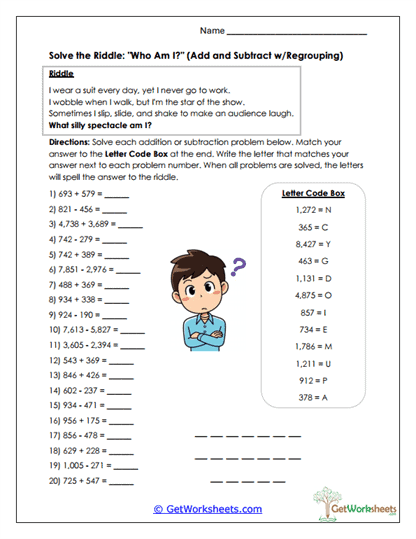
These worksheets guide learners from counting with objects to adding multi-digit numbers using structured models like number lines, tens frames, and columns. Students practice both basic facts and more complex problems, gradually building fluency and confidence. The tasks emphasize number sense by encouraging strategies such as making tens, using doubles, and decomposing numbers. Over time, this helps learners see addition not just as "carrying" but as combining quantities in smart, flexible ways.
Business Math
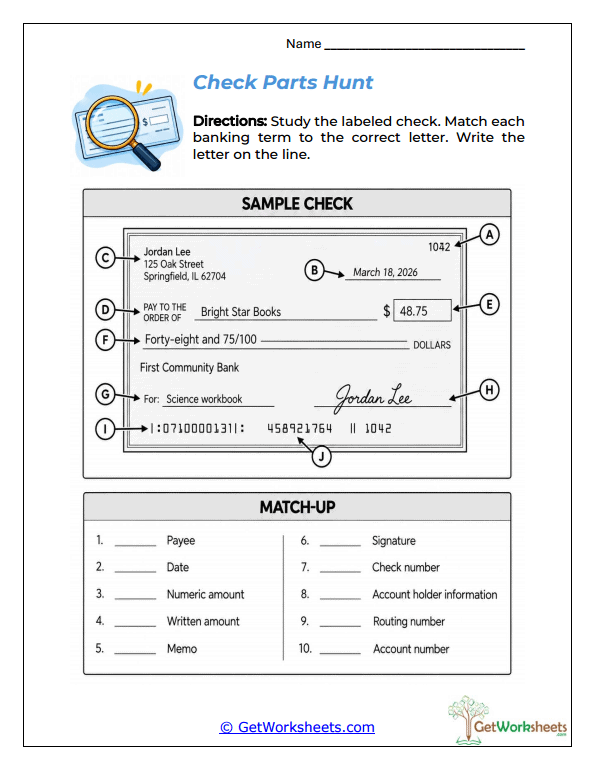
Business math worksheets give students practice using numbers in practical situations involving money, pricing, wages, discounts, taxes, interest, and budgeting. Learners may calculate totals, compare costs, determine percent increases or decreases, and work through scenarios involving sales, profit, and everyday financial decisions. Many activities combine several math skills at once, helping students see how arithmetic, decimals, percentages, and problem-solving work together outside the classroom. This makes the practice especially useful for building confidence with the kinds of calculations students may encounter in jobs, shopping, personal finance, and future business courses.
Decimals
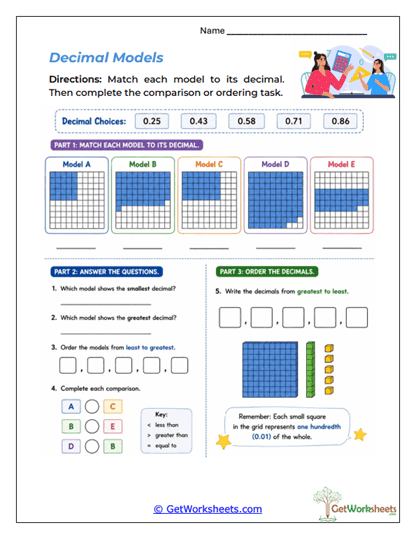
Decimal worksheets help learners understand how numbers continue beyond the whole-number place values they already know. Students practice reading, writing, comparing, ordering, rounding, and performing operations with decimals while strengthening their understanding of tenths, hundredths, and thousandths. Visual models, place value charts, number lines, and real-world examples can make these smaller quantities easier to picture. As students become more comfortable with decimal notation, they are better prepared to work with money, measurement, percentages, and more advanced mathematics.
Division
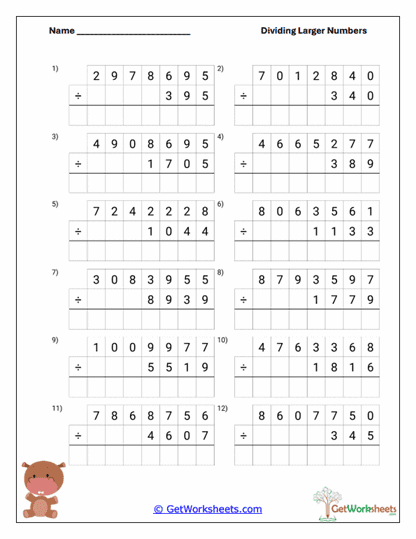
In these worksheets, students move from the idea of sharing and grouping into formal division with and without remainders. Visual models-arrays, equal groups, and number lines-help learners understand what division actually means before they rely on procedures. Practice includes fact fluency, multi-step word problems, and connections to multiplication. This builds strong conceptual understanding so students can interpret real-world division situations, such as splitting items or comparing rates, with confidence.
Estimation
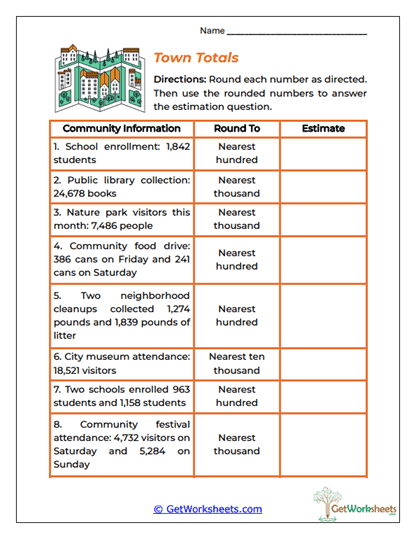
Estimation worksheets help students learn when an exact answer is necessary and when a reasonable approximation is more useful. Learners practice rounding numbers, estimating sums, differences, products, and quotients, and using strategies such as compatible numbers, benchmarks, and front-end estimation. Many activities also ask students to compare estimated answers with exact results, judge whether an answer makes sense, or apply estimation to money, measurement, and real-world situations. This kind of practice strengthens number sense and mental math while helping students become more confident making quick, thoughtful mathematical decisions.
Exponents
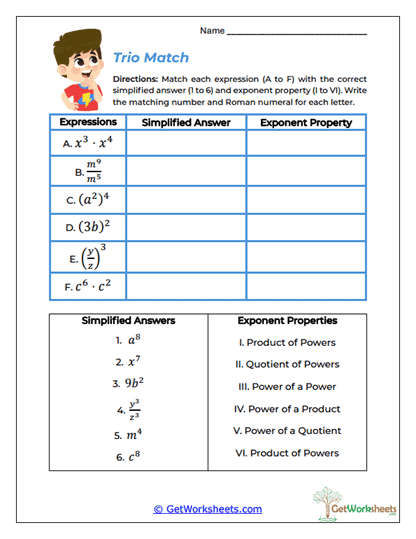
Exponents give students a more efficient way to represent repeated multiplication, and these worksheets help make that idea clear step by step. Learners identify bases and exponents, write repeated factors in exponential form, evaluate powers, and explore patterns involving squares, cubes, and larger exponents. More advanced practice may introduce exponent rules and expressions that combine powers with other operations. Working through these problems helps students recognize numerical patterns and prepares them for algebra, scientific notation, and other topics where exponential thinking becomes increasingly important.
Fractions
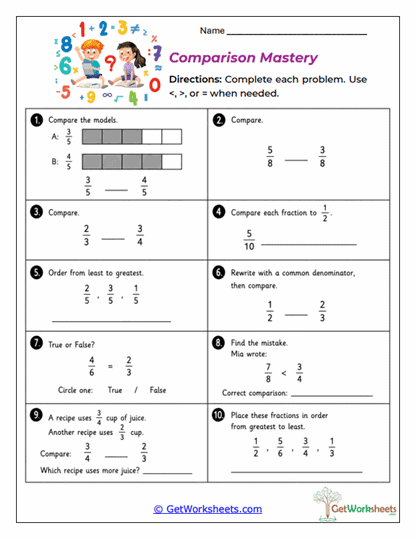
Fraction worksheets help students make sense of parts, wholes, and the relationships between quantities. Learners work with visual models, number lines, equivalent fractions, mixed numbers, improper fractions, and comparisons before moving into addition, subtraction, multiplication, and division. The activities encourage students to think about why fractions are equal or different instead of relying only on memorized procedures. With regular practice, learners build the number sense needed to use fractions confidently in measurement, ratios, probability, cooking, and later algebra.
Graphing
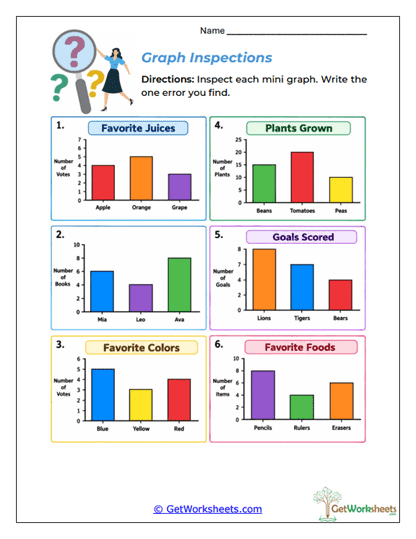
Graphing worksheets teach students how to organize information visually and make sense of what a graph is showing. Learners may create and interpret bar graphs, line graphs, picture graphs, coordinate planes, and other displays while answering questions about values, changes, comparisons, and patterns. Some activities focus on plotting points or choosing appropriate scales, while others ask students to analyze data and draw conclusions from it. These skills strengthen mathematical communication and help learners become more comfortable reading the charts and graphs they encounter in science, news, research, and everyday life.
Integers
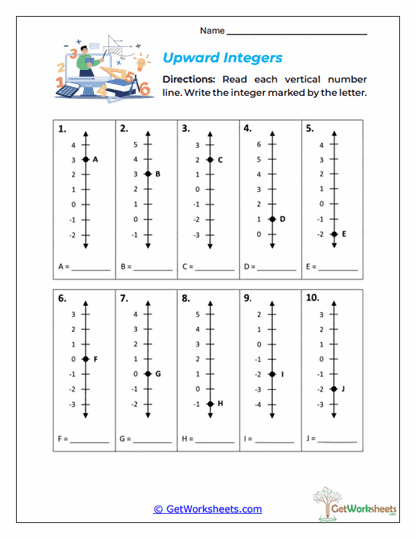
Integer worksheets help students understand and work with positive numbers, negative numbers, and zero while exploring how these values relate to one another. Learners practice comparing and ordering integers, locating them on number lines, finding absolute values, and performing addition, subtraction, multiplication, and division with signed numbers. Activities may include visual models, number patterns, and real-world situations involving temperatures, elevations, money, and changes in value. As students become more comfortable with integers, they develop a stronger understanding of how numbers behave above and below zero. These skills build confidence with negative numbers and establish an important foundation for algebra, coordinate graphing, equations, and more advanced mathematical reasoning.
Measurement
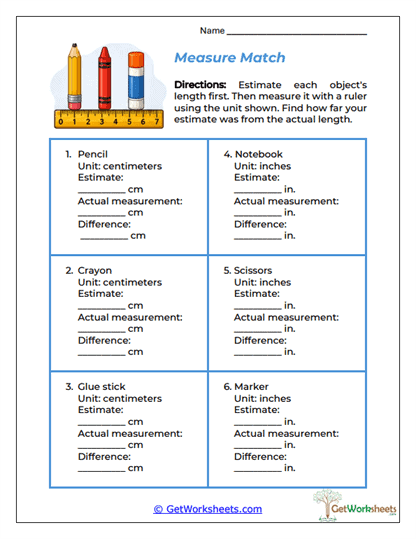
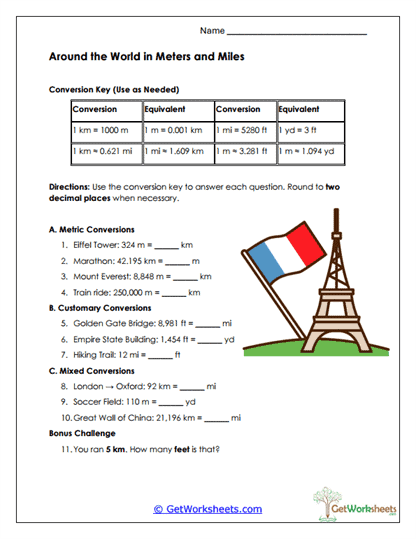
These worksheets introduce learners to length, weight, capacity, time, and temperature through real-life contexts and clear visuals. Students learn to read tools like rulers, scales, thermometers, and clocks, and they practice estimating and comparing measurements. Tasks often combine measurement with operations, asking students to add, subtract, or convert units in meaningful word problems. This supports both mathematical precision and the ability to apply measurement in daily activities, science experiments, and projects.
Multiplication
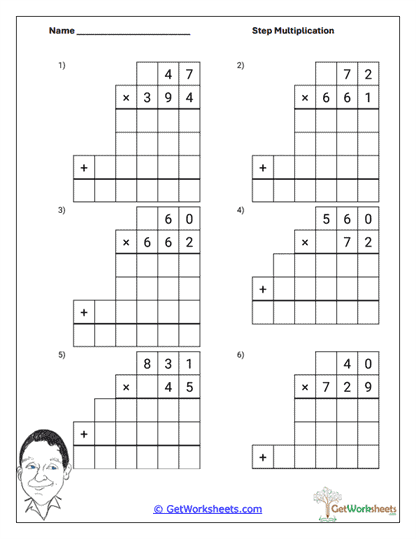
These worksheets develop multiplication from repeated addition and equal groups to arrays, area models, and eventually standard algorithms. Students practice fact fluency while also exploring patterns in times tables and relationships between factors and products. Tasks include visual models, word problems, and multi-digit multiplication with place value support. This combination builds both speed and understanding, helping learners see multiplication as a powerful shortcut for reasoning about larger quantities.
Operations
In the operations worksheets, students bring together addition, subtraction, multiplication, and division in mixed practice. Tasks often require choosing the correct operation for a situation, interpreting key words in word problems, and solving multi-step questions. Learners also work with equations, comparison problems, and balance-style puzzles that highlight the structure of operations. This strengthens mathematical reasoning and helps students see how different operations relate and work together in real problem-solving.
Patterns
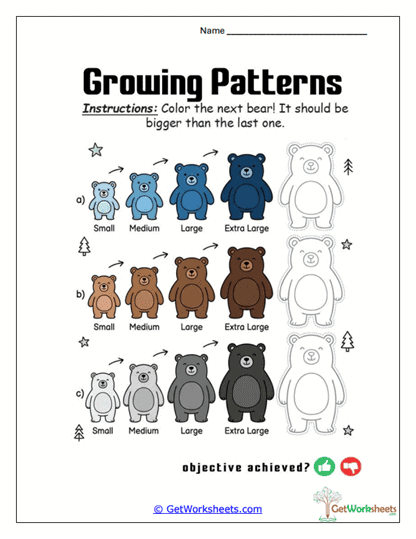
Pattern worksheets encourage students to look closely at numbers, shapes, and sequences to determine what changes and what stays the same. Learners practice extending patterns, identifying rules, filling in missing terms, and explaining relationships between values. As the work becomes more challenging, students may explore growing patterns, function-style rules, and sequences that require more than simple counting. This type of practice develops logical thinking and helps students recognize structure, an important foundation for algebra and higher-level problem-solving.
Percentages
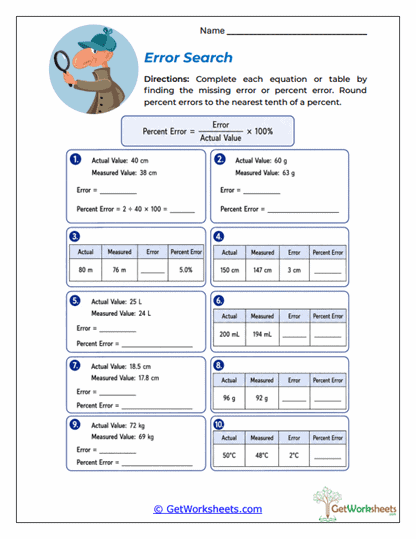
Percentage worksheets help students understand how numbers can represent parts of a whole using a scale of one hundred. Learners practice converting between percentages, fractions, and decimals, calculating percentages of quantities, and finding percentage increases and decreases. Activities may include visual models, comparison problems, and real-world situations involving discounts, sales tax, tips, and financial decisions. As students progress, they develop strategies for estimating percentages mentally, interpreting percentage-based information, and solving multi-step problems. These skills strengthen proportional reasoning and prepare learners for more advanced work with ratios, statistics, probability, and everyday situations where percentages help explain relationships between quantities.
Proportions
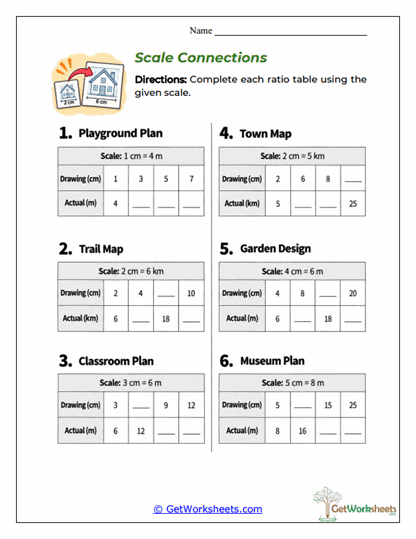
Proportions worksheets help students understand how two ratios can represent the same relationship, even when the quantities involved are different. Through activities involving equivalent ratios, missing values, scale factors, and cross-multiplication, learners develop strategies for recognizing and solving proportional relationships. Practice may include comparing quantities, interpreting tables, working with fractions, and solving word problems involving recipes, maps, measurements, and similar figures. These exercises encourage students to think about how quantities change together rather than simply memorizing procedures. By strengthening proportional reasoning, students build an important foundation for percentages, unit rates, algebra, geometry, and everyday situations that involve comparing or adjusting amounts.
Rounding
Rounding worksheets help students learn how to replace exact numbers with nearby values that are easier to work with and understand. Learners practice identifying place value, deciding whether to round up or down, and rounding whole numbers, decimals, and larger values to different positions. Many activities also connect rounding to estimation, encouraging students to think about whether an answer is reasonable before calculating it exactly. As this skill develops, students become more comfortable simplifying numbers for mental math, measurement, money, and everyday situations where a close approximation is often more useful than a precise value.
Subtraction
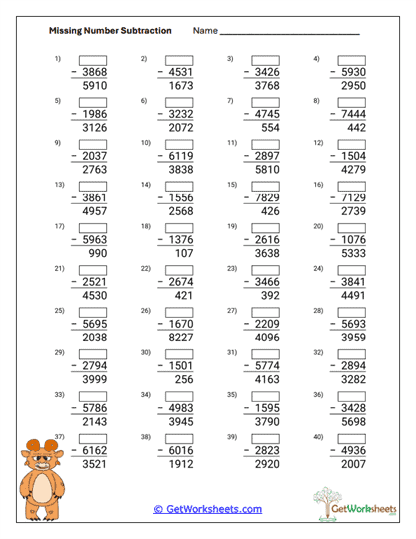
These worksheets support learners as they move from "taking away" objects to using number lines, decomposing numbers, and eventually regrouping with larger numbers. Students practice basic subtraction facts, as well as multi-digit problems that require careful place value thinking. Many tasks are embedded in real-world word problems, such as comparing quantities or finding how much is left. This helps learners understand subtraction as the language of difference and change, not just a reversed addition problem.
Bookmark Us Now!
New, high-quality worksheets are added every week! Do not miss out!