Reading Instructions Worksheets
About This Worksheet Collection
This engaging collection of reading instruction worksheets helps students strengthen their ability to follow directions, understand procedures, and apply information in meaningful ways. The activities cover a wide variety of real-world situations, including recipes, science experiments, crafts, workplace rules, technology navigation, and creative drawing tasks. Each worksheet is designed to keep learners actively involved while giving teachers and parents practical, ready-to-use literacy resources for classroom lessons, centers, homework, intervention groups, or homeschool instruction. The mix of hands-on learning, critical thinking, and relatable scenarios makes the collection especially effective for helping students see the everyday importance of reading carefully.
As students complete these worksheets, they build essential literacy and comprehension skills that extend far beyond traditional reading passages. Learners practice sequencing, procedural understanding, close reading, analytical thinking, editing, decision-making, and evidence-based reasoning while strengthening attention to detail and task completion abilities. Many activities also support writing development by encouraging students to revise unclear directions, organize ideas logically, and communicate information more effectively. Together, the worksheets provide meaningful practice that helps children become more confident readers, stronger problem-solvers, and more independent learners.
Detailed Descriptions Of These Worksheets
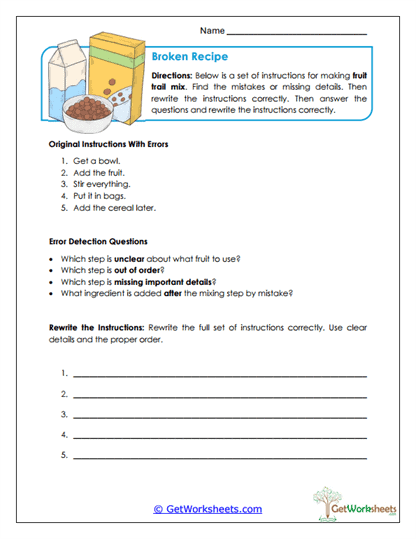
Broken Recipe
Students review a flawed trail mix recipe and work to repair instructions that are incomplete, unclear, or arranged incorrectly. The activity encourages careful reading as learners identify problems that could confuse the reader or prevent the recipe from working properly. By rewriting directions in a clearer order, students strengthen sequencing, editing, and procedural writing skills at the same time. The puzzle-style format keeps the task engaging while reinforcing the importance of precise communication.
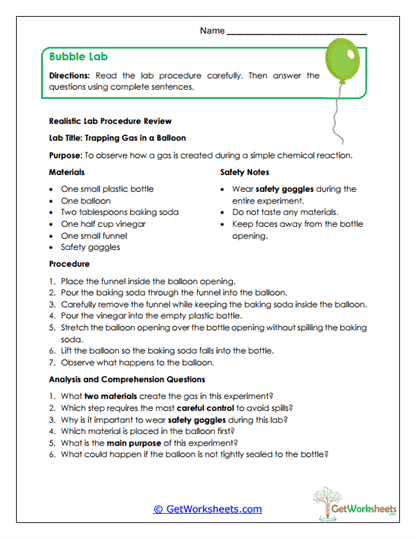
Bubble Lab
This science-focused worksheet introduces students to the importance of reading lab procedures carefully before beginning an experiment. Learners examine safety notes, materials, and step-by-step directions while answering questions about why each action matters. The activity strengthens informational reading and encourages students to think critically about how mistakes can affect scientific results. It also provides valuable practice with sequencing and detail analysis in a realistic classroom setting. Teachers can easily use it during science literacy lessons, intervention groups, or independent practice time.
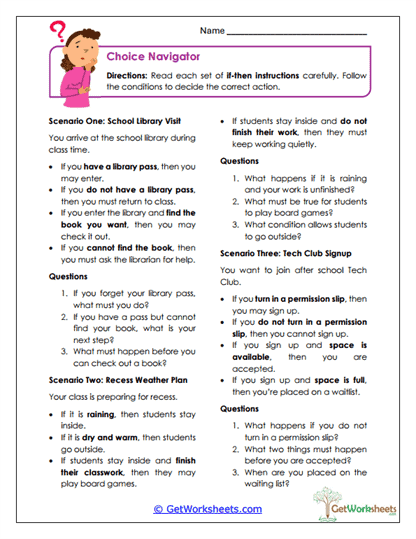
Choice Navigator
Students work through realistic "if-then" scenarios that require thoughtful decision-making and careful reading. The worksheet challenges learners to follow conditions, rules, and possible outcomes in situations connected to school and daily life. As they answer comprehension questions, students practice logical reasoning and strengthen their ability to interpret instructional text accurately. The relatable examples make advanced procedural reading skills feel approachable and practical.
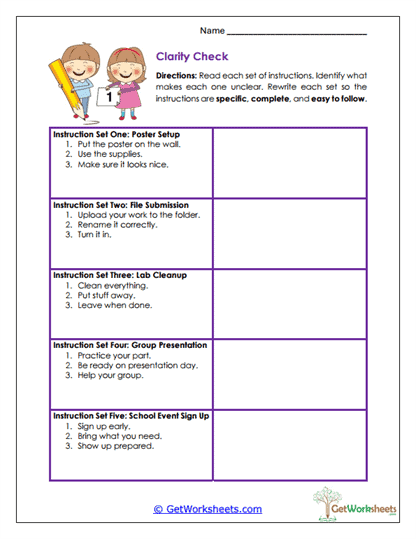
Clarity Check
Learners revise confusing directions by adding missing details, reorganizing steps, and replacing vague wording with clearer explanations. This worksheet helps students recognize how unclear communication can create misunderstandings for readers. Through editing and rewriting practice, children improve procedural writing and develop stronger organizational habits. The activity also encourages students to think about instructions from another person's perspective, which builds audience awareness and communication skills. It works especially well for upper elementary literacy and writing lessons.
Next Step Detective
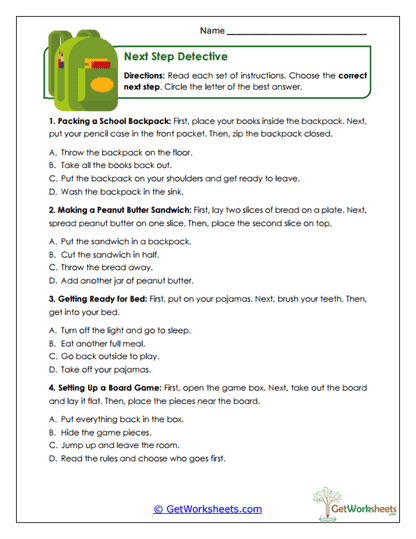
Students become procedural "detectives" as they study everyday directions and determine what action should happen next. Each scenario requires learners to use sequencing clues, reading comprehension, and logical thinking to make informed decisions. The familiar real-life situations help students connect literacy skills to practical routines they already understand. This activity is an engaging way to reinforce careful reading habits while encouraging independent reasoning.
Paper Pinwheel
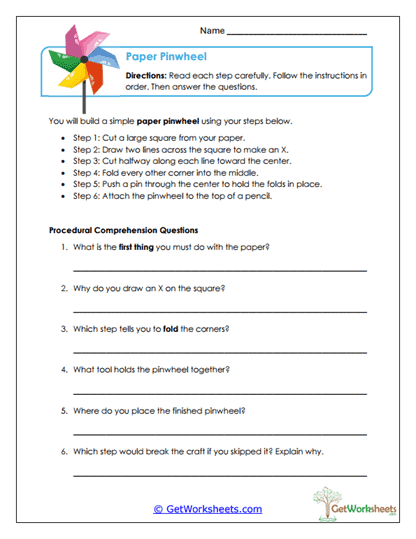
This hands-on worksheet combines reading comprehension with a fun craft project as students follow instructions to create a paper pinwheel. Learners must pay close attention to sequencing words and procedural details to complete each step successfully. Comprehension questions reinforce understanding of order, actions, and important information from the directions. The activity supports independent learning while showing students how accurate reading directly affects the final outcome. It is especially useful for younger elementary students who benefit from interactive literacy practice.
Procedure Showdown
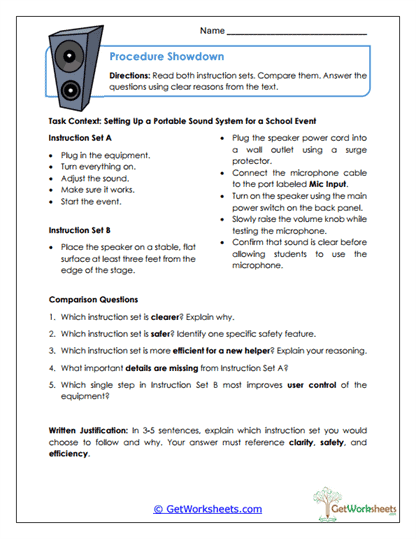
Students compare two versions of instructional text and evaluate which set of directions is more effective for readers. The activity encourages learners to analyze sequencing, clarity, safety details, and organization while defending their opinions with evidence from the text. This higher-level comprehension task strengthens reasoning and analytical reading skills in a practical context. Learners also gain experience writing short evidence-based explanations to support their conclusions.
Seed Starter
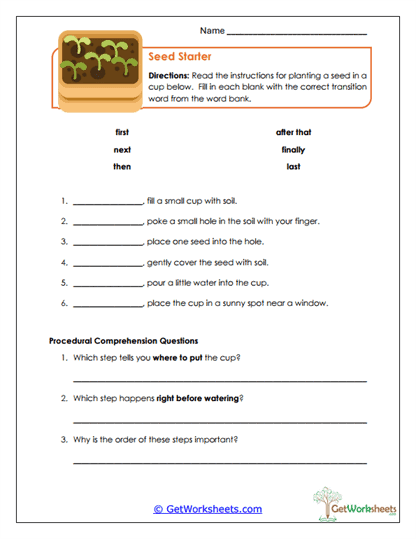
This worksheet introduces students to transition words and procedural sequencing through a simple planting activity. Learners complete directions using terms such as "first," "next," and "finally" to show how instructions are organized step by step. The activity helps students understand the structure of procedural writing while reinforcing comprehension and vocabulary development. It also provides valuable support for students learning how to organize their own writing clearly and logically.
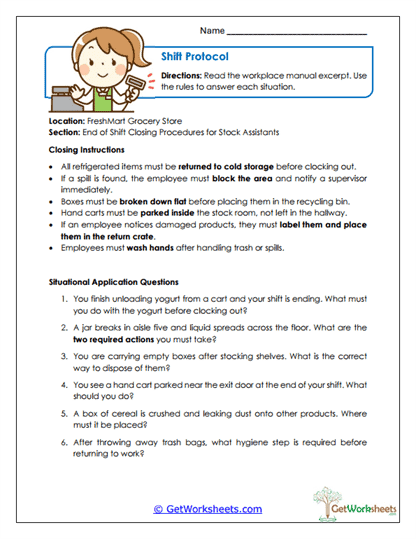
Shift Protocol
Students explore workplace-style procedures by reading rules and applying them to realistic scenarios involving safety, cleanup, and responsibilities. The worksheet helps older elementary learners understand how informational reading is used in practical situations outside of school. As students analyze the procedures, they strengthen reasoning, sequencing, and decision-making skills. The real-world format encourages thoughtful discussion about responsibility and consequences. It is an excellent resource for combining literacy instruction with life-readiness concepts.
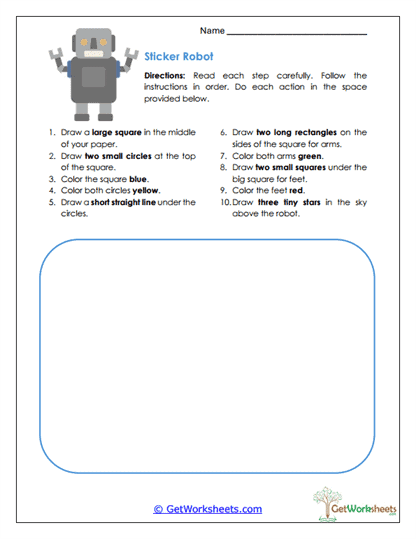
Sticker Robot
This creative activity asks students to build a robot drawing by carefully following a long sequence of detailed directions. Learners must pay attention to colors, shapes, placement words, and order of steps while completing the illustration accurately. The worksheet strengthens procedural comprehension while also supporting visual processing and spatial awareness. Because students immediately see the results of missing a detail, the activity naturally reinforces careful reading habits.
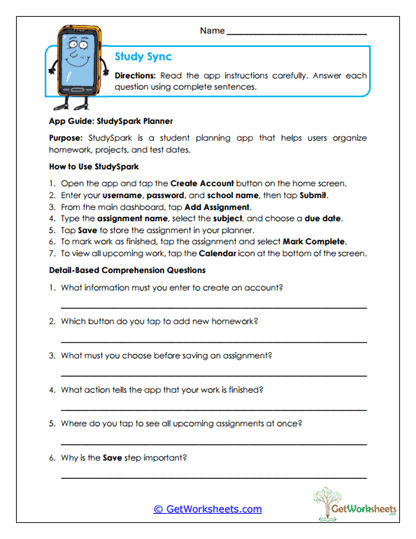
Study Sync
Students practice reading technology-based directions as they navigate a fictional student planner app. The worksheet asks learners to follow steps involving accounts, assignments, saving work, and app features while answering comprehension questions along the way. By focusing on digital instructions, students strengthen both informational reading and digital literacy skills. The realistic setup helps children become more independent and confident when using online learning tools.
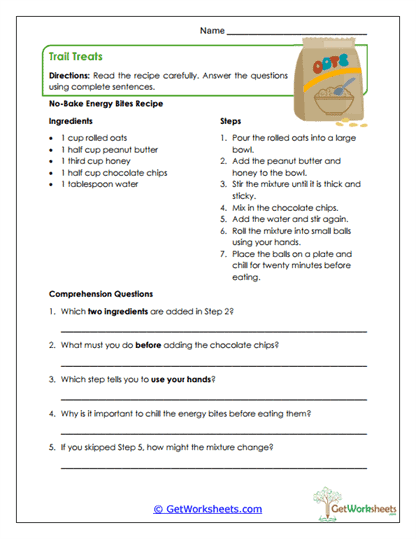
Trail Treats
This recipe-based activity gives students practice reading and understanding step-by-step cooking directions. Learners answer questions about ingredients, sequencing, and why certain actions are important to the final result. The worksheet encourages students to think carefully about how skipping steps could affect the recipe outcome. Its food-themed format keeps students engaged while reinforcing close reading and procedural comprehension skills.
Bookmark Us Now!
New, high-quality worksheets are added every week! Do not miss out!