Short Stories with Questions Worksheets
About This Worksheet Collection
This collection of short story comprehension worksheets helps students strengthen deeper fiction analysis and evidence-based reading skills through engaging narrative passages and thoughtful literary response activities. The worksheets guide learners through important literary concepts such as theme, symbolism, point of view, literary devices, motivation, conflict, plot structure, and text evidence analysis. By encouraging students to move beyond surface-level comprehension, these activities help readers think critically about how authors develop meaning through characters, dialogue, narration, and story structure.
As students work through these worksheets, they build stronger inference skills, literary analysis abilities, reading fluency, analytical reasoning, and evidence-based writing habits. The collection also supports emotional literacy, close reading, comprehension monitoring, and discussion skills while introducing higher-level fiction concepts in approachable ways. Together, these activities help students become more thoughtful readers who can analyze stories deeply, explain interpretations clearly, and support ideas with meaningful textual evidence.
Detailed Descriptions Of These Worksheets
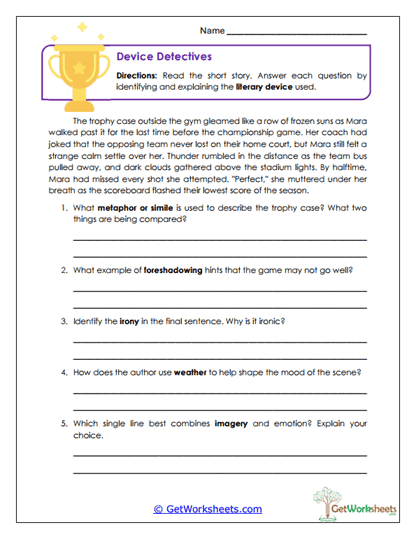
Device Detectives
Students identify and explain literary devices such as similes, metaphors, imagery, foreshadowing, irony, and mood within a short fiction passage. The activities encourage learners to analyze how authors use figurative language to shape meaning and emotional impact. Students strengthen literary analysis and close reading skills through evidence-based explanations. This practice also helps readers recognize how language choices influence storytelling.
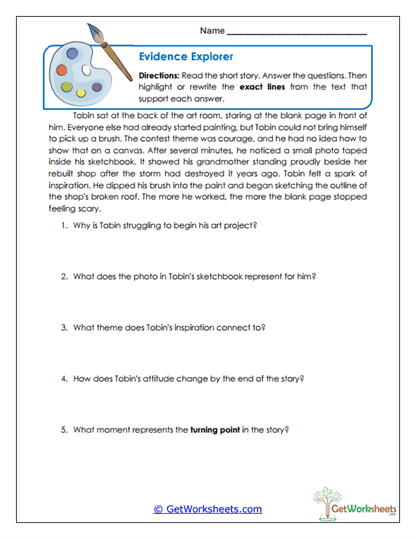
Evidence Explorer
This worksheet helps students answer analytical questions about a short fiction story using direct text evidence. Learners identify important details, themes, and character moments before quoting or referencing exact lines from the passage. The activities strengthen close reading and evidence-based reasoning skills. They also encourage students to support interpretations with proof instead of unsupported opinions.
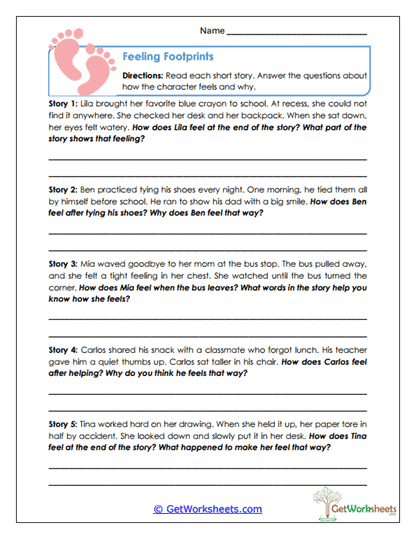
Feeling Footprints
Students identify character emotions by analyzing actions, dialogue, and descriptive clues within short stories. The activities encourage learners to explain how story details reveal feelings and emotional changes. Students strengthen inference skills, emotional literacy, and evidence-based reasoning. This practice also helps readers connect more deeply with fictional characters and situations.
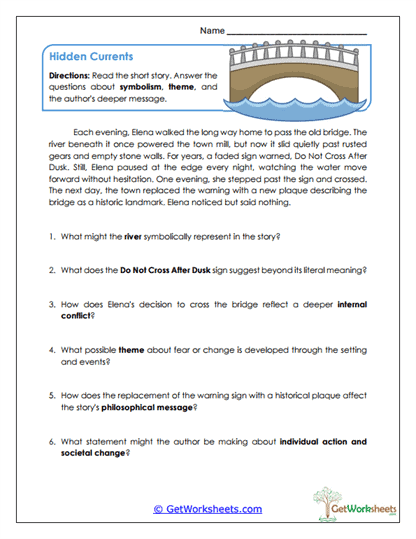
Hidden Currents
This worksheet guides students through analyzing symbolism, theme, and the author's deeper message within a short fiction story. Learners interpret symbolic details, examine character choices, and explain how events connect to broader life lessons. The activities strengthen literary awareness and critical thinking skills. They also encourage more reflective and analytical reading habits.
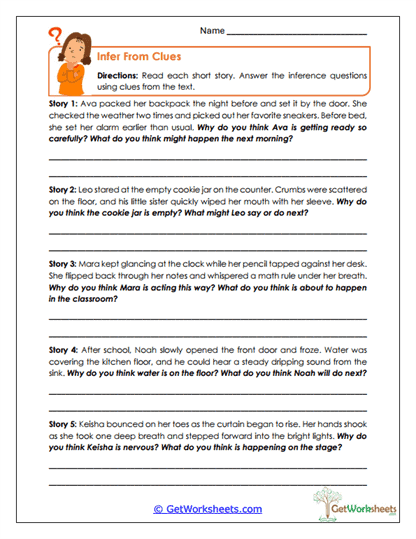
Infer From Clues
Students use textual clues and prior knowledge to make logical inferences about events, motivations, and outcomes within short stories. Learners explain which details support their conclusions while practicing evidence-based reasoning. The activities strengthen comprehension and analytical thinking skills. They also help students recognize how authors imply meaning indirectly.
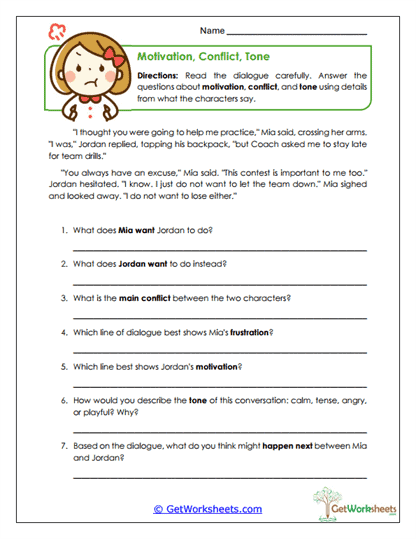
Motivation, Conflict, Tone
This worksheet asks students to analyze dialogue in order to identify character motivations, emotional tone, and central conflict. Learners examine what characters want, how tension develops, and how conversations reveal feelings and relationships. The activities strengthen literary analysis and inference skills. They also improve understanding of how dialogue shapes plot and character development.
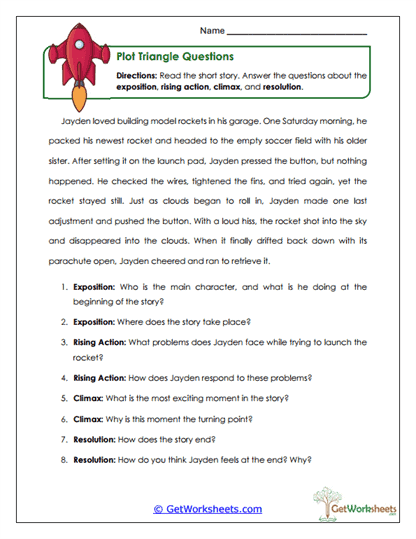
Plot Triangle Questions
Students analyze the major stages of plot structure within a short fiction story. Learners identify the exposition, rising action, climax, and resolution while explaining how each event contributes to the overall narrative. The activities strengthen sequencing and narrative comprehension skills. They also help students understand how authors organize stories to create suspense and meaning.
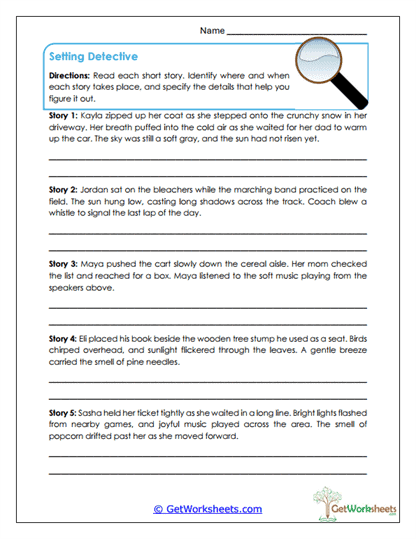
Setting Detective
This worksheet helps students identify the setting of short stories using descriptive clues about time and place. Learners explain which details from the passage helped them determine the setting accurately. The activities strengthen close reading and inference skills. They also improve understanding of how setting influences mood and story events.
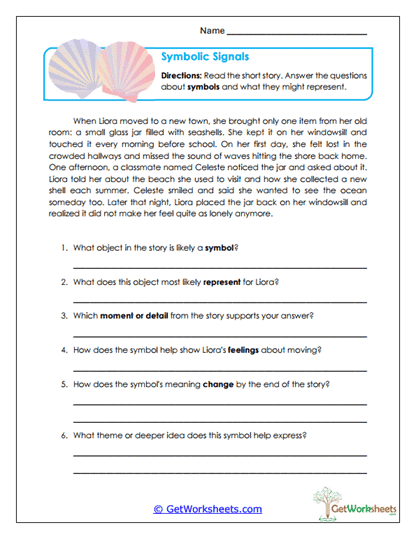
Symbolic Signals
Students identify symbolic objects within a fiction story and explain what those symbols represent. Learners analyze how symbolic meanings connect to character emotions, themes, and important events in the passage. The activities strengthen literary analysis and interpretive thinking skills. They also introduce students to higher-level fiction concepts in an approachable way.
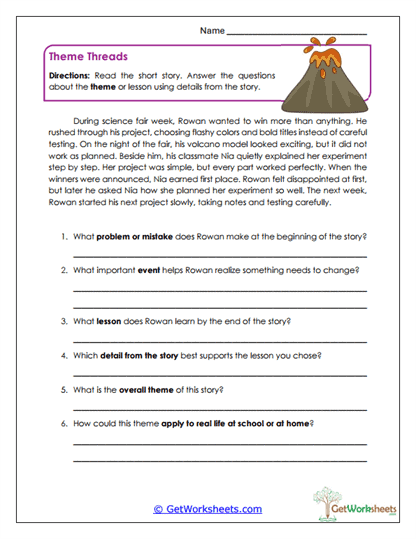
Theme Threads
This worksheet helps students identify the theme or lesson within a short fiction story by analyzing character actions, mistakes, and growth. Learners support their ideas using details from the text while explaining how the story develops its message. The activities strengthen critical thinking and literary interpretation skills. They also encourage students to connect story lessons to broader life experiences.
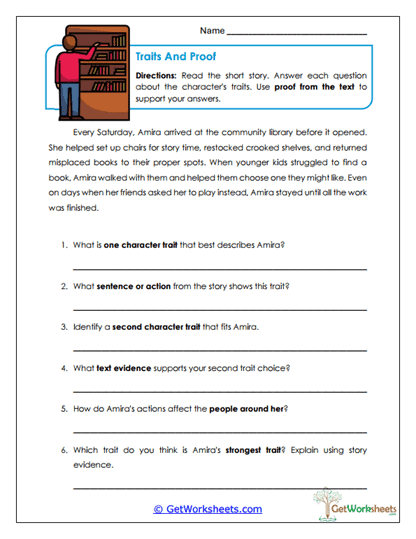
Traits and Proof
Students identify character traits and support their answers with direct evidence from the story. Learners analyze actions, decisions, and interactions to determine accurate descriptions of personality and behavior. The activities strengthen inference skills and evidence-based reasoning. They also encourage deeper understanding of character development in fiction texts.
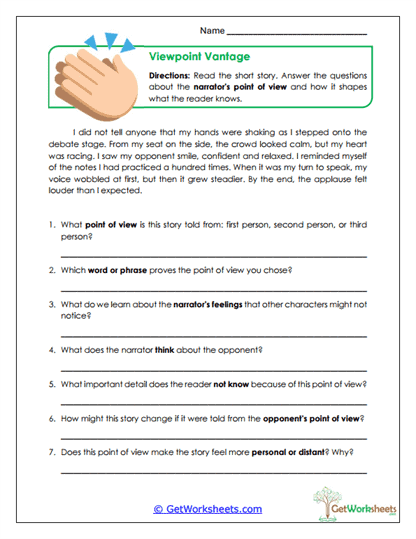
Viewpoint Vantage
This worksheet helps students analyze narrator point of view and understand how perspective shapes storytelling. Learners examine a first-person narrative and answer questions about the narrator's thoughts, feelings, and limitations. The activities strengthen literary analysis and comprehension skills. They also encourage students to think about how stories change depending on who tells them.
Bookmark Us Now!
New, high-quality worksheets are added every week! Do not miss out!