Yes or No Reading Passages Worksheets
About This Worksheet Collection
Yes or no reading passages introduce developing readers to an essential comprehension skill: determining whether information accurately reflects what they have read. These activities encourage students to examine short stories, recognize important details, and evaluate statements using information provided in the text. Rather than relying on guesses or general knowledge, learners practice identifying characters, recalling events, recognizing settings, and distinguishing accurate descriptions from statements that contradict the passage. The straightforward YES or NO response format makes comprehension practice accessible while helping students develop confidence in interpreting written information. As reading skills progress, these exercises also introduce opportunities to understand character emotions, recognize story problems, interpret vocabulary through context, and use textual evidence to support decisions.
This collection of Yes or No Reading Passages Worksheets features engaging narratives that encourage students to practice comprehension through familiar experiences, imaginative characters, and everyday situations. Learners explore stories about a penguin who enjoys baking, children organizing a backyard parade, a turtle overcoming shyness, and a girl observing fireflies after sunset. Other passages introduce trips to the library, outdoor markets, apple orchards, snowy cabins, forests, and ponds, providing varied settings for recognizing important narrative details. Activities require students to read each passage carefully before circling YES or NO, with questions focused on character actions, descriptive information, event sequences, story elements, emotions, and vocabulary meanings. Some exercises emphasize rereading to locate supporting evidence, while others organize questions around specific comprehension skills such as identifying characters, settings, and problems. These resources are useful for guided reading, independent assignments, literacy centers, homeschooling, tutoring, homework, and beginning reading comprehension assessments.
Working through these activities strengthens literal comprehension, factual recall, close reading, vocabulary understanding, and the ability to recognize information directly supported by a passage. Students develop greater awareness of how small details involving colors, quantities, locations, character behavior, and event sequences contribute to accurate understanding. Repeated opportunities to compare statements with the original text encourage careful information retrieval, attention to wording, and the development of early evidence-based reasoning skills. Questions involving character feelings and story problems also introduce foundational inferential thinking, helping learners understand how actions and descriptions can reveal meaning beyond simple facts. By combining manageable reading passages with focused comprehension decisions, these worksheets build the reading confidence, accuracy, and analytical habits needed for more advanced narrative comprehension, informational reading, and independent literacy development.
Detailed Descriptions Of These Worksheets
Backyard Parade
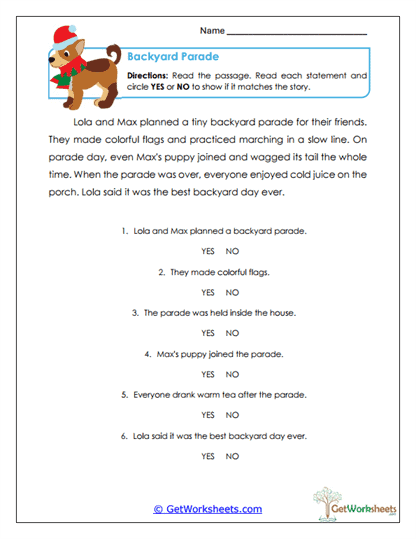
Backyard Parade develops literal reading comprehension through a cheerful story about Lola and Max organizing a neighborhood parade with their friends. The children prepare colorful flags, practice marching, and enjoy a celebration that includes a playful puppy and refreshments. After reading the passage, learners examine six statements and circle YES or NO to determine whether each accurately describes the events. Questions involving the parade's location, preparations, and activities encourage students to recognize important details and understand the order in which events occur. The activity strengthens factual recall, story sequencing, and careful comparison of written statements with narrative information.
Firefly Night
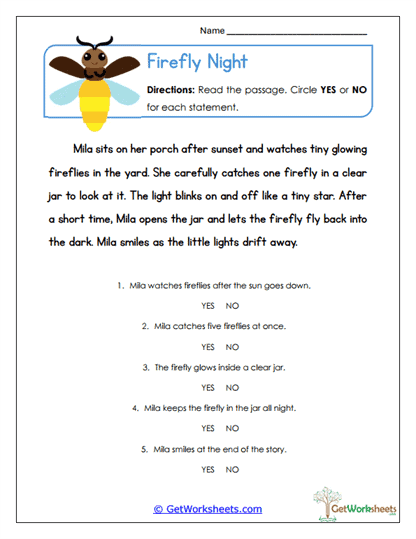
Firefly Night introduces a gentle nighttime story about Mila watching glowing fireflies in her yard after sunset. Readers follow Mila as she carefully catches one firefly in a clear jar, observes its blinking light, and releases it back into the night. Five YES or NO statements ask learners to recall important details involving the number of fireflies, Mila's actions, and the sequence of events. The focused format builds confidence in literal comprehension, chronological understanding, and accurate identification of information directly stated in a short narrative.
Forest Discovery
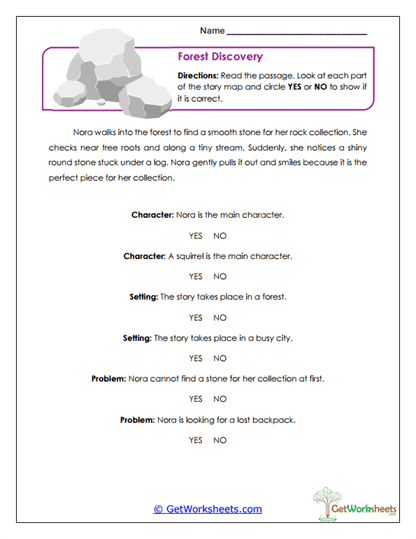
Forest Discovery introduces three fundamental story elements through a narrative about Nora searching for a special stone to add to her rock collection. As Nora explores the forest, checks near tree roots, and searches beside a stream, readers learn about her goal and the setting in which her adventure takes place. Six YES or NO questions are organized into Character, Setting, and Problem categories, helping students identify the essential components of the story. The structured format encourages learners to distinguish Nora from unrelated characters, recognize the forest environment, and understand the challenge driving the narrative. This activity provides a foundation for story mapping, plot comprehension, and identifying important narrative information.
Forest Helper
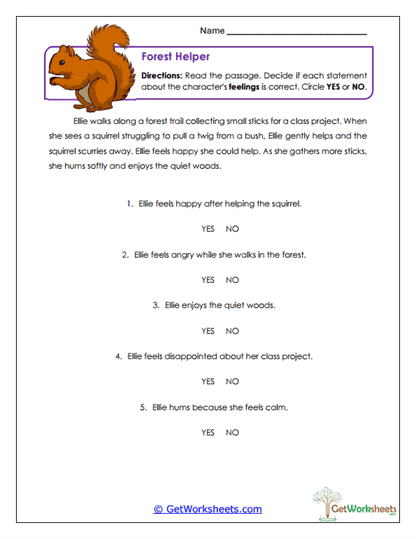
Forest Helper encourages students to recognize character emotions through a short story about Ellie collecting sticks for a classroom project and helping a squirrel in the woods. Her caring actions and peaceful experience provide clues about how she feels before and after helping the animal. Learners evaluate six YES or NO statements involving emotions such as happiness, anger, disappointment, and calmness, using details from the passage to guide their decisions. The activity combines literal comprehension with introductory emotional inference, helping readers connect character behavior with implied feelings while exploring themes of kindness and compassion.
Garden Brave
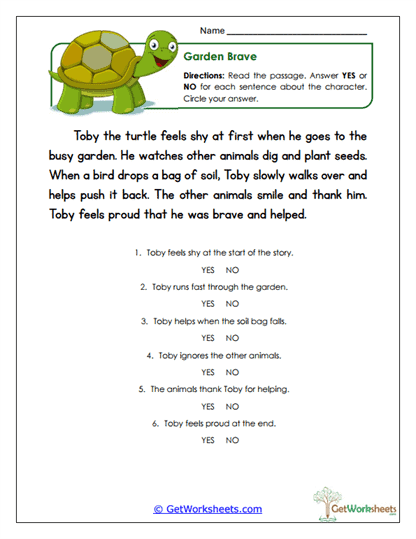
Garden Brave follows Toby, a shy turtle who discovers his courage while visiting a busy garden filled with animals planting seeds. When a bird drops a bag of soil, Toby decides to help, eventually feeling proud of his contribution. Students read the story and evaluate six YES or NO statements about Toby's feelings, actions, and experiences. Questions encourage learners to recognize how his behavior changes throughout the narrative while distinguishing accurate details from misleading descriptions. The worksheet reinforces character comprehension, emotional recognition, story sequencing, and the understanding that actions can reveal a character's growing confidence.
Library Helper
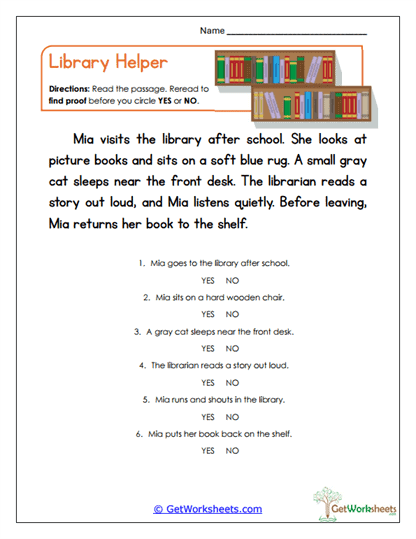
Library Helper introduces evidence-based reading through a familiar story about Mia visiting the library after school. The passage describes her experiences with picture books, a soft blue rug, a sleeping gray cat, and the librarian's activities. Before circling YES or NO for six comprehension statements, students are encouraged to reread the passage and locate information supporting their decisions. This emphasis on finding proof helps learners understand why comprehension answers should reflect what a text actually says rather than what they remember or assume. The activity strengthens literal comprehension, textual evidence identification, descriptive detail recognition, and independent reading accuracy.
Mailbox Mixup
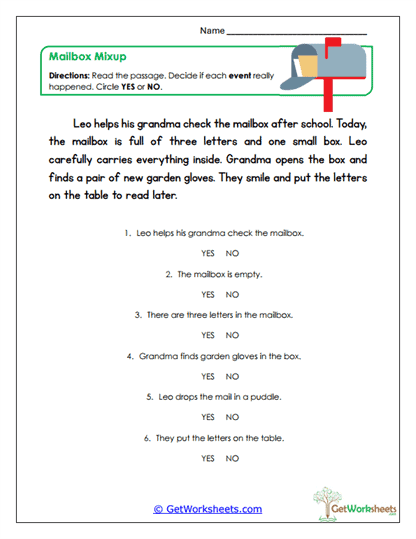
Mailbox Mixup focuses on recognizing actual story events through a short narrative about Leo helping his grandmother collect mail. Readers learn that the mailbox contains three letters and a small box with garden gloves, following the characters as they bring the mail inside and decide what to open. Six YES or NO statements ask students to distinguish these events from invented details, including claims about an empty mailbox or mail falling into a puddle. The exercise reinforces factual recall, chronological understanding, character action recognition, and accurate comparison of statements with information presented in the reading.
Market Morning
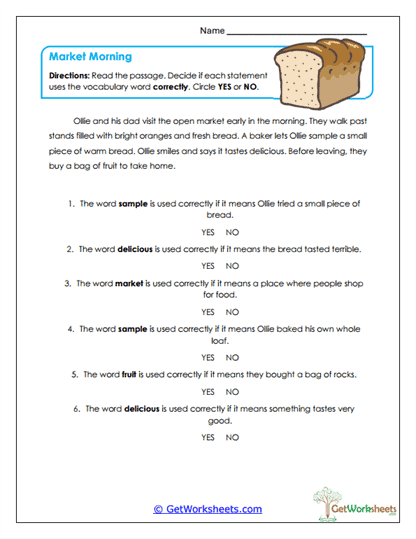
Market Morning combines reading comprehension with vocabulary development through a story about Ollie exploring an outdoor market with his father. The passage introduces fresh bread, colorful fruit, and the opportunity to sample a delicious piece of bread while encountering useful everyday vocabulary. Students examine six YES or NO statements that evaluate the meanings of words such as sample, delicious, market, and fruit. Some statements provide accurate explanations, while others deliberately confuse meanings, requiring learners to consider how each word functions in context. This vocabulary-focused activity strengthens semantic understanding, context clue recognition, and the ability to distinguish correct word definitions from misleading interpretations.
Orchard Surprise
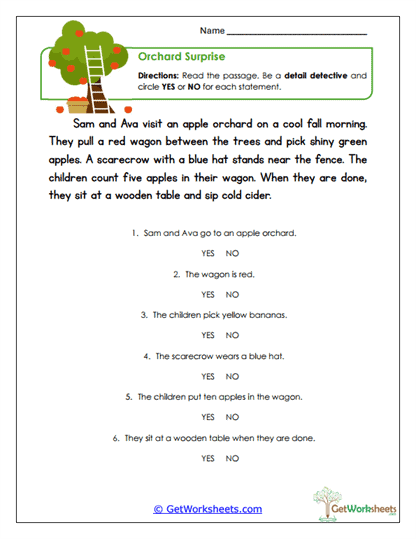
Orchard Surprise builds careful reading habits through an autumn adventure featuring Sam and Ava visiting an apple orchard. The children collect green apples, use a red wagon, encounter a scarecrow wearing a blue hat, and enjoy cider during their visit. Six YES or NO statements challenge learners to recall accurate information involving colors, quantities, objects, and character actions. Incorrect statements introduce details such as different fruit or inaccurate apple counts, encouraging students to verify their answers against the passage. The activity develops literal comprehension, descriptive detail recognition, factual comparison, and attention to the small pieces of information that establish an accurate understanding of a story.
Penguin Bakery
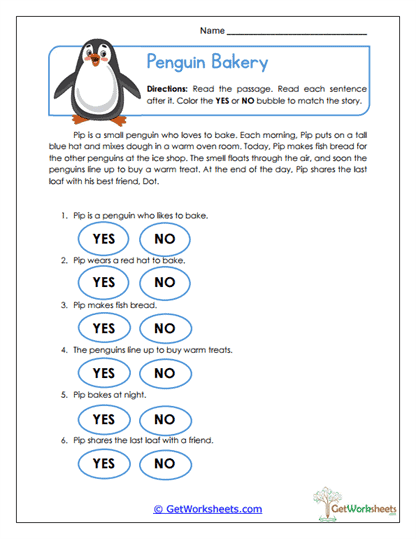
Penguin Bakery provides an imaginative introduction to reading comprehension through a story about Pip, a friendly penguin who loves baking. Readers discover details about his blue baking hat, his fish bread, and his decision to share a treat with his friend Dot. After reading, students color the YES or NO bubble beside six statements, identifying which descriptions accurately reflect the story. The questions focus on Pip's routine, character actions, and specific details that may be changed in misleading statements. Combining a playful animal narrative with straightforward comprehension questions, the activity supports factual recall, close reading, statement verification, and confidence in evaluating short passages.
Pond Picnic
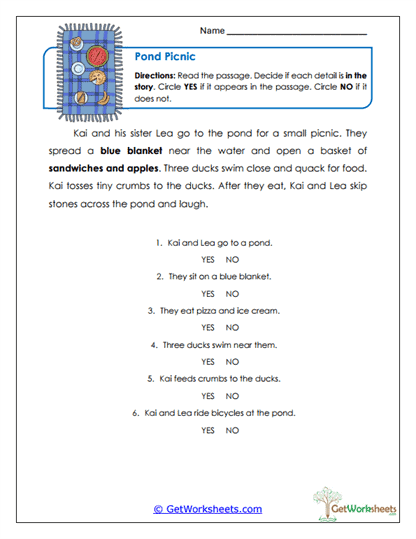
Pond Picnic invites learners to examine story details through a narrative about Kai and Lea enjoying a relaxing afternoon beside a pond. The children spread a blue blanket, eat sandwiches and apples, observe nearby ducks, and spend time skipping stones. Students evaluate six YES or NO statements about the picnic, distinguishing activities and objects actually mentioned from incorrect descriptions. By concentrating on characters, setting, and events, the worksheet reinforces literal comprehension, factual verification, and the ability to recognize accurate narrative information.
Snowy Cabin
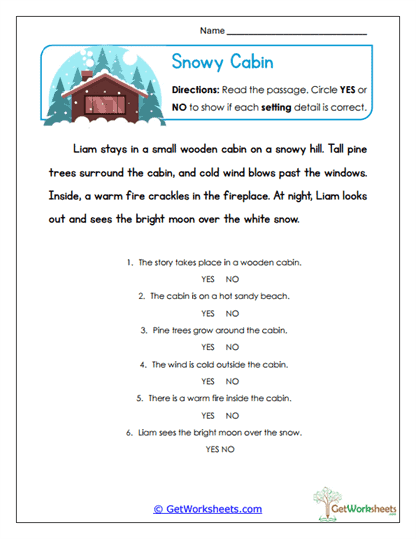
Snowy Cabin develops students' understanding of story setting through a descriptive passage about Liam spending time in a wooden cabin surrounded by snow and tall pine trees. Details involving the cold wind, crackling fireplace, and bright moon help readers visualize the winter environment and recognize how sensory descriptions establish a scene. Six YES or NO statements ask learners to determine whether different descriptions accurately reflect the setting presented in the story. The questions encourage careful attention to location, weather, objects, and environmental details while distinguishing the snowy surroundings from unrelated settings. This activity strengthens setting identification, descriptive vocabulary comprehension, visualization, and accurate interpretation of narrative information.
Bookmark Us Now!
New, high-quality worksheets are added every week! Do not miss out!