Reading Schedules Worksheets
About This Worksheet Collection
This engaging collection of schedule-reading worksheets helps students build confidence with one of the most practical forms of informational text they encounter in everyday life. From school timetables and transportation routes to travel itineraries and event planning, the activities encourage learners to think carefully about time, organization, sequencing, and decision-making in realistic situations. Each worksheet is designed to make schedule reading feel approachable and meaningful while supporting independent thinking and problem-solving skills. Teachers, parents, and homeschool educators will appreciate the variety of activities that work well for literacy lessons, math integration, enrichment, intervention, and executive functioning practice.
As students complete these worksheets, they strengthen a wide range of academic and life-readiness skills that extend beyond traditional reading comprehension. Learners practice sequencing, elapsed time reasoning, analytical thinking, schedule interpretation, organizational planning, comparison skills, and evidence-based decision-making while reinforcing close reading and attention to detail. Many activities also support executive functioning by encouraging students to balance priorities, analyze conflicts, and evaluate multiple options logically. Together, the worksheets help children become more organized, thoughtful, and confident readers of real-world informational text.
Detailed Descriptions Of These Worksheets
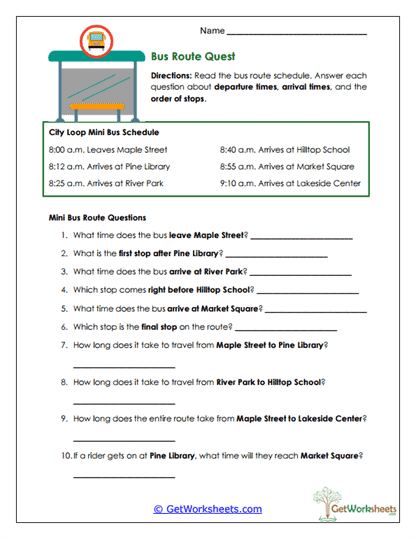
Bus Route Quest
Students read a transportation schedule and answer questions about bus stops, travel times, departures, and arrivals. The worksheet encourages learners to follow routes carefully while calculating elapsed time between locations. By tracking multiple stops and schedule changes, students strengthen sequencing and detail-based comprehension skills. The realistic travel format helps children connect reading and math skills to everyday life situations. It is a practical and engaging way to build confidence with informational text.
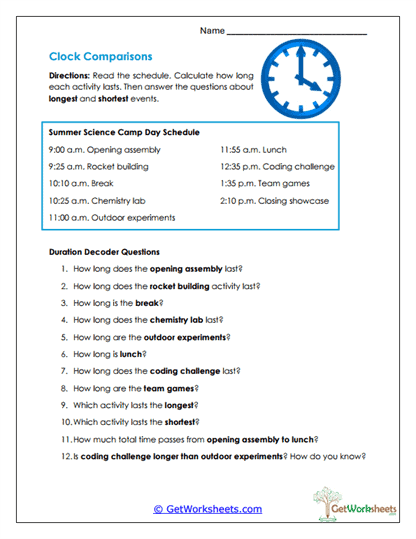
Clock Comparisons
This worksheet asks students to examine a summer science camp schedule and compare the duration of different activities. Learners calculate elapsed time, identify the longest and shortest events, and explain their reasoning using schedule details. The activity strengthens analytical thinking while reinforcing practical time-management concepts. Students also gain valuable practice organizing information across a full day of events.
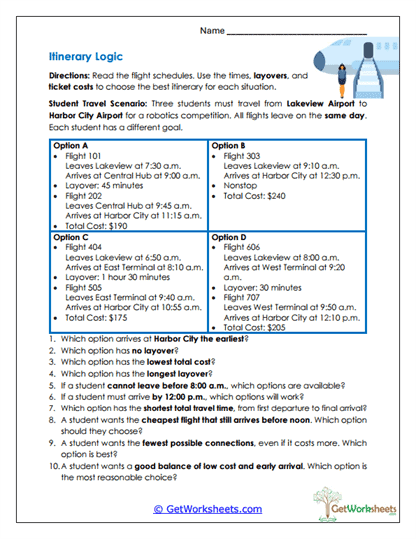
Itinerary Logic
Students compare complicated flight itineraries involving layovers, travel costs, and arrival times to determine which options best fit different travel goals. The activity requires careful reading as learners analyze multiple pieces of information at once. By evaluating convenience, timing, and efficiency, students strengthen reasoning and schedule interpretation skills. The worksheet also supports elapsed time calculation and evidence-based decision-making in a realistic setting. It is especially effective for helping older students build higher-level comprehension and organizational abilities.
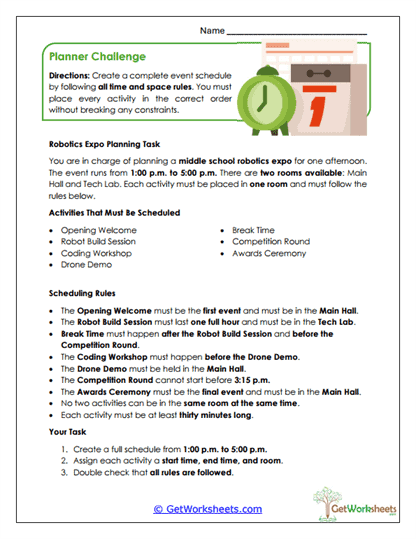
Planner Challenge
Learners become event planners as they design a robotics expo schedule while following detailed timing restrictions and organizational rules. Students must think strategically about sequencing, room availability, overlapping activities, and scheduling conflicts. The task strengthens logical reasoning, executive functioning, and procedural thinking skills in a highly interactive format. Because students create the schedule themselves, the activity encourages persistence and flexible problem-solving.
Route Rivals
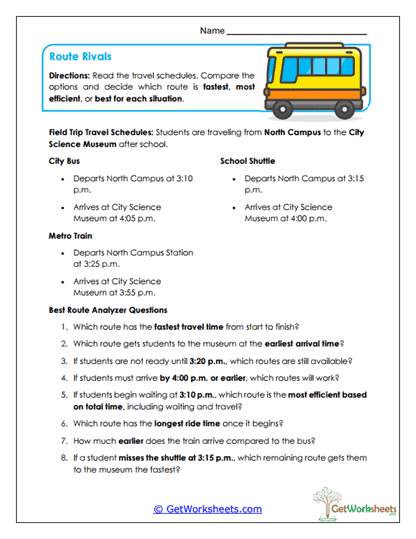
This travel-themed worksheet challenges students to compare transportation routes involving buses, trains, and shuttles. Learners analyze arrival times, travel durations, and waiting periods before deciding which option works best for different situations. The activity promotes strategic thinking while reinforcing schedule reading and elapsed time reasoning. Students also practice supporting answers with evidence from the schedules provided.
Schedule Shuffle
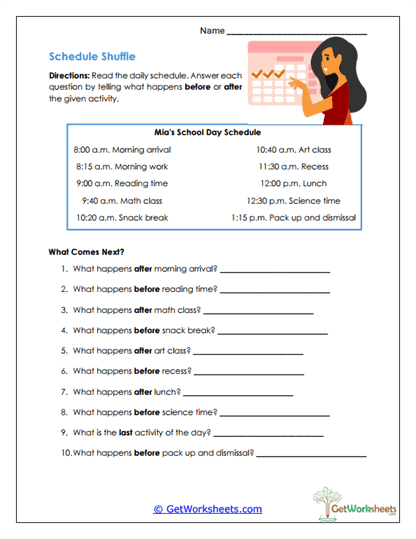
Students study a realistic school-day schedule and answer comprehension questions about daily routines and activity order. The worksheet helps learners understand what happens before, after, and between events while strengthening chronological thinking. Familiar classroom activities make the task approachable for younger readers developing foundational schedule-reading skills. The activity also supports independence by encouraging students to interpret timetables carefully on their own.
Schedule Showdown
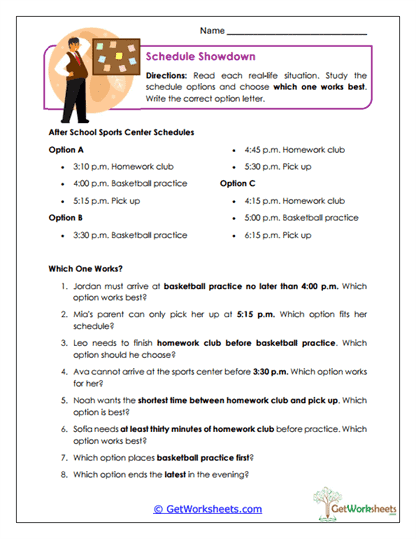
This worksheet asks students to compare several after-school schedules and decide which option best fits different student needs and responsibilities. Learners analyze timing conflicts, activity lengths, and transportation concerns before explaining their choices. The activity strengthens decision-making and encourages thoughtful reasoning using evidence from the schedules. It also introduces students to the idea that different situations may require different scheduling priorities.
Schedule Sleuths
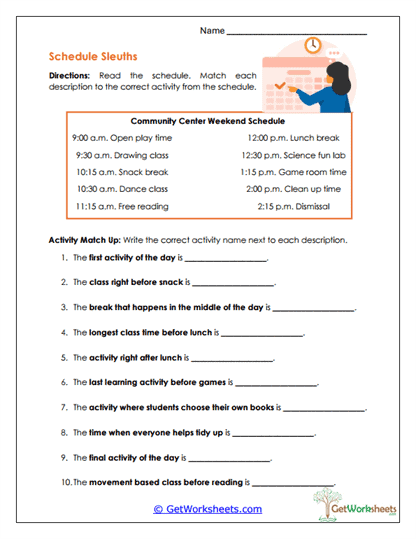
Students become "schedule detectives" as they examine a community center timetable and answer questions about timing, sequence, and activity duration. The worksheet goes beyond simple clock reading by encouraging learners to compare events and identify relationships across the schedule. Its detective-style format keeps students engaged while building close reading and organizational thinking skills. The realistic event-planning theme also helps children understand how schedules function in real life.
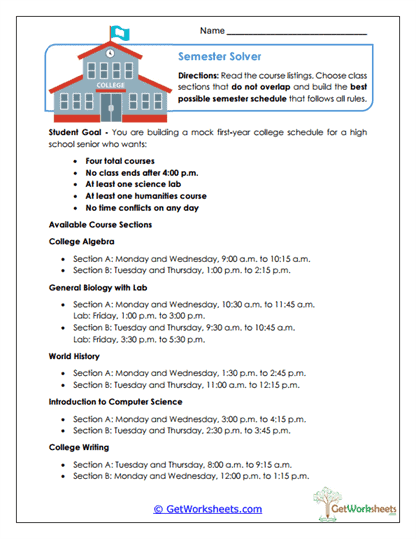
Semester Solver
This advanced scheduling activity challenges students to build a complete college-style semester timetable while avoiding conflicts and meeting academic requirements. Learners compare course options, analyze overlapping times, and organize classes strategically. The worksheet strengthens planning, logical reasoning, and executive functioning skills through a structured academic challenge. Students also gain experience balancing priorities and making thoughtful organizational decisions.
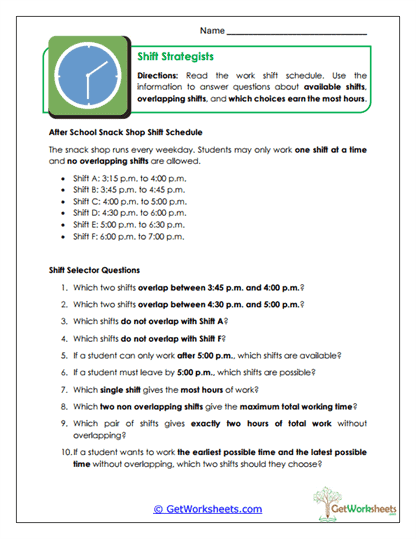
Shift Strategists
Students analyze overlapping work shifts and determine which schedules fit different rules, restrictions, and time limits. The worksheet requires careful comparison of total hours, schedule gaps, and timing conflicts. As learners work through the scenarios, they strengthen elapsed time reasoning and strategic problem-solving skills. The workplace-style situations also introduce practical concepts related to planning and organization in adult life.
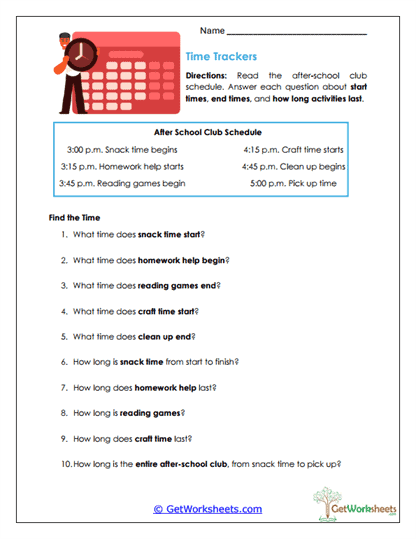
Time Trackers
This worksheet focuses on helping students understand activity durations within an after-school club schedule. Learners calculate start times, ending times, and elapsed time while interpreting the flow of events throughout the day. The activity blends literacy and math skills naturally in a meaningful context students can relate to. It also encourages careful analysis and precision when working with timelines and schedules.
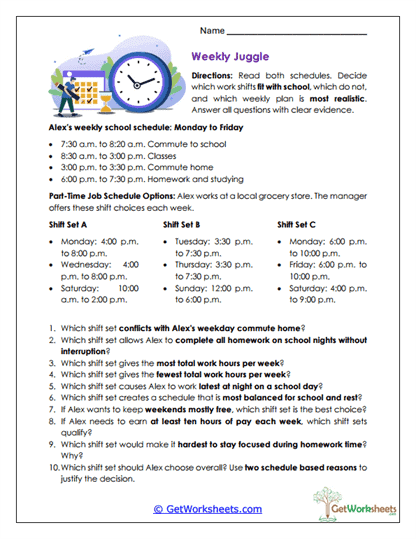
Weekly Juggle
Students compare school responsibilities with part-time job schedules to determine which weekly routine creates the best balance. The worksheet asks learners to think carefully about homework, rest, commuting time, and scheduling conflicts before making decisions. By analyzing priorities and trade-offs, students strengthen organizational thinking and executive functioning skills. The relatable scenarios help learners see how schedule reading connects directly to real-world planning and responsibility.
Bookmark Us Now!
New, high-quality worksheets are added every week! Do not miss out!