Reading Food Labels Worksheets
About This Worksheet Collection
This collection of reading food labels worksheets helps students develop practical literacy skills by exploring the information found on nutrition labels, ingredient lists, and food packaging. Through engaging real-world activities, learners analyze nutritional data, compare products, evaluate marketing claims, and apply information to everyday situations. These worksheets are well-suited for classrooms, health education lessons, intervention programs, and homeschool settings, offering meaningful opportunities to connect reading comprehension with informed decision-making.
As students work through the collection, they strengthen informational reading, critical thinking, data interpretation, comparison, problem-solving, and evidence-based reasoning skills. The activities encourage learners to examine facts carefully, interpret numerical information accurately, and draw conclusions supported by evidence. By combining literacy, math, health, and consumer awareness, these worksheets help students become more confident readers while building valuable life skills that extend far beyond the classroom.
Detailed Descriptions Of These Worksheets
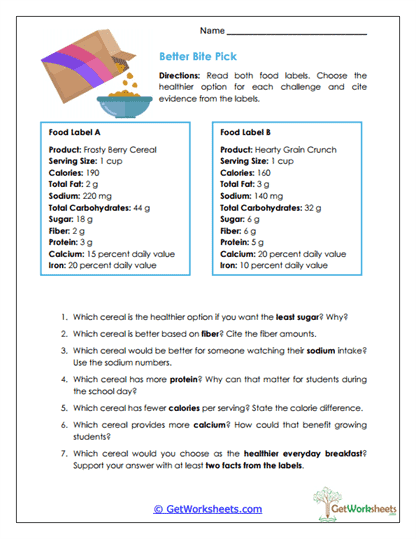
Better Bite Pick
Students compare nutrition information from multiple products and determine which options best fit specific health goals. The activity encourages thoughtful analysis of nutrients such as sugar, fiber, sodium, and calories rather than relying on product packaging or assumptions. Learners support their conclusions with evidence drawn directly from the labels. This process strengthens comparison skills, decision-making abilities, and confidence when evaluating food choices.
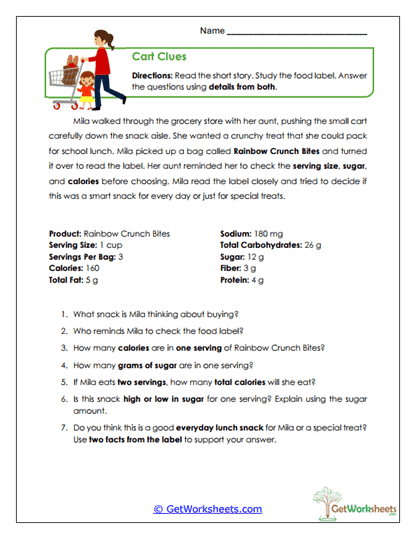
Cart Clues
This worksheet places students in a realistic scenario where they must use information from both a narrative passage and a nutrition label. Learners gather details from multiple sources to answer questions and make informed judgments. The activity reinforces the ability to locate relevant information, interpret data, and support conclusions with evidence. It provides a practical way to connect reading comprehension to everyday decision-making.
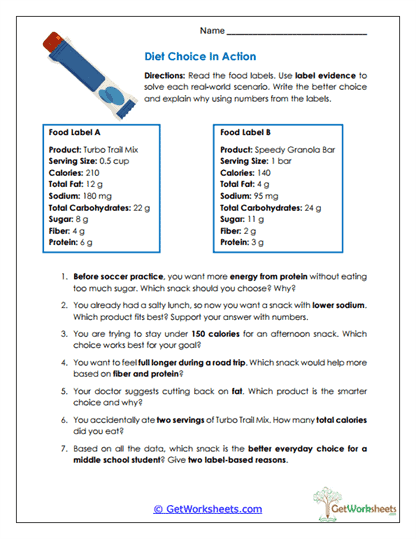
Diet Choice in Action
Students examine nutrition labels and apply the information to situations that require careful food-related decisions. Rather than simply identifying facts, learners evaluate trade-offs and determine which products best meet specific needs. The worksheet promotes analytical thinking by encouraging students to justify their choices using nutritional evidence. It offers meaningful practice with real-world problem solving and informational reading.
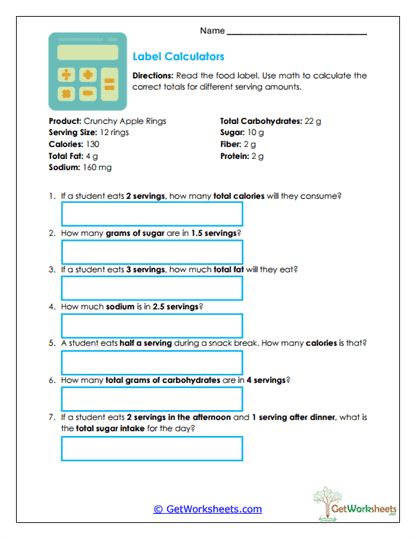
Label Calculators
Learners use nutrition label data to solve mathematical problems involving serving sizes and nutrient totals. By applying arithmetic skills to realistic scenarios, students see how math and literacy work together in everyday life. The activity encourages careful reading of food labels while strengthening problem-solving abilities. Students build confidence interpreting nutritional information and performing accurate calculations.
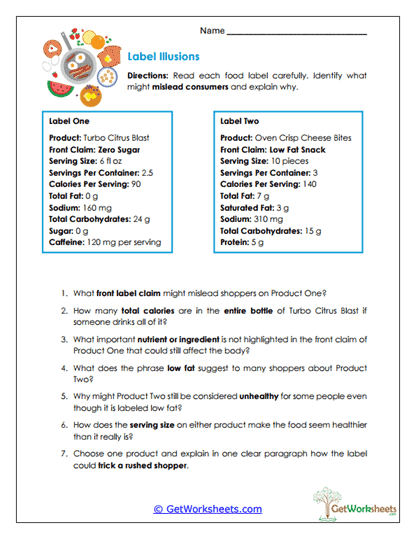
Label Illusions
This activity challenges students to investigate whether marketing messages align with the actual nutritional facts found on food packaging. Learners compare promotional claims with evidence from nutrition labels to determine if products are being represented fairly. The worksheet encourages skepticism, careful analysis, and informed consumer habits. It also strengthens media literacy and evidence-based reasoning skills.
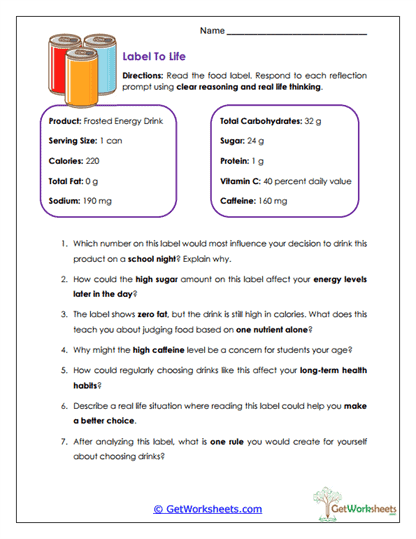
Label to Life
Students connect nutritional information to everyday habits, routines, and personal choices through thoughtful reflection. The activity encourages learners to think about how food labels relate to health, energy levels, and long-term wellness. By supporting their responses with evidence, students strengthen both comprehension and reasoning skills. The worksheet promotes meaningful connections between academic learning and daily life.
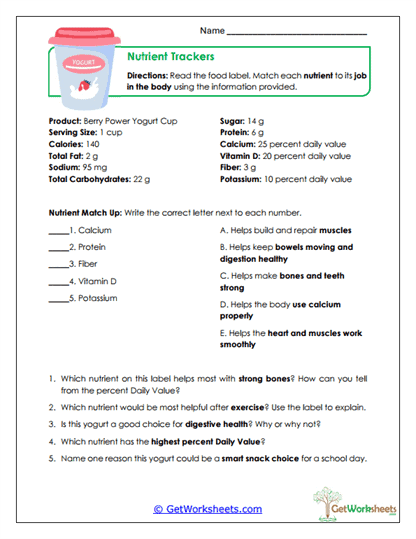
Nutrient Trackers
This worksheet helps students understand the purpose of common nutrients and how they contribute to healthy body functions. Learners analyze food labels while building vocabulary related to nutrition and wellness. The activity encourages students to connect information from labels to broader health concepts. Through reading and analysis, they develop stronger content knowledge and literacy skills.
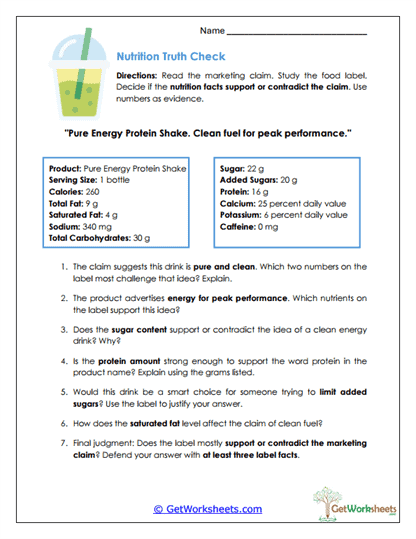
Nutrition Truth Check
Students investigate advertising claims and determine whether they are supported by the nutritional facts provided on food labels. The task encourages objective analysis and requires learners to use evidence when evaluating promotional language. By examining facts carefully, students strengthen critical reading and consumer awareness. The activity also helps build habits of questioning information before accepting it as accurate.
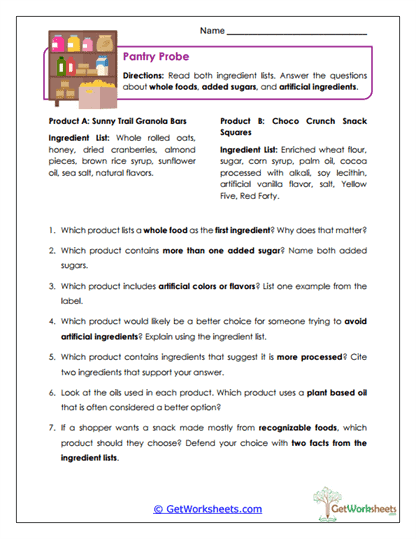
Pantry Probe
Learners examine ingredient lists to compare food products and identify patterns related to processing and food quality. The worksheet encourages careful reading as students look for added sugars, artificial ingredients, and other notable components. Through comparison and analysis, they develop a deeper understanding of what ingredient lists can reveal. The activity supports critical thinking while promoting informed food choices.
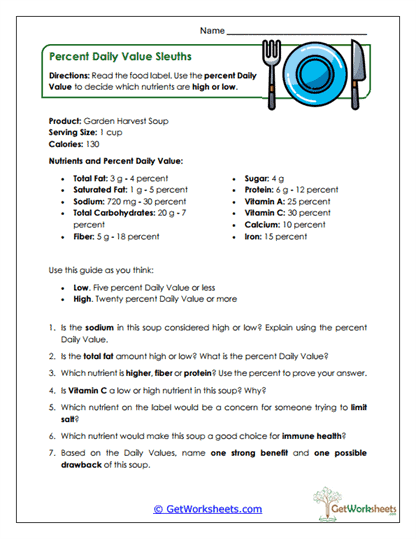
Percent Daily Value Sleuths
Students focus on Percent Daily Value information to determine whether nutrients are present in high or low amounts. The worksheet helps learners move beyond reading numbers and begin interpreting their significance. By evaluating nutrient levels and drawing evidence-based conclusions, students strengthen analytical thinking skills. The activity provides valuable experience with practical health literacy concepts.
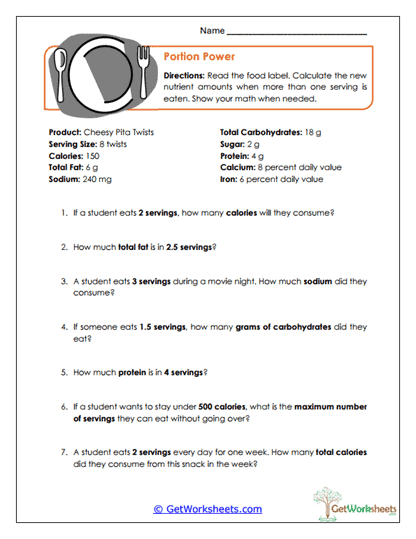
Portion Power
This activity teaches students how nutrition facts change when serving sizes increase or decrease. Learners use multiplication, division, and reasoning skills to calculate nutrient totals for different amounts of food. The worksheet demonstrates that understanding nutrition labels involves both reading comprehension and quantitative thinking. It offers a useful blend of math, literacy, and real-world application.
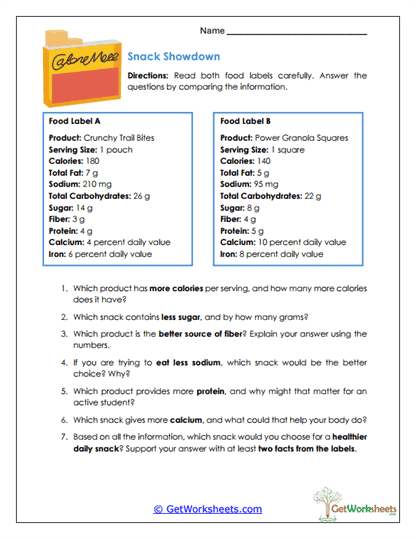
Snack Showdown
Students compare two nutrition labels and use the information to answer questions about nutrients, serving sizes, and overall nutritional value. The activity encourages close examination of numerical data and evidence-based decision-making. Learners practice identifying similarities and differences while supporting conclusions with facts from the labels. Through this process, they strengthen comprehension, analytical thinking, and consumer awareness.
Bookmark Us Now!
New, high-quality worksheets are added every week! Do not miss out!