Reading Nonfiction Texts Worksheets
About This Worksheet Collection
This collection of reading nonfiction texts worksheets helps students develop the essential skills needed to understand, analyze, and evaluate informational reading. Through a variety of engaging activities, learners explore main ideas, supporting details, text structures, author's purpose, credibility, bias, argumentation, and vocabulary development. The worksheets gradually move from foundational comprehension strategies to more advanced analytical tasks, making them valuable resources for classrooms, intervention programs, enrichment activities, and homeschool instruction.
As students work through the collection, they strengthen critical thinking, evidence-based reasoning, summarization, comparison, evaluation, and informational literacy skills. The activities encourage learners to engage actively with nonfiction texts by identifying important information, analyzing how authors communicate ideas, and assessing the reliability and effectiveness of written content. By developing these skills, students become more confident readers who can successfully navigate increasingly complex informational texts across all academic subjects.
Detailed Descriptions Of These Worksheets
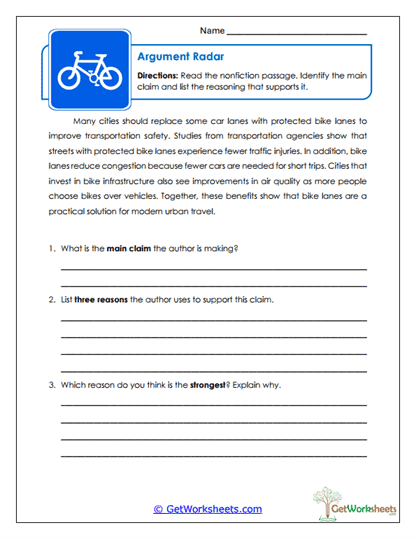
Argument Radar
Students examine a nonfiction argument to identify the central claim and the reasons used to support it. The activity encourages learners to distinguish major ideas from supporting evidence while evaluating the strength of an author's reasoning. Through close reading and analysis, students gain a better understanding of how persuasive texts are constructed. This worksheet strengthens critical thinking and evidence-based interpretation skills.
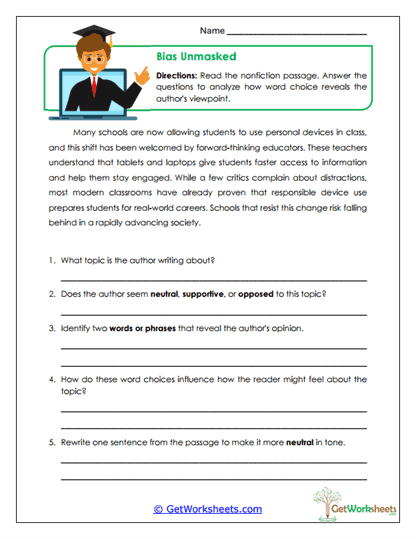
Bias Unmasked
This activity helps students recognize how word choice can reveal an author's perspective or bias. Learners analyze tone, language, and presentation to determine whether information is being communicated objectively or with a particular viewpoint. The worksheet encourages thoughtful evaluation of informational texts and promotes independent thinking. Students develop stronger media literacy skills while learning to support their observations with evidence.
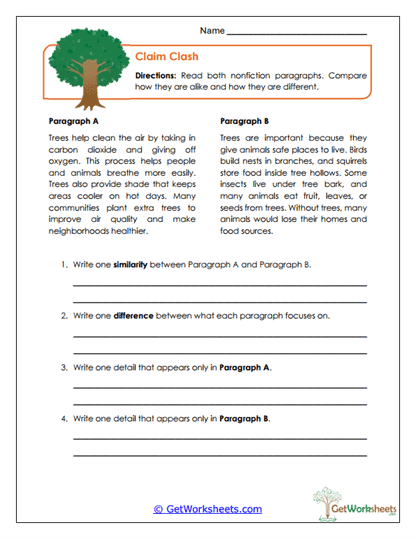
Claim Clash
Students compare two nonfiction passages that explore a related topic and identify similarities and differences between them. The task encourages learners to analyze how different authors develop ideas and present information. By supporting comparisons with evidence from both texts, students strengthen cross-text comprehension and analytical reasoning. The activity promotes deeper engagement with informational reading.
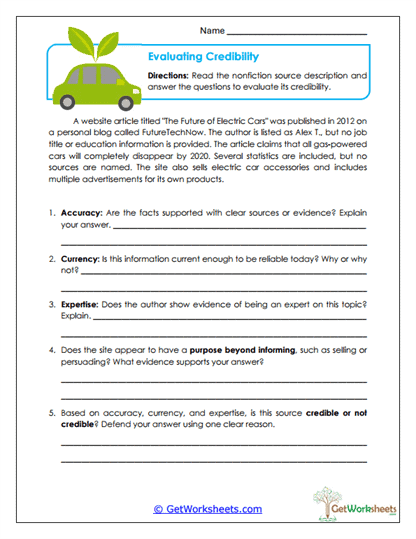
Evaluating Credibility
Learners investigate source descriptions and determine whether the information provided appears trustworthy and reliable. The worksheet introduces important concepts such as expertise, accuracy, purpose, and timeliness. Students practice evaluating evidence before accepting claims as true. This real-world skill helps build strong habits for research and responsible information consumption.
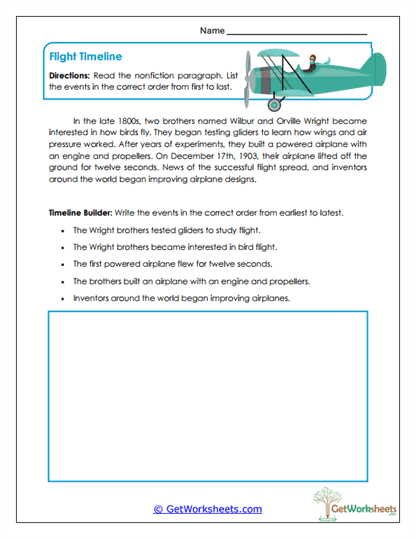
Flight Timeline
Students read a nonfiction passage and organize important events in the order they occurred. The activity reinforces understanding of chronological structure while encouraging attention to sequencing clues within the text. Learners develop stronger organizational and comprehension skills as they track developments over time. This worksheet provides valuable practice with nonfiction texts that explain processes, discoveries, or historical events.
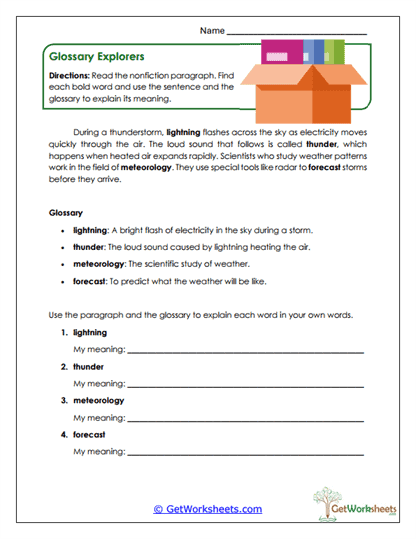
Glossary Explorers
This worksheet teaches students how to use context clues and glossary entries to determine the meaning of unfamiliar words. Learners connect definitions to examples found within a passage and practice applying new vocabulary in meaningful ways. The activity supports independent reading by helping students develop strategies for understanding challenging terms. It also strengthens comprehension across a variety of nonfiction topics.
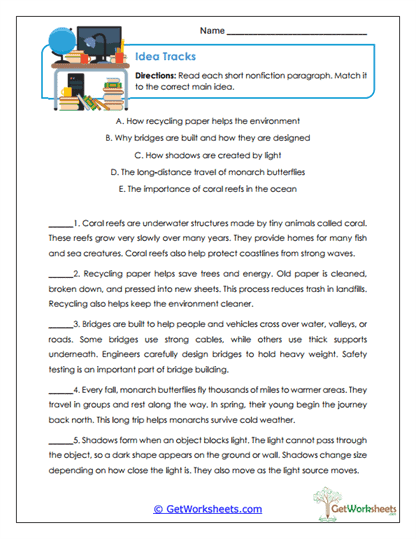
Idea Tracks
Students read short informational passages and determine the main idea that best matches each selection. The activity helps learners focus on the overall message rather than becoming distracted by individual facts. Through repeated practice, students develop stronger main idea identification and informational reading skills. This foundational comprehension strategy supports success across all content areas.
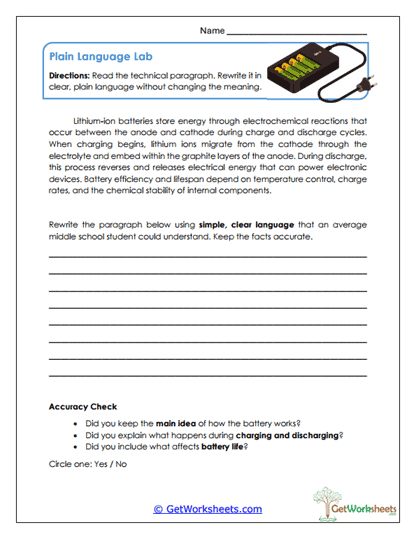
Plain Language Lab
Students take a complex nonfiction passage and rewrite it using simpler, more accessible language. The activity requires learners to identify the most important information while maintaining the original meaning. Through paraphrasing and simplification, students strengthen both reading and writing skills. The worksheet promotes deeper understanding by encouraging students to explain ideas in their own words.
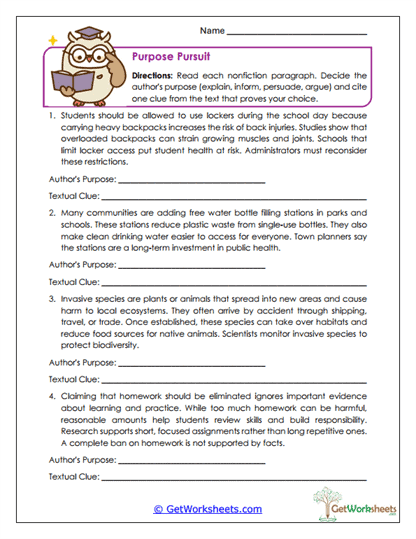
Purpose Pursuit
Learners examine nonfiction passages to determine whether the author's goal is to inform, persuade, or explain. The worksheet encourages close attention to word choice, evidence, and presentation style. Students support their conclusions by identifying clues within the text. This activity strengthens comprehension and helps readers better understand author intent.
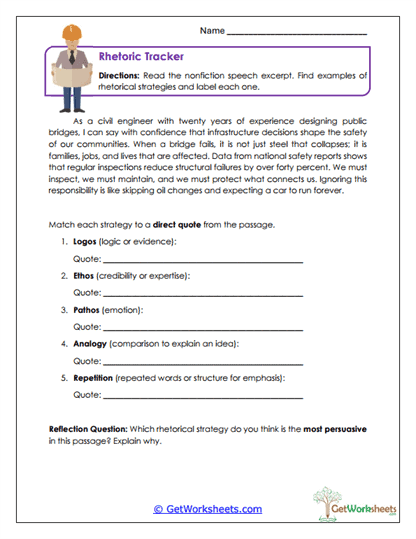
Rhetoric Tracker
Students explore persuasive techniques commonly found in speeches, articles, and opinion writing. The activity introduces rhetorical strategies such as emotional appeals, logical reasoning, credibility, repetition, and analogy. Learners analyze how these techniques influence audiences and strengthen arguments. Through close reading, students develop more advanced comprehension and communication skills.
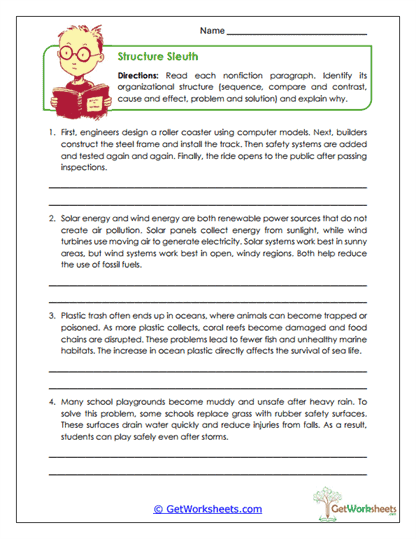
Structure Sleuth
This worksheet helps students identify common nonfiction text structures such as sequence, cause and effect, compare and contrast, and problem and solution. Learners examine how authors organize information and how that organization supports understanding. Recognizing these patterns improves comprehension and helps students navigate informational texts more effectively. The activity encourages analytical thinking and deeper engagement with nonfiction reading.
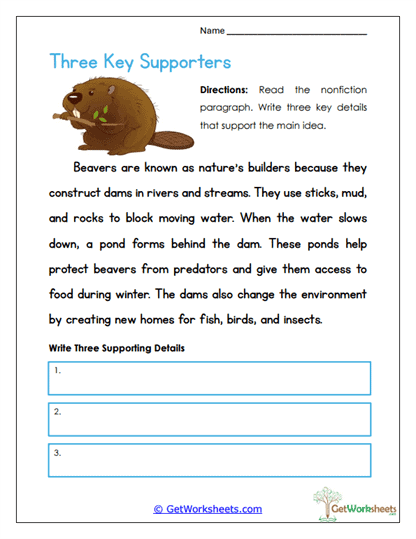
Three Key Supporters
Students identify important supporting details that reinforce the main idea of a nonfiction passage. The activity helps learners understand how authors use facts and evidence to develop central concepts. By connecting details to broader ideas, students strengthen comprehension and summarization skills. This worksheet provides valuable practice with one of the most important strategies for understanding informational texts.
Bookmark Us Now!
New, high-quality worksheets are added every week! Do not miss out!