Thesaurus Skills Worksheets
About This Worksheet Collection
This engaging collection of thesaurus and vocabulary worksheets helps students build stronger language skills through meaningful word study and thoughtful reading practice. The activities move beyond simple memorization by encouraging learners to compare synonyms, analyze tone, explore connotation, revise weak writing, and understand how word choice shapes meaning. With topics ranging from emotional vocabulary and descriptive writing to nuanced synonym analysis and tone shifts, the collection provides a balanced mix of foundational and advanced language activities for elementary learners. Teachers, parents, and homeschool educators will appreciate the variety of engaging exercises that support literacy growth while helping students become more confident communicators.
As students complete these worksheets, they strengthen vocabulary development, reading comprehension, contextual reasoning, writing fluency, analytical thinking, and editing skills in practical and highly interactive ways. Learners practice selecting precise words, understanding subtle meaning differences, identifying emotional tone, and improving sentence clarity while also building inferencing and critical thinking abilities. Many activities encourage students to explain their choices, helping them develop stronger evidence-based reasoning and deeper awareness of how language works. Together, these worksheets help children become more flexible readers, more intentional writers, and more thoughtful users of language in both academic and everyday communication.
Detailed Descriptions Of These Worksheets
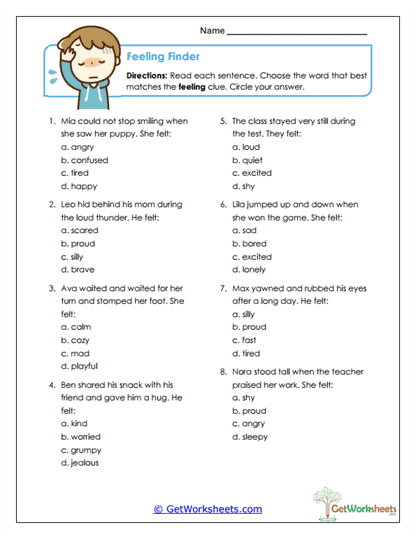
Feeling Finder
Students read short scenarios and determine which emotion word best matches how a character is feeling. The activity encourages learners to use context clues and inferencing skills to distinguish between emotions such as worried, excited, lonely, or proud. By connecting vocabulary to behavior and situations, students strengthen both reading comprehension and emotional awareness. The relatable examples also help children develop stronger communication skills for expressing feelings accurately.
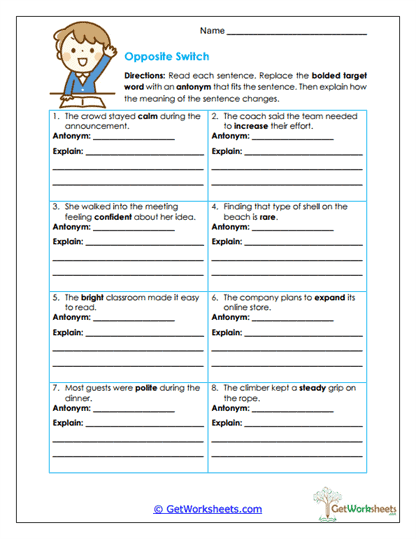
Opposite Switch
This worksheet challenges students to replace highlighted words with meaningful antonyms while keeping each sentence logical and complete. Learners must think carefully about context and sentence structure instead of simply choosing any opposite word they recognize. The explanation portion encourages students to analyze how changing vocabulary alters the overall meaning and tone. It is an excellent activity for strengthening vocabulary flexibility and analytical language skills.
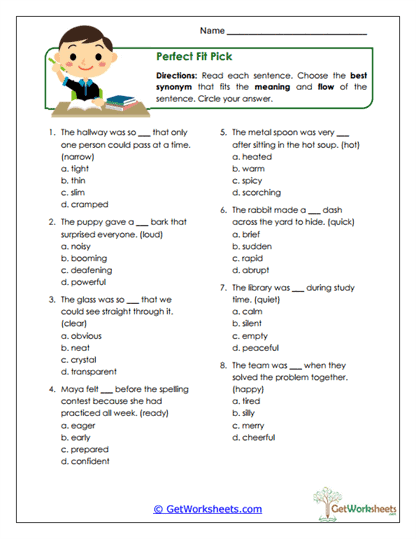
Perfect Fit Pick
Students practice choosing the synonym that best fits the tone and meaning of a sentence rather than relying on simple dictionary definitions alone. The worksheet encourages learners to compare similar words and think carefully about how language sounds within different contexts. Through close reading and thoughtful word selection, students strengthen comprehension and vocabulary precision. The activity also supports stronger writing habits by teaching children to choose words intentionally.
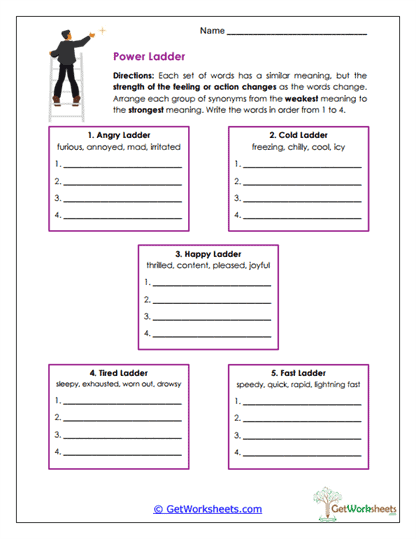
Power Ladder
Learners arrange groups of related words from weakest intensity to strongest intensity, creating organized "word ladders" for emotions and descriptive language. The activity helps students understand that synonyms can vary greatly in strength and emotional impact. As they compare vocabulary carefully, students strengthen analytical thinking and descriptive language skills. The visual format also makes shades of meaning easier to recognize and remember. It is especially effective for helping students develop more vivid and precise vocabulary usage.
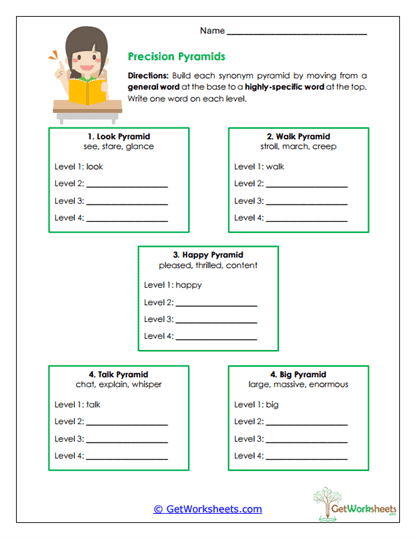
Precision Pyramids
This worksheet helps students build stronger vocabulary by organizing synonyms from general language to more vivid and specific word choices. Learners compare words carefully to determine how meaning, tone, and imagery gradually change across the pyramid structure. The activity strengthens descriptive writing and encourages students to think more deeply about vocabulary precision. Its visual organization makes abstract language relationships more approachable for developing readers and writers.
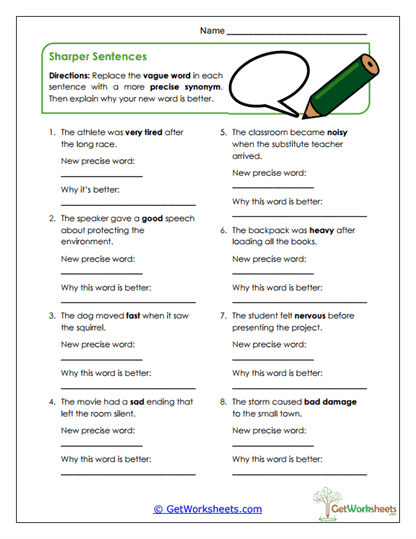
Sharper Sentences
Students improve weak or repetitive sentences by replacing vague words with stronger, more accurate synonyms. The worksheet goes beyond simple word replacement by asking learners to explain why their new choices improve the sentence meaning and clarity. This process strengthens editing, critical thinking, and communication skills all at once. It also helps students become more thoughtful about how vocabulary affects tone and readability in writing.
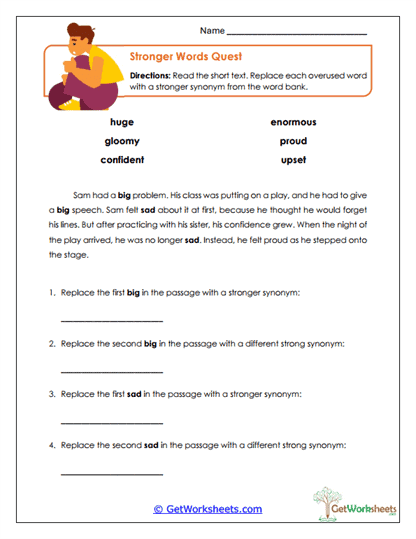
Stronger Words Quest
Learners revise a short passage by replacing overused vocabulary with more vivid and descriptive synonyms from a word bank. The activity encourages students to think carefully about tone, precision, and sentence flow while improving the overall quality of the writing. By focusing on stronger word choices, students strengthen thesaurus skills and descriptive writing abilities. The engaging revision format also helps children build confidence with editing and vocabulary development.
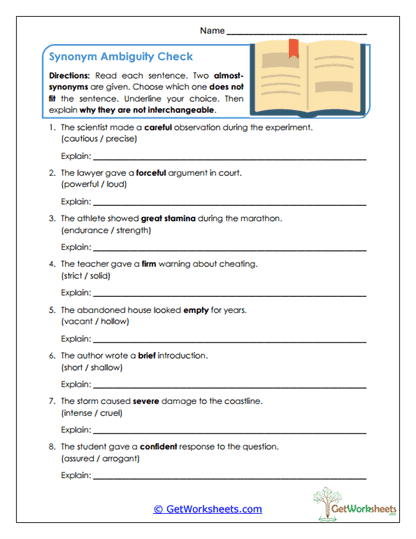
Synonym Ambiguity Check
Students examine pairs of near-synonyms and decide which word fits best within a specific sentence context. The worksheet encourages learners to analyze subtle meaning differences, emotional tone, and precision rather than assuming all synonyms are interchangeable. Through evidence-based explanations, students strengthen comprehension and higher-level vocabulary reasoning. This activity is especially valuable for preparing upper elementary learners for more advanced literary analysis and writing tasks.
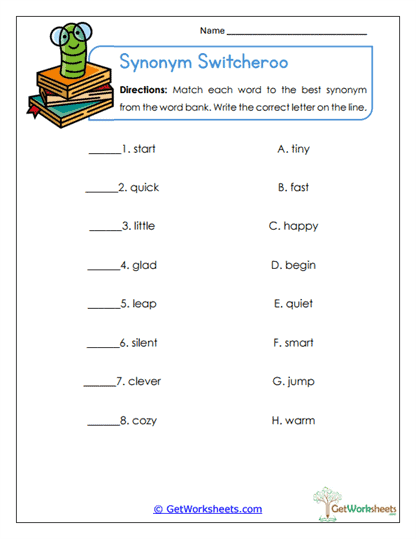
Synonym Switcheroo
This beginner-friendly worksheet introduces younger learners to synonyms by asking them to match simple everyday words with others that share similar meanings. Students strengthen vocabulary recognition while building foundational reading comprehension and language fluency skills. The approachable format helps children gain confidence using varied vocabulary in both reading and writing. It is an excellent early step toward developing thesaurus-style thinking.
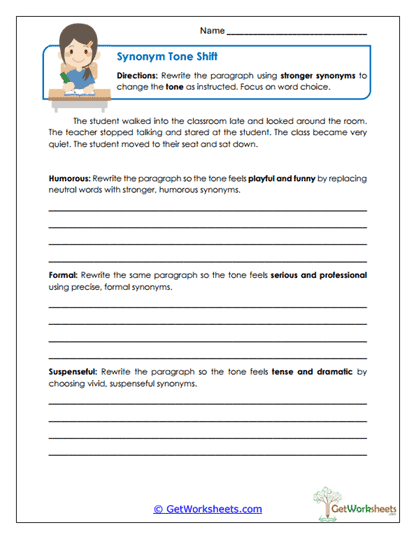
Synonym Tone Shift
Students rewrite the same classroom scene multiple times so it creates different moods such as humorous, suspenseful, or formal. By changing only the vocabulary choices, learners discover how word selection dramatically affects tone and reader reaction. The activity strengthens revision skills, vocabulary precision, and stylistic awareness in a highly creative format. It also encourages flexible thinking as students experiment with several ways to reshape the same passage.
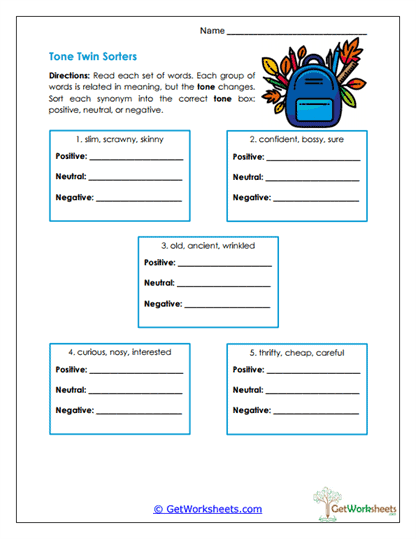
Tone Twin Sorters
This worksheet introduces students to positive, neutral, and negative connotations by having them sort related words according to emotional tone. Learners compare vocabulary that may share similar definitions but create very different impressions for the reader. The activity strengthens tone analysis and encourages deeper thinking about how language influences mood and meaning. It also provides strong preparation for literary analysis and more sophisticated descriptive writing.
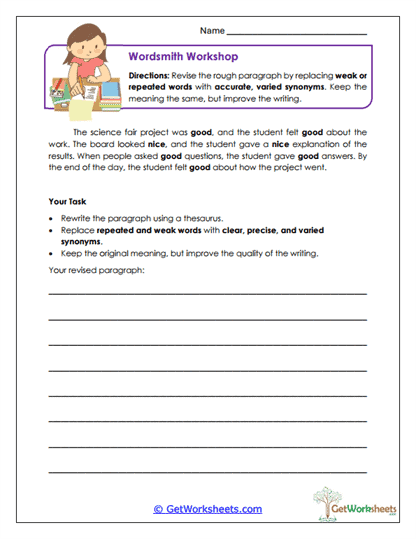
Wordsmith Workshop
Students revise a repetitive paragraph by replacing weak or overused words with stronger and more engaging synonyms. The worksheet encourages careful editing while helping learners improve sentence flow, clarity, and variety without changing the original meaning. Through meaningful revision practice, students strengthen vocabulary development and writing fluency. The activity also helps children recognize how small language changes can make writing sound more polished and expressive.
Bookmark Us Now!
New, high-quality worksheets are added every week! Do not miss out!