Sight Word Stories Worksheets
About This Worksheet Collection
Sight words are high-frequency words that young readers are encouraged to recognize instantly without needing to sound them out letter by letter. Because these words appear repeatedly in nearly every children's book, developing automatic sight word recognition allows students to read more smoothly and devote more attention to understanding what they are reading. As fluency improves, children spend less time decoding individual words and more time thinking about characters, events, and ideas, leading to stronger overall reading comprehension.
This collection of sight word stories worksheets combines meaningful reading practice with engaging activities that reinforce high-frequency word recognition in authentic contexts. Rather than practicing isolated word lists, students read short, age-appropriate stories before completing comprehension questions, sequencing tasks, editing activities, vocabulary exercises, retelling prompts, and fluency-building practice. These printable worksheets are ideal for guided reading lessons, literacy centers, intervention groups, homework, tutoring sessions, and homeschool instruction, giving beginning readers repeated opportunities to build confidence while reading connected text.
As students work through the collection, they strengthen sight word recognition, reading fluency, comprehension, vocabulary, sentence structure, sequencing, story recall, handwriting, and evidence-based thinking. Each activity encourages learners to recognize familiar words quickly while still focusing on the meaning of the passage and responding thoughtfully to what they have read. By combining automatic word recognition with meaningful comprehension practice, these worksheets help children become more fluent, confident, and successful readers.
Detailed Descriptions Of These Worksheets
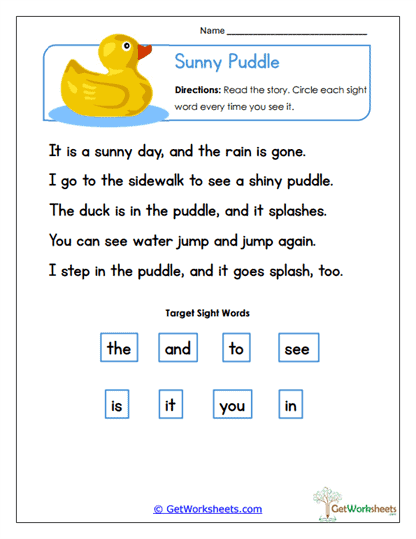
Sunny Puddle
Students read a cheerful story about a duck splashing through a puddle while searching for familiar sight words throughout the passage. As they locate and circle each target word, they repeatedly encounter those words in meaningful sentences instead of isolated lists. The activity improves word recognition, visual tracking, and reading fluency while reinforcing comprehension. It helps beginning readers understand that common sight words are essential building blocks of everyday reading.
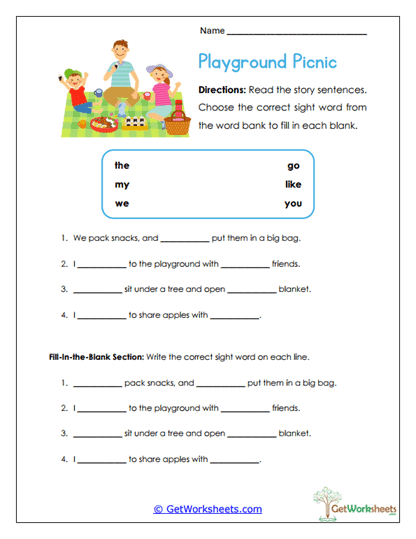
Playground Picnic
Learners complete simple picnic-themed sentences by selecting the correct sight words from a word bank before writing them into the blanks. Reading each sentence carefully helps students choose words that make grammatical and contextual sense. Repeating the exercise gives children another opportunity to strengthen recognition and spelling of high-frequency words. This worksheet naturally blends reading, writing, and comprehension into one activity.
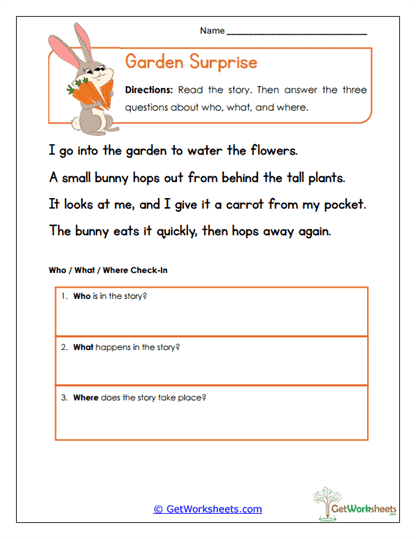
Garden Surprise
Students enjoy a short story about discovering a bunny in a garden before answering straightforward who, what, and where questions. The passage provides repeated exposure to common sight words while encouraging children to think about characters, actions, and setting. Responding with information from the text reinforces careful reading instead of guessing. This activity builds both fluency and early comprehension skills.
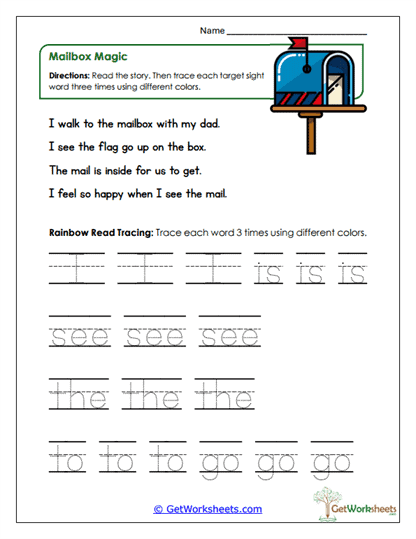
Mailbox Magic
This worksheet combines a simple reading passage with tracing practice for several important sight words. Children strengthen handwriting and letter formation while repeatedly seeing the same words used naturally within sentences. Reading the story before and after tracing reinforces automatic word recognition. The activity helps connect written practice with meaningful reading experiences.
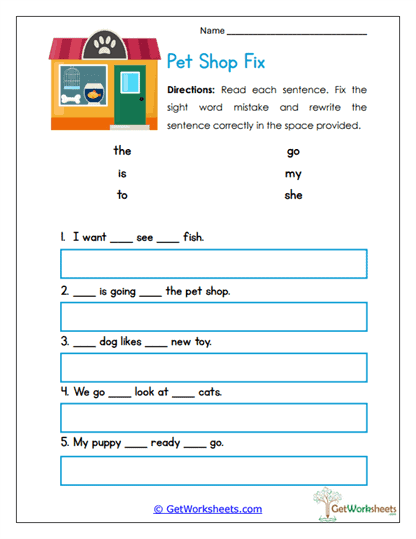
Pet Shop Fix
Students identify incorrect sight words hidden within short sentences and replace them with words that fit both the meaning and the grammar. After making their corrections, they rewrite each complete sentence to reinforce proper usage. The editing process encourages children to notice when familiar words do not belong, strengthening both comprehension and self-monitoring skills. It also introduces beginning proofreading habits in an age-appropriate way.
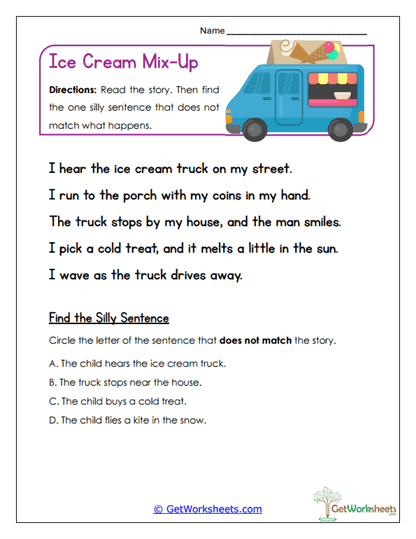
Ice Cream Mix-Up
Learners read a fun story about visiting an ice cream truck before identifying the one sentence that does not belong. Comparing each answer choice to the events in the passage encourages close reading and careful attention to detail. Rather than relying on memory alone, students learn to verify information using the text itself. The activity strengthens comprehension, logical thinking, and sight word fluency.
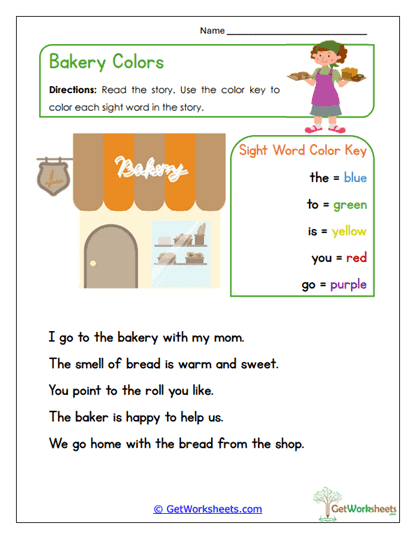
Bakery Colors
Students use a color key to highlight target sight words as they read a story about visiting a neighborhood bakery. The visual nature of the activity helps repeated high-frequency words stand out while keeping students engaged with the overall meaning of the passage. Color coding also supports visual discrimination and print awareness. This worksheet provides an enjoyable way to build automatic word recognition through authentic reading.
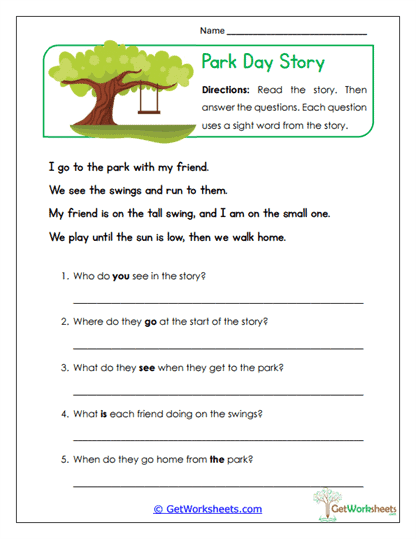
Park Day Story
Students read a short story about two friends spending time at the park before answering comprehension questions about the characters, setting, actions, and timeline. The questions encourage learners to return to the passage for accurate information rather than relying on memory alone. Along the way, they gain additional practice recognizing common sight words in connected text. The activity reinforces that successful reading requires both fluency and understanding.
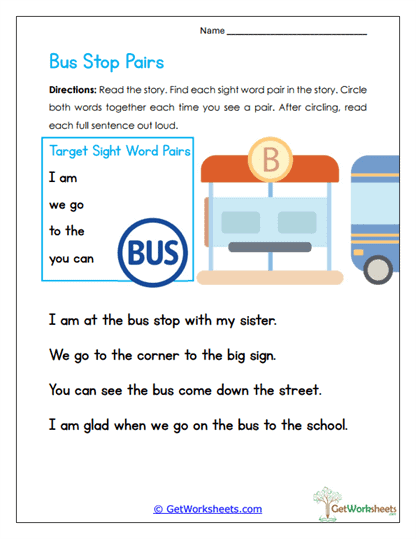
Bus Stop Pairs
This activity introduces children to common two-word sight word phrases instead of focusing only on individual words. Students locate each phrase within a short story and practice reading the complete sentences aloud with smooth expression. Recognizing familiar word groups helps beginning readers develop more natural pacing and rhythm. The worksheet encourages children to read meaningful chunks rather than stopping after every word.
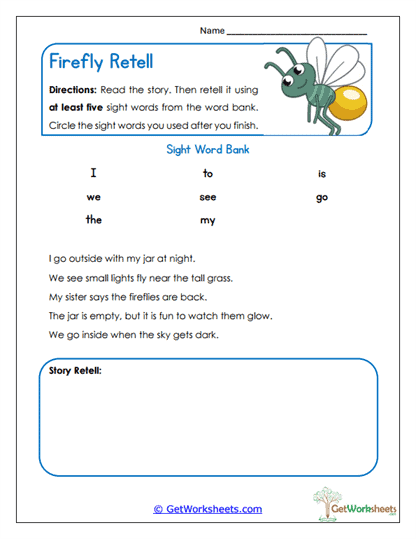
Firefly Retell
Students read a gentle story about watching fireflies before writing their own retelling using words from a provided sight word bank. After finishing, they identify and circle the sight words they successfully included in their writing. This process connects reading, writing, sequencing, and vocabulary practice within one meaningful task. It also helps young learners become more confident using familiar words independently.
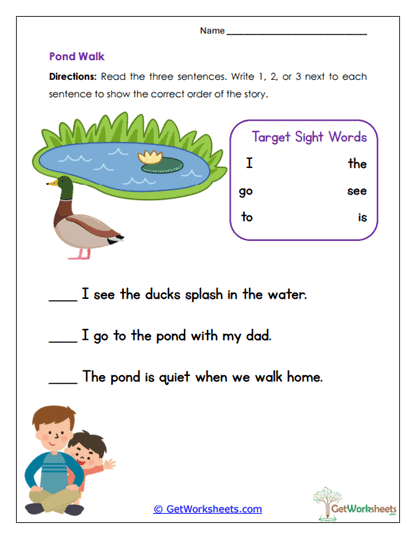
Pond Walk
Learners organize three short sentences into the correct order to rebuild a simple story about visiting a pond. Reading each sentence carefully helps students determine which event happens first, next, and last. Sequencing the events reinforces story structure while providing additional exposure to high-frequency words in context. The activity encourages logical thinking alongside developing reading fluency.
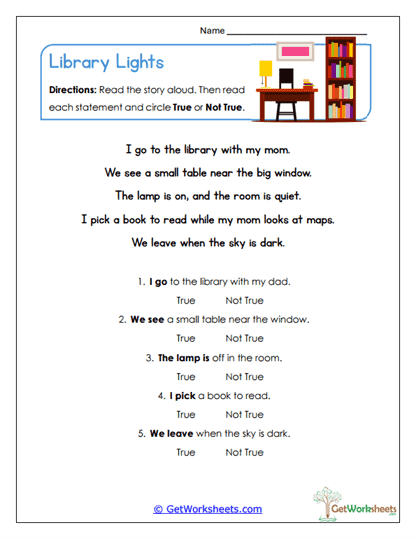
Library Lights
Students read a short story about a library visit before deciding whether several statements are true or not true. Each response requires children to compare the statements directly with details from the passage instead of choosing what merely sounds reasonable. This careful comparison strengthens attention to detail, comprehension, and evidence-based thinking. Repeated exposure to familiar sight words also continues to build reading fluency and confidence.
Bookmark Us Now!
New, high-quality worksheets are added every week! Do not miss out!