Short Answer Reading Passages Worksheets
About This Worksheet Collection
Short answer reading passages help students move beyond simply recognizing information and encourage them to explain their thinking using evidence from the text. Instead of selecting answers from multiple-choice options, learners practice writing concise responses that demonstrate comprehension, support ideas with details, make inferences, analyze characters, and communicate their understanding clearly. These activities strengthen both reading and writing by teaching students to organize their thoughts and answer questions using complete, text-based responses.
This collection of short answer reading passages provides students with engaging fiction and nonfiction texts that explore a wide variety of comprehension skills. Learners identify key details, analyze character development, make inferences, determine an author's purpose, recognize themes, summarize passages, evaluate arguments, interpret point of view, and connect stories to their own experiences. Perfect for classrooms, literacy centers, intervention groups, tutoring sessions, homework, and homeschool instruction, these ready-to-use worksheets give students meaningful opportunities to practice thoughtful written responses across a range of reading situations.
As students complete the collection, they strengthen reading comprehension, evidence-based writing, inference, vocabulary development, character analysis, summarizing, critical thinking, author's craft, argument evaluation, and text analysis. Each activity encourages learners to return to the passage, locate supporting evidence, and explain their ideas clearly rather than relying on guesses or personal opinion alone. By developing these habits, students become more confident readers who can analyze increasingly complex texts and communicate their understanding with clarity and precision.
Detailed Descriptions Of These Worksheets
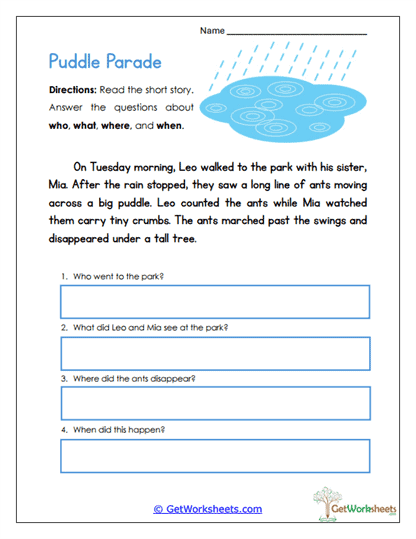
Puddle Parade
Young readers practice answering the essential question words-who, what, where, and when-after reading a short story about a visit to the park. The activity encourages children to return to the passage to locate specific details instead of relying on memory alone. By writing short responses and identifying key story elements, students build a strong foundation for future reading comprehension. This worksheet also reinforces confidence with basic text-dependent questions.
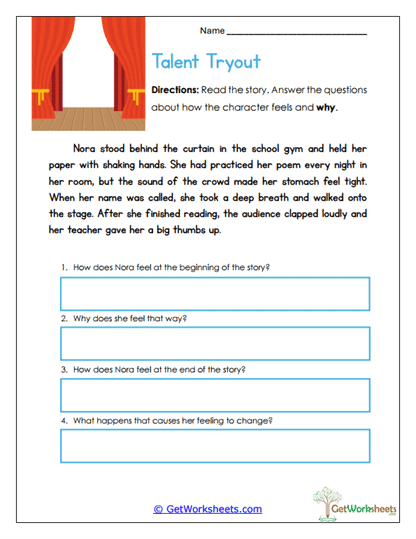
Talent Tryout
Students follow Nora's emotional journey as she prepares to perform at a school talent show and examine how her feelings change throughout the story. They use actions and events as clues to explain why her emotions shift from beginning to end. The activity encourages thoughtful character analysis while introducing inference in an age-appropriate way. Learners also practice supporting their answers with evidence from the passage.
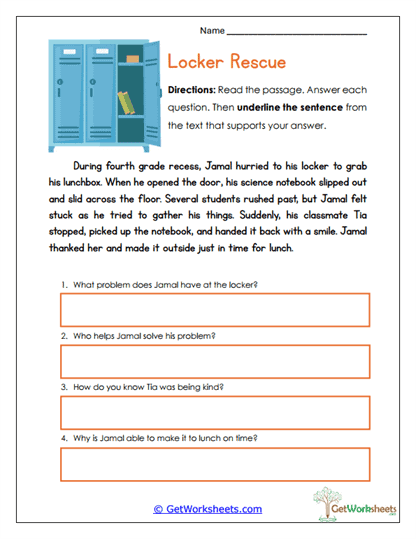
Locker Rescue
This worksheet asks students to identify a problem, explain how it is solved, and locate the exact evidence that supports each response. By returning to the passage to justify their thinking, learners develop stronger evidence-based reading habits. The realistic school setting makes it easy for students to relate to the characters and their actions. The activity reinforces comprehension, inference, and complete-sentence writing.
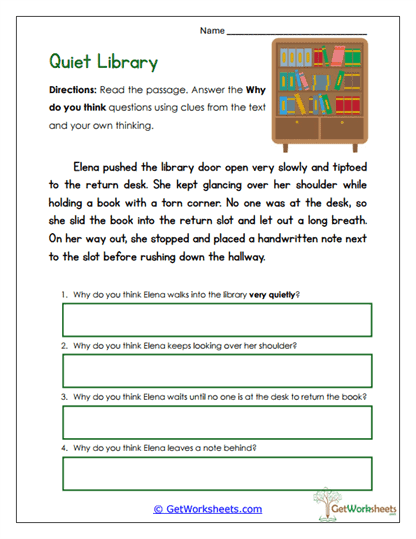
Quiet Library
Students read about Elena returning a damaged library book and use subtle story clues to infer her thoughts and motivations. Rather than searching for answers stated directly in the passage, learners combine details to draw logical conclusions. The worksheet promotes close reading while strengthening confidence with open-ended comprehension questions. It also encourages students to defend their ideas using textual evidence.
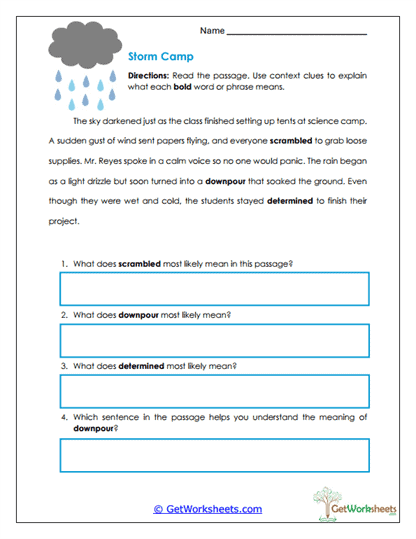
Storm Camp
Learners use surrounding details in a science camp story to determine the meanings of unfamiliar vocabulary words. Instead of memorizing definitions, students analyze context and explain how nearby sentences reveal each word's meaning. This strategy helps readers become more independent when encountering challenging texts. The activity strengthens both vocabulary development and overall comprehension.
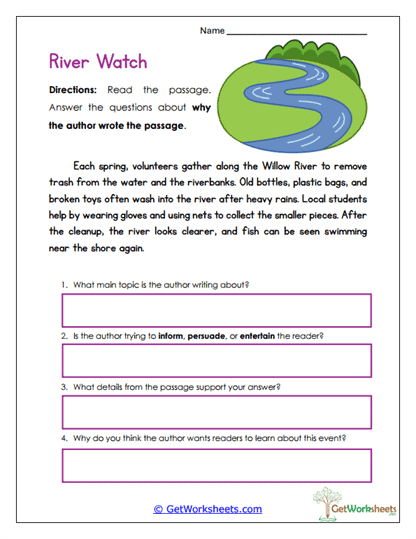
River Watch
Students examine an informational passage about a community river cleanup and determine the author's primary purpose. After deciding whether the passage was written to inform, persuade, or entertain, they identify details that support their conclusion. The worksheet encourages readers to think beyond the facts and consider the writer's overall goal. It also reinforces evidence-based reasoning through concise written responses.
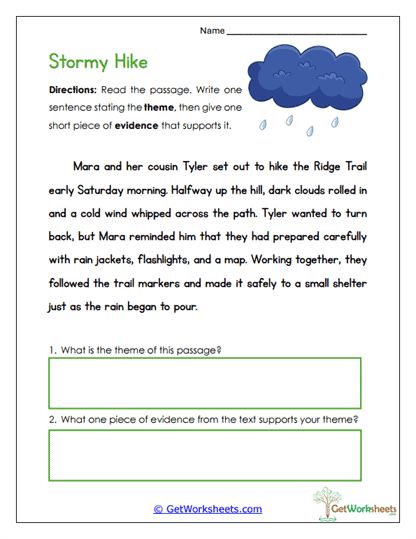
Stormy Hike
This activity challenges students to identify the deeper message hidden within a story about two hikers facing difficult weather conditions. Learners distinguish the theme from the topic by connecting the characters' choices to the lesson readers can learn. They then select evidence that clearly supports their interpretation. The worksheet develops higher-level comprehension while reinforcing thoughtful analysis.
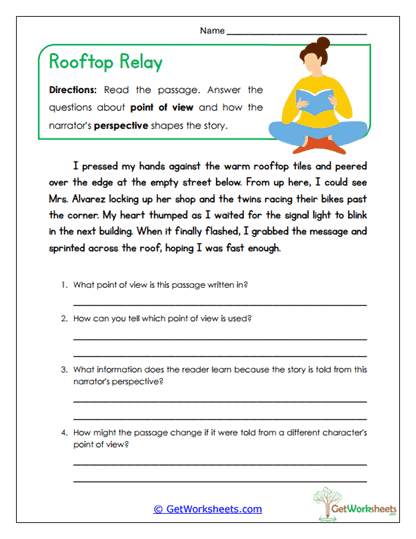
Rooftop Relay
Students analyze a passage written from the first-person point of view and examine how the narrator shapes the reader's understanding of events. By identifying pronoun clues and considering what information is revealed or hidden, learners gain a stronger understanding of perspective. The activity also asks students to imagine how the story would change if another character told it. This builds both reading comprehension and narrative analysis skills.
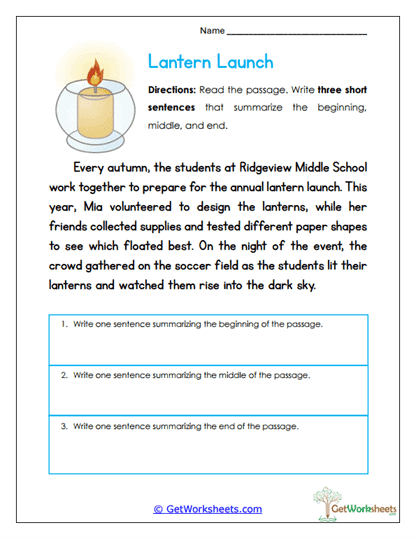
Lantern Launch
Students summarize a school tradition by organizing the passage into beginning, middle, and end before writing concise responses for each section. The structured format helps learners identify essential details without becoming distracted by less important information. It also reinforces story organization and sequencing in a manageable way. This worksheet provides an effective introduction to summary writing.
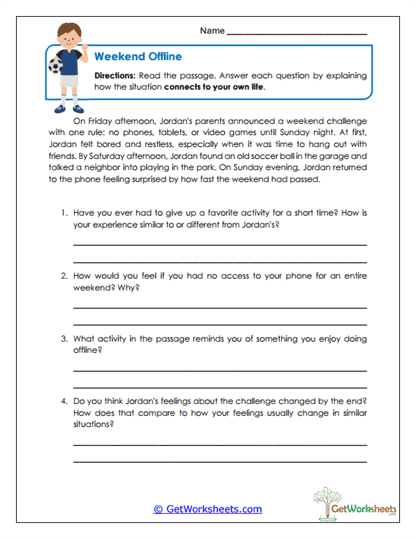
Weekend Offline
Learners compare Jordan's experience without technology to their own lives by making meaningful text-to-self connections. The questions encourage thoughtful reflection while still requiring students to understand the character's emotions and decisions. By blending comprehension with personal response, students become more engaged with the reading. The activity also strengthens written expression and comparison skills.
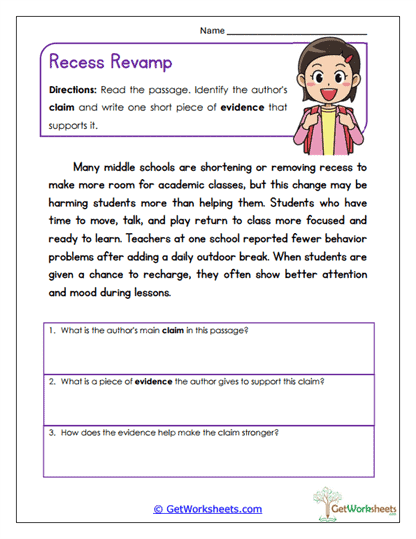
Recess Revamp
Students identify the central claim in an argument about recess and determine which evidence best supports the author's position. They explain how the supporting facts strengthen the overall argument rather than simply restating information from the passage. The worksheet introduces the structure of persuasive writing in a clear and accessible way. It also develops critical reading and analytical thinking skills.
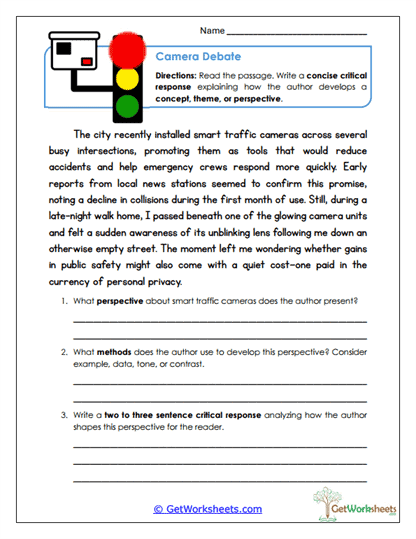
Camera Debate
Students examine a balanced discussion about traffic cameras and evaluate how the author presents both benefits and concerns. Rather than focusing on one side of the issue, learners analyze tone, perspective, and supporting evidence before writing a short critical response. The activity encourages thoughtful evaluation of how authors influence readers through organization and language. It provides excellent practice with advanced comprehension and evidence-based writing.
Bookmark Us Now!
New, high-quality worksheets are added every week! Do not miss out!