Label Illusions
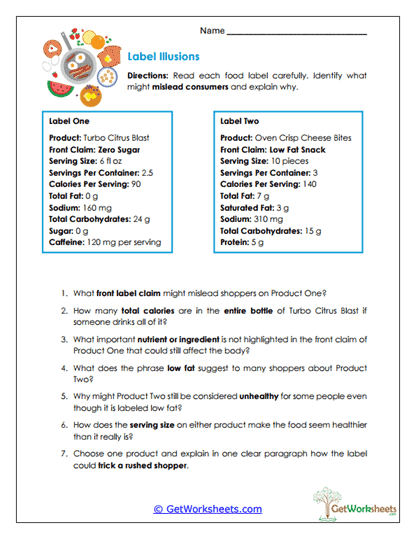
Students examine food labels and marketing statements to determine whether advertising claims accurately reflect the nutritional information provided. This activity develops critical reading, media literacy, informational text analysis, evidence-based reasoning, consumer awareness, and evaluation skills. Appropriate for grades 7-10, it encourages learners to look beyond attractive packaging and carefully assess nutritional facts before drawing conclusions. Students learn how serving sizes, promotional language, and omitted information can influence consumer perceptions.
Instructional Objectives
- Media Literacy Skills – Evaluate marketing messages critically and thoughtfully.
- Nutrition Label Interpretation – Read and analyze nutrition facts accurately.
- Consumer Awareness – Recognize how advertising can influence purchasing decisions.
- Evidence-Based Evaluation – Use data to support conclusions about product claims.
Instructional Support
- Promotes Real-Life Application – Connects literacy skills to everyday consumer choices.
- Encourages Healthy Skepticism – Helps students question unsupported claims.
- No-Prep Classroom Resource – Ready for immediate use.
- Supports Discussion and Debate – Encourages evidence-based conversations.
- Engaging and Relevant – Uses scenarios students may encounter in daily life.
Through analyzing claims and comparing them with factual nutrition information, students strengthen critical thinking and reading comprehension skills. The activity reinforces evaluation, evidence gathering, informational text analysis, media literacy, and decision-making abilities. Learners become more confident in recognizing persuasive techniques and identifying misleading impressions. This worksheet provides meaningful practice that helps students apply literacy skills to real-world situations and become more informed consumers.
Bookmark Us Now!
New, high-quality worksheets are added every week! Do not miss out!