Story Elements Worksheets
About This Worksheet Collection
This engaging collection of story elements worksheets helps students strengthen reading comprehension by exploring the building blocks that make stories meaningful and memorable. Through activities focused on characters, setting, plot, conflict, theme, and resolution, learners move beyond simple retelling and begin analyzing how stories are organized and why events unfold the way they do. The worksheets use relatable scenarios, visual organizers, evidence-based questions, and creative response activities to help students think more deeply about narrative structure while staying actively engaged. Teachers, parents, and homeschool educators will appreciate the wide variety of approachable activities that support both foundational comprehension and higher-level literary thinking.
As students complete these worksheets, they strengthen important literacy and analytical skills including sequencing, character analysis, evidence-based reasoning, summarizing, critical thinking, inference, and written response development. Learners practice identifying story elements, organizing information visually, explaining character motivations, analyzing mood and conflict, and supporting ideas using details from the text. Many activities also encourage creativity, empathy, and reflection by asking students to rewrite endings, examine character relationships, or consider the lessons hidden within stories. Together, these resources help children become more thoughtful readers, stronger communicators, and more confident literary thinkers.
Detailed Descriptions Of These Worksheets
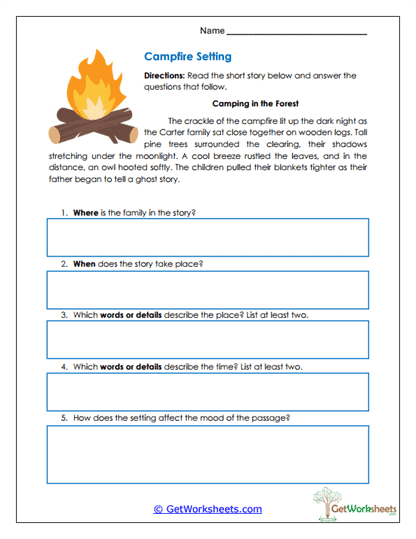
Campfire Setting
Students read a campfire-themed story and identify details about the setting, including both time and place, while analyzing how those details shape the mood of the story. Learners search for descriptive language that creates tension, emotion, or atmosphere within the passage. The activity strengthens close reading and evidence-based thinking while helping students understand that setting influences more than location alone. It also encourages stronger descriptive reading and interpretation skills.
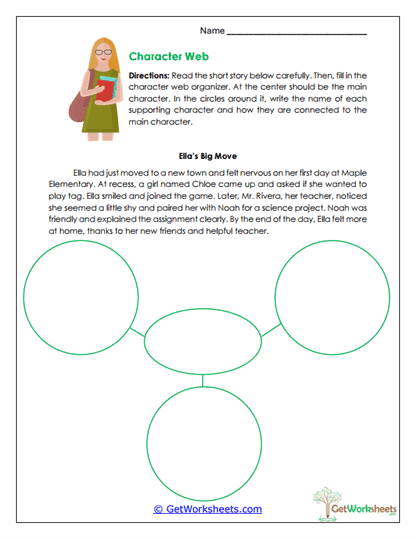
Character Web
This worksheet asks students to complete a visual character web after reading about Ella starting at a new school. Learners identify relationships between the main character and supporting characters while explaining how each connection influences the story. The visual organizer helps students track multiple characters more clearly and deepen comprehension of social interactions within the narrative. The activity also supports empathy and thoughtful discussion about friendship and support.
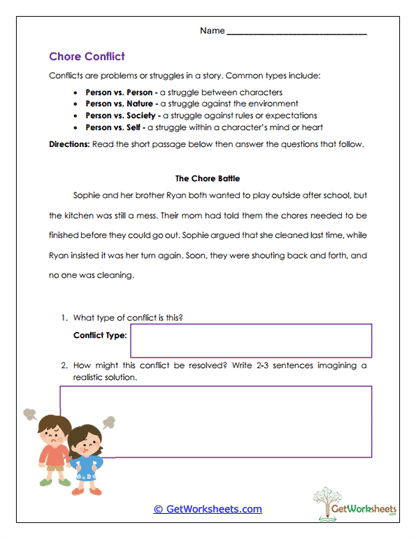
Chore Conflict
Students analyze a realistic sibling disagreement story to determine the type of conflict taking place and propose a believable solution. The worksheet strengthens comprehension and conflict analysis while encouraging learners to think carefully about character motivations and peaceful problem-solving. Writing their own resolution also supports empathy and organized written response skills. The relatable situation helps students connect literary analysis to real-life social situations.
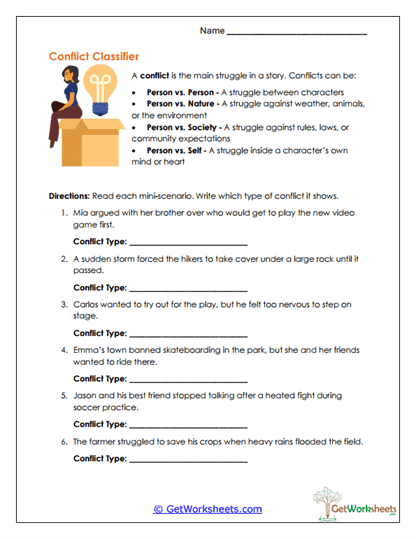
Conflict Classifier
This activity introduces students to major literary conflict types such as person vs. person, person vs. self, person vs. nature, and person vs. society. Learners read short scenarios and classify each conflict correctly while explaining their reasoning. The worksheet builds important literary vocabulary and helps students recognize how conflict drives plot development. It also prepares readers for deeper comprehension and literary analysis in future reading tasks.
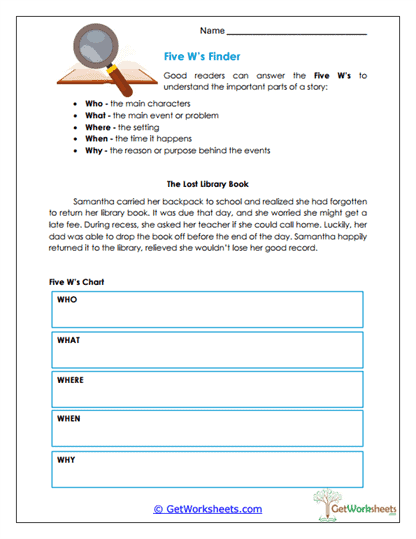
Five W's Finder
Students read a short passage about Samantha returning an overdue library book and organize details using the Five W's: who, what, where, when, and why. The structured questioning format helps learners identify the most important information while strengthening summarizing and comprehension skills. By sorting story details into categories, students build stronger recall and active reading habits. The activity is especially supportive for readers learning how to organize information clearly.
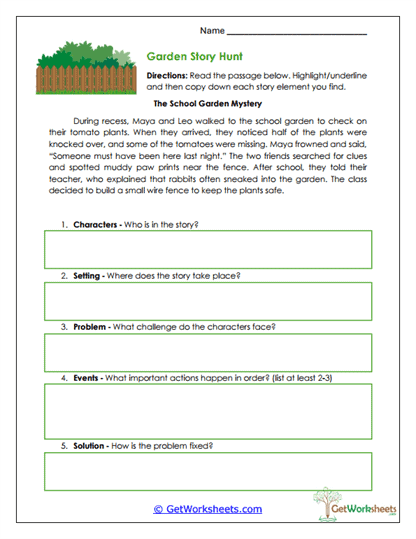
Garden Story Hunt
Learners become "story detectives" by reading a passage and identifying major story elements such as characters, setting, problem, events, and solution. Students highlight clues directly in the text before organizing their findings into structured sections below. The worksheet encourages close reading and careful evidence gathering while helping students understand how story elements connect together. The guided structure also makes story analysis more approachable for developing readers.
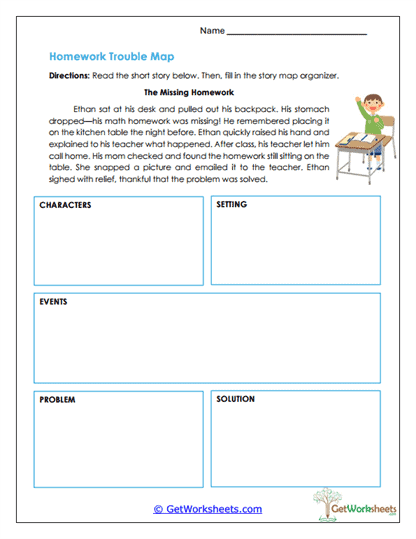
Homework Trouble Map
This worksheet uses a story map graphic organizer to help students organize characters, setting, events, problem, and solution after reading about Ethan's missing homework. Learners strengthen sequencing and summarizing skills while visually organizing story structure into manageable sections. The structured layout helps students better understand how narrative elements work together within a complete story. It is especially effective for supporting comprehension and organization skills simultaneously.
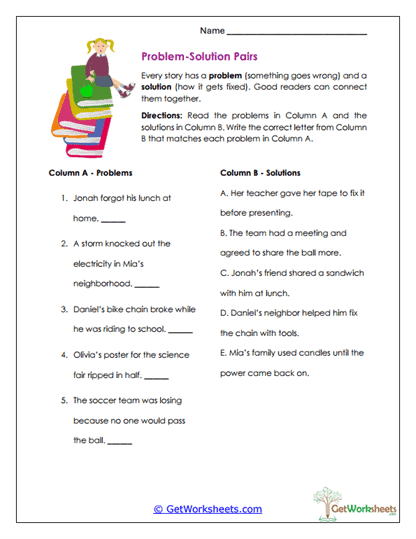
Problem-Solution Pairs
Students match story problems with their correct solutions by carefully analyzing cause-and-effect relationships within realistic scenarios. The activity strengthens comprehension and critical thinking while helping learners understand how solutions resolve conflicts in stories. By evaluating logical outcomes, students improve sequencing and reasoning skills alongside story structure understanding. The interactive matching format keeps students engaged while reinforcing narrative comprehension.
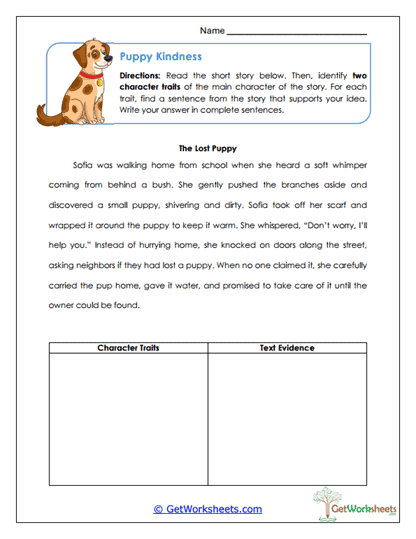
Puppy Kindness
After reading a short story about Sofia helping a lost puppy, students identify character traits and support each one using evidence from the text. Learners strengthen comprehension and analytical thinking by focusing on what characters say, do, and feel throughout the story. Writing complete evidence-based responses also supports organization and communication skills. The compassionate story naturally encourages thoughtful classroom discussions about kindness and responsibility.
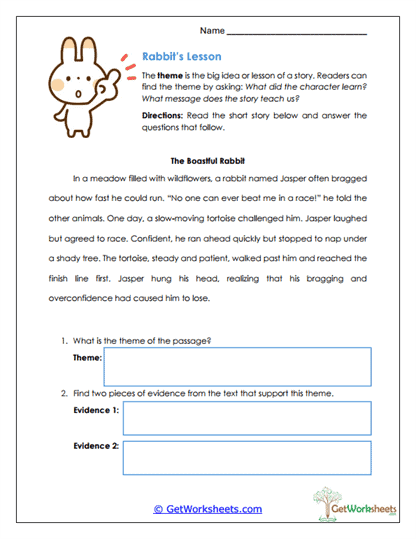
Rabbit's Lesson
Students read about Jasper the boastful rabbit and determine the deeper lesson or theme hidden within the story. Learners support their interpretation using evidence from the passage while analyzing character growth and consequences. The worksheet strengthens higher-level literary thinking and helps students move beyond simple plot retelling into theme analysis. It also encourages thoughtful reflection about choices, behavior, and personal growth.
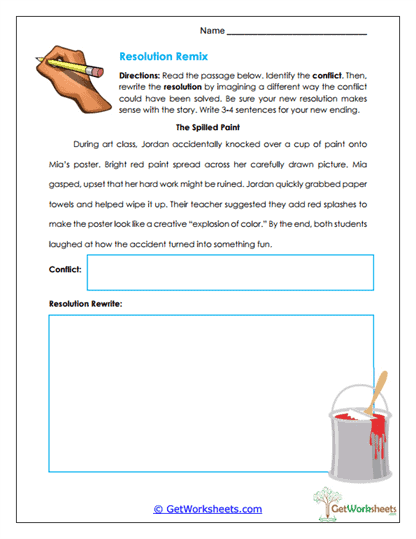
Resolution Remix
This creative activity asks students to rewrite the ending of a story by creating a new believable resolution that still fits the original events and characters. Learners analyze the original conflict before imagining how the story could end differently while remaining realistic. The worksheet strengthens comprehension, creativity, and story structure understanding at the same time. It also encourages flexible thinking and organized writing development.
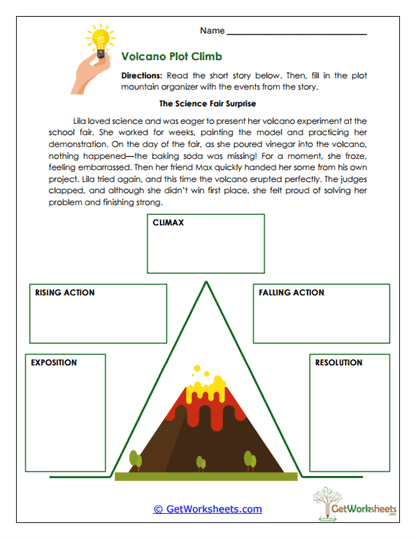
Volcano Plot Climb
Students use a volcano-shaped plot mountain organizer to identify exposition, rising action, climax, falling action, and resolution after reading about Lila's science fair volcano experiment. The visual format helps learners understand how tension builds and resolves throughout a narrative. By sorting events into the correct stages, students strengthen sequencing, literary analysis, and comprehension skills. The engaging organizer also makes abstract plot concepts easier to understand for developing readers.
Bookmark Us Now!
New, high-quality worksheets are added every week! Do not miss out!