Unspoken Rivalry
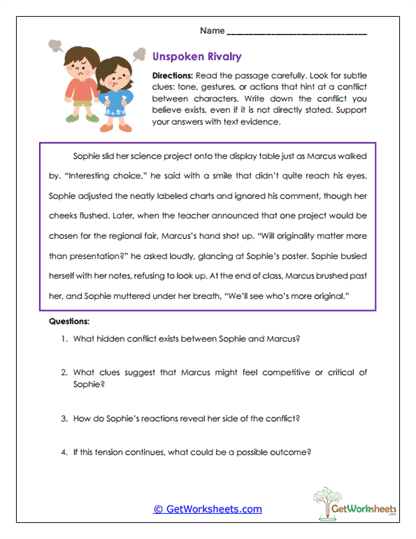
Unspoken Rivalry challenges students to identify underlying tensions and unspoken conflicts by analyzing dialogue, body language, and subtle interactions between characters. Through a narrative about Sophie and Marcus preparing their science projects for a school competition, learners examine seemingly polite remarks, competitive behavior, and emotional reactions that suggest a disagreement neither character directly acknowledges. Four open-ended questions develop inferential comprehension, character motivation analysis, dialogue interpretation, conflict recognition, textual evidence identification, and prediction skills while encouraging readers to examine the meaning behind characters’ words and actions. By exploring how competition and personal feelings influence the interaction, the worksheet demonstrates how authors establish conflict through implication rather than explicit explanation.
Key Learning Objectives
- Identifying Implied Conflict: Determine the underlying tension between Sophie and Marcus by examining their conversations, reactions, and competitive circumstances.
- Analyzing Dialogue and Tone: Interpret Marcus’s comments about Sophie’s project and his question about originality to infer possible criticism or competitiveness.
- Interpreting Character Reactions: Examine Sophie’s flushed cheeks, avoidance of eye contact, and final remark to understand her feelings about the interaction.
- Predicting Conflict Development: Consider how the characters’ rivalry might influence their future behavior or the outcome of the science project competition.
Educational Value
- Realistic School Competition: The science fair setting provides a relatable context for examining jealousy, competitiveness, and interpersonal tension.
- Four Analytical Questions: Learners progress from identifying the hidden conflict to examining supporting clues and predicting possible consequences.
- Subtle Dialogue Clues: Indirect remarks and carefully described reactions encourage readers to look beyond the literal meaning of spoken words.
- Character Comparison Opportunities: Students analyze how Sophie and Marcus respond differently to the same competitive situation.
- Evidence-Based Interpretation: The activity encourages learners to support conclusions about character motivations with details from the narrative.
Unspoken Rivalry strengthens students’ ability to recognize that important story conflicts are not always openly discussed by the characters involved. By examining Sophie and Marcus’s interaction, learners practice emotional inference, dialogue analysis, character interpretation, conflict identification, and evidence-based reasoning. Teachers can use the narrative to demonstrate how tone, gestures, facial expressions, and indirect comments contribute to a reader’s understanding of interpersonal relationships. The prediction question also encourages students to consider how unresolved tension might influence later events while distinguishing reasonable possibilities from confirmed outcomes. Developing these interpretive skills helps students approach more complex literary texts involving hidden motivations, character relationships, emotional subtext, and evolving conflicts.
Bookmark Us Now!
New, high-quality worksheets are added every week! Do not miss out!