Business Math Worksheets
About This Worksheet Collection
Business math helps students use everyday mathematics in situations involving money, work, banking, pricing, taxes, insurance, and running a business. These skills show learners how addition, subtraction, multiplication, division, percentages, and financial reasoning are used outside the classroom. Building confidence with business math supports stronger decision-making and practical financial literacy.
This collection brings together several real-world business and money topics that students may encounter at work, at home, or while managing their own finances. Learners practice reading bank statements, writing checks, calculating commissions and salaries, tracking expenses, understanding taxes and health insurance, using online banking, setting prices, completing timecards, and solving workplace word problems. The worksheets can be used for life-skills classes, career readiness, financial literacy, independent practice, intervention, tutoring, or homeschool instruction.
As students work through the collection, they strengthen money management, percentage reasoning, budgeting, account tracking, workplace math, and problem-solving skills. They also practice interpreting financial documents, comparing costs, calculating earnings, understanding deductions and fees, and making informed decisions about business and personal finances. These activities help learners connect classroom math with practical situations they are likely to face in everyday adult life.
Detailed Descriptions Of These Worksheets
Bank Statements
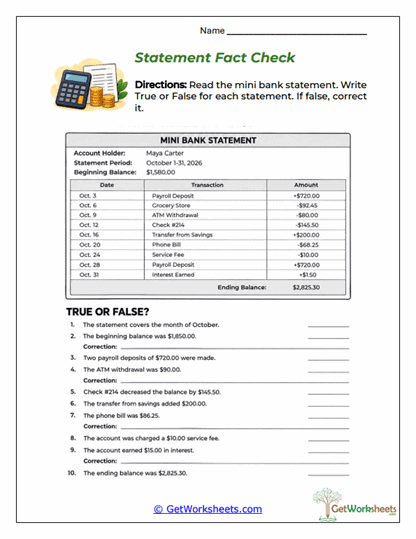
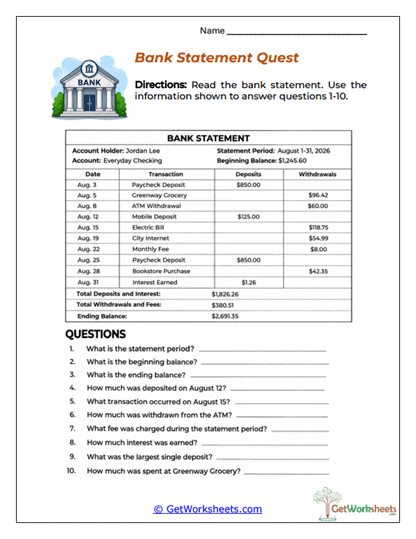
Students practice reading and interpreting common information found on bank statements. Activities may include tracking deposits, withdrawals, fees, balances, and other account activity. Learners use the information provided to understand how transactions affect the amount of money available in an account. This topic strengthens financial literacy and practical account-management skills.
Business Expenses
Students identify, track, compare, and calculate different types of personal and business costs. Activities may include adding expenses, comparing spending categories, and determining how costs affect a budget or business result. Learners practice distinguishing between different financial obligations and monitoring where money is going. This topic builds budgeting and money-management skills.
Business Math Word Problems
Real-world workplace situations give students practice applying math to pricing, profit, expenses, wages, and other business decisions. Learners identify the important information in each problem and choose the correct operation or calculation. The word-problem format helps students see how mathematical reasoning is used in everyday business settings. It also strengthens problem solving and decision-making.
Check Writing
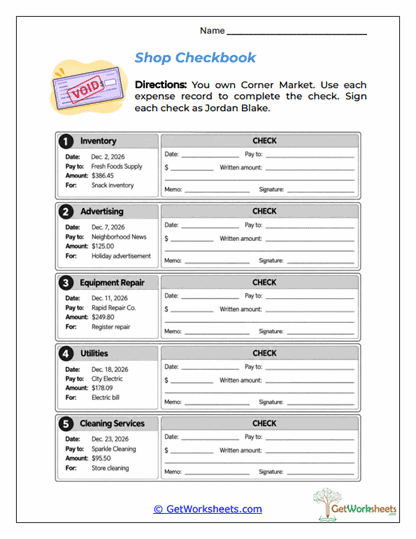
Students learn how to complete checks accurately and record payments in a check register. Practice may include writing dates, payee names, numerical and written amounts, memos, and account balances. These activities help learners understand how payments are documented and tracked. The topic provides practical experience with traditional banking and personal money management.
Commissions and Sales
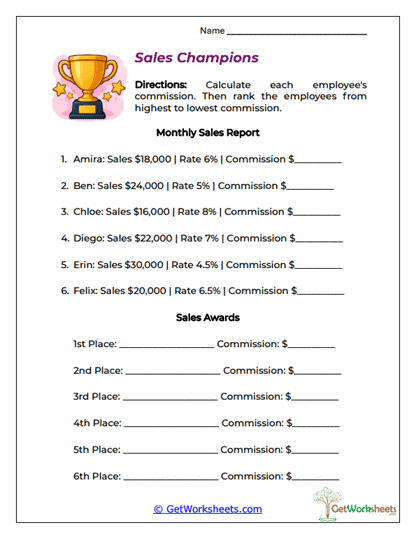
Students calculate earnings based on commission rates, sales amounts, and other workplace information. Problems help learners connect percentages with real-world income situations. They may determine total commission, compare different rates, or combine commission with other earnings. This topic strengthens percentage fluency and workplace financial reasoning.
Company Formation
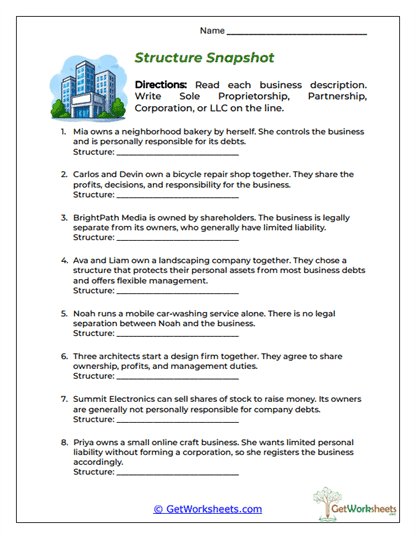
Students explore the basic decisions involved in starting and organizing a business. Activities introduce ideas such as ownership, business structures, startup planning, and how companies are formed. The topic helps learners understand that business decisions involve both financial and organizational thinking. It also provides a useful introduction to entrepreneurship and business planning.
Health Insurance
Students work with common health insurance terms such as premiums, deductibles, copays, coverage, and out-of-pocket costs. Real-life examples help learners understand how these amounts can affect the total cost of medical care. The activities encourage students to read financial information carefully and calculate what an individual may be responsible for paying. This topic supports practical financial and insurance literacy.
Income Taxes
Students practice basic ideas related to taxable income, deductions, tax rates, and income tax calculations. Activities help learners see how taxes affect earnings and why the amount owed may depend on income and allowable deductions. The topic introduces important financial vocabulary while reinforcing percentage and computation skills. It provides a useful foundation for understanding personal finances and pay.
Online Banking
Students explore common digital banking activities such as checking balances, making transfers, reviewing deposits, paying bills, and managing accounts online. Activities may also introduce basic banking security and responsible account use. Learners practice interpreting account information and understanding how digital transactions affect balances. This topic connects financial literacy with modern banking habits.
Pricing
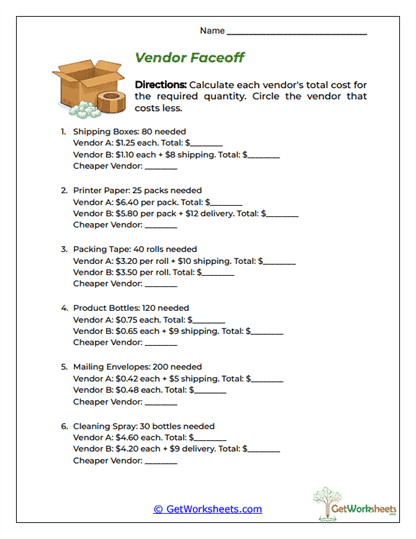
Students calculate selling prices using costs, markup, markdown, discounts, and profit. The activities show how businesses use percentages and basic operations when deciding what to charge for products or services. Learners may compare prices or determine how a change in cost affects profit. This topic strengthens percentage reasoning and introduces important business decision-making skills.
Salaries
Students work with workplace income by calculating annual salaries, monthly earnings, hourly equivalents, and pay increases. Real-world examples help learners understand how the same income can be described in different ways. Activities may also involve comparing salaries or determining the effect of a raise. This topic builds practical income and career-readiness skills.
Timecards
Students calculate hours worked using realistic workplace time records. Activities may include finding total hours, subtracting breaks, identifying overtime, and calculating weekly pay. The topic helps learners connect elapsed time with earnings and workplace expectations. It strengthens time calculation, multiplication, and practical payroll reasoning.
Bookmark Us Now!
New, high-quality worksheets are added every week! Do not miss out!