Check Writing Worksheets
About This Worksheet Collection
Check writing helps students understand how to complete, read, and verify a traditional payment document accurately. Learners practice identifying the different parts of a check, writing dollar amounts correctly, choosing the right payee, using memo lines, and transferring information from bills or payment records. These skills combine financial literacy, money notation, reading comprehension, and careful record keeping.
This collection gives students several ways to practice check-writing skills in realistic situations. Activities include labeling check parts, converting numeric amounts into written form, filling in missing fields, completing full checks, finding errors, transferring bill information, matching written and numeric values, writing business checks, identifying payees, creating useful memos, sequencing payments, and reviewing completed checks for accuracy. The worksheets are well suited for middle school business math, consumer math, financial literacy, tutoring, independent practice, or homeschool instruction.
As students work through the collection, they strengthen financial vocabulary, document reading, money notation, decimal place value, transaction organization, and error-checking skills. They also practice writing amounts in two forms, identifying payment recipients, keeping records in chronological order, and reviewing documents before approval. These activities help learners become more confident handling everyday payment information and understanding how financial documents are completed correctly.
Detailed Descriptions Of These Worksheets
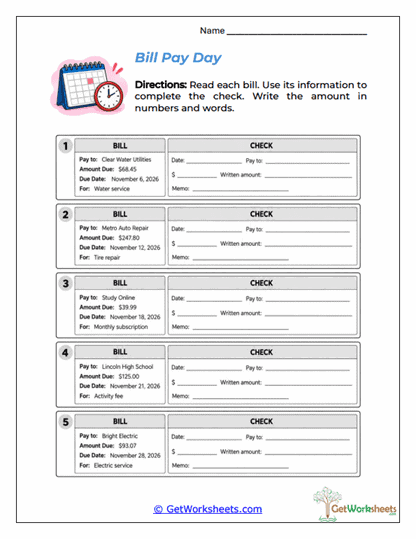
Bill-to-Check Transfer
Students read a bill and transfer the important information onto a matching check. They identify the payee, amount due, due date, and reason for payment before completing the date, numeric amount, written amount, and memo fields. Moving information from one document to another encourages careful reading and organization. This activity helps learners understand how bills and checks work together in a real payment process.
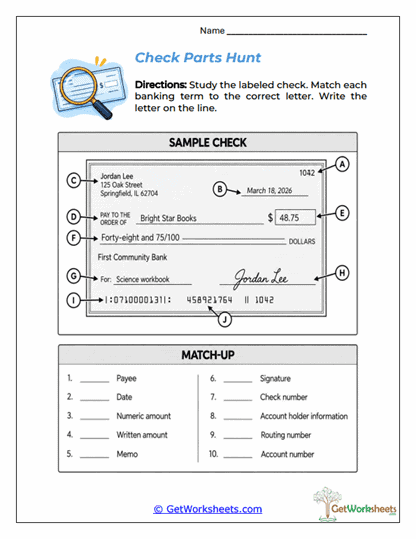
Check Anatomy Match-Up
A labeled sample check introduces the purpose and location of each major field. Students match terms such as payee, date, numeric amount, written amount, memo, signature, routing number, account number, and check number to the correct areas. Learning the layout first makes later check-writing activities easier to understand. The worksheet strengthens financial vocabulary and document literacy.
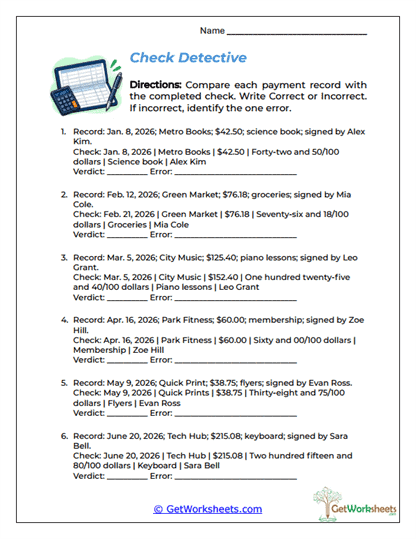
Check Error Inspector
Students compare completed checks with the original payment information to find mistakes. They inspect dates, payees, dollar amounts, written amounts, memos, and signatures before deciding what must be corrected. The activity encourages learners to review financial documents instead of assuming they are accurate. It builds practical error-detection and self-checking habits.
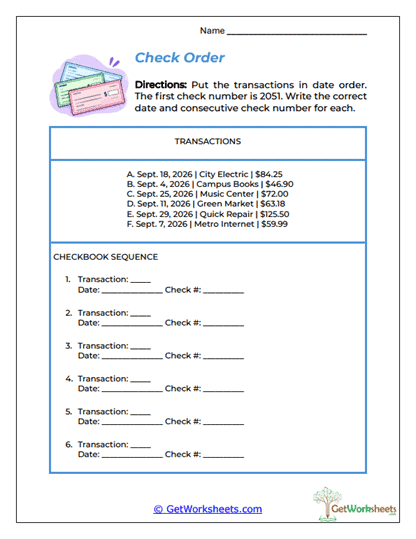
Checkbook Sequence
A list of payments must be placed in chronological order before students assign the correct check numbers. Learners compare transaction dates, business names, and amounts while maintaining a logical sequence. The activity shows how check numbers and payment dates work together in organized record keeping. It also strengthens date comparison and financial organization.
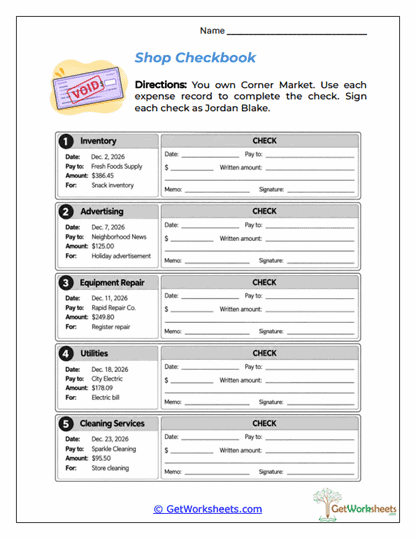
Corner Market Checkbook
Students take the role of a small business owner and write checks for expenses such as utilities, inventory, repairs, advertising, or cleaning services. Each expense record provides the information needed to complete the date, payee, amounts, memo, and signature. The activity connects check writing with business operations and financial documentation. It reinforces the importance of keeping payment information accurate and organized.
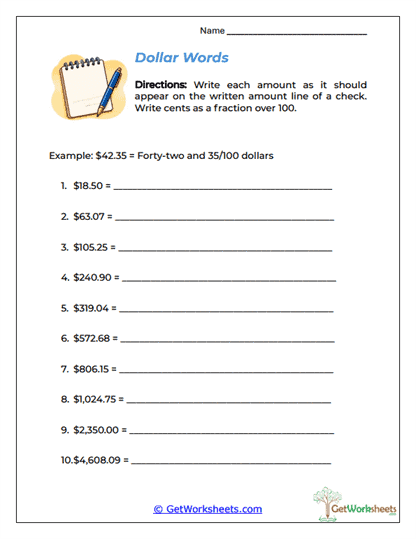
Dollar Amounts in Words
Numeric money values are rewritten in the written form commonly used on checks. Students practice expressing dollars in words and cents as hundredths, such as 50/100 or 25/100. This connects decimal notation, place value, and financial writing conventions. The activity also reinforces why the numeric and written amount lines must agree.
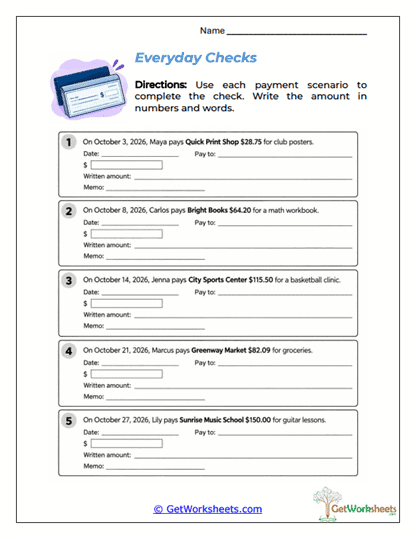
Everyday Payment Check
Short real-life payment scenarios give students practice completing an entire check from start to finish. Learners identify the date, payee, numeric amount, written amount, and memo from each situation and place the information correctly. The full-document format combines several check-writing skills at once. It is useful for building independence after students have practiced individual check fields.
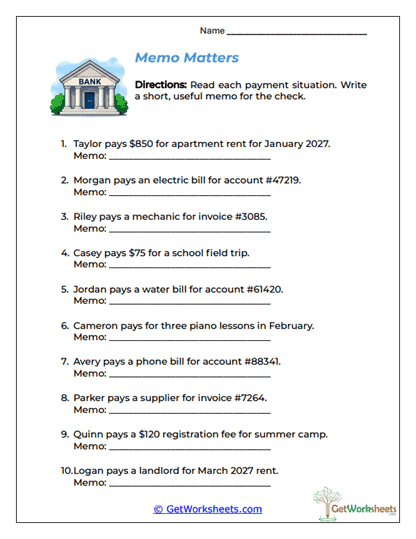
Memo Line Purpose
Students focus on writing short, useful notes for the memo section of a check. Scenarios involving rent, utilities, school fees, repairs, lessons, and supplier payments require learners to decide which details are most helpful to record. The activity emphasizes concise financial record keeping rather than full-sentence writing. It helps students understand how a memo can make a payment easier to identify later.
Missing Check Fields
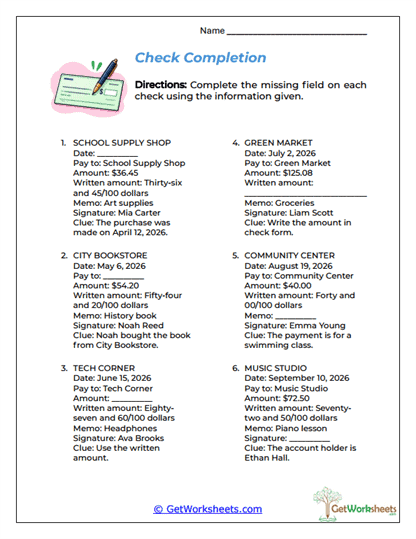
Partially completed checks are paired with short payment scenarios. Students determine which detail is missing and use the provided clues to fill in the correct date, payee, amount, memo, or signature information. This gives learners practice applying their knowledge of check structure in context. The activity serves as a useful bridge between labeling a check and completing one independently.
Numeric-to-Written Amount Match
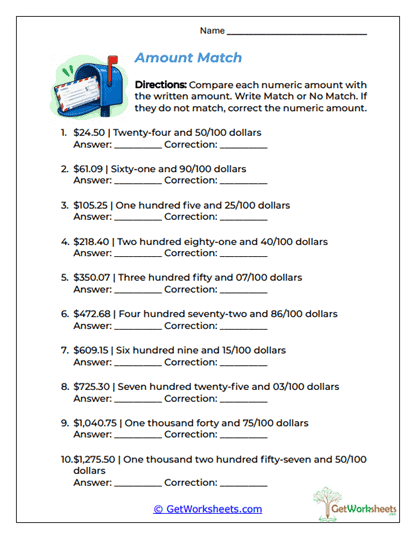
Students compare numeric dollar amounts with their written check-form equivalents and decide whether the two versions agree. Incorrect pairs must be corrected so the dollars and cents match exactly. The task strengthens decimal place value, number words, and careful comparison. It also develops an important habit of checking both amount fields before considering a check complete.
Payee Decision
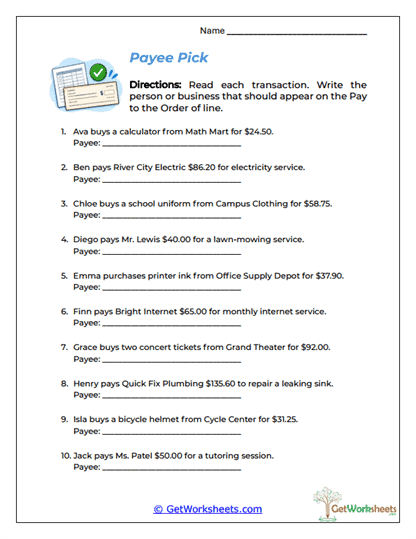
Students read short payment situations and determine who belongs on the "Pay to the Order of" line. The focused format helps learners distinguish the person making the payment from the person or business receiving it. Careful reading is important because the payment recipient must be identified correctly. This worksheet provides useful preparation for more complete check-writing activities.
Payment Request Review
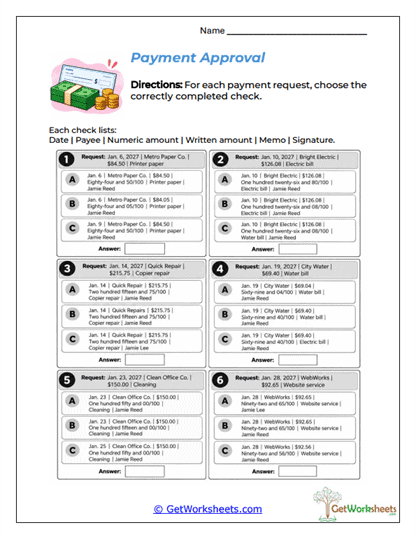
Students compare payment requests with several completed checks and choose the one that matches every required detail. They review the date, payee, numeric amount, written amount, memo, and signature before making a final decision. The multiple-choice format encourages careful document checking and attention to subtle errors. This activity brings several check-writing skills together in one practical review.
Bookmark Us Now!
New, high-quality worksheets are added every week! Do not miss out!