Evaluating Credibility
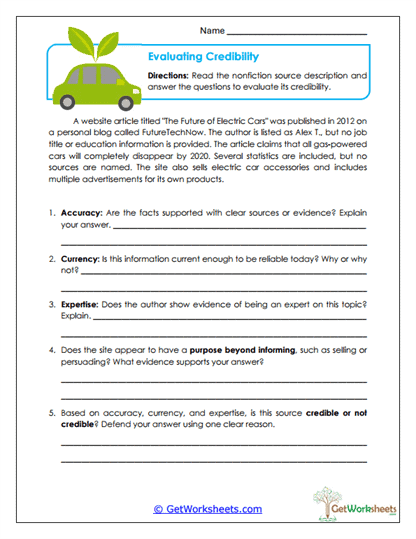
Students examine a nonfiction source description and evaluate its credibility using criteria such as accuracy, currency, expertise, and purpose. This activity strengthens reading comprehension, source evaluation, critical thinking, media literacy, and evidence-based reasoning while helping learners develop essential research skills. Designed for grades 5-8, the worksheet encourages students to think carefully about where information comes from and whether it deserves trust. Students learn that not all sources are equally reliable and that strong readers evaluate evidence before accepting claims.
Academic Focus
- Source Evaluation – Assess the reliability and trustworthiness of information.
- Critical Thinking Skills – Examine evidence before drawing conclusions.
- Research Readiness – Build foundational information-literacy habits.
- Media Literacy – Analyze author qualifications, publication dates, and source purpose.
Classroom & Home Use
- Develops Real-World Literacy Skills – Helps students evaluate information responsibly.
- Supports Research Instruction – Reinforces important academic practices.
- Print-and-Go Convenience – Requires little preparation.
- Encourages Evidence-Based Judgments – Promotes thoughtful analysis.
- Highly Relevant for Modern Learners – Addresses skills needed in digital environments.
Many parents worry about how children determine whether information online is trustworthy. This worksheet directly addresses that concern by teaching students to evaluate sources using clear criteria rather than assumptions. As learners analyze accuracy, expertise, relevance, purpose, and credibility, they strengthen comprehension, research skills, critical thinking, and media literacy. These abilities help students become more careful readers and more informed consumers of information throughout their academic and personal lives.
Bookmark Us Now!
New, high-quality worksheets are added every week! Do not miss out!