Setting Analysis Worksheets
About This Worksheet Collection
This engaging collection of setting analysis worksheets helps students move beyond simply identifying where a story takes place and instead explore how setting influences characters, mood, plot, theme, and overall meaning. Through visualization activities, creative rewriting tasks, evidence-based analysis, graphic organizers, and comparative thinking exercises, learners develop a deeper understanding of how authors use place, time, weather, and environment as powerful storytelling tools. The worksheets encourage students to examine the relationship between setting and other story elements while strengthening close reading and literary interpretation skills. Teachers, parents, and homeschool educators will appreciate the variety of activities that combine comprehension, creativity, and critical thinking in meaningful ways.
As students complete these worksheets, they strengthen reading comprehension, inference, visualization, literary analysis, evidence-based reasoning, creative writing, and critical thinking skills. Learners practice identifying setting details, analyzing mood and atmosphere, evaluating how environments influence character choices, exploring setting-driven plot events, and connecting setting to theme. Many activities also encourage students to compare different settings and imagine how stories would change in new environments, helping them become more thoughtful readers and stronger writers. Together, these resources help children understand that setting is not merely a backdrop but an essential element that shapes every aspect of a story.
Detailed Descriptions Of These Worksheets
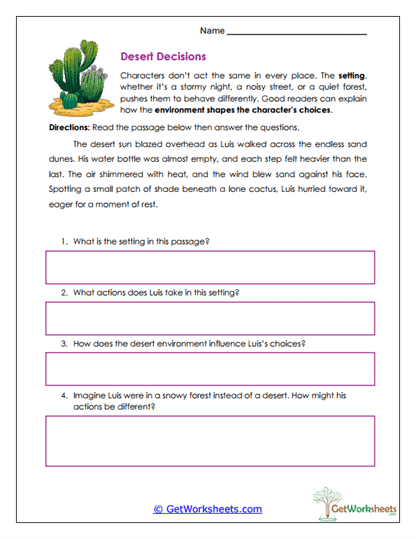
Desert Decisions
Students read a passage set in a challenging desert environment and analyze how the setting influences a character's choices and actions. Through guided questions and comparison activities, learners examine cause-and-effect relationships between environmental conditions and story events. The worksheet strengthens comprehension, inference, and character analysis skills while encouraging thoughtful reasoning. It helps students recognize how physical surroundings can shape decisions and outcomes.
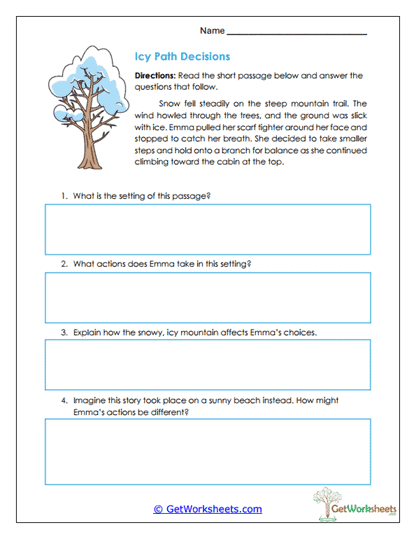
Icy Path Decisions
This worksheet asks students to explore how a snowy mountain setting directly affects a character's behavior and decision-making. Learners use textual evidence to explain why the environment creates certain challenges and influences actions. The activity strengthens setting analysis, critical thinking, and evidence-based reasoning skills. It also encourages students to consider how different settings might lead to different outcomes.
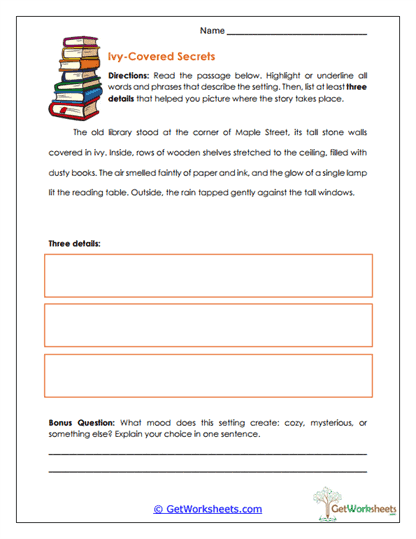
Ivy-Covered Secrets
Students gather clues from descriptive language to determine important details about a story's setting. By identifying key words and phrases, learners practice visualization and analyze how authors reveal setting indirectly through description. The worksheet strengthens close reading, vocabulary awareness, and literary interpretation skills. It also helps students understand how descriptive details contribute to mood and atmosphere.
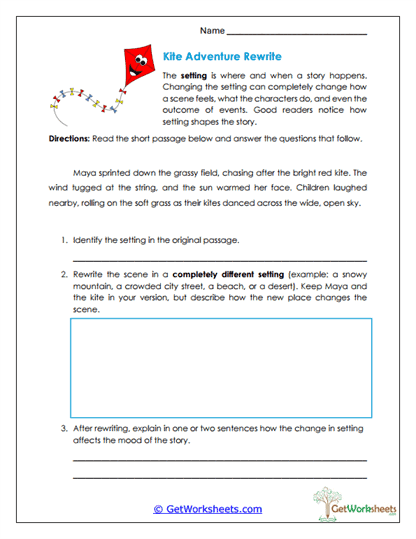
Kite Adventure Rewrite
Learners analyze an existing story setting and then rewrite the scene in a completely different environment. The activity demonstrates how changing a setting can alter mood, character behavior, and the overall feel of a story. Through creative writing and reflection, students strengthen comprehension, visualization, and literary analysis skills. It also encourages flexible thinking about story structure and author choices.
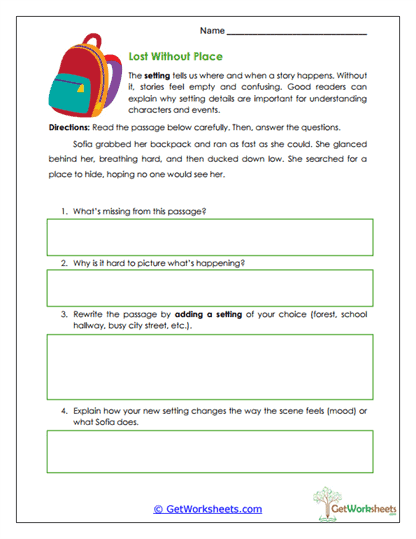
Lost Without Place
This activity presents students with a passage that intentionally lacks setting details and asks them to evaluate how the omission affects understanding. Learners identify missing information, explain why the scene feels incomplete, and rewrite the passage with a setting of their choice. The worksheet strengthens comprehension, descriptive writing, and visualization skills while highlighting the importance of setting in storytelling. It helps students understand how setting provides context for actions and emotions.
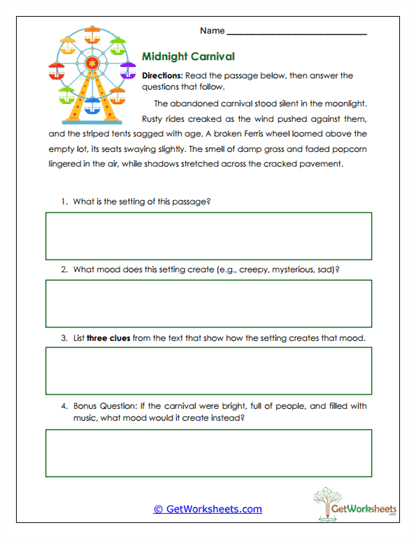
Midnight Carnival
Students read a passage set in an abandoned carnival and analyze how setting details create a specific mood and emotional atmosphere. Through evidence-based questions, learners examine how imagery, description, and environmental details influence readers' feelings. The activity strengthens literary analysis, inference, and comprehension skills. It also helps students recognize the relationship between setting and mood.
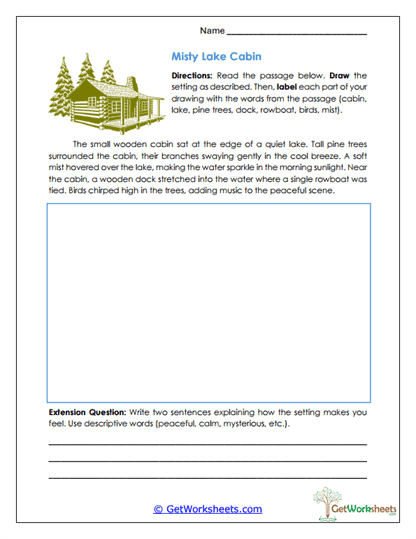
Misty Lake Cabin
This worksheet combines reading and art as students read a descriptive passage and create a drawing that reflects the setting. Learners identify important details, label features from the text, and analyze the mood created by the environment. The activity strengthens visualization, close reading, and descriptive analysis skills. It also helps students connect textual evidence to mental imagery in a creative and engaging way.
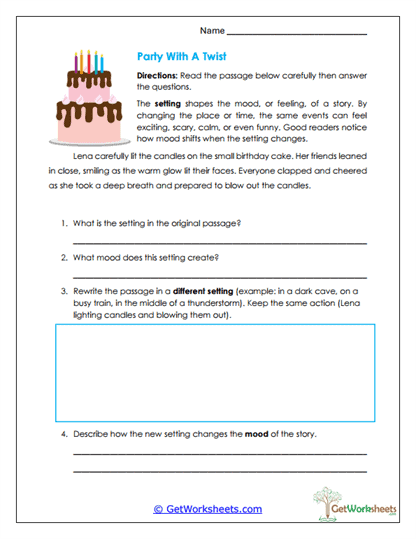
Party With a Twist
Students examine a familiar story event and then rewrite it in a completely different setting to explore how mood changes. The activity demonstrates how the same event can feel exciting, suspenseful, joyful, or frightening depending on the environment. Through creative rewriting and comparison, learners strengthen literary analysis and writing skills. It also deepens understanding of how setting shapes emotional tone.
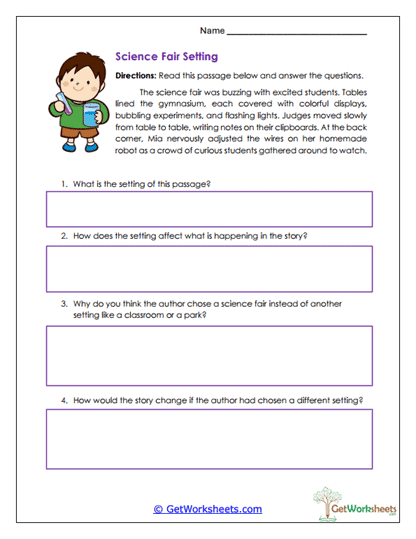
Science Fair Setting
Learners analyze a story set at a busy science fair and evaluate why the author chose that particular environment. Students consider how the setting supports character actions, story events, and the overall purpose of the narrative. The worksheet strengthens inference, reasoning, and literary analysis skills. It also encourages students to think critically about author decisions.
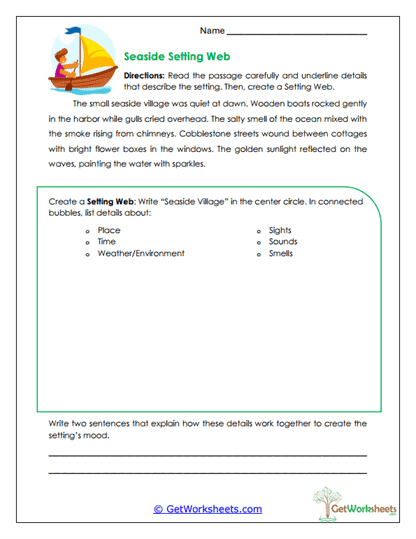
Seaside Setting Web
Students organize descriptive clues from a passage into a visual web that focuses on place, time, weather, sensory details, and mood. The activity helps learners identify how individual setting details work together to create a vivid environment. Through structured analysis, students strengthen comprehension, organization, and visualization skills. The graphic organizer format is especially helpful for visual learners.
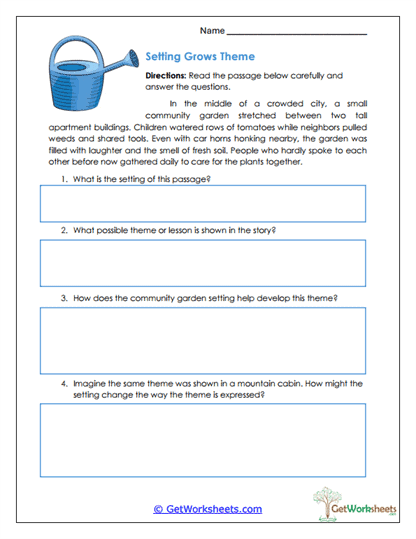
Setting Grows Theme
This advanced worksheet asks students to identify a story's theme and explain how the setting helps develop and reinforce that message. Learners analyze the relationship between environment and theme while considering how the same lesson might be expressed in a different setting. The activity strengthens literary interpretation, critical reasoning, and theme analysis skills. It encourages deeper understanding of how story elements work together.
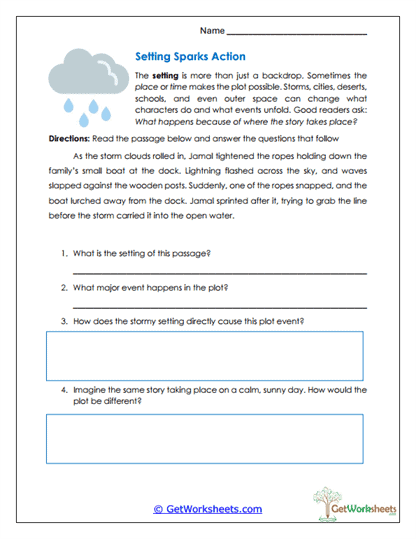
Setting Sparks Action
Students investigate how setting directly drives important plot events rather than simply serving as a backdrop. By examining environmental conditions, weather, and location details, learners identify ways the setting creates challenges, opportunities, and conflicts within the story. The worksheet strengthens cause-and-effect reasoning, plot analysis, and evidence-based thinking skills. It helps students recognize setting as an active force within narratives.
Bookmark Us Now!
New, high-quality worksheets are added every week! Do not miss out!