Theme Identification Worksheets
About This Worksheet Collection
This collection of theme identification worksheets helps students develop deeper reading comprehension and literary analysis skills by exploring how stories communicate meaningful lessons, values, and universal truths. Through character analysis, evidence-based questioning, dialogue interpretation, symbolism exploration, and comparative reading activities, learners practice identifying themes and supporting their ideas with textual evidence. The worksheets encourage students to move beyond simple plot summary and think critically about how authors reveal messages through emotions, conflict, growth, and relationships.
As students complete these activities, they strengthen inference skills, close reading habits, analytical reasoning, emotional literacy, and evidence-based writing abilities. The collection also supports thoughtful discussion, empathy development, reflective thinking, and literary interpretation while introducing more advanced concepts such as symbolism, counter-theme, universal themes, and theme comparison. Together, these worksheets help students become more confident and thoughtful readers who can interpret deeper meaning within fiction texts and explain their ideas clearly using proof from the story.
Detailed Descriptions Of These Worksheets
Decoding Goodness
Students identify a story's theme by analyzing character actions, dialogue, and emotional responses within a short fiction passage. The activities encourage learners to explain how kindness, empathy, and generosity are revealed through character choices and interactions. Students strengthen inference skills and evidence-based reasoning through thoughtful literary analysis. This practice also helps readers connect story lessons to real-life values and relationships.
Fear vs. Freedom Test
This worksheet helps students analyze both a story's central theme and an opposing counter-theme using textual evidence. Learners examine character choices, emotional risks, and personal growth while identifying multiple perspectives within the story. The activities strengthen close reading and higher-level literary analysis skills. They also encourage students to recognize that stories can communicate layered and complex ideas.
Greener Than Paint
Students explore theme and character growth by analyzing how emotions, conflict, and decisions shape a character's development over time. Learners identify the story's life lesson while supporting ideas with details from the passage. The activities strengthen empathy, literary interpretation, and inference skills. They also encourage reflection on values such as gratitude, honesty, and friendship.
Haiku of Surrender
This worksheet combines literary analysis with creative writing by asking students to express a story's theme through poetry. Learners identify the emotional lesson within the fiction passage and write a haiku using the traditional 5-7-5 syllable structure. The activities strengthen comprehension, reflection, and poetic expression skills. They also encourage students to communicate complex emotions in concise and meaningful ways.
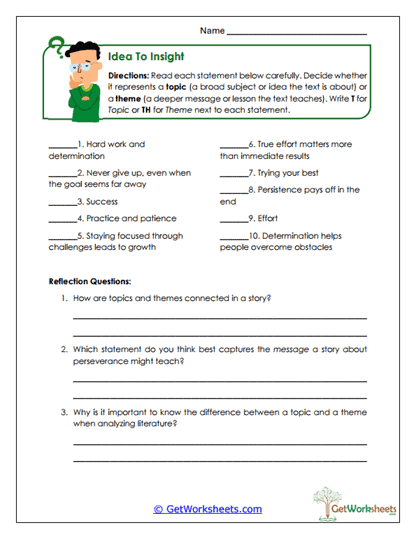
Idea to Insight
Students learn the important difference between a story's topic and its theme through focused literary analysis activities. Learners classify statements as either broad subjects or deeper life lessons communicated by stories. The exercises strengthen abstract thinking and literary interpretation skills. They also help students move beyond surface-level reading into more meaningful analysis.
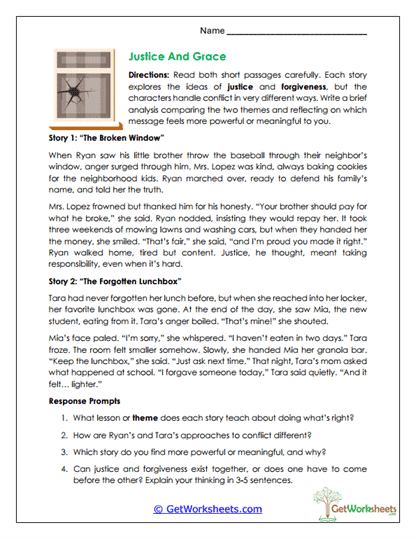
Justice and Grace
This worksheet asks students to compare themes across two fiction passages focused on justice, forgiveness, honesty, and responsibility. Learners analyze how different characters respond to conflict while identifying similarities and differences between the stories' messages. The activities strengthen comparative thinking and evidence-based reasoning skills. They also encourage thoughtful discussion about values and emotional choices.
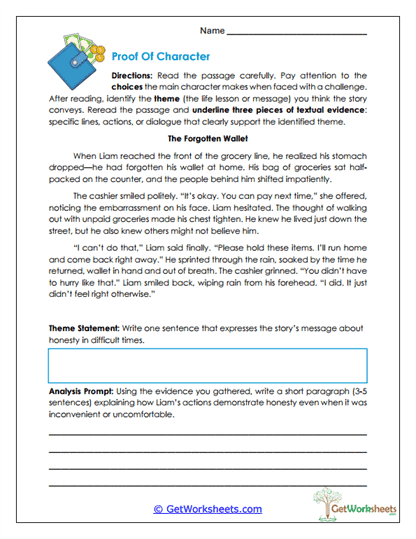
Proof of Character
Students identify character traits and support their interpretations using direct textual evidence from a fiction passage. Learners analyze actions, dialogue, and emotional responses while connecting character behavior to larger themes about honesty and responsibility. The activities strengthen close reading and literary analysis skills. They also encourage students to support ideas with meaningful proof from the text.
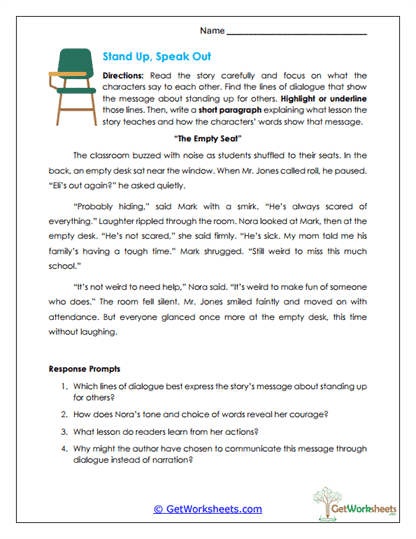
Stand Up, Speak Out
This worksheet helps students analyze theme through dialogue, actions, and emotional responses within a short fiction story. Learners identify lines that reveal important lessons about courage, empathy, and defending others in difficult situations. The activities strengthen inference and evidence-based thinking skills. They also encourage students to reflect on kindness and standing up for what is right.
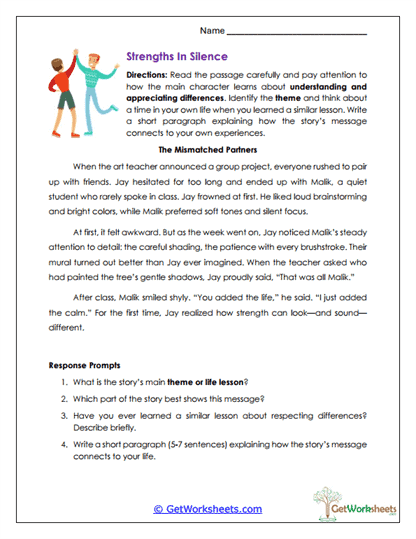
Strengths in Silence
Students explore how character relationships and personality differences reveal a story's deeper theme. Learners analyze how respecting different strengths and communication styles contributes to character growth and understanding. The activities strengthen empathy, reflection, and literary interpretation skills. They also encourage students to value teamwork, inclusion, and personal differences.
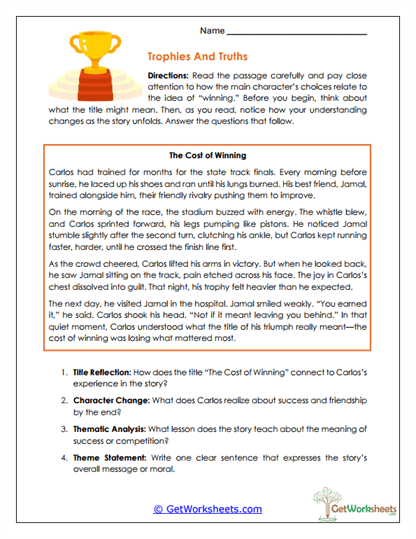
Trophies and Truths
This worksheet guides students through analyzing theme, symbolism, and character realization within a fiction story. Learners examine emotional turning points and changing perspectives while identifying the larger lesson communicated through the narrative. The activities strengthen critical thinking and literary awareness skills. They also encourage reflection on success, honesty, perseverance, and friendship.
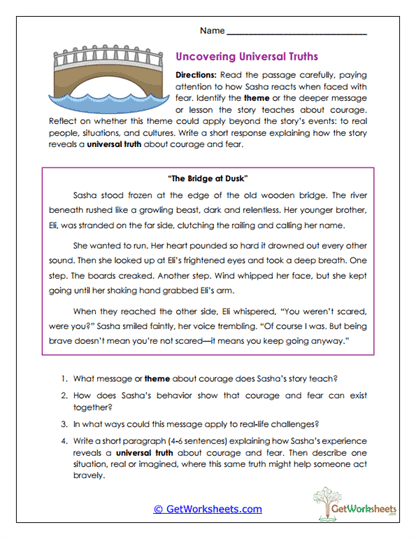
Uncovering Universal Truths
Students identify universal themes and connect them to real-life experiences beyond the story itself. Learners analyze how courage, fear, perseverance, and responsibility shape character actions and deeper literary meaning. The activities strengthen analytical reasoning and reflective thinking skills. They also help students understand why certain themes connect across cultures and generations.
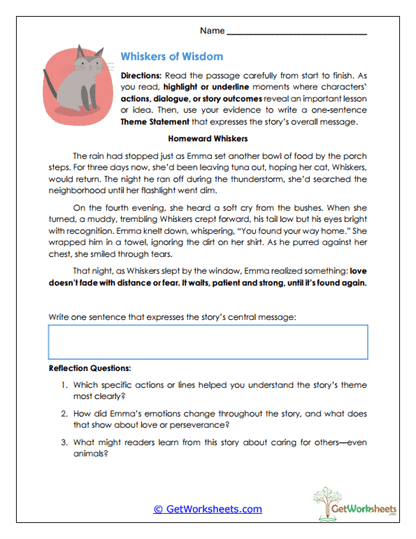
Whiskers of Wisdom
This worksheet helps students identify theme by analyzing character actions, emotions, dialogue, and important story events. Learners underline evidence connected to the story's message and write a one-sentence theme statement explaining the lesson or central idea. The activities strengthen close reading and literary interpretation skills. They also encourage thoughtful discussion about values such as perseverance, kindness, and courage.
Bookmark Us Now!
New, high-quality worksheets are added every week! Do not miss out!