Bias and Perspective Worksheets
About This Worksheet Collection
This engaging collection of bias and perspective worksheets helps students become more thoughtful readers by teaching them how authors, speakers, and media sources can influence understanding through word choice, tone, evidence, and point of view. Through activities involving news headlines, opinion writing, source evaluation, audience analysis, fact-versus-opinion practice, and perspective comparison, learners develop the skills needed to evaluate information critically and fairly. The worksheets encourage students to look beyond surface-level messages and consider how language, assumptions, and presentation can shape interpretation. Teachers, parents, and homeschool educators will appreciate the strong connection between literacy instruction, critical thinking, and real-world media awareness.
As students complete these activities, they strengthen reading comprehension, analytical thinking, media literacy, source evaluation, inferencing, reasoning, perspective-taking, and writing skills. Learners practice distinguishing facts from opinions, identifying bias and loaded language, evaluating evidence, recognizing intended audiences, and revising writing to improve objectivity. Many activities encourage students to compare viewpoints and justify conclusions using textual evidence, helping them become more independent and evidence-based thinkers. Together, these worksheets help students become more informed readers, stronger communicators, and more confident evaluators of information.
Detailed Descriptions Of These Worksheets
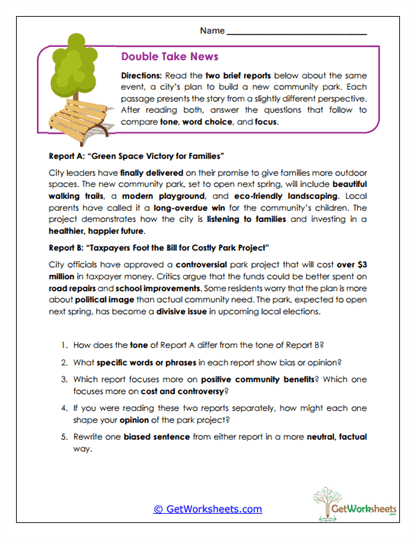
Double Take News
Students compare two reports covering the same event and analyze how tone, focus, perspective, and word choice influence understanding. The activity encourages learners to identify similarities and differences while evaluating examples of bias and emphasis. Through guided comparison, students strengthen critical reading, inferencing, and evidence-based reasoning skills. It also helps them recognize that different authors can present the same information in very different ways.
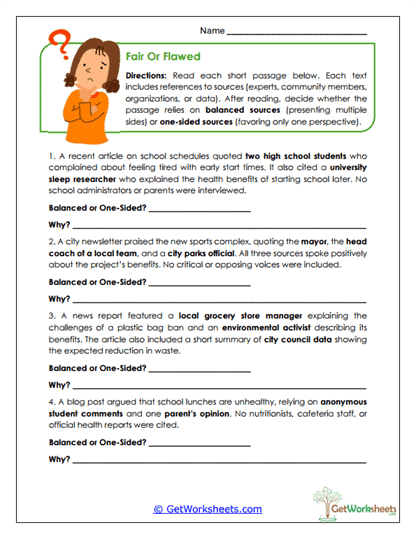
Fair or Flawed
This worksheet asks students to evaluate informational passages and determine whether claims are supported by balanced evidence or rely on one-sided perspectives. Learners analyze source quality, identify missing viewpoints, and assess whether enough evidence is provided to support conclusions. The activity strengthens source evaluation and critical thinking skills while encouraging thoughtful reading habits. It also helps students become more informed consumers of information.
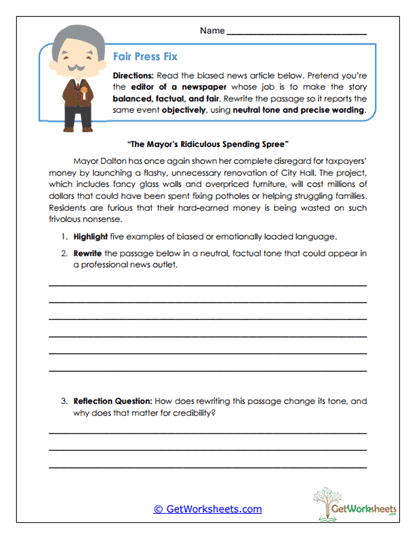
Fair Press Fix
Students act as editors by revising a biased news article and replacing emotionally charged language with objective wording. The activity reinforces media literacy and revision skills while demonstrating how professional reporting relies on fairness and accuracy. Learners strengthen vocabulary awareness, editing strategies, and analytical thinking as they revise the article. The authentic format helps connect literacy skills to real-world communication.
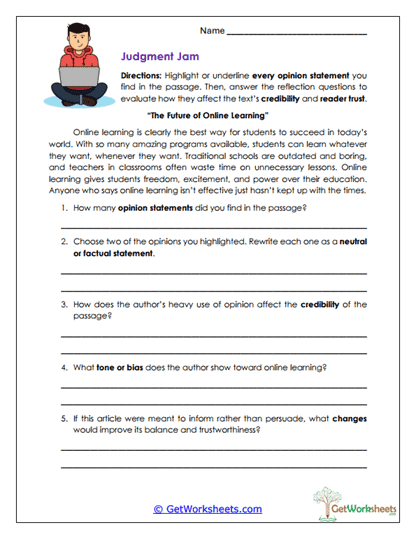
Judgment Jam
This worksheet focuses on identifying opinion statements within a persuasive passage and evaluating how those opinions affect credibility. Learners distinguish between factual information and personal judgments before revising subjective statements into objective language. The activity strengthens bias recognition, evidence evaluation, and critical reading skills. It also encourages students to question unsupported claims and seek reliable information.
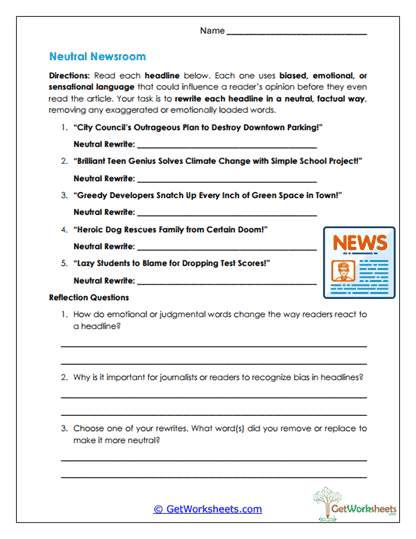
Neutral Newsroom
Students analyze news headlines to identify bias, sensationalism, and loaded language before rewriting each headline in a more neutral and factual way. The activity develops media literacy and vocabulary awareness while helping learners understand how wording influences audience reactions. Through repeated practice, students strengthen objectivity and source evaluation skills. It also encourages thoughtful analysis of informational texts.
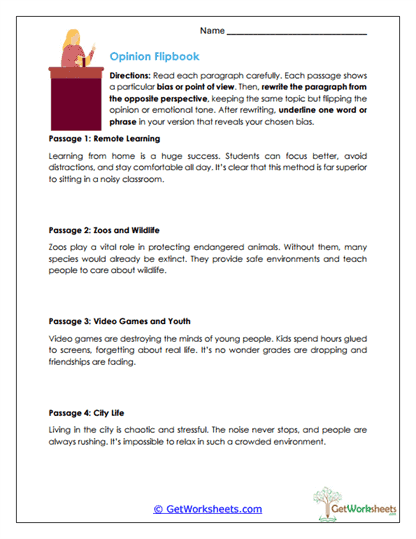
Opinion Flipbook
Learners rewrite opinion-based passages from an opposing perspective to explore how viewpoint influences communication. The activity encourages flexible thinking as students identify bias, adjust tone, and create alternative interpretations of the same topic. Through perspective shifting, students strengthen writing, reasoning, and empathy skills. It also helps them appreciate the complexity of different viewpoints.
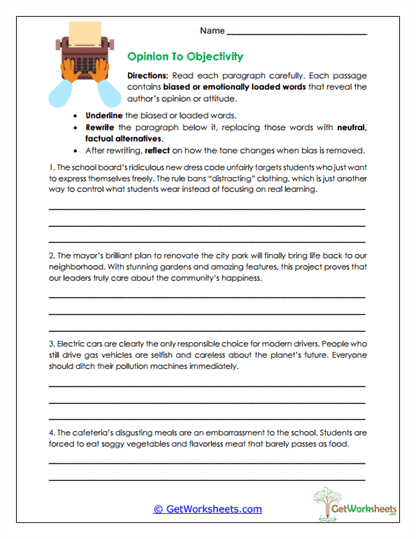
Opinion to Objectivity
This revision-focused worksheet teaches students how to transform emotionally charged statements into neutral, fact-based writing. Learners identify opinion language, evaluate author attitude, and replace loaded wording with objective alternatives. The activity strengthens critical reading, editing, and writing skills while reinforcing the distinction between facts and opinions. It also promotes more balanced communication practices.
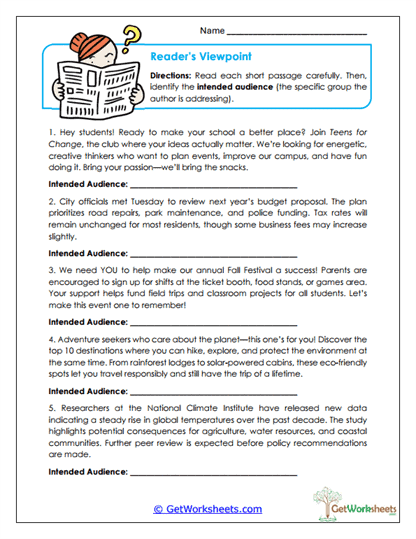
Reader's Viewpoint
Students examine short passages and determine the audience each author is trying to reach. By analyzing tone, purpose, vocabulary, and context clues, learners strengthen audience awareness and perspective analysis skills. The activity reinforces comprehension and inferencing while helping students understand how writers tailor messages for different groups. It also connects literacy skills to real-world communication.
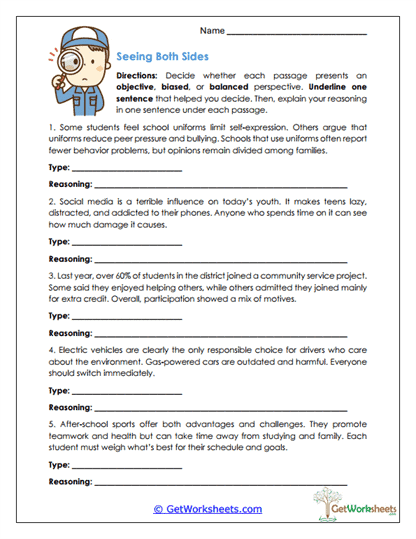
Seeing Both Sides
This worksheet asks students to classify passages as objective, biased, or balanced and support their decisions with evidence from the text. Learners evaluate language choices, perspectives, and supporting details while strengthening analytical reading skills. The activity promotes thoughtful evaluation of information and encourages evidence-based reasoning. It also helps students recognize how authors communicate different viewpoints.
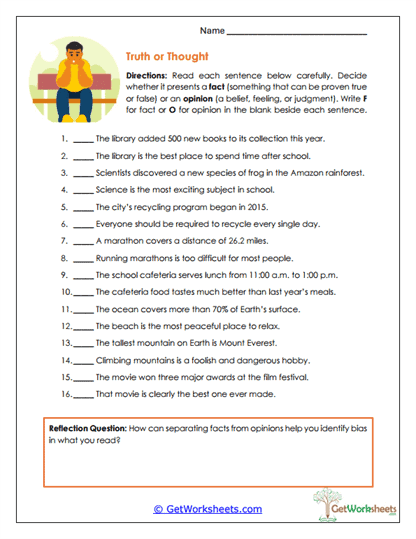
Truth or Thought
Students determine whether statements represent facts that can be verified or opinions based on personal beliefs and judgments. The activity strengthens reasoning, comprehension, and media literacy while helping learners understand how opinions can contribute to bias. Through repeated classification practice, students build stronger habits of evidence-based evaluation. It also provides an important foundation for critical reading across subjects.
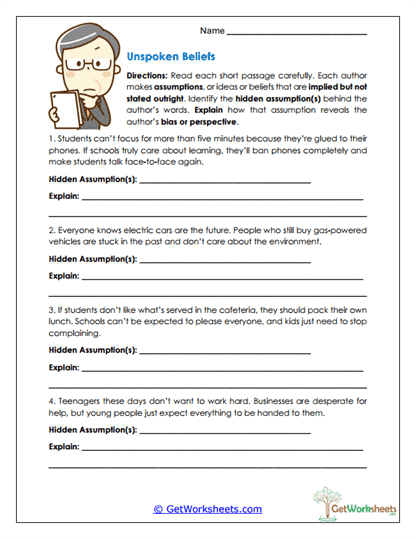
Unspoken Beliefs
Learners explore statements that contain implied assumptions and analyze the hidden beliefs behind them. The worksheet encourages students to evaluate reasoning, consider alternative viewpoints, and identify conclusions that may not be supported by evidence. Through inference and perspective analysis, students strengthen higher-order thinking skills. It also helps them become more reflective and thoughtful readers.
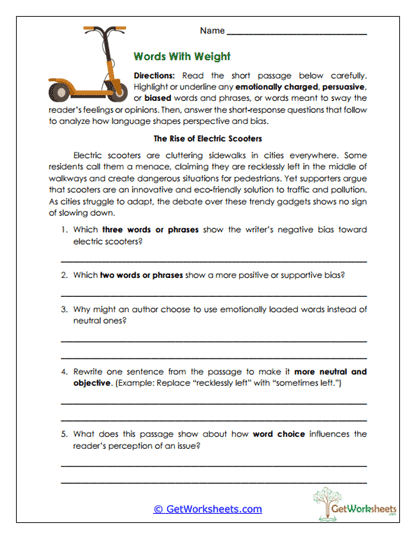
Words With Weight
Students examine passages for emotionally charged words and phrases that reveal bias or influence audience opinion. After identifying examples of loaded language, learners revise the wording to create a more neutral tone. The activity strengthens vocabulary awareness, tone analysis, media literacy, and writing skills. It also helps students understand how word choice shapes interpretation and perspective.
Bookmark Us Now!
New, high-quality worksheets are added every week! Do not miss out!