Reading Tongue Twisters Worksheets
About This Worksheet Collection
This lively collection of reading tongue twister worksheets helps students strengthen oral fluency, pronunciation, pacing, and confidence through playful language activities that feel more like games than traditional reading practice. By combining silly sound patterns, repeated reading, partner activities, group performance, and creative word play, the worksheets encourage learners to experiment with rhythm, articulation, and expressive speaking in a low-pressure environment. The activities use engaging formats such as choral reading, pacing challenges, partner coaching, and tongue twister construction to keep students actively involved while building important reading and speaking skills. Teachers, parents, and homeschool educators will appreciate how naturally these worksheets motivate reluctant readers while still delivering meaningful literacy practice.
As students work through these fluency activities, they strengthen articulation, oral reading smoothness, phonemic awareness, listening skills, pacing control, self-monitoring, and expressive reading abilities. Learners also develop confidence with public speaking, collaboration, and repeated oral practice while improving pronunciation and attention to sound patterns within language. Many worksheets encourage students to reflect on their progress, compare different reading styles, and experiment with pacing and expression to better understand how fluent reading should sound. Together, these activities help children become more comfortable, expressive, and confident readers who can read aloud with greater clarity and control.
Detailed Descriptions Of These Worksheets
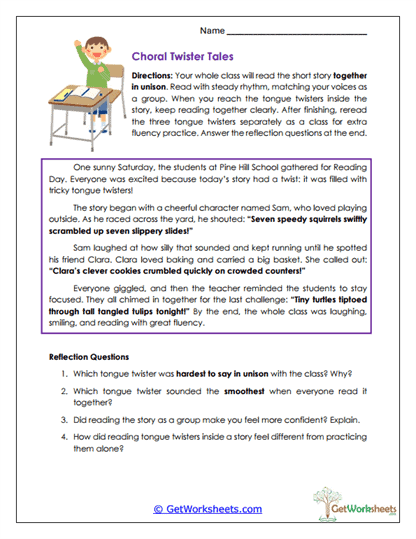
Choral Twister Tales
Students read a humorous tongue-twister story together as a group while practicing steady pacing, pronunciation, and expressive oral reading. The choral format helps hesitant readers feel more comfortable participating while strengthening rhythm and listening skills. Learners also improve articulation by repeatedly practicing tricky sound combinations within the story context. The shared reading experience creates a fun and energetic fluency activity that encourages teamwork and confidence.
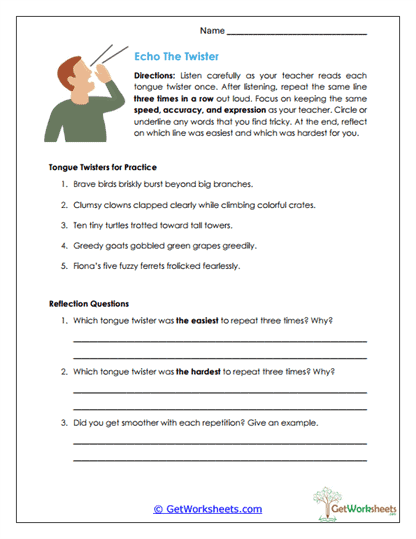
Echo The Twister
This worksheet turns fluency practice into a listening-and-repeating challenge where students hear tongue twisters and then repeat them several times aloud. Learners focus on pronunciation, pacing, and expression while noticing how repeated practice improves smoothness over time. Reflection questions encourage students to think about which sound combinations felt easiest or most difficult. The playful format helps build oral reading confidence in a supportive and engaging way.
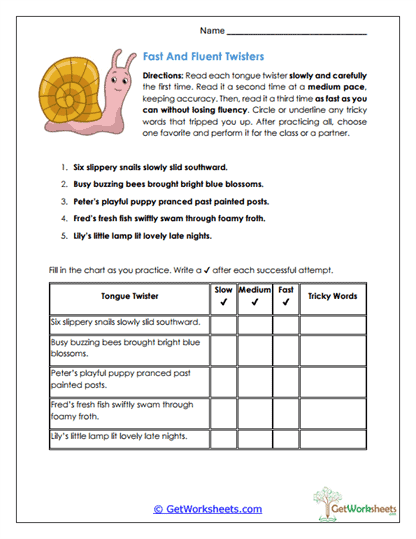
Fast And Fluent Twisters
Students practice reading tongue twisters at slow, medium, and fast speeds while tracking accuracy and fluency growth in a chart. The activity teaches learners that fluent reading involves balance between speed, smoothness, and clear pronunciation. Through repeated oral practice, students strengthen pacing control and self-monitoring skills. The progress-tracking format also helps children recognize their own improvement and build confidence over time.
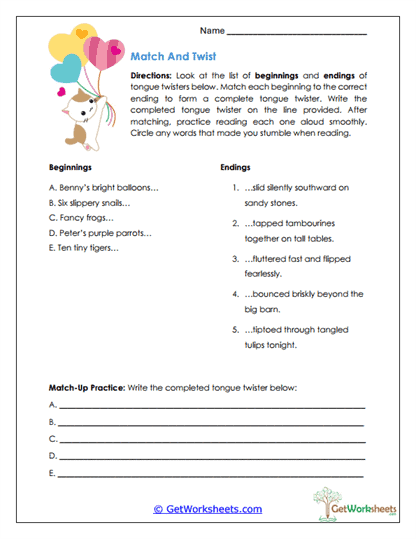
Match And Twist
Learners match the beginnings and endings of tongue twisters to create complete silly phrases before reading them aloud smoothly and clearly. The activity encourages students to pay close attention to rhythm, sound patterns, and sentence flow while practicing articulation and fluency. By constructing their own tongue twisters, learners become more engaged with the language and repeated sounds. The interactive matching format makes foundational fluency practice feel creative and playful.
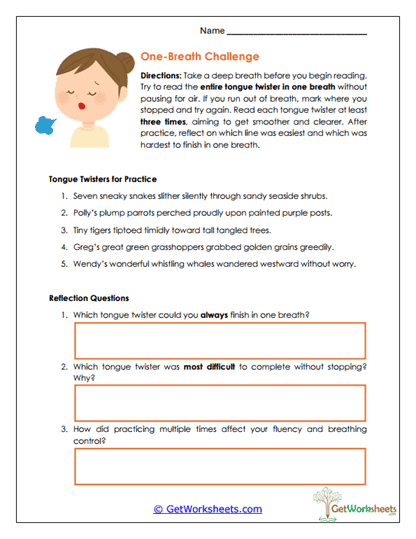
One-Breath Challenge
This worksheet challenges students to read increasingly difficult tongue twisters aloud in one breath without stopping. Learners strengthen breath control, pacing, articulation, and reading stamina while practicing smoother oral reading. Reflection prompts encourage students to think about which lines required the most control and concentration. The challenge-based structure keeps fluency work active, energetic, and highly motivating for students.
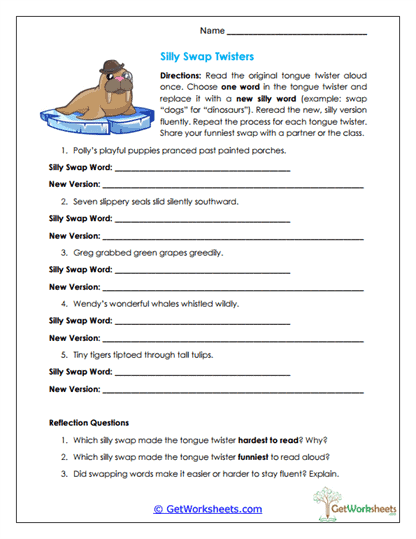
Silly Swap Twisters
Students replace words within tongue twisters with silly alternatives and then reread the new versions aloud to hear how the rhythm and humor change. The activity encourages experimentation with pacing, pronunciation, and sound patterns while strengthening vocabulary flexibility and oral fluency. Learners also reflect on which substitutions made the tongue twisters harder or funnier to read. The creative structure helps students view reading practice as playful language exploration instead of repetitive drill work.
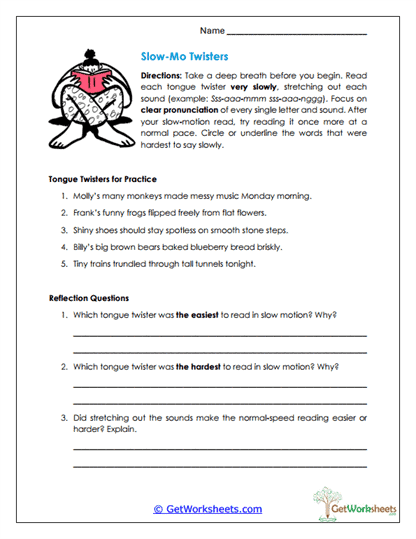
Slow-Mo Twisters
This activity teaches students how slowing down can improve pronunciation and fluency by having them read tongue twisters in exaggerated slow motion. Learners stretch sounds carefully, focus on articulation, and compare how the twisters feel when read slowly versus at normal speed. The process helps students build stronger pacing awareness and speech clarity. It is especially useful for readers who tend to rush through difficult sound combinations.
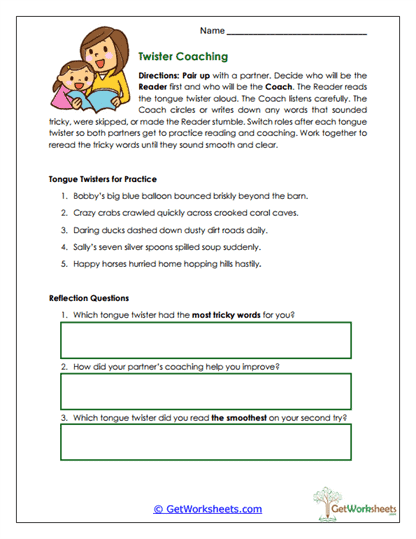
Twister Coaching
Students work with partners to practice tongue twisters while offering feedback about skipped words, pronunciation difficulties, and pacing. After each reading, partners switch roles so every learner practices both reading fluency and supportive coaching skills. The collaborative structure encourages careful listening and self-correction while building oral confidence. It also helps students develop respectful communication and teamwork during literacy practice.
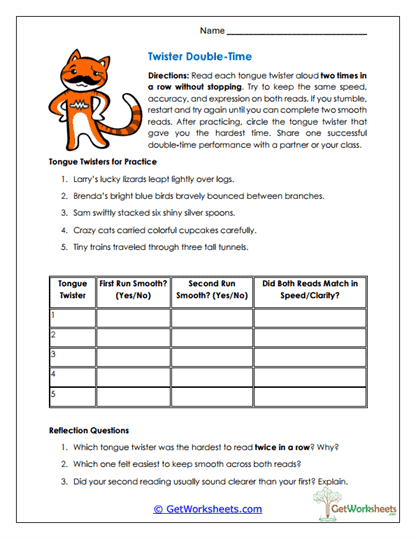
Twister Double-Time
This worksheet focuses on repeated reading by asking students to read tongue twisters aloud twice in a row while monitoring smoothness and pacing. Learners compare their first and second attempts to identify improvements in pronunciation and fluency. The repetition helps students build reading stamina and greater control over difficult sound combinations. Reflection opportunities also encourage children to recognize how practice strengthens oral reading confidence.
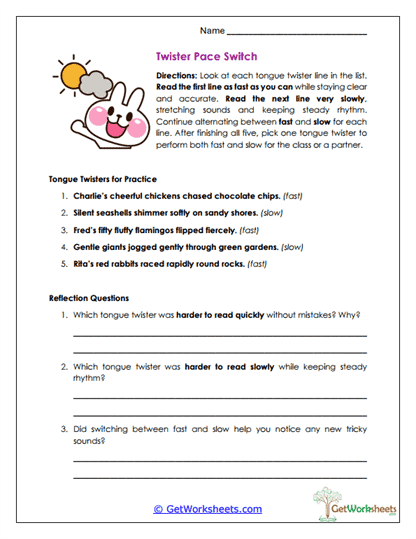
Twister Pace Switch
Students alternate between reading tongue twisters as quickly as possible and then rereading them slowly with careful pronunciation and rhythm. The activity helps learners experiment with pacing and understand how speed affects fluency and clarity. Through repeated oral reading, students strengthen articulation, expression, and pacing flexibility. The energetic format keeps fluency practice engaging while reinforcing the importance of balanced reading control.
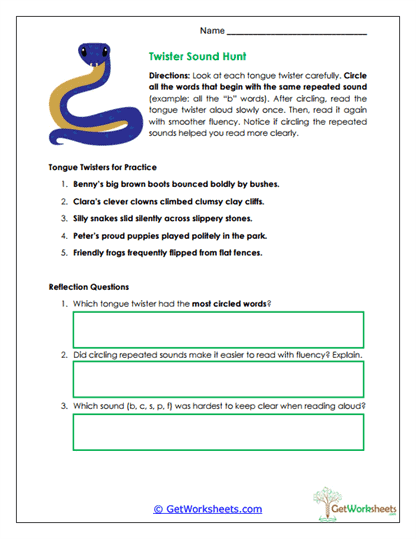
Twister Sound Hunt
This worksheet asks learners to identify and circle repeated beginning sounds within tongue twisters before rereading them aloud smoothly and clearly. Students strengthen phonics awareness and alliteration recognition while improving pronunciation and pacing during oral reading. The repeated sound patterns help children become more aware of how rhythm works in spoken language. The activity also supports stronger articulation through repeated practice with similar consonant sounds.
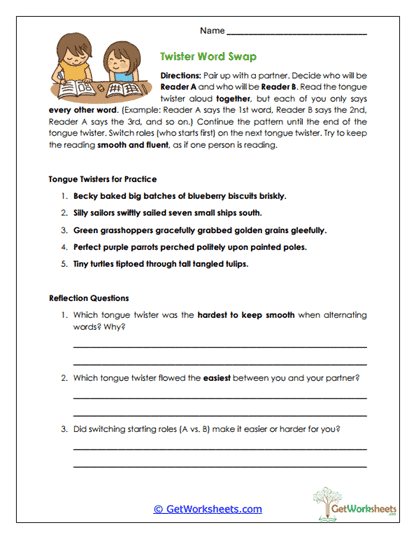
Twister Word Swap
Students take turns with a partner reading every other word of a tongue twister aloud while trying to maintain smooth pacing and rhythm together. The unusual reading pattern forces learners to listen carefully, stay focused, and coordinate timing with another reader. Through shared fluency practice, students strengthen teamwork, oral expression, and concentration skills. The cooperative challenge format also creates a lively and memorable classroom activity.
Bookmark Us Now!
New, high-quality worksheets are added every week! Do not miss out!