Supporting Details and Evidence Worksheets
About This Worksheet Collection
This collection of supporting details and evidence worksheets helps students strengthen critical reading, analytical thinking, and evidence-based writing skills through meaningful literacy activities focused on informational texts and paragraph development. The worksheets guide learners through identifying relevant supporting details, evaluating evidence quality, distinguishing fact from opinion, analyzing credibility and bias, synthesizing information across sources, and developing stronger written explanations. With a balance of reading comprehension and writing practice, these activities help students understand how evidence supports ideas clearly and effectively in both academic reading and written communication.
As students work through these worksheets, they build stronger comprehension habits, paragraph organization skills, logical reasoning abilities, and informational writing fluency. The collection also supports close reading, elaboration, summarizing, source evaluation, analytical discussion, and evidence-based response writing while introducing important concepts such as credibility, relevance, bias, and source synthesis. Together, these activities help students become more thoughtful readers, clearer writers, and more confident critical thinkers across all subject areas.
Detailed Descriptions Of These Worksheets
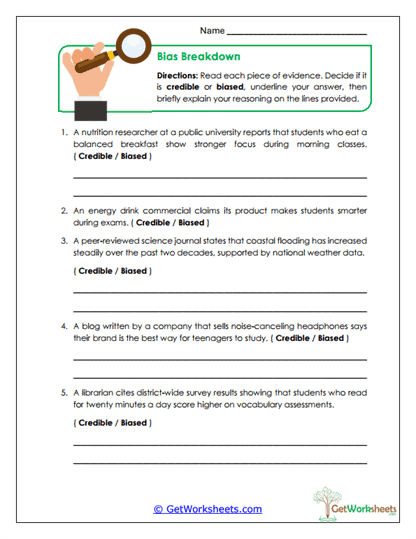
Bias Breakdown
Students evaluate whether informational statements and sources appear credible or biased based on wording, purpose, and source reliability. The activities encourage learners to think critically about advertisements, surveys, articles, and opinion-based claims. Students strengthen media literacy, analytical reasoning, and source evaluation skills. This practice also helps learners become more thoughtful consumers of information in both academic and real-world settings.
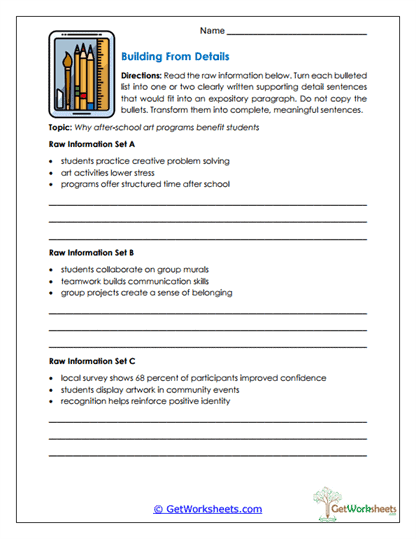
Building From Details
This worksheet teaches students how to transform notes and bullet-point facts into organized informational paragraphs. Learners use provided details to create topic sentences and complete written responses in their own words. The activities strengthen paragraph construction, organization, and informational writing fluency. They also encourage students to connect supporting details logically within academic writing.
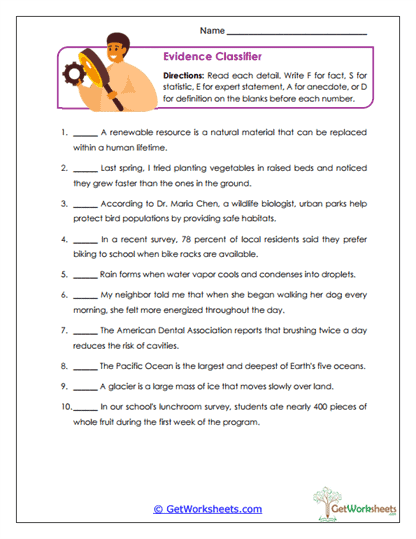
Evidence Classifier
Students identify and sort different types of evidence such as facts, statistics, expert statements, anecdotes, and definitions. The activities strengthen informational text analysis and research literacy skills while introducing important academic vocabulary. Learners practice evaluating how authors support ideas in nonfiction writing. This worksheet also prepares students for more advanced research and evidence-based writing tasks.
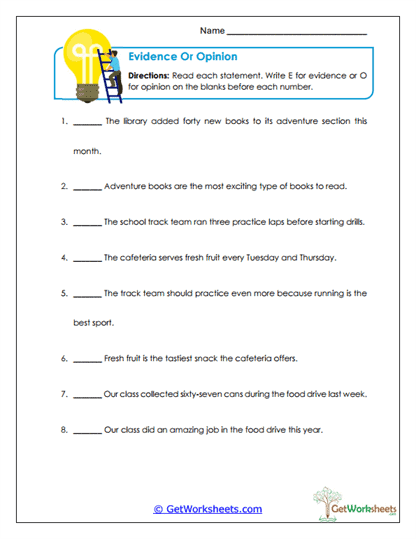
Evidence or Opinion
This worksheet helps students distinguish between evidence-based statements and personal opinions. Learners analyze sentences carefully to determine whether information is factual, objective, or based on personal belief and preference. The activities strengthen critical literacy and reasoning skills. They also encourage students to become more thoughtful readers and communicators.
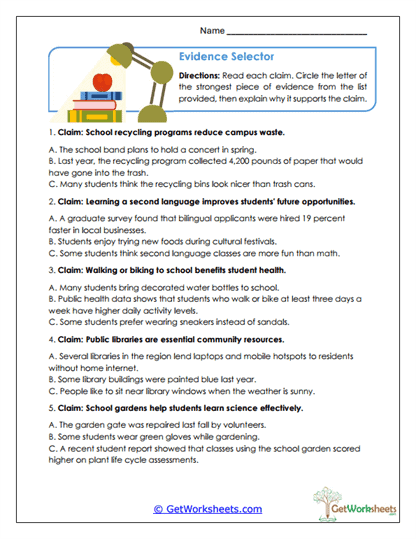
Evidence Selector
Students evaluate multiple pieces of evidence and choose the strongest support for a claim or main idea. The activities encourage learners to compare relevant and irrelevant details while analyzing which evidence is most convincing. Students strengthen critical reading and analytical decision-making skills. This practice also supports stronger evidence selection in academic writing.
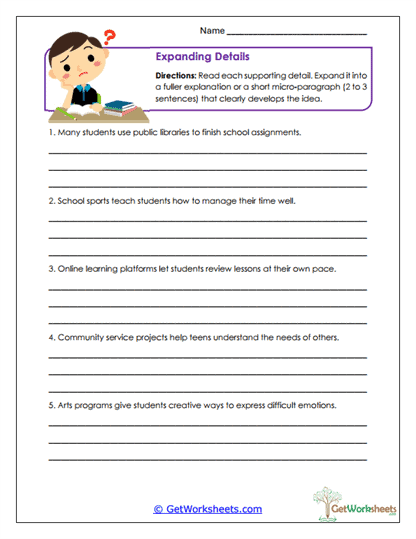
Expanding Details
This writing-focused worksheet encourages students to turn short statements into fuller explanations using complete sentences and organized thinking. Learners expand ideas into short paragraphs while strengthening elaboration, sentence fluency, and descriptive writing skills. The activities also support reasoning and explanatory communication. Students gain confidence expressing ideas more clearly and thoughtfully in writing.
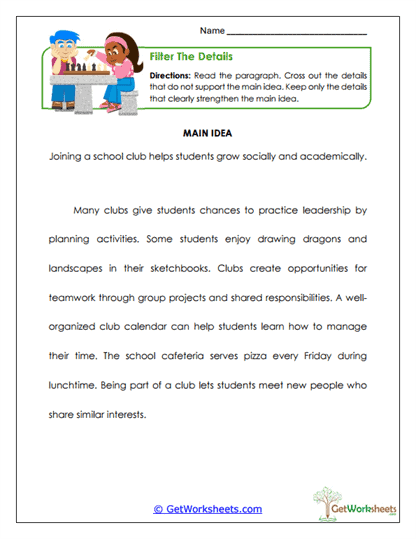
Filter the Details
Students identify which details in an informational paragraph support the main idea and which details are unnecessary or off-topic. The activities strengthen paragraph analysis, close reading, and critical thinking skills. Learners practice recognizing how strong writing stays focused on a clear central message. This worksheet also supports stronger paragraph organization in student writing.
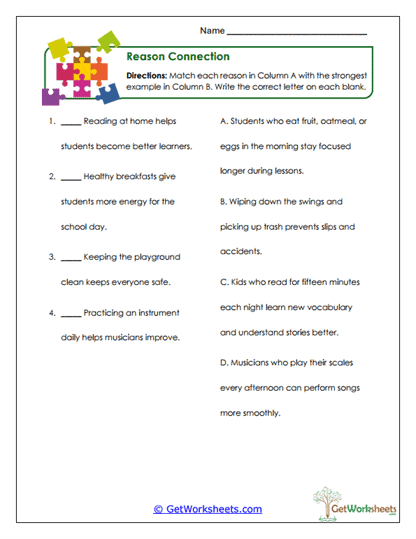
Reason Connection
This worksheet helps students match general reasons with the strongest supporting examples or evidence. Learners analyze logical relationships between claims and supporting details while strengthening reasoning and inference skills. The activities encourage careful reading and thoughtful comparison between examples. They also reinforce how evidence supports explanations and conclusions effectively.
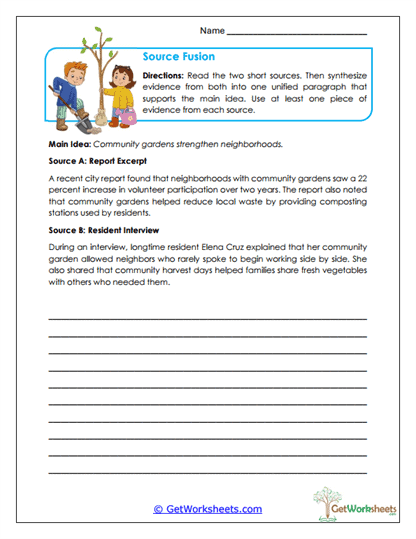
Source Fusion
Students read two informational passages and combine evidence from both sources into one organized written explanation. The activities strengthen summarizing, synthesis, and evidence-based writing skills while teaching students how to connect ideas across texts. Learners also improve reading comprehension and analytical reasoning. This worksheet provides valuable preparation for future research and informational writing tasks.
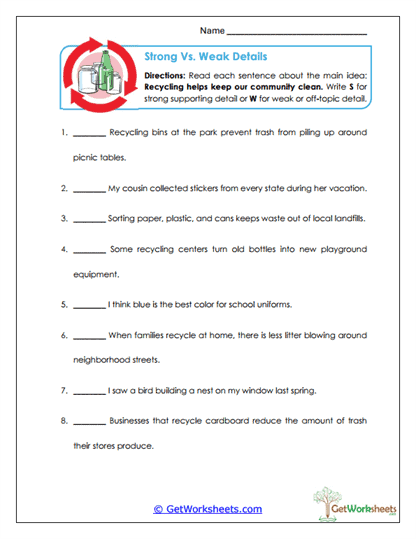
Strong vs. Weak Details
This worksheet teaches students how to distinguish between strong supporting details and weak or unrelated information connected to a topic. Learners evaluate whether details clearly support the main idea or distract from it. The activities strengthen logical reasoning, topic analysis, and informational reading skills. They also help students understand how evidence improves writing clarity and communication.
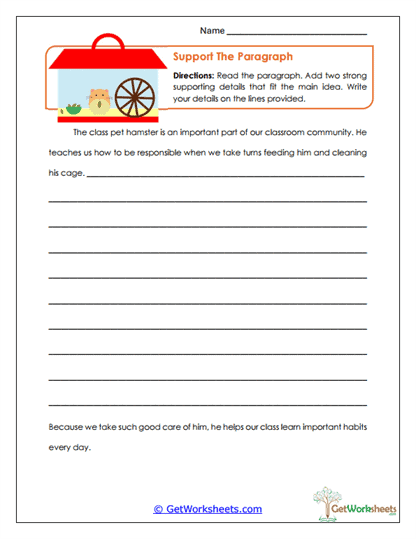
Support the Paragraph
Students strengthen a paragraph by adding meaningful supporting details connected to a central idea. Learners practice elaboration, descriptive writing, and sentence organization while expanding a simple paragraph into a more complete written response. The activities reinforce how supporting details improve clarity and reader understanding. They also help developing writers build stronger paragraph-writing confidence.
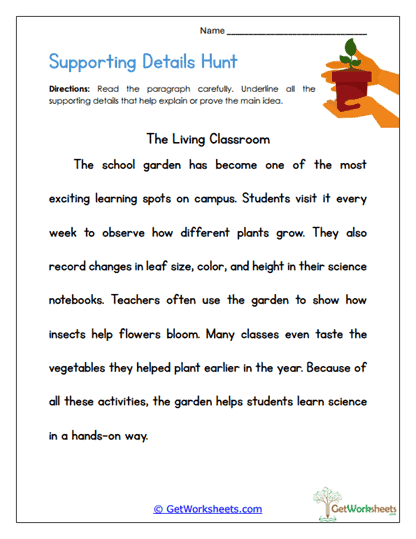
Supporting Details Hunt
This worksheet helps students identify supporting details and textual evidence within an informational paragraph. Learners underline sentences that explain or strengthen the main idea while practicing close reading and evidence analysis. The activities strengthen comprehension, inference, and paragraph understanding skills. They also encourage students to recognize how authors organize information effectively in nonfiction writing.
Bookmark Us Now!
New, high-quality worksheets are added every week! Do not miss out!