Summarizing Worksheets
About This Worksheet Collection
This thoughtfully designed collection of summarizing worksheets helps students learn how to identify the most important ideas in a text without getting distracted by unnecessary details. Through graphic organizers, sequencing charts, fact-versus-opinion activities, headline writing, and guided summary frames, learners practice turning stories and nonfiction passages into clear, concise explanations. The activities gradually build summarizing confidence by breaking complex comprehension skills into manageable steps that feel approachable for developing readers and writers. Teachers, parents, and homeschool educators will appreciate the wide variety of engaging formats that support both foundational comprehension and stronger written responses.
As students complete these worksheets, they strengthen summarizing, sequencing, main idea identification, organizational thinking, comprehension, evidence-based reasoning, and paragraph-writing skills. Learners practice separating important information from extra details, identifying story structure, organizing ideas logically, and writing concise summaries that focus on the heart of a text. Many activities also support nonfiction reading development and critical thinking by teaching students how to evaluate summary quality, distinguish facts from opinions, and connect supporting details to larger ideas. Together, these worksheets help children become more focused readers, clearer writers, and more confident communicators.
Detailed Descriptions Of These Worksheets
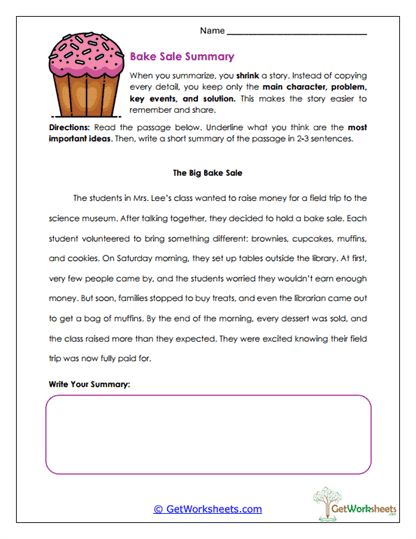
Bake Sale Summary
Students read a story about a class bake sale fundraiser, underline the most important events, and write a short 2-3 sentence summary focused on the main ideas. The worksheet teaches learners how to "shrink" a story by leaving out unnecessary details while still explaining what matters most. Through guided summary writing, students strengthen comprehension and informational organization skills. The relatable school setting also helps keep upper elementary readers engaged and confident.
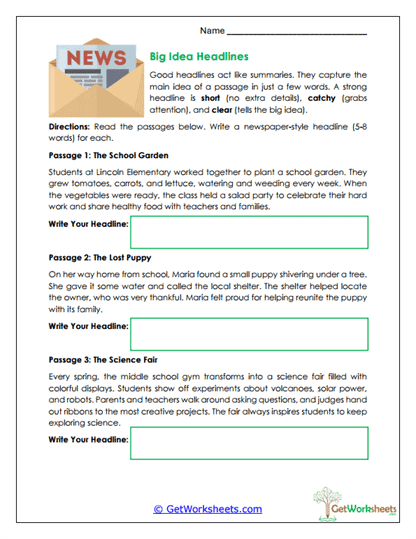
Big Idea Headlines
This creative activity asks students to summarize short passages by writing newspaper-style headlines that capture the most important idea in only a few words. Learners practice concise writing while focusing carefully on the central message of each text. The headline format helps students understand that summaries should be short, focused, and clear rather than overly detailed. It also adds a fun and engaging twist to traditional summarizing practice.
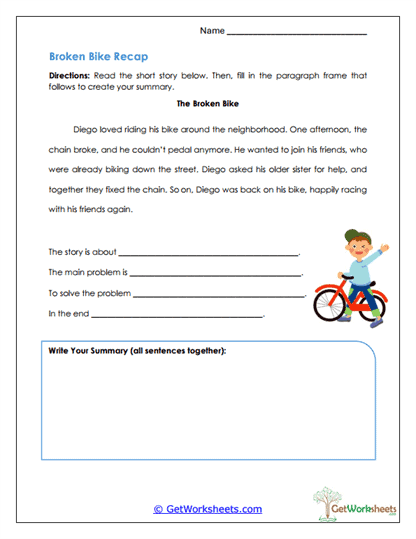
Broken Bike Recap
Students read a story about a broken bike and use a guided summary frame to organize the problem, solution, and ending before writing a complete summary paragraph. The structured support helps learners who struggle with organizing their thoughts independently. By breaking the process into smaller sections, students strengthen sequencing, comprehension, and paragraph-writing skills more confidently. The activity is especially supportive for developing writers learning how to summarize longer texts.
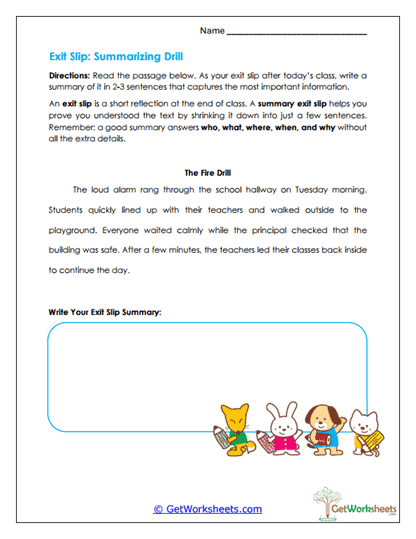
Exit Slip Summarizing Drill
This worksheet provides quick summary practice by asking students to read a short informational passage and write a brief 1-2 sentence "exit slip" summary. Learners focus on answering the key questions of who, what, where, when, and why while avoiding unnecessary details. The short format makes summarizing feel manageable and approachable for reluctant writers. It also works well as a fast comprehension check for classroom routines or homework practice.
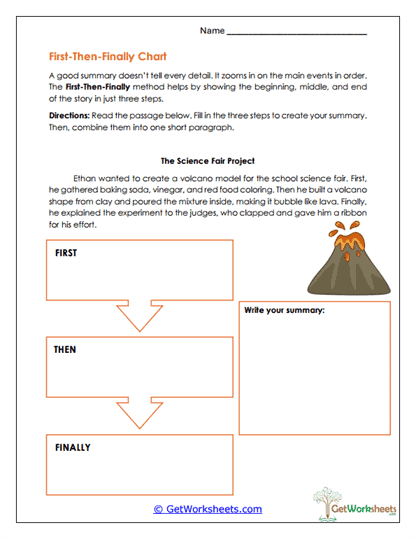
First-Then-Finally Chart
Students organize the beginning, middle, and end events of a story using a simple sequencing chart before turning those events into a written summary paragraph. The activity strengthens comprehension and logical organization while teaching students how to summarize events in the correct order. Transition words help learners connect ideas more smoothly during writing. The visual sequencing support also makes story structure easier to understand for developing readers.
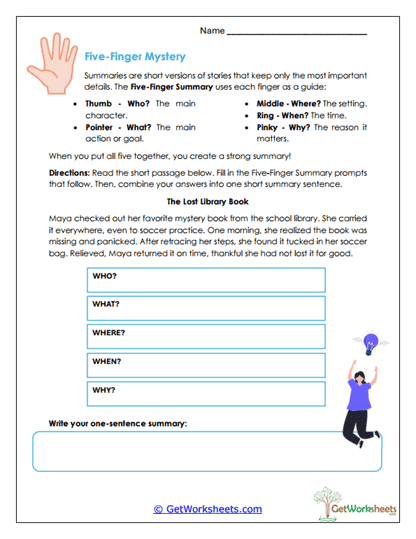
Five-Finger Mystery
This worksheet teaches students to summarize using the Five W's: who, what, where, when, and why. After reading a short passage, learners complete each section of the organizer and combine the information into one concise summary sentence. The highly visual format helps students separate important information from extra details more effectively. It also supports confidence for younger learners who need stronger structure during summary writing.
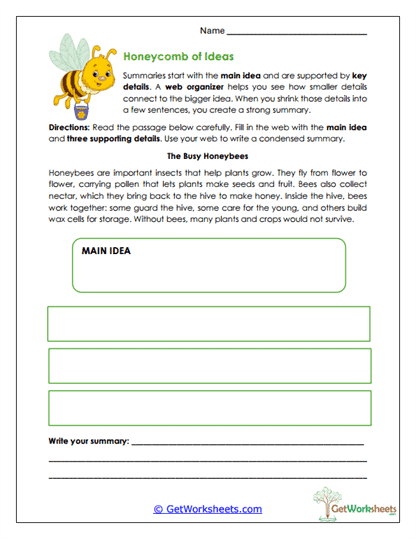
Honeycomb of Ideas
Students read a nonfiction passage about honeybees and organize information by separating the main idea from supporting details using a honeycomb-style graphic organizer. The activity strengthens nonfiction comprehension and helps learners understand how details support larger concepts. After organizing the information visually, students create a short written summary using the collected ideas. The structured format makes informational reading feel more manageable and less overwhelming.
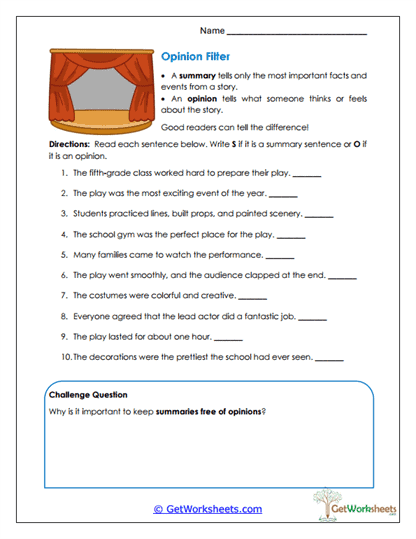
Opinion Filter
This worksheet teaches students how to keep summaries factual by sorting statements into fact or opinion categories after reading about a school play. Learners practice identifying which details belong in a summary and which reflect personal reactions instead. The activity strengthens critical thinking and helps students write more objective and organized summaries. It also prepares learners for stronger academic writing across subjects.
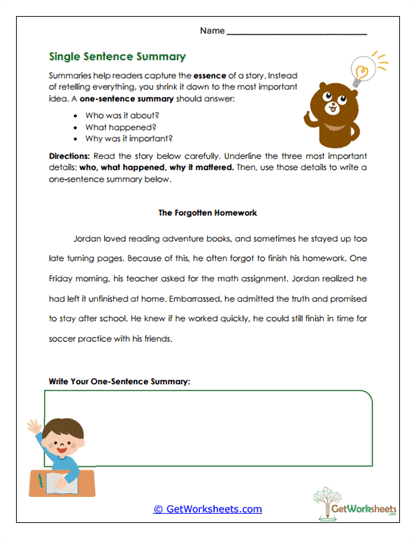
Single Sentence Summary
Students read a short passage and identify the most important ideas before combining them into one focused summary sentence. The worksheet encourages learners to avoid rambling and focus only on the heart of the story. Through concise writing practice, students strengthen main idea recognition and detail selection skills. The simple structure makes it especially effective for quick fluency-style comprehension work.
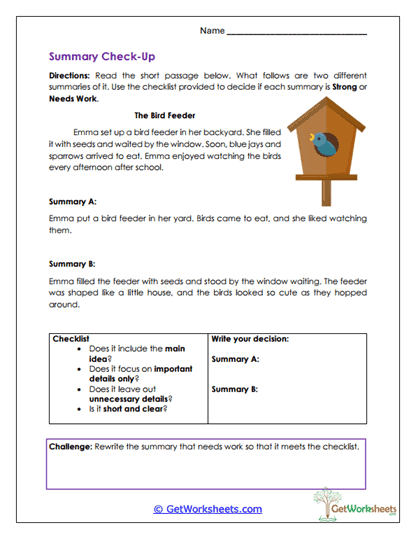
Summary Check-Up
Learners compare strong and weak summaries of a short story and use a checklist to evaluate which example works better. Students analyze clarity, main idea focus, and unnecessary details before revising the weaker summary themselves. The activity strengthens editing and analytical thinking while helping learners recognize what makes a summary effective. It also encourages stronger self-monitoring during future writing tasks.
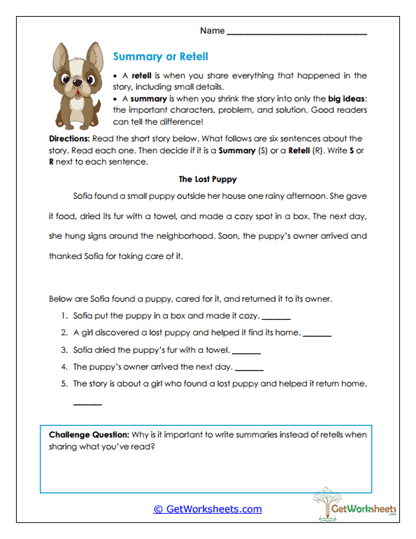
Summary or Retell
This activity helps students understand the important difference between a summary and a retell by sorting example sentences into the correct category. Learners practice identifying which details are essential and which are too specific for a summary. The comparison format strengthens comprehension and critical thinking while helping students become more concise writers. It is especially useful for correcting one of the most common summarizing mistakes among developing readers.
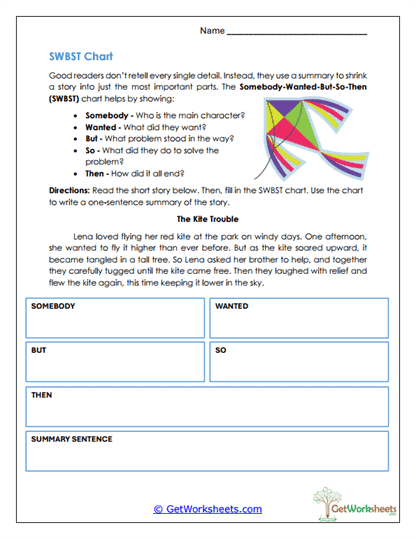
SWBST Chart
Students use the SWBST strategy - Somebody, Wanted, But, So, Then - to organize the major parts of a story before writing a complete summary sentence. The structured format helps learners focus on characters, goals, conflicts, solutions, and outcomes without becoming overwhelmed by smaller details. The activity strengthens comprehension, sequencing, and summary-writing skills simultaneously. Teachers especially appreciate how clearly the strategy supports both struggling readers and more advanced learners.
Bookmark Us Now!
New, high-quality worksheets are added every week! Do not miss out!