Nursery Rhyme Activities Worksheets
About This Worksheet Collection
This nursery rhyme activities worksheet collection brings familiar songs and rhythms into early reading practice, making learning feel more natural and enjoyable. Because many children already recognize these rhymes, they can focus more on sounds, patterns, and meaning instead of struggling with new material. The mix of reading, matching, and creative tasks keeps students engaged while helping them build confidence step by step.
As students work through this collection, they strengthen their ability to hear rhyming patterns, read with rhythm, and connect sounds to meaning within sentences. These activities also support early fluency, comprehension, and word recognition by encouraging learners to read aloud, think carefully, and interact with text in different ways. Over time, this helps students become more confident readers who can recognize patterns and apply them to new words.
Detailed Descriptions Of These Worksheets
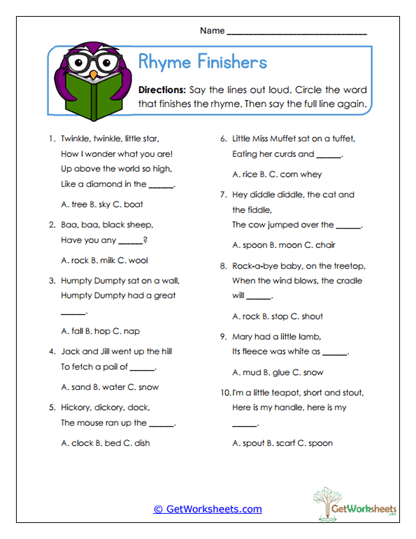
Finish the Rhyme - Completing Familiar Nursery Lines
Students read or listen to familiar rhyme lines and choose the word that completes each one correctly. This activity uses rhythm and memory to guide sound recognition. It helps learners rely on how words flow together in a sentence. The task also builds early reading confidence through predictable text.
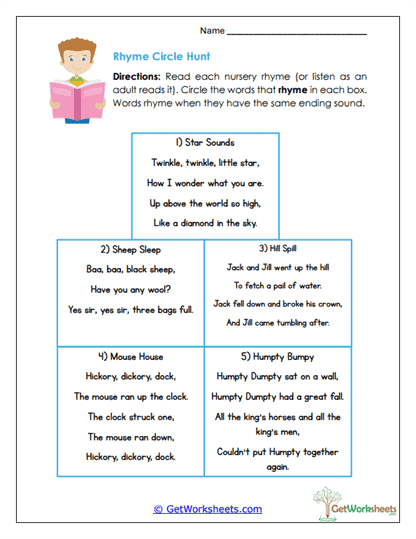
Circle Hunt - Finding Matching Sounds in Rhymes
Students read short rhymes and circle words that share the same ending sound. This encourages scanning within a passage instead of focusing on single words. It helps learners connect sound patterns to real reading situations. The activity also supports focus and pattern recognition.
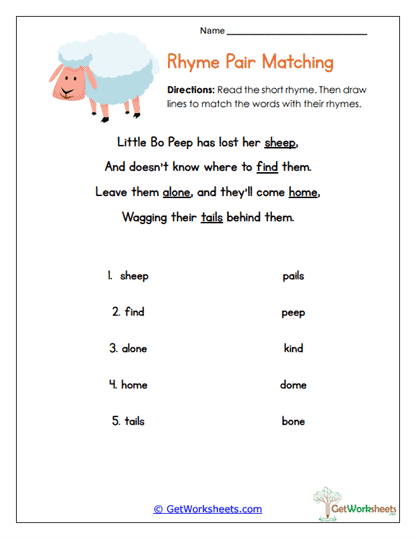
Match the Pairs - Connecting Rhyming Words from a Rhyme
Students read a short rhyme and draw lines to connect words that rhyme. This combines reading and matching in a meaningful context. It helps learners see how rhyming words relate within a passage. The activity also supports both sound awareness and fine motor skills.
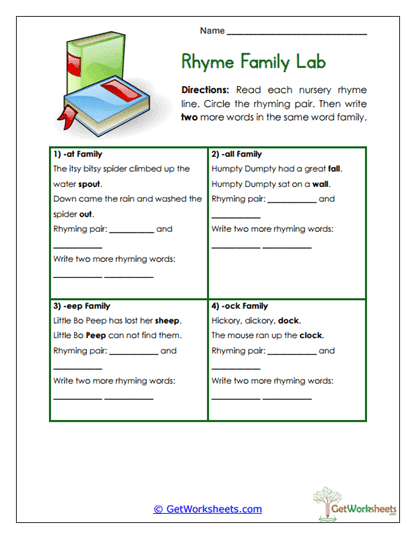
Family Lab - Exploring Rhyming Word Groups
Students identify rhyming words in a rhyme and then generate new words that follow the same pattern. This moves beyond recognition into word creation. It encourages deeper thinking about how words are connected. The activity also strengthens both reading and writing skills.
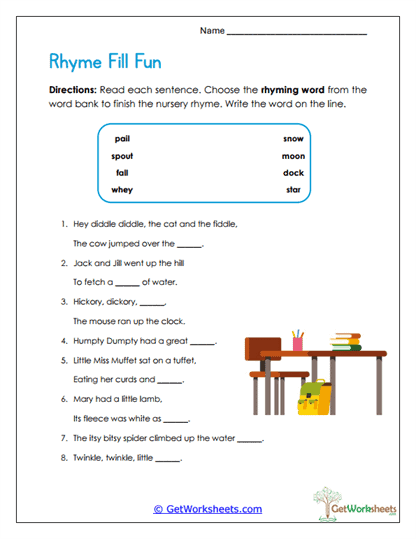
Fill the Rhyme - Completing Nursery Lines with the Right Word
Students read rhyme lines and choose the correct word from a word bank to complete them. This adds a layer of challenge by requiring comparison across options. It helps learners think about both sound and meaning. The activity also supports stronger reading fluency.
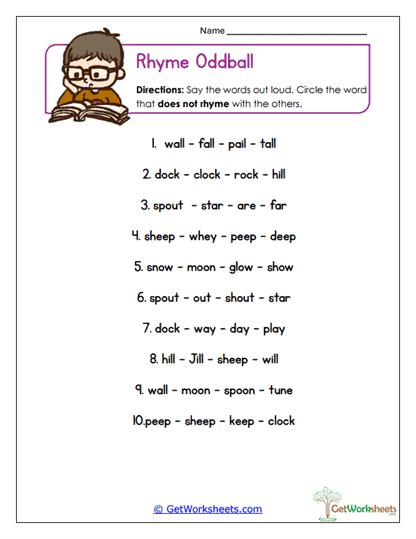
Odd One Out - Finding the Word That Doesn't Rhyme
Students review groups of words and identify the one that does not rhyme. This sharpens listening skills by focusing on differences. It encourages careful comparison and thoughtful decision-making. The activity also builds stronger accuracy in sound recognition.
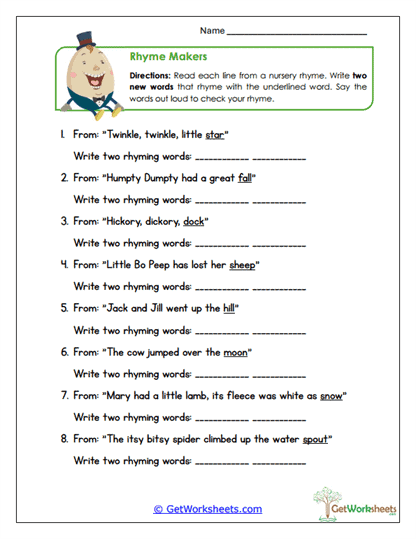
Make Your Own - Creating New Rhymes from Familiar Lines
Students create their own rhyming words based on familiar rhyme patterns. This encourages creativity and independent thinking. It helps learners apply what they know about sound patterns. The activity also strengthens both spelling and reading skills.
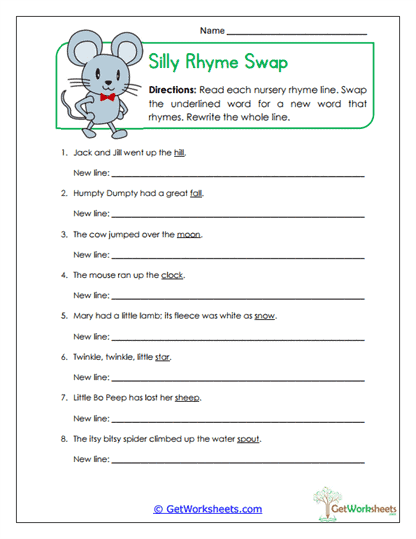
Swap the Line - Changing Words to Make New Rhymes
Students rewrite rhyme lines by replacing words with new rhyming options. This blends reading and writing into one task. It encourages learners to think about both sound and sentence meaning. The activity also supports creativity and language development.
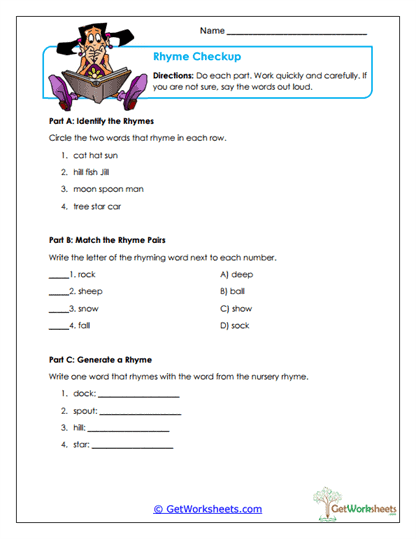
Quick Check - Review and Practice with Rhyming Skills
Students complete a mix of rhyming tasks in one worksheet. This provides a broad review of skills such as matching, identifying, and creating rhymes. It helps reinforce learning through varied practice. The activity also allows for quick assessment of progress.
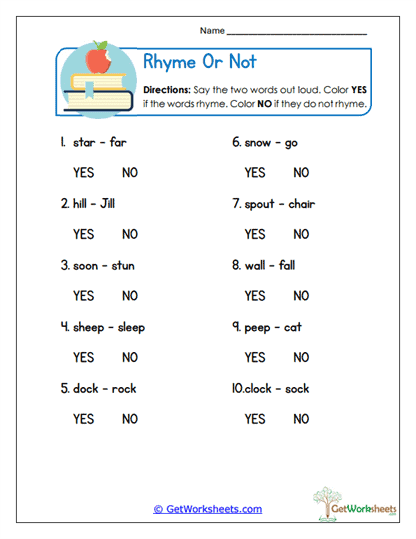
Yes or No - Deciding If Words Rhyme
Students decide if pairs of words rhyme by answering yes or no. This simple format encourages careful listening and quick thinking. It helps learners become more accurate in recognizing sound patterns. The activity also builds confidence through clear choices.
Bookmark Us Now!
New, high-quality worksheets are added every week! Do not miss out!