Handling Teasing and Bullying Worksheets
-
Anonymous Note Detective
-
Best Helper
-
Calm Choices

-
-
Chat Reset: Flip the Script
-
Fix It for Real: The Apology Repair Plan
-
Kindness Counts

-
Know the Signs

-
My Space, My Rules
-
Online or Over the Line?
-
Respectful Voices
-
Ripple Reactions
-
Rumor Drop: Watch the Story Change
-
Stand Up to Bullying

-
Standing Up Together
-
Staying Cool
-
The Lunchtime Joke

-
Where Does It Fall?
-
Words That Hurt
About This Worksheet Collection
This Handling Teasing and Bullying collection offers educators a supportive set of tools to help students navigate challenging social situations with confidence, empathy, and safety. Through stories, scenarios, reflective writing, and decision-making tasks, students learn to recognize unkind behavior, manage their emotions, and respond in ways that keep themselves and others safe. The worksheets encourage learners to think about the impact of teasing, the importance of speaking up, and how bystanders can promote kindness.
Students gain essential social-emotional skills such as empathy, self-management, advocacy, and responsible decision-making while also strengthening literacy skills like comprehension, writing, and interpreting scenarios. These activities help create a classroom environment where respect, courage, and compassion are valued. By practicing healthy responses to teasing and bullying, learners develop the tools they need to support themselves and contribute to a positive community.
Detailed Descriptions Of These Worksheets
Anonymous Note Detective
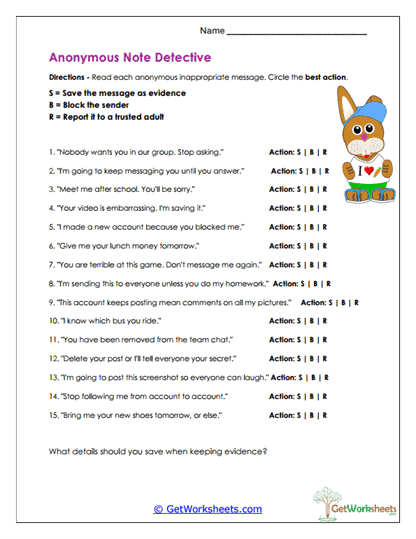
Learners read a series of anonymous online messages and determine the safest response for each situation. They practice deciding when to save evidence, block a sender, or report concerning behavior to a trusted adult. Working through realistic digital scenarios helps students build confidence navigating online communication safely. The worksheet reinforces responsible decision-making and healthy digital citizenship.
Calm Choices
Learners read short scenarios involving teasing and select the response that demonstrates calm, confident behavior. They compare positive coping strategies to unhelpful reactions. The worksheet encourages emotional regulation and respectful decision-making. Students practice choosing responses that reduce conflict rather than escalate it.
Chat Reset: Flip the Script
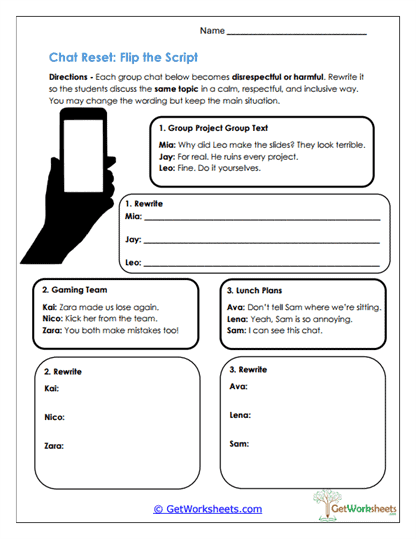
Students analyze group chat conversations that become disrespectful or hurtful before rewriting them using calmer, more constructive language. Rather than avoiding conflict, they learn how to communicate concerns without insulting, excluding, or blaming others. Comparing the original and revised conversations helps students recognize how word choice affects relationships. This activity strengthens respectful communication and problem-solving skills.
Fix It for Real: The Apology Repair Plan
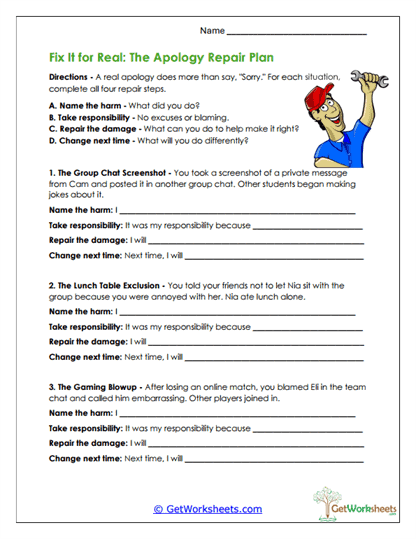
Students work through realistic conflict situations by creating a meaningful apology that goes beyond simply saying "I'm sorry." They identify the harm that occurred, take responsibility for their actions, explain how they can repair the situation, and plan how they will respond differently in the future. The structured format encourages accountability while helping students rebuild trust and relationships. This activity strengthens empathy, self-reflection, and conflict resolution skills.
Kindness Counts
Students read a story about a girl who is teased and reflect on how teasing affects feelings and relationships. They answer questions that encourage empathy and awareness of supportive actions. This activity helps students understand the importance of kindness and the role of bystanders in creating safety. It also strengthens reading comprehension and emotional insight.
Know the Signs
Learners answer multiple-choice questions about identifying bullying, digital harassment, and safe reporting strategies. The activity helps students distinguish between conflict and harmful behavior with a power imbalance. It teaches when to seek adult help and how to respond as a witness. Students build awareness, empathy, and responsible decision-making both online and offline.
My Space, My Rules
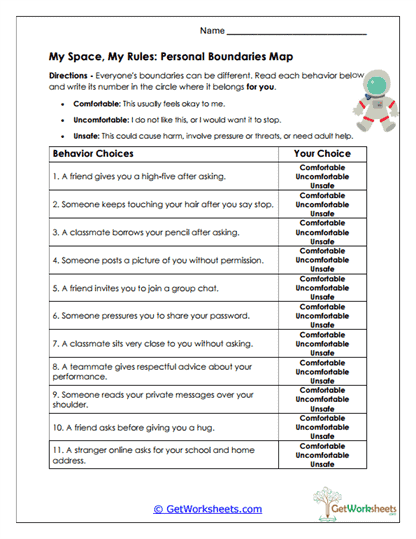
This worksheet encourages students to think carefully about personal boundaries by evaluating situations involving physical space, privacy, belongings, and online interactions. Learners decide whether each example feels comfortable, uncomfortable, or unsafe while recognizing that healthy boundaries can vary from person to person. The discussion promotes self-awareness, consent, and respectful relationships. It also reinforces that students should always seek help when safety is at risk.
Online or Over the Line?
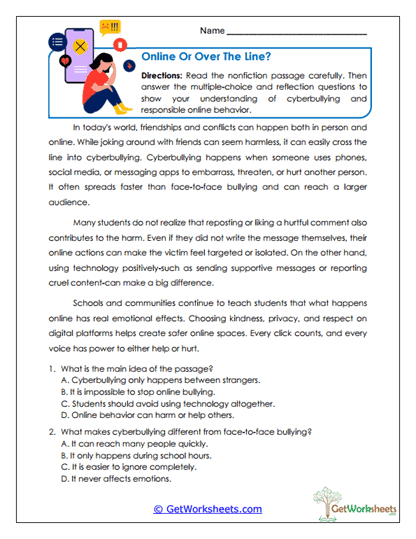
Students read an informational passage about cyberbullying and respond to comprehension and reflection questions. They learn how digital actions such as liking or sharing hurtful posts can cause real harm. The worksheet teaches safe online behavior and accountability. It supports responsible digital citizenship and reading informational text.
Respectful Voices
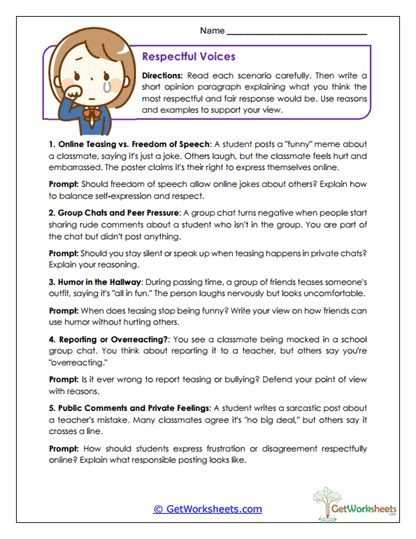
Learners read scenarios involving teasing, rude behavior, and online interactions, then write opinion responses. This activity strengthens critical thinking about respectful communication and boundaries. Students reflect on how words influence others and practice expressing their views clearly. It promotes empathy and ethical decision-making.
Ripple Reactions
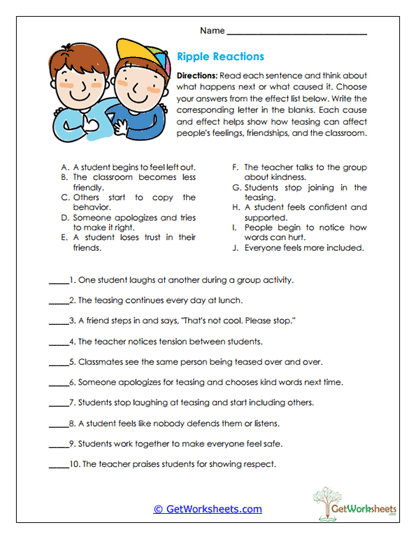
Students match teasing situations with their likely outcomes, exploring cause-and-effect relationships. The activity helps learners understand how teasing affects friendships and classroom climate. It highlights how positive actions can improve emotional safety. Students develop social awareness through thoughtful scenario analysis.
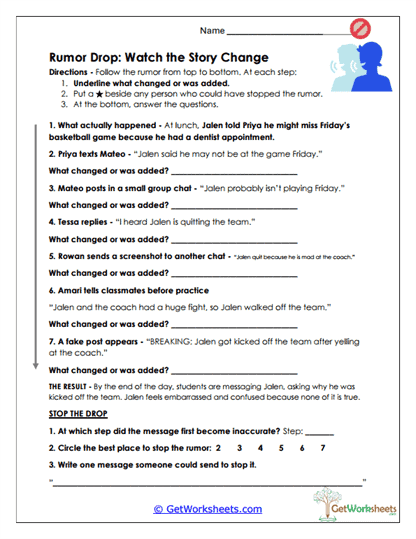
Rumor Drop: Watch the Story Change
Students follow the path of a rumor as it changes from one person to the next, identifying where inaccurate information begins to spread. By comparing each version with the original message, learners see how small changes can quickly become harmful misinformation. The worksheet encourages critical thinking while emphasizing the importance of verifying facts before sharing information. It also helps students understand the social impact of gossip and rumors.
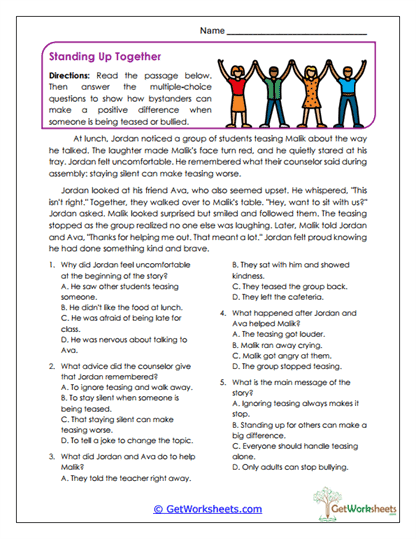
Standing Up Together
Learners read a story about bystanders supporting a classmate and answer comprehension questions. The activity highlights teamwork, courage, and kindness as ways to stop teasing. It builds empathy and problem-solving skills. Students learn how group support can make a positive difference.
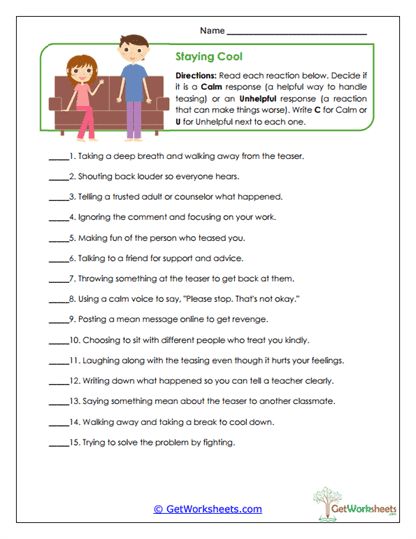
Staying Cool
Students evaluate different reactions to teasing and label them as Calm or Unhelpful. This activity strengthens self-management by helping learners identify responses that keep situations safe. It encourages students to practice healthy coping strategies. The worksheet supports emotional regulation and responsible choices.
Stand Up to Bullying
Learners read short scenarios and write what a bystander could do or say to help. This worksheet builds communication and empathy while encouraging students to take action in safe, respectful ways. It promotes problem-solving and advocacy for others. Students practice expressing supportive responses.
The Best Helper
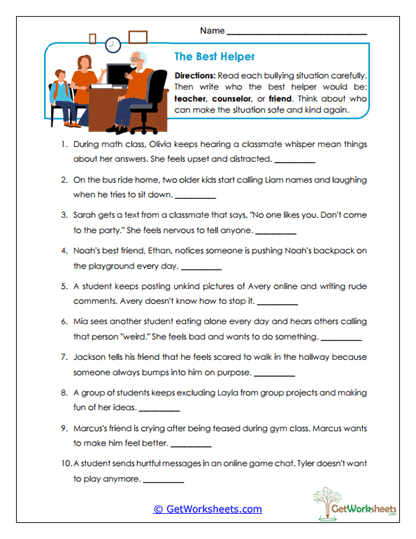
Students read bullying scenarios and identify who the best helper would be-teacher, counselor, or friend. The activity teaches learners when and how to seek help to keep everyone safe. It builds understanding of safe adults and responsible decision-making. Students practice interpreting scenarios and choosing supportive actions.
The Lunchtime Joke
Students read a narrative about teasing in the cafeteria and answer questions focused on empathy and standing up for others. The activity shows how supportive comments can make someone feel included and safe. It reinforces respectful behavior and awareness of unkind teasing. The multiple-choice questions build comprehension and social understanding.
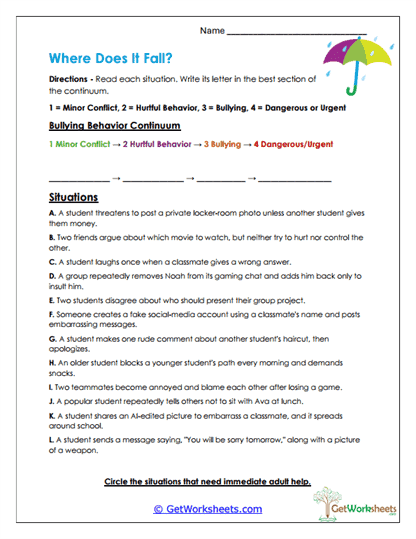
Where Does It Fall?
Students examine a variety of school situations and decide whether each example represents a minor conflict, hurtful behavior, bullying, or an urgent safety concern. Sorting the scenarios helps learners understand that not every disagreement is bullying while reinforcing that repeated harassment and threats require immediate adult support. The activity encourages thoughtful discussion about personal safety, appropriate responses, and when to seek help. It provides a practical framework that students can apply to real-life situations.
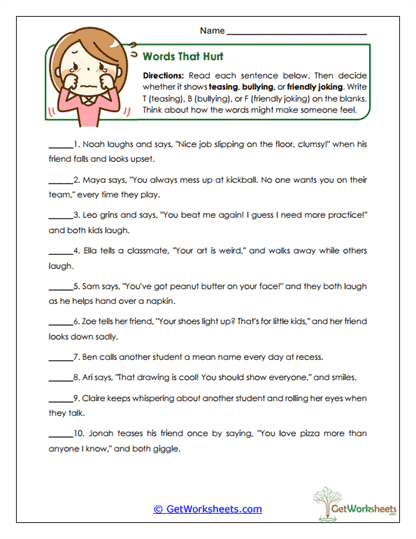
Words That Hurt
Learners categorize examples as teasing, bullying, or friendly joking. This task helps students understand the difference between playful comments and harmful behavior. It encourages careful consideration of how words impact others. The activity promotes early recognition of unkind interactions and builds social awareness.
Bookmark Us Now!
New, high-quality worksheets are added every week! Do not miss out!