Developing Patience Worksheets
About This Worksheet Collection
This engaging collection of developing patience worksheets helps students build the ability to slow down, stay calm, and make thoughtful choices in everyday situations. Each activity uses relatable scenarios, simple stories, and guided reflection to show what patience looks like in real life. Designed for easy use in both classrooms and homeschool settings, these worksheets support meaningful conversations about emotions, self-control, and decision-making.
As students work through the collection, they strengthen important skills like emotional regulation, reflection, and problem-solving. They also build reading comprehension, writing ability, and vocabulary while learning practical strategies for managing frustration and waiting calmly. These activities help students understand that patience is a skill they can practice and improve over time. With consistent use, learners grow more confident in handling challenges with a calm and thoughtful approach.
Detailed Descriptions Of These Worksheets
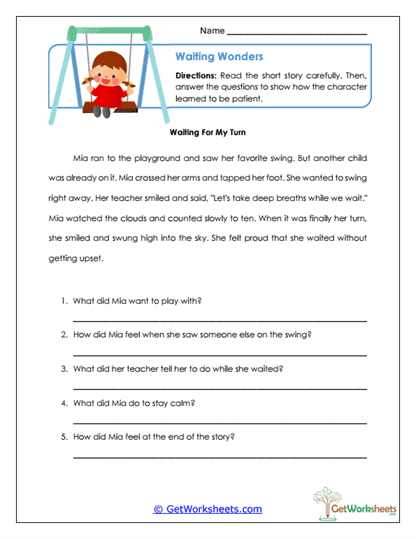
Waiting Wonders - Reading & Patience Skills
Students read a short story about waiting their turn and answer questions about what happens. This activity helps them connect emotions with actions and outcomes. It introduces patience in a way that feels familiar and easy to understand. As they reflect, students begin to see how calm choices lead to better results.
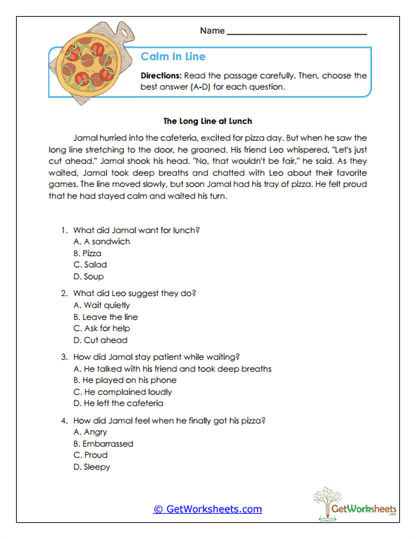
Calm in Line - Comprehension & Self-Control
This worksheet uses a real-life situation-standing in line-to explore patience and behavior. Students answer questions that focus on choices, feelings, and outcomes. It encourages them to think about how to respond calmly in frustrating moments. The activity builds both comprehension and self-control skills.
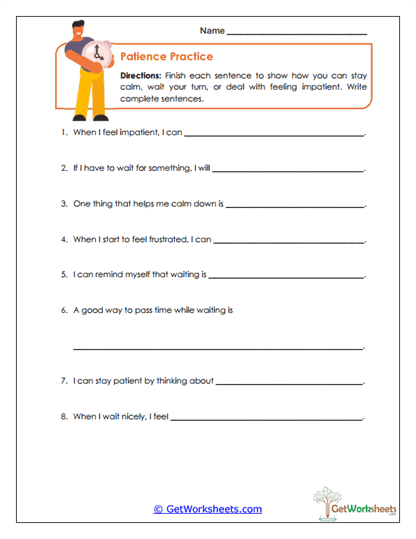
Patience Practice - Building Calm Responses
Students use sentence starters to describe how they can stay calm when they feel impatient. This activity encourages personal reflection and thoughtful responses. It helps learners develop their own strategies for managing emotions. Over time, they gain confidence in handling challenging situations.
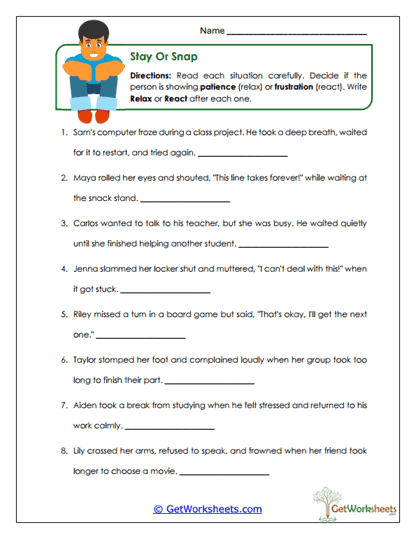
Stay or Snap - Recognizing Reactions
Learners read short scenarios and decide whether the response shows patience or frustration. This helps them clearly see the difference between calm and reactive behavior. It builds awareness of how actions reflect emotions. Students begin to understand that they can choose how they respond.
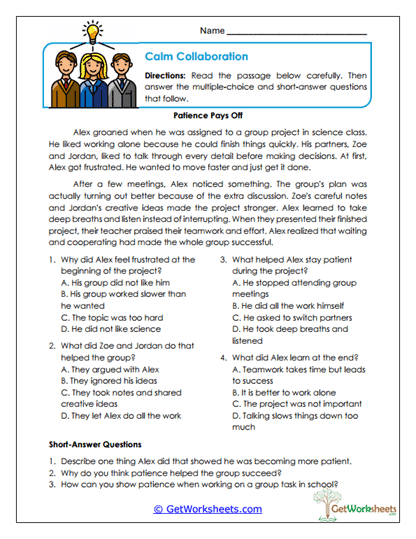
Calm Collaboration - Teamwork & Patience
This worksheet focuses on how patience plays a role in working with others. Students read a passage about teamwork and answer questions about cooperation and problem-solving. It highlights the importance of staying calm in group situations. The activity connects patience with successful collaboration.
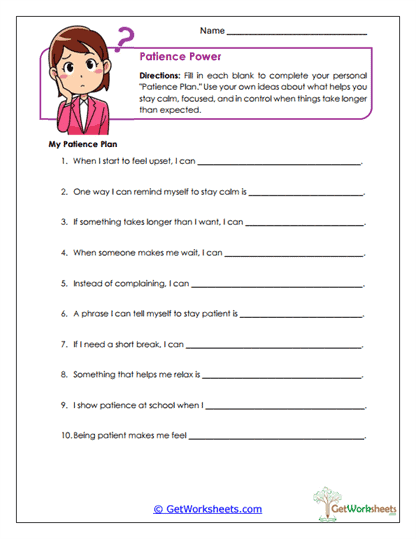
Patience Power - Personal Strategy Building
Students create a personal plan for how they will stay calm in difficult situations. Guided prompts help them identify triggers and helpful strategies. This activity builds self-awareness and independence. It gives learners practical tools they can use right away.
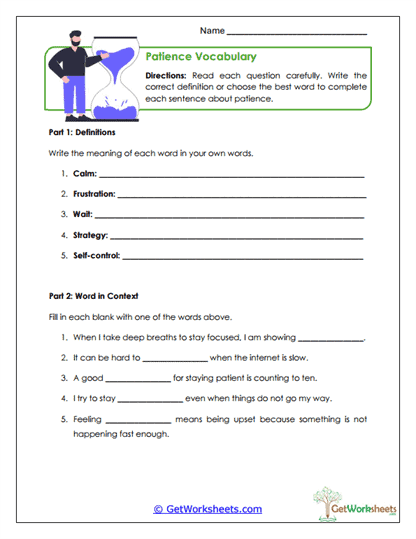
Patience Vocabulary - Language & Self-Control
Students define and use words related to patience, such as calm and frustration. This strengthens both vocabulary and understanding of emotional concepts. They apply these words in sentences to connect learning to real-life situations. It helps students better express how they feel.
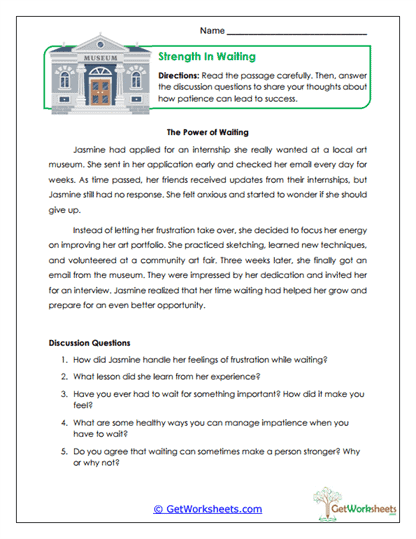
Strength in Waiting - Reflection & Growth Mindset
Students read about how patience can lead to growth and success. They answer questions that encourage reflection on personal experiences. This activity helps shift their thinking about waiting. It builds a more positive and resilient mindset.
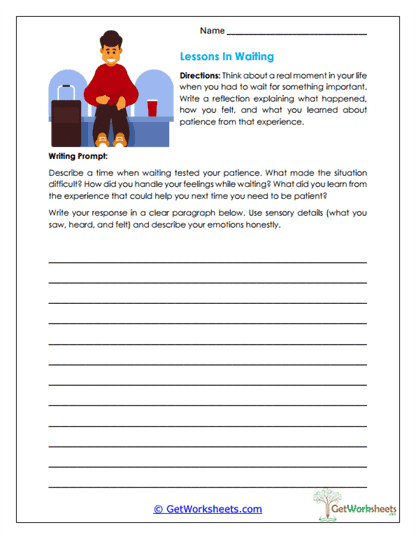
Lessons in Waiting - Reflective Writing on Patience
Students write about a time they struggled with patience and what they learned. This encourages honest reflection and self-awareness. It also supports writing skills through structured prompts. By thinking about past experiences, students learn how to improve.
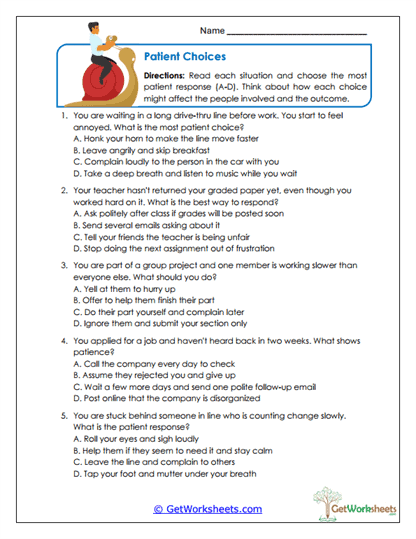
Patient Choices - Decision-Making & Self-Control
Students read scenarios and choose the most patient response. This helps them practice making thoughtful decisions before reacting. It connects emotional awareness with real-life situations. Over time, students build stronger habits of self-control.
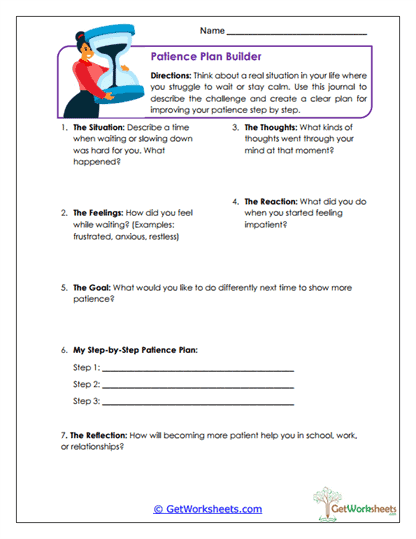
Patience Plan Builder - Goal Setting & Reflection
Students reflect on a situation where they felt impatient and create a plan for improvement. This activity combines goal setting with emotional awareness. It encourages students to think ahead and prepare better responses. The process builds confidence and responsibility.
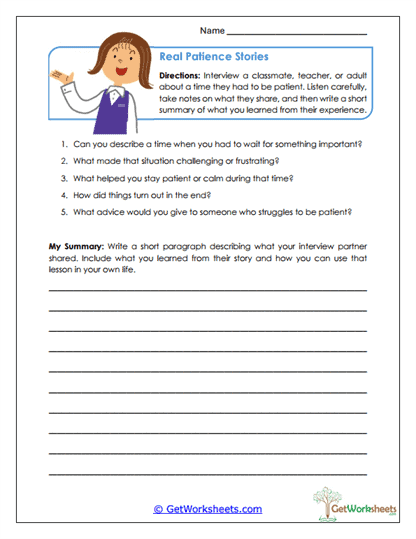
Real Patience Stories - Communication & Reflection
Students interview someone about a time patience was important and write about what they learn. This activity builds listening, speaking, and writing skills. It helps students connect patience to real-life experiences. By reflecting on others' stories, they gain a deeper understanding of the skill.
Bookmark Us Now!
New, high-quality worksheets are added every week! Do not miss out!