Fix It for Real: The Apology Repair Plan
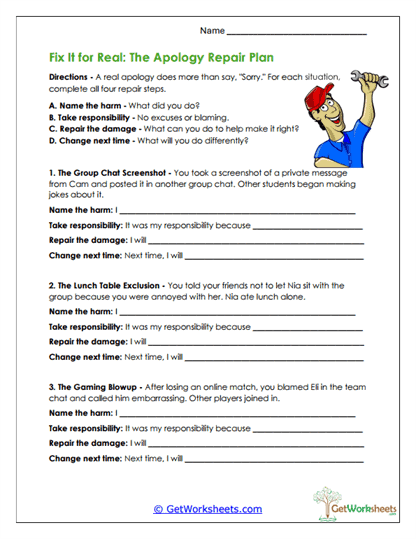
Students read three situations involving harmful choices and complete a four-part repair plan for each one. They name the harm, take responsibility without blaming others, explain how they will repair the damage, and state what they will do differently next time. This special education and social-emotional learning worksheet strengthens accountability, empathy, conflict repair, self-reflection, responsible decision-making, and relationship skills. It is especially useful for upper-elementary and middle school students who may know how to say “sorry” but need direct instruction in what a real apology should include.
Academic Focus
- Name the Harm Clearly: Students describe what they did and how it affected another person.
- Take Responsibility: Learners practice admitting their choice without using excuses, blaming, or minimizing.
- Repair the Damage: Children identify a realistic action that could help make the situation better.
- Plan a Better Response: Students explain what they will do differently if a similar problem happens again.
Instructional Benefits
- Moves Beyond Empty Apologies: The four-part structure shows that repair requires more than saying one word.
- Supports Students Who Need Scripts: Sentence starters make difficult social language easier to organize.
- Builds Accountability Without Shame: Students focus on changing behavior rather than being labeled as a bad person.
- Useful for Adults and Families: Parents, teachers, and counselors can use the completed plan to guide a calm repair conversation.
- Works Across Settings: The page is appropriate for special education, restorative practices, counseling, behavior support, or homeschool lessons.
Many children apologize quickly because an adult tells them to, but they may not yet understand what went wrong or how to rebuild trust. This worksheet teaches that a meaningful apology includes honesty, responsibility, repair, and a plan for change. Students strengthen empathy, self-awareness, communication, conflict resolution, emotional regulation, and problem-solving while working through realistic situations involving screenshots, exclusion, and public blame. Parents can remind children that taking responsibility does not mean making excuses or demanding immediate forgiveness. In classroom and home settings, this activity can build confidence and help students repair relationships in a more thoughtful, respectful, and lasting way.
Bookmark Us Now!
New, high-quality worksheets are added every week! Do not miss out!