Emotion Vocabulary Building Worksheets
About This Worksheet Collection
This engaging collection of emotion vocabulary building worksheets helps students develop the language they need to understand and express their feelings clearly. Through a mix of relatable scenarios, reading passages, and reflective writing, each activity encourages learners to explore a wide range of emotions in meaningful ways. These worksheets are easy to use in both classroom and homeschool settings, making them a practical resource for building emotional awareness alongside academic skills.
As students work through the collection, they strengthen vocabulary, reading comprehension, and writing while also developing deeper emotional insight. They learn to recognize subtle differences between feelings, use context clues to understand emotions, and communicate their thoughts more effectively. These activities support both personal growth and stronger interpersonal skills. Over time, students gain confidence in expressing themselves and understanding others with greater clarity and empathy.
Detailed Descriptions Of These Worksheets
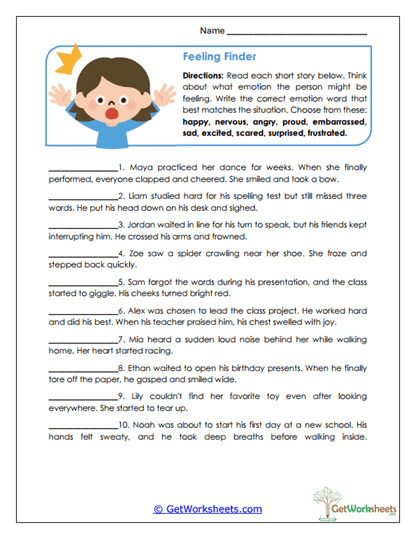
Feeling Finder - Identifying Emotions in Stories
Students read short scenarios and select the emotion that best matches each situation. This activity helps them connect everyday experiences with specific feeling words. It introduces a variety of emotions, allowing learners to see how feelings can differ. As they practice, students build confidence in recognizing and naming emotions.
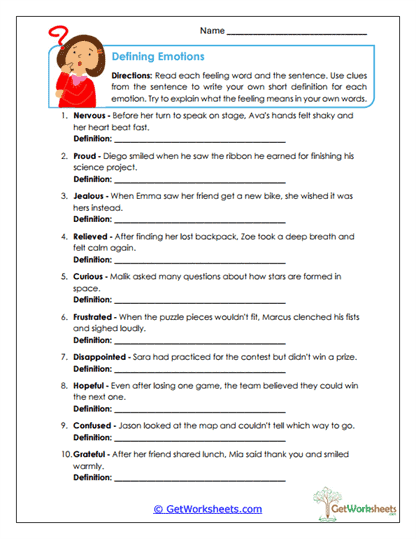
Defining Emotions - Understanding Feeling Words
Learners use context clues to explain what different emotion words mean in their own words. This encourages deeper thinking and stronger comprehension of vocabulary. Instead of memorizing definitions, students actively construct meaning. This process helps them better understand and use emotional language.
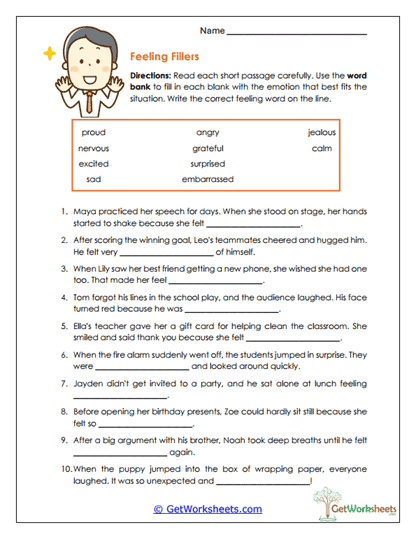
Feeling Fillers - Emotion Word Practice
Students complete short passages by choosing the most appropriate emotion from a word bank. This activity strengthens reading comprehension and vocabulary at the same time. It encourages careful thinking about tone and context. As a result, students improve their ability to select accurate emotion words.
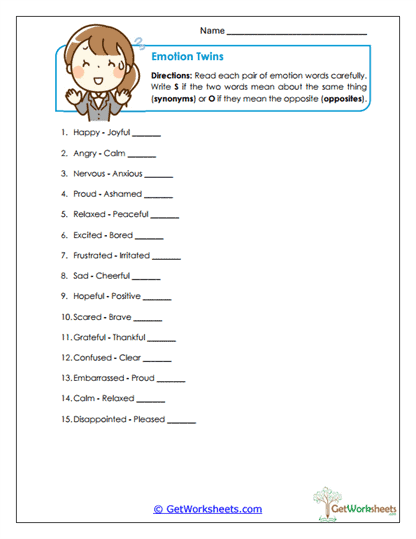
Emotion Twins - Synonyms & Opposites
Students examine pairs of emotion words and decide whether they are similar or opposite. This helps them understand how different feelings relate to each other. It also strengthens their knowledge of word relationships and meaning. Through this practice, learners develop a richer emotional vocabulary.
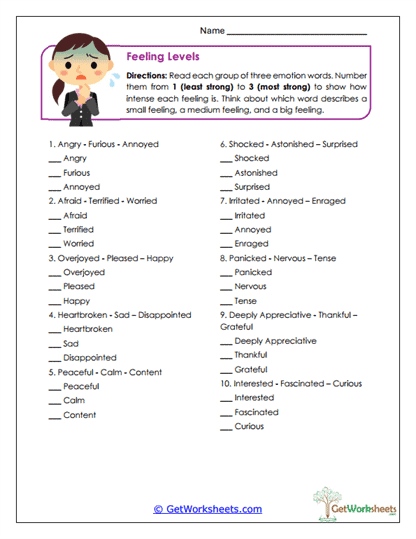
Feeling Levels - Intensity of Emotions
Students rank emotion words based on how strong or intense they are. This activity helps them understand that feelings can vary in degree. It also supports early emotional regulation by helping students notice changes in intensity. As they work through each set, they build deeper awareness of how emotions grow and shift.
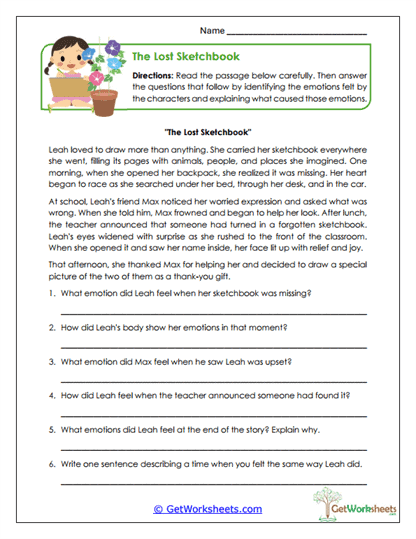
The Lost Sketchbook - Reading & Emotional Insight
Students read a story about losing something important and answer questions about the character's feelings. This helps them connect events with emotional responses. It also builds empathy and comprehension skills at the same time. Through reflection, students better understand how emotions change over time.
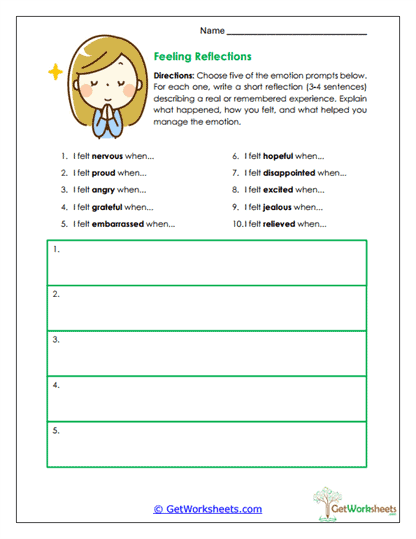
Feeling Reflections - Personal Emotion Writing
Learners respond to prompts about their own emotional experiences. This activity encourages them to connect vocabulary to real-life situations. It also supports writing development and self-expression. By reflecting on their feelings, students build stronger emotional awareness.
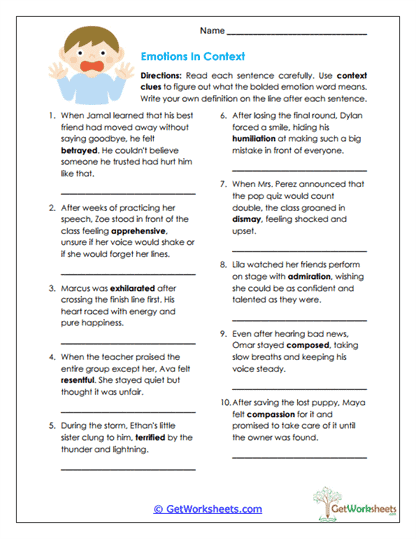
Emotions in Context - Defining Feelings Through Situations
Students read short passages and explain the meaning of highlighted emotion words. This encourages them to use context clues and critical thinking. It also introduces more advanced emotional vocabulary. As they work through the activity, students develop a deeper understanding of nuanced feelings.
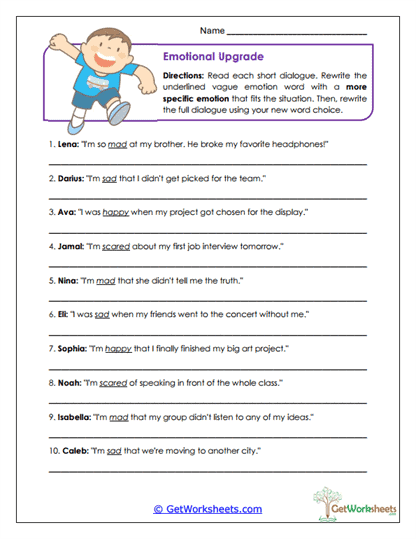
Emotional Upgrade - Rewriting with Precision
Students improve sentences by replacing simple emotion words with more specific ones. This strengthens both editing and writing skills. It also encourages more precise and thoughtful communication. Through practice, learners become more expressive in describing their feelings.
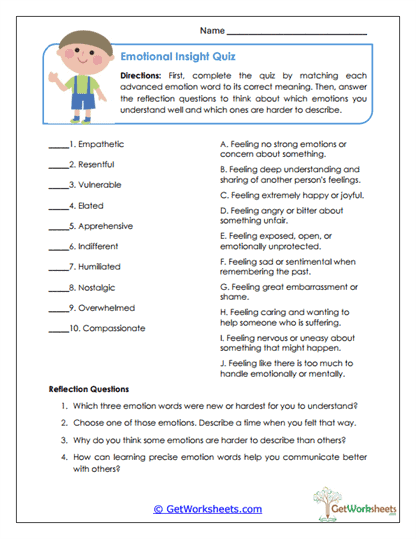
Emotional Insight Quiz - Advanced Emotion Vocabulary
Students match complex emotion words with their meanings and reflect on their own experiences. This activity builds higher-level vocabulary and self-awareness. It also encourages thoughtful connections between language and real life. As a result, students gain confidence using more advanced emotional terms.
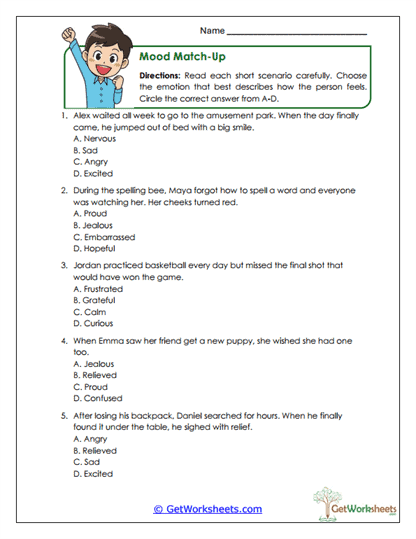
Mood Match-Up - Identifying Emotions in Scenarios
Students read short situations and choose the emotion that best fits each one. This reinforces their ability to use context clues and make thoughtful decisions. It also strengthens emotional awareness in everyday situations. With repeated practice, students become more confident in recognizing feelings.
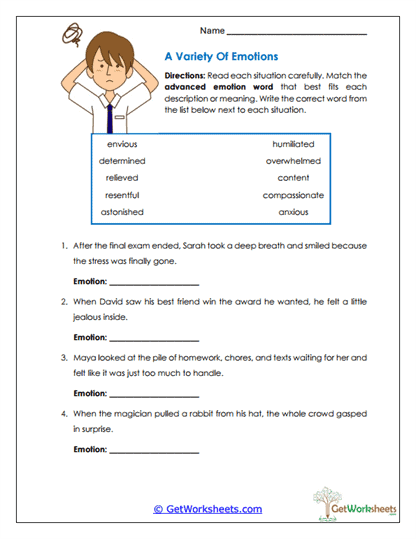
A Variety of Emotions - Matching Advanced Feelings
Students match detailed emotion words with short descriptive scenarios. This activity expands their vocabulary and strengthens comprehension skills. It also helps them recognize more subtle emotional differences. Over time, students build the ability to express themselves with greater clarity and precision.
Bookmark Us Now!
New, high-quality worksheets are added every week! Do not miss out!