Recognizing Triggers Worksheets
About This Worksheet Collection
This collection of recognizing triggers worksheets is designed to help students better understand what causes their emotional reactions and how to manage them effectively. Through relatable scenarios, guided reflection, and real-life problem-solving, these activities support children in identifying the early signs of frustration, anger, or stress. The worksheets are easy to use in both classroom and homeschool settings, making them a practical tool for building emotional awareness and self-control.
As learners work through the collection, they develop important skills like self-reflection, emotional regulation, and critical thinking. They begin to recognize patterns in their behavior, connect thoughts and feelings, and practice healthier responses to challenging situations. These activities also strengthen reading comprehension and communication skills while encouraging personal growth. Over time, students gain the confidence to pause, think, and respond more calmly in moments that once felt overwhelming.
Detailed Descriptions Of These Worksheets
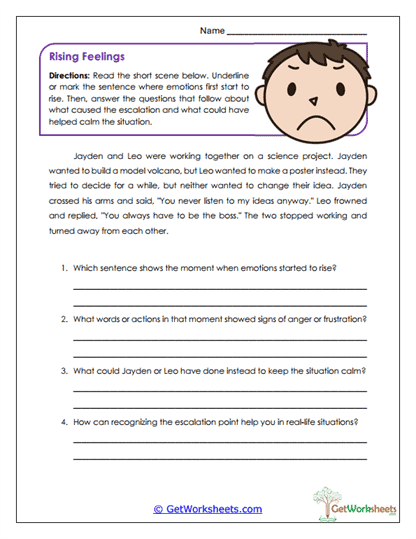
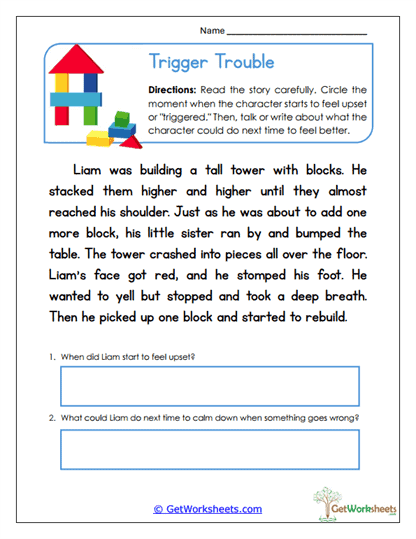
Trigger Trouble - Spotting the Moment It Starts
A short story introduces a situation where emotions begin to rise, asking learners to pinpoint the exact moment things shift. This activity builds awareness of how feelings don't appear suddenly but develop over time. It also encourages thinking about what could be done differently in the future. With practice, children begin to notice these moments in their own lives.
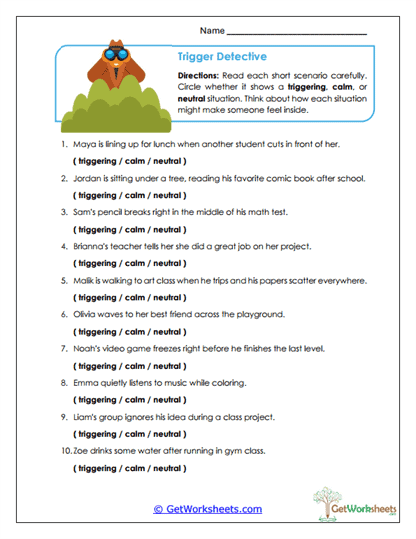
Trigger Detective - Is This a Big Deal or Not?
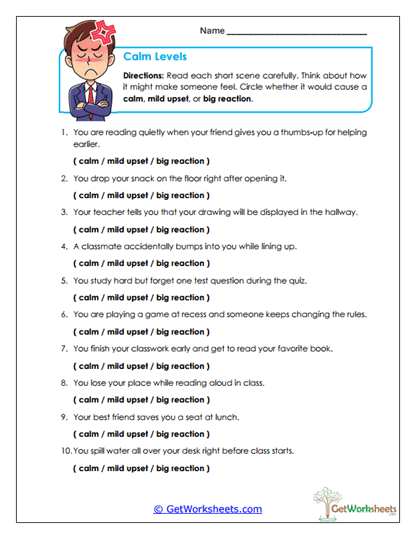
Different situations are presented for learners to sort into triggering, calm, or neutral categories. This helps build perspective around what truly deserves a strong reaction. It also encourages pausing before responding emotionally. Over time, this kind of thinking supports better judgment and self-control.
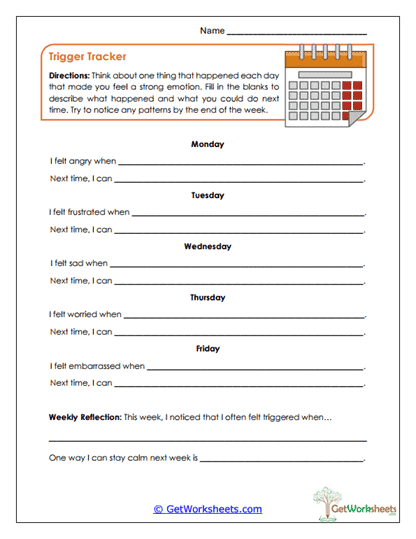
Trigger Tracker - Building Awareness Over Time
Daily tracking prompts encourage reflection on situations that caused frustration or stress. Patterns begin to emerge as learners record repeated experiences and reactions. This activity strengthens self-awareness and helps identify common triggers. Recognizing these patterns makes it easier to plan better responses.
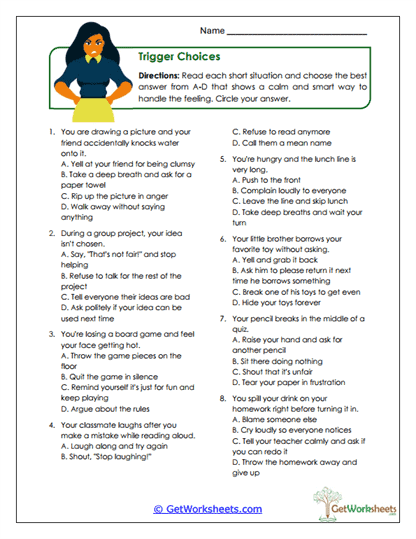
Trigger Choices - Teaching Kids What To Do In The Moment
Real-life scenarios guide learners to choose responses that reflect calm thinking and self-control. Each example reinforces what appropriate behavior looks like during challenging moments. This builds confidence in handling situations before they happen. Repeated exposure helps those better choices become more natural.
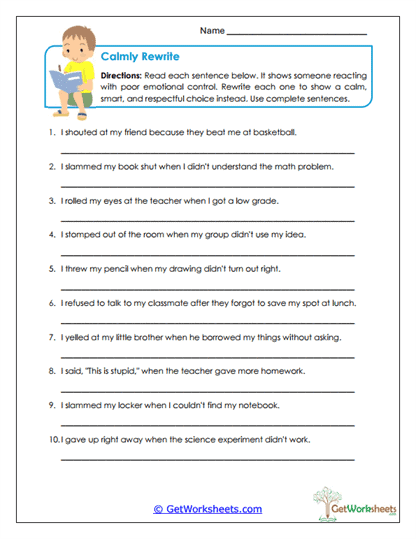
Calmly Rewrite - Turning Reactions Into Better Choices
Situations involving negative reactions are rewritten into calmer, more thoughtful responses. This process helps learners see clear alternatives to impulsive behavior. It also strengthens communication skills and emotional awareness. Practicing these rewrites builds habits that carry into real interactions.
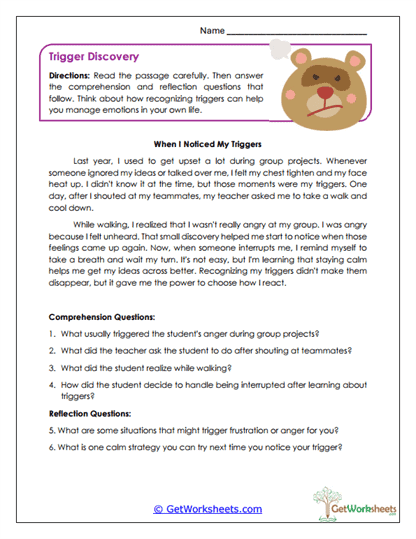
Trigger Discovery - Understanding Why Kids Get Upset
A story-based activity helps uncover the underlying reasons behind emotional reactions. Learners explore what specifically caused frustration or discomfort for a character. This builds deeper self-awareness and understanding of personal triggers. Recognizing the "why" makes it easier to manage reactions.
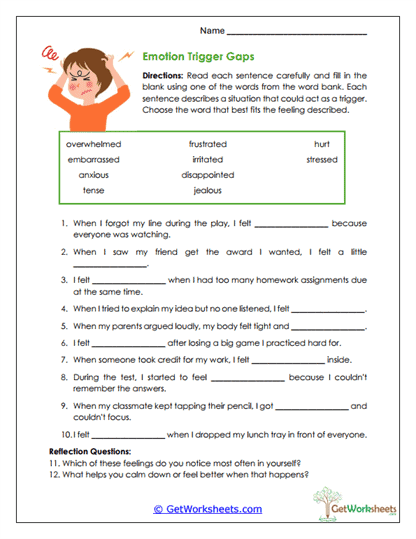
Emotion Trigger Gaps - Connecting Feelings to Real Situations
Short scenarios are paired with emotion choices, encouraging learners to match feelings to specific situations. This strengthens the connection between events and emotional responses. It also expands vocabulary with more precise feeling words. Over time, children become more confident in identifying what they feel and why.
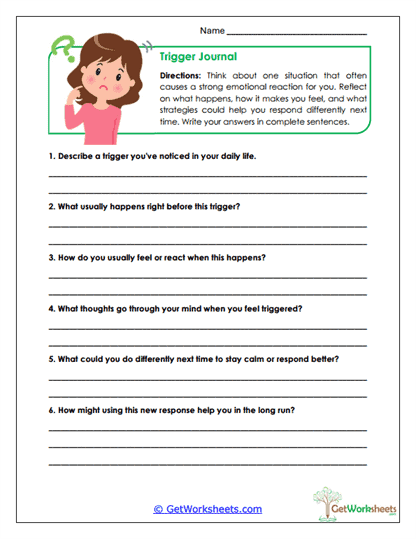
Trigger Journal - Building Daily Awareness
Reflection prompts guide learners to think about their own experiences, reactions, and possible improvements. This activity supports long-term awareness by focusing on personal patterns. It encourages thoughtful thinking rather than quick reactions. With consistency, it helps build stronger emotional habits.
Body Signals - Noticing Warning Signs Early
Physical cues like a racing heart or tense muscles are connected to emotional experiences. This helps learners recognize early warning signs before emotions escalate. Understanding these signals supports better self-regulation. Catching feelings early makes it easier to stay in control.
Thought Triggers - Understanding What Starts the Feeling
Situations are paired with possible thought patterns that influence emotional reactions. This helps learners see how thinking can shape feelings and behavior. It introduces the idea that different thoughts can lead to different outcomes. With practice, children begin to rethink situations more calmly.
Trigger Patterns - Identifying Repeated Emotional Responses
Multiple examples are used to help identify repeated reactions across different situations. This builds awareness of consistent emotional patterns. It also encourages deeper thinking about why those patterns occur. Recognizing trends helps learners prepare for future challenges.
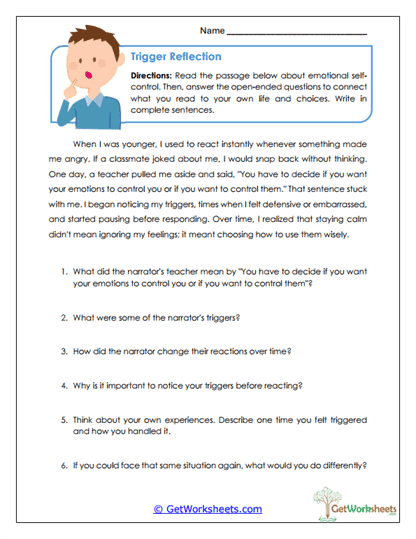
Trigger Response Planning - Building a Strategy for Self-Control
Guided prompts support the creation of a personal plan for handling triggers. Learners think through situations, typical reactions, and better alternatives. This activity connects awareness with action. Having a plan in place builds confidence and improves real-life decision-making.
Bookmark Us Now!
New, high-quality worksheets are added every week! Do not miss out!