Gratitude and Positive Emotions Worksheets
About This Worksheet Collection
This uplifting collection of gratitude and positive emotions worksheets helps children notice, understand, and appreciate the good things in their lives. Each activity is designed to gently guide learners toward recognizing kindness, joy, and everyday positive moments through relatable situations and meaningful reflection. Whether used in a classroom or at home, these worksheets make it easy to introduce gratitude in a way that feels natural and engaging.
As children move through the activities, they strengthen emotional awareness, build vocabulary, and develop stronger communication skills. They also begin to connect their actions with how others feel, which supports empathy and positive relationships. Along the way, learners practice reflection, reading, and writing while building habits that support confidence and a more positive mindset. These are skills that extend far beyond the worksheet and into everyday life.
Detailed Descriptions Of These Worksheets
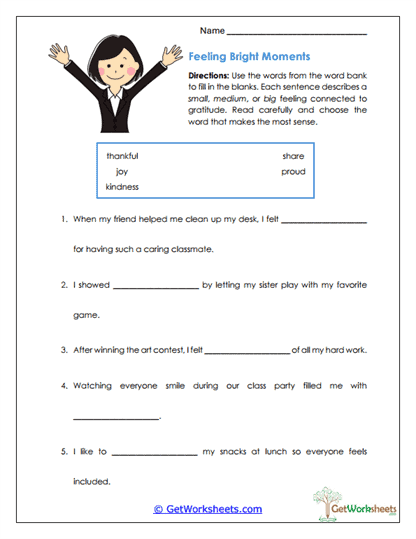
Feeling Bright Moments - Gratitude & Positive Thinking
Short sentences guide learners to fill in blanks using uplifting words like thankful or joy. This activity encourages noticing small positive moments that might otherwise go overlooked. It also builds early emotional vocabulary in a simple, approachable way. Over time, this kind of practice helps children develop a more positive outlook.
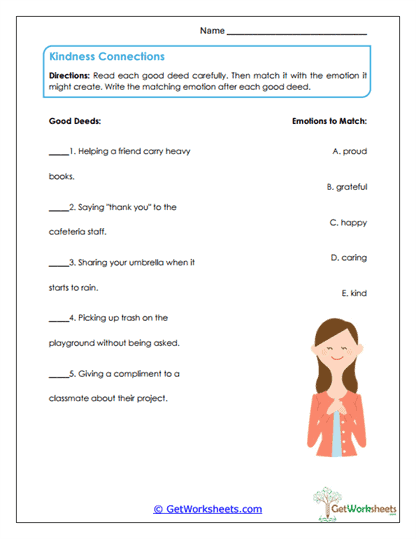
Kindness Connections - Linking Actions to Feelings
Simple acts of kindness are paired with the emotions they create, helping learners see the connection between behavior and feelings. Each example reinforces the idea that actions can impact others in meaningful ways. It's a clear and relatable introduction to empathy. With repeated exposure, children begin to make more thoughtful choices.
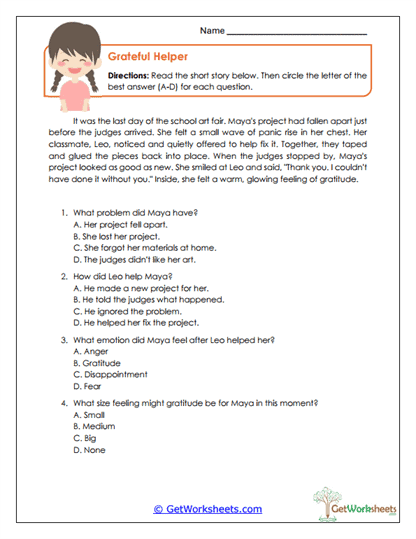
Grateful Helper - Reading & Gratitude Comprehension
A short story introduces gratitude through a real-life situation involving help and appreciation. Follow-up questions encourage thinking about what happened and why it mattered. This blends reading comprehension with emotional insight. It's a great way to make gratitude feel real instead of abstract.
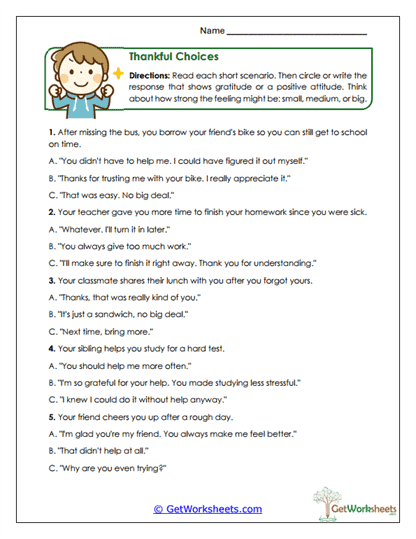
Thankful Choices - Practicing Grateful Responses
Everyday scenarios invite learners to choose responses that reflect appreciation and kindness. The activity also introduces the idea that feelings can vary in intensity. This helps build both emotional awareness and decision-making skills. Practicing ahead of time makes it easier to respond thoughtfully in real situations.
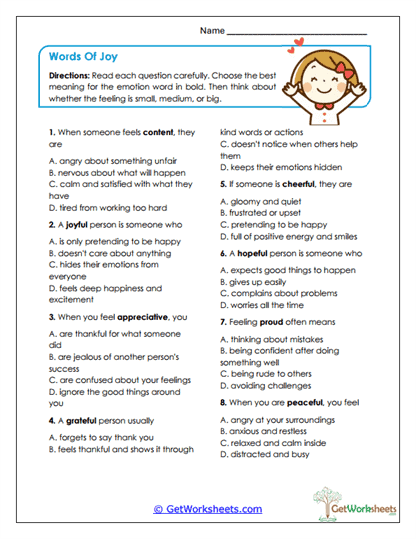
Words of Joy - Understanding Positive Emotions
A range of positive emotion words is explored through questions and context-based thinking. Learners begin to understand not just what the words mean, but how they feel in real life. This deepens both vocabulary and emotional awareness. It also encourages more precise communication.
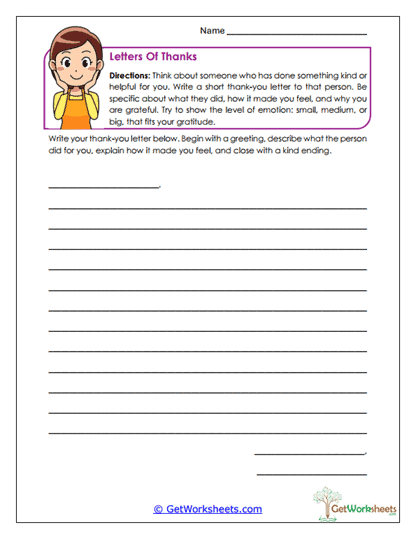
Letters of Thanks - Writing Gratitude
A guided format supports writing a meaningful thank-you letter to someone important. The process encourages reflection on actions, feelings, and appreciation. Writing becomes more purposeful as learners connect it to real relationships. This activity helps turn gratitude into something personal and lasting.
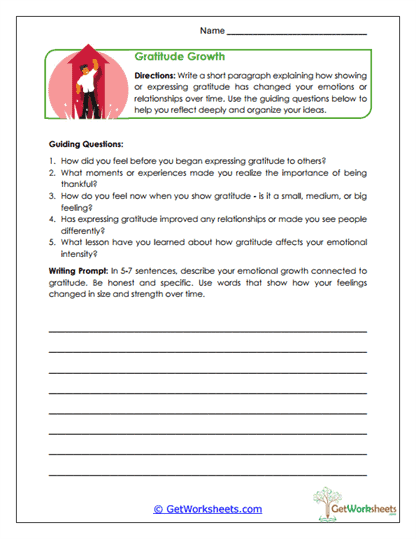
Gratitude Growth - Reflecting on Thankfulness
Guided questions encourage thinking about how gratitude changes feelings over time. Learners reflect on before-and-after experiences to notice emotional growth. This builds self-awareness and deeper understanding. It also reinforces the idea that gratitude is something that develops with practice.
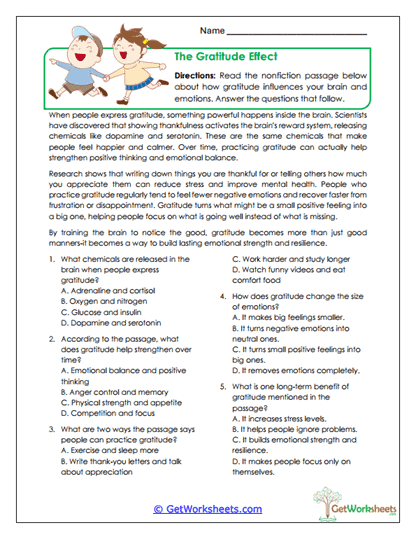
The Gratitude Effect - Reading & Brain Science
An informational passage explains how gratitude impacts mood and thinking. Comprehension questions help reinforce key ideas and connections. This introduces a simple science-based perspective on emotions. Understanding the "why" behind gratitude makes it more meaningful.
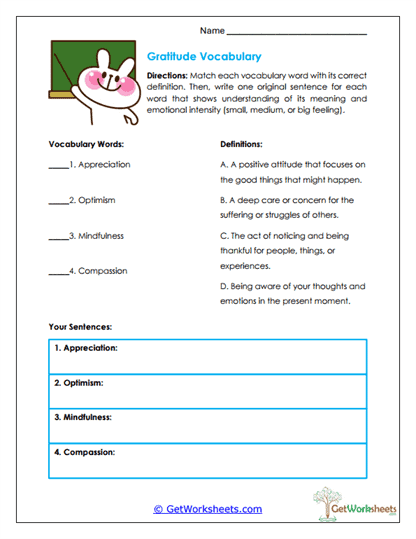
Gratitude Vocabulary - Understanding Key Terms
Important words like optimism and compassion are explored through matching and sentence use. This strengthens both comprehension and expressive language skills. Learners gain confidence using more advanced emotional vocabulary. Clear structure keeps the activity accessible and focused.
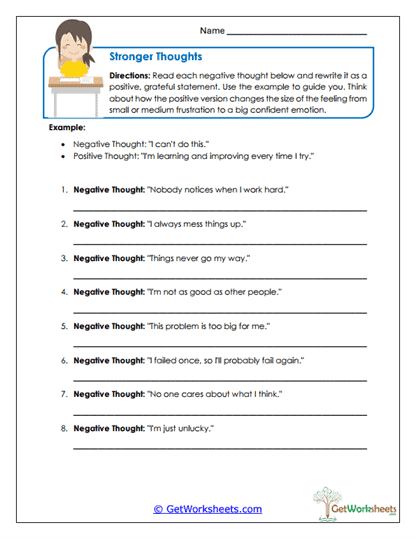
Stronger Thoughts - Reframing with Gratitude
Negative thoughts are transformed into more positive, balanced ones through guided rewriting. This encourages a shift in mindset and builds emotional resilience. The process helps learners see that thoughts can be changed. Over time, it supports stronger confidence and self-belief.
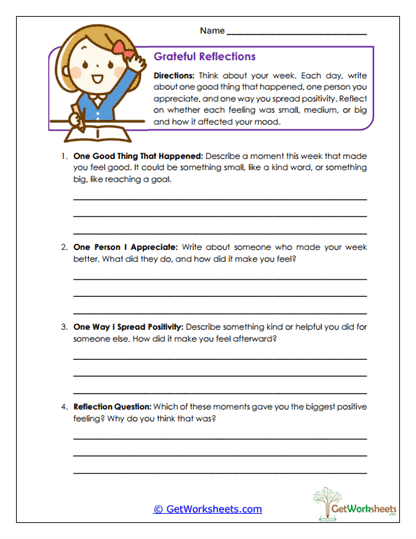
Grateful Reflections - Daily Positivity Practice
A simple format encourages writing about positive moments, people, and actions from the day. This builds a consistent habit of noticing the good. Reflection becomes part of a routine rather than a one-time activity. Regular practice helps improve mood and awareness.
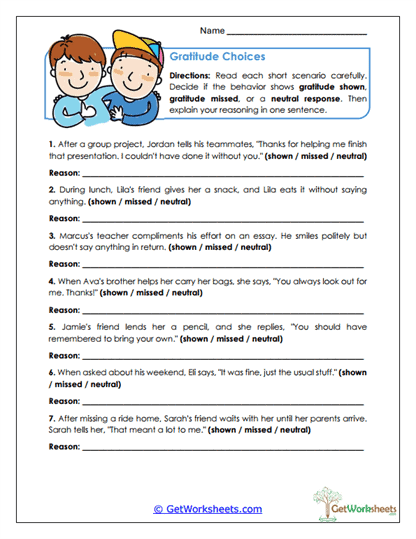
Gratitude Choices - Recognizing Appreciation
Short scenarios challenge learners to decide whether gratitude is being shown or not. This builds awareness of how appreciation looks in real life. It also encourages explaining reasoning, which strengthens communication skills. Over time, children become more thoughtful and observant in social situations.
Bookmark Us Now!
New, high-quality worksheets are added every week! Do not miss out!