Vowel Diphthongs Worksheets
About This Worksheet Collection
This Vowel Diphthongs Worksheets collection gives students extensive, meaningful practice with diphthongs such as oi, oy, ou, and ow, helping them recognize and decode shifting vowel sounds within real words. The worksheets include tasks such as picture matching, cloze reading, editing, sound sorting, and rhyming-style comparisons that require students to analyze how diphthongs function in both isolated words and connected text. These varied approaches support strong foundational reading skills by reinforcing the relationship between sound and spelling.
Throughout the collection, learners strengthen phonemic awareness, decoding fluency, vocabulary understanding, and spelling accuracy. Many activities prompt students to choose between similar-sounding diphthong patterns, evaluate real vs. nonsense words, or apply vocabulary within sentence and story contexts. Together, these worksheets help students internalize diphthong patterns and build confidence reading and writing words that contain complex vowel sounds.
Detailed Descriptions Of These Worksheets
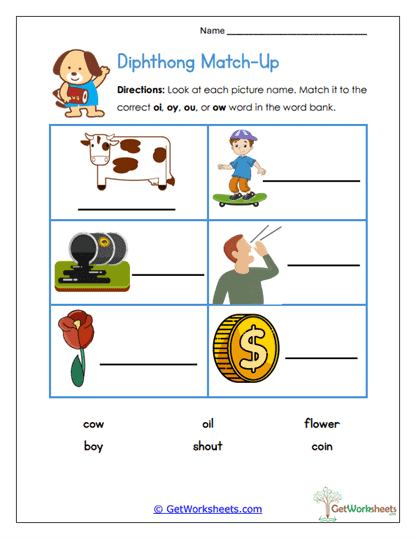
Diphthong Match-Up
Students match picture clues to diphthong words such as those with oi, oy, ou, or ow, promoting strong picture-word association. This builds decoding ability as learners connect visual meaning with written vowel patterns. The exercise reinforces pronunciation and vocabulary understanding. It also supports recognition of diphthongs in meaningful contexts.
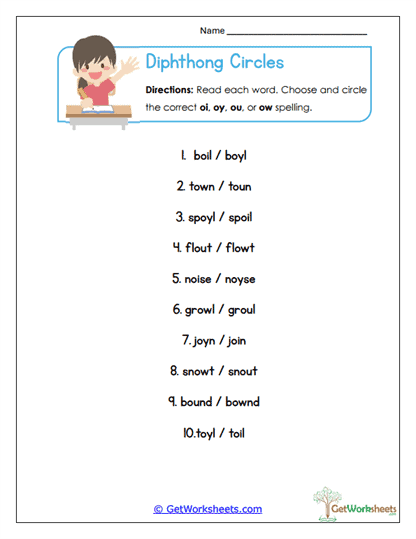
Diph Circles
Learners read pairs of words and circle the correctly spelled diphthong form, strengthening spelling and decoding accuracy. Comparing correct and incorrect spellings encourages careful visual discrimination. This helps students recognize common diphthong patterns and boosts confidence in word analysis. The activity supports fluent reading through repeated pattern exposure.
Vowel Diphthong Sorter
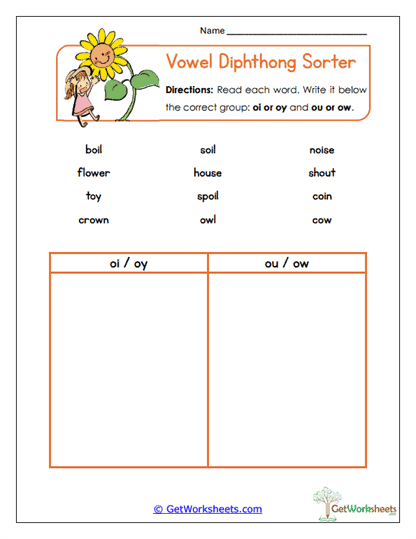
Students sort words into oi/oy or ou/ow groups, developing awareness of sound-spelling relationships. Writing words into groups reinforces decoding and long-term retention. Sorting helps learners distinguish between similar vowel teams. It also strengthens foundational phonics skills and vocabulary.
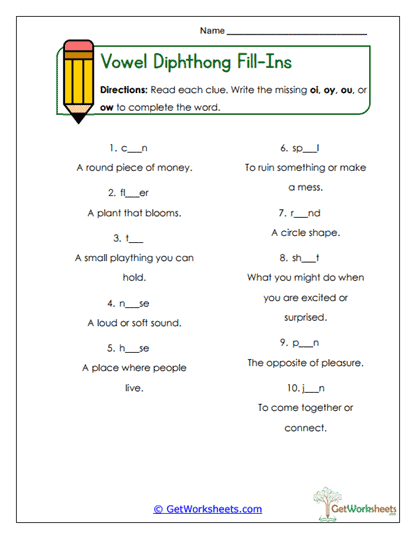
Mixed Fill-Ins
Learners fill in missing diphthongs using picture or sentence clues, encouraging contextual reasoning. This supports spelling accuracy as students analyze each partial word. Writing the completed words reinforces correct sound-symbol mapping. The activity deepens understanding of how diphthongs appear in everyday vocabulary.
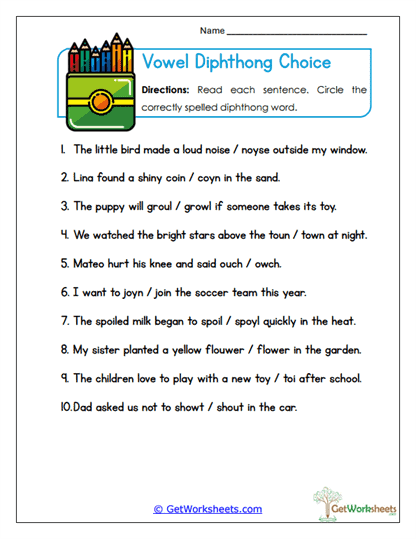
Choice Layer
Students choose the correctly spelled diphthong word within sentences, using context to guide decision-making. This strengthens comprehension and promotes precise spelling. Repeated exposure builds fluency and decoding accuracy. The task reinforces diphthong recognition within meaningful text.
Story Read
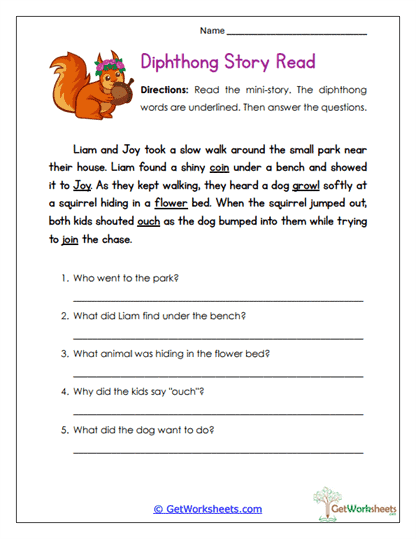
Students read a short diphthong-rich story and answer comprehension questions, combining decoding practice with understanding of narrative details. Underlined diphthong words help learners focus on vowel patterns in context. This dual approach supports vocabulary recognition and reading accuracy. It also encourages careful attention to key ideas.
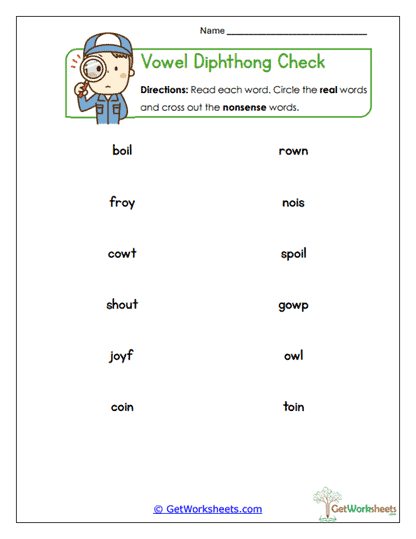
Nonsense Check
Learners circle real diphthong words and cross out nonsense ones, sharpening phonics reasoning. This boosts decoding accuracy and vocabulary awareness. Distinguishing realistic spellings from invented ones promotes confidence in word recognition. The task reinforces attention to sound-spelling patterns.
Twin Match
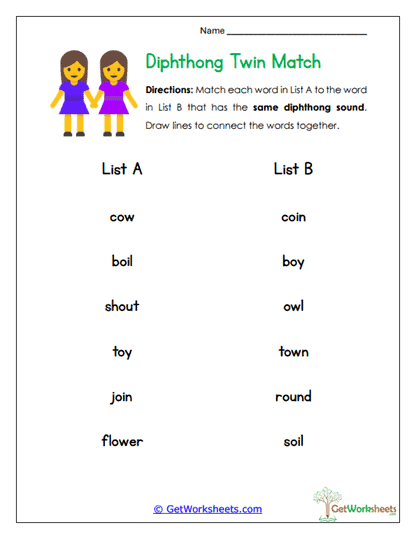
Students match words based on shared diphthong sounds, even when spelled differently. This builds phonological awareness and flexible decoding strategies. Matching strengthens recognition of vowel sound relationships. It also supports vocabulary development and reading fluency.
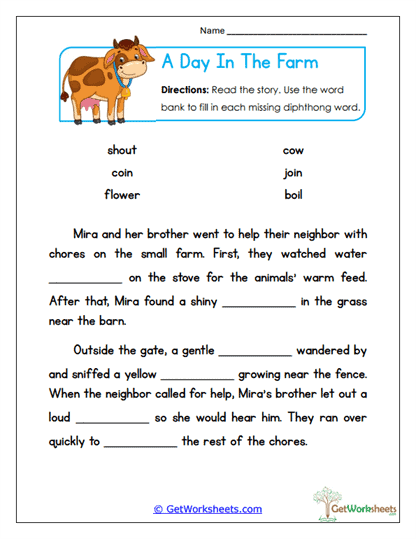
A Day in the Farm
Learners complete a cloze-style story by inserting diphthong words from a word bank. This strengthens comprehension through context-based decision-making. Writing the correct words reinforces spelling and decoding. The narrative setting encourages fluent reading and meaningful vocabulary use.
Really Fix-It
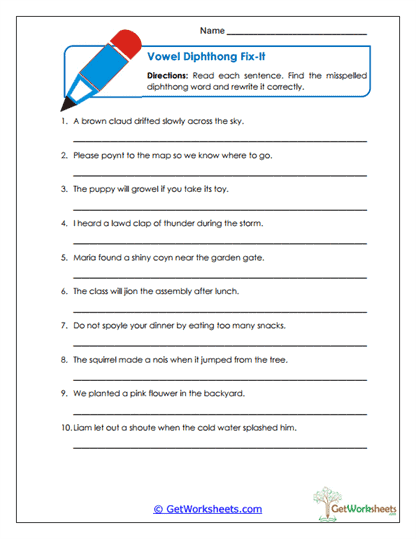
Students locate diphthong spelling errors in sentences and rewrite each one correctly, promoting strong editing habits. The exercise reinforces accurate vowel patterns and decoding. Rewriting improves spelling fluency and comprehension. It builds confidence applying diphthongs in writing.
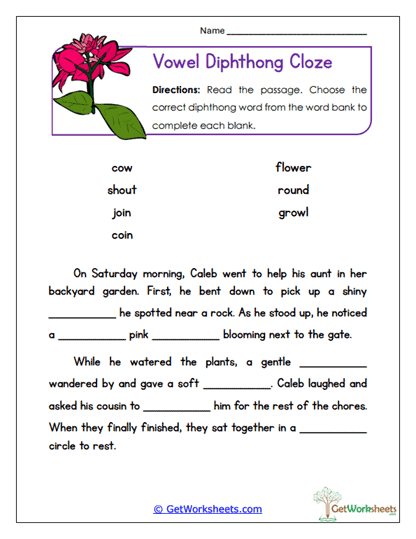
Diphthong Cloze
Learners fill in blanks in a short passage using diphthong words from a list, reinforcing context-based decoding. This task supports reading fluency and vocabulary application. Writing the completed words strengthens spelling and recognition of vowel teams. The passage format enhances engagement.
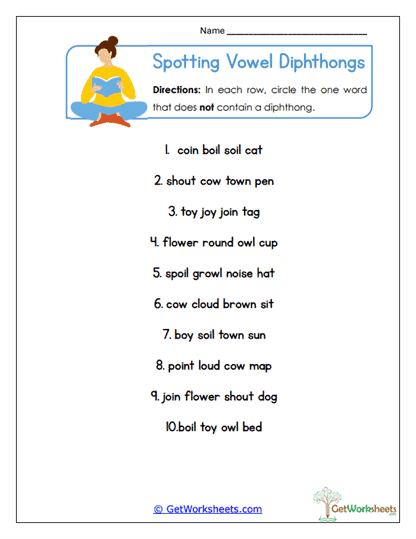
Quick Spotting
Students identify the word in each row that does not contain a diphthong, building discrimination between regular vowel patterns and diphthong sounds. This supports phonemic awareness and decoding accuracy. The activity encourages careful analysis of sound-spelling relationships. It strengthens fluency and deepens vocabulary understanding.
Bookmark Us Now!
New, high-quality worksheets are added every week! Do not miss out!