Phonics Worksheets
-
Beginning Blends
-
Beginning Digraphs
-
Bossy R Word Patterns
-
-
Ch Blends
-
Common Prefix Patterns
-
Common Suffix Patterns
-
CVC Patterns
-
CVCe (Silent E) Patterns
-
CVVC Patterns
-
Diphthongs
-
Double Consonants
-
Ending Blends
-
Ending Digraphs
-
ft Blends
-
L Consonant Blend
-
lt Blends
-
mp Blends
-
nd Blends
-
NT Consonant Blend
-
Ph Blends
-
Qu Blends
-
R-Blends
-
R-Controlled Vowels
-
S Blends
-
Schwa Sound
-
SCR Consonant Blends
-
Sh Blends
-
Silent Consonant Blends
-
Spl- Blends
-
Spr- Blends
-
St Blends
-
Str- Blends
-
T-Blends
-
Three-Letter Blends
-
Variant Vowels
-
Vowel Digraphs
-
Vowel Diphthongs
-
Vowel Patterns
-
Vowel Teams
Phonics Worksheets Collection
Phonics gives young readers the essential tools they need to break apart words, connect sounds to letters, and read with confidence. This Phonics Worksheets collection provides systematic, skill-focused practice that helps learners build decoding fluency one sound pattern at a time. Through carefully designed activities, students develop the phonemic awareness, blending ability, and sound-symbol knowledge required for strong, independent reading.
Each worksheet encourages learners to read, sort, build, write, and apply phonics patterns in meaningful ways. Activities include word lists, sound boxes, blending lines, decodable sentences, picture-word connections, and fluency strips-all designed to strengthen the connection between print and sound. This supports smoother reading, clearer pronunciation, stronger spelling habits, and overall literacy growth.
Below is an alphabetized list of phonics subtopics, each offering targeted worksheets that help learners master specific sound patterns and build a solid foundation for reading success.
Subtopic Worksheet Collection Descriptions
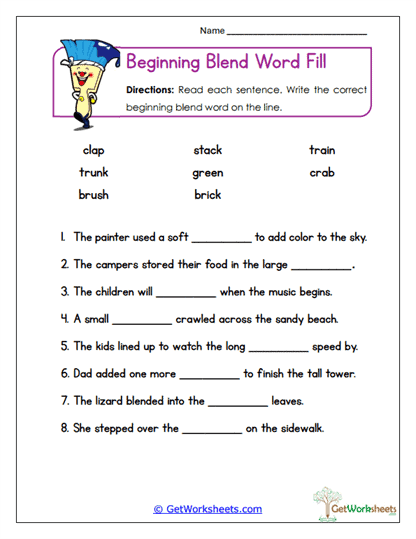
Beginning Blends
This collection helps young readers recognize and decode common beginning blends such as bl, cr, st, and fl. Through targeted practice, students learn how two consonants work together to create smooth, combined sounds at the start of words. These worksheets build early reading fluency and strengthen the foundation needed for more advanced phonics skills.
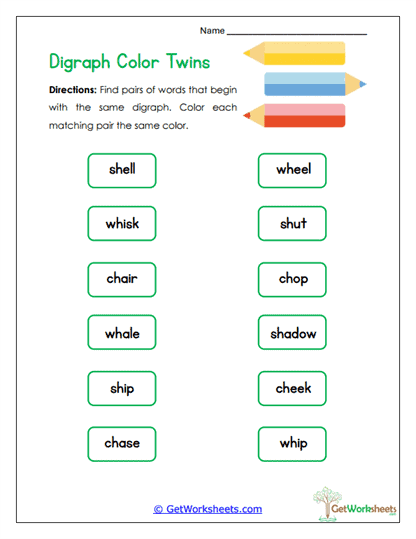
Beginning Digraphs
These worksheets introduce students to beginning digraphs, where two letters come together to represent a single new sound, such as ch, sh, th, and wh. Activities guide learners in identifying these sounds in words and using them to improve reading accuracy. By mastering digraphs, children gain confidence and clarity in both decoding and spelling.
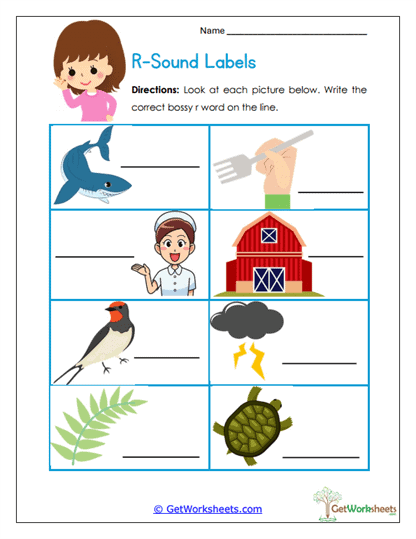
Bossy R Word Patterns
This collection teaches the important "Bossy R" (R-controlled vowel) patterns, helping students understand how ar, er, ir, or, and ur change the vowel sound that comes before them. Engaging exercises show how the "bossy" R alters pronunciation and meaning in everyday words. Strengthening this skill supports smoother reading, clearer spelling, and stronger overall phonics development.
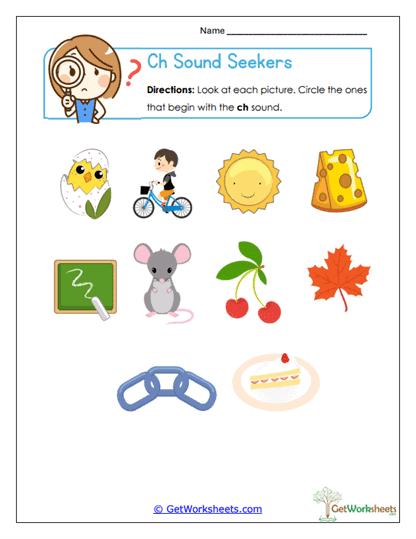
Ch Blends (e.g., chair, cheese)
These worksheets help learners recognize and read the /ch/ sound in both beginning and ending positions. This builds strong phonemic awareness and decoding confidence. It supports reading fluency by helping students identify one of the most common digraph patterns.
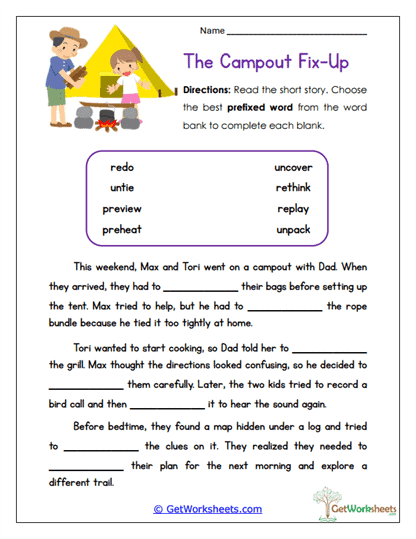
Common Prefix Patterns
A series of worksheets help students understand how word beginnings like un-, re-, and pre- change a word's meaning. Activities guide learners in breaking apart words to see how prefixes provide clues for comprehension. This collection strengthens vocabulary skills and supports more confident reading and writing.
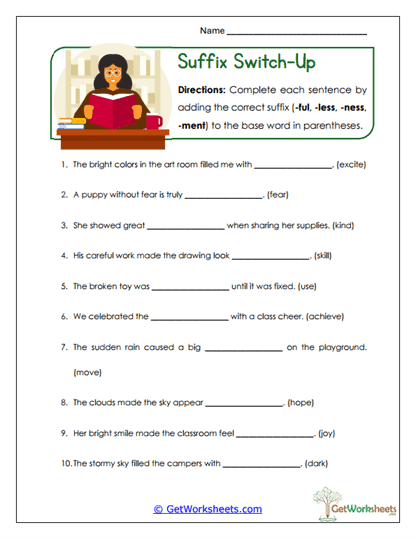
Common Suffix Patterns
This collection introduces students to word endings such as -ful, -less, -ment, and -ness, showing how they transform base words. Learners practice identifying meanings and recognizing how suffixes change word forms. These worksheets build vocabulary, grammar awareness, and reading fluency.
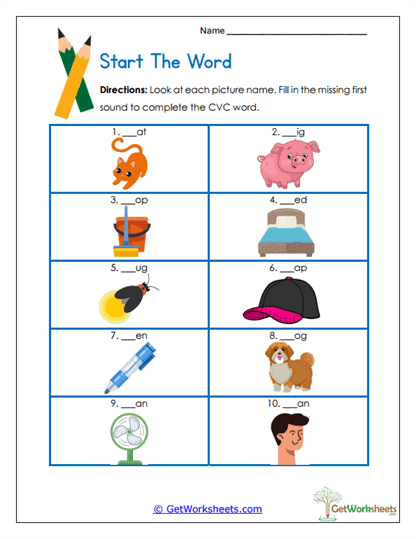
CVC Patterns
These worksheets focus on consonant-vowel-consonant words like cat, sun, and pen, helping students master short vowel sounds. Through decoding practice, children learn to blend these letter patterns smoothly. This foundational skill boosts early reading confidence and prepares students for more complex phonics work.
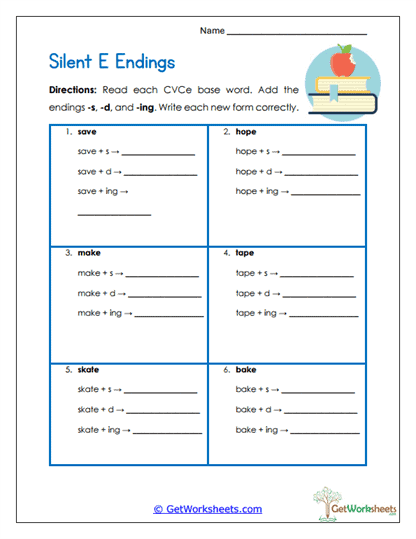
CVCe (Silent E) Patterns
This collection teaches how adding a final "e" changes a short vowel into a long vowel, as in cap → cape or pin → pine. Students practice identifying the silent-e rule and applying it in both reading and spelling. Mastering this pattern greatly expands word recognition and decoding accuracy.
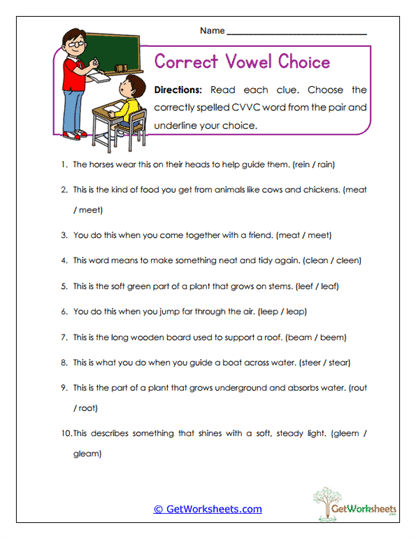
CVVC Patterns
These worksheets introduce vowel teams such as ai, ea, and oa, showing how two vowels can work together to create a long vowel sound. Learners practice spotting these patterns and using them to decode unfamiliar words. Understanding CVVC combinations helps readers grow fluency and confidence.
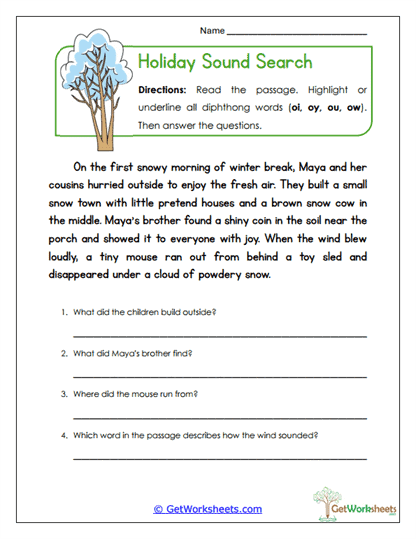
Diphthongs
This collection teaches the unique gliding vowel sounds found in patterns like oi, oy, ow, and ou. Activities help children hear, read, and spell these shifting sounds with accuracy. Strengthening diphthong recognition improves pronunciation, decoding, and overall reading fluency.
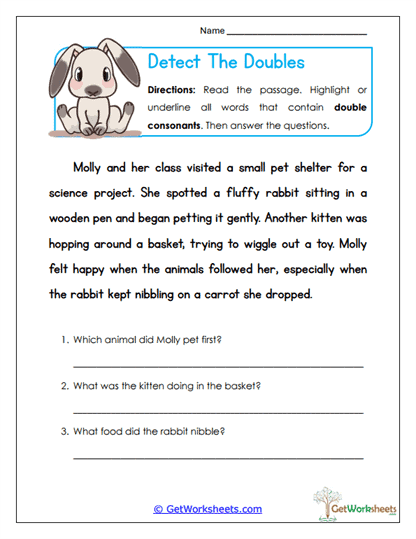
Double Consonants
These worksheets help students recognize when two identical consonants appear together and how they affect word structure and spelling. Learners explore common patterns in words like rabbit, hopping, and little. This practice builds strong spelling habits and reinforces syllable awareness.
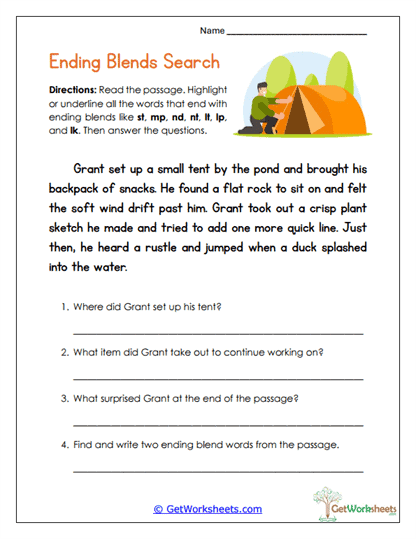
Ending Blends
This collection focuses on consonant combinations such as -nd, -st, -mp, and -ft that appear at the end of words. Students practice hearing and spelling these blended sounds to improve accuracy. Mastering ending blends boosts decoding skills and strengthens overall reading fluency.
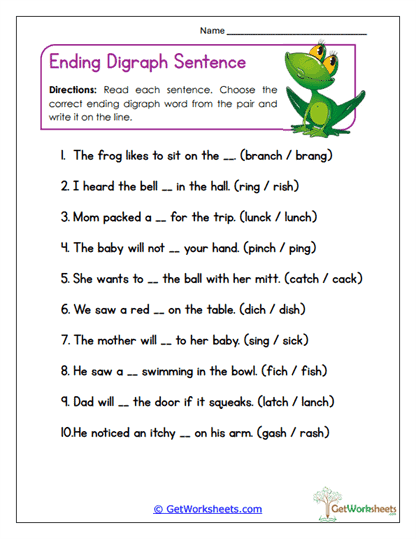
Ending Digraphs
These worksheets introduce word endings like -ch, -sh, -th, and -ck, where two letters create a single sound. Activities guide students in identifying these patterns and applying them in reading and spelling. This collection supports clearer pronunciation, stronger decoding, and improved writing skills.
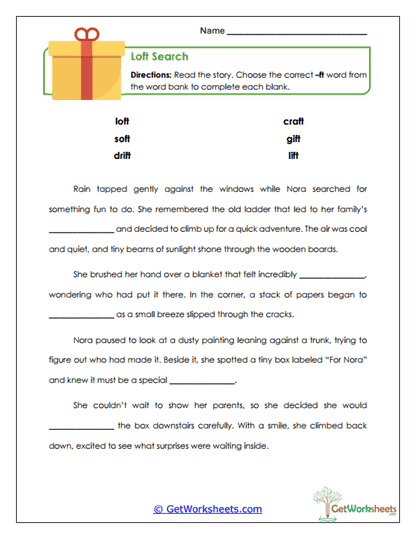
-ft Blends (e.g., lift, gift, sift)
Learners practice reading and writing words ending with -ft. This strengthens awareness of final consonant clusters. It helps students decode multisyllabic words more accurately later on.
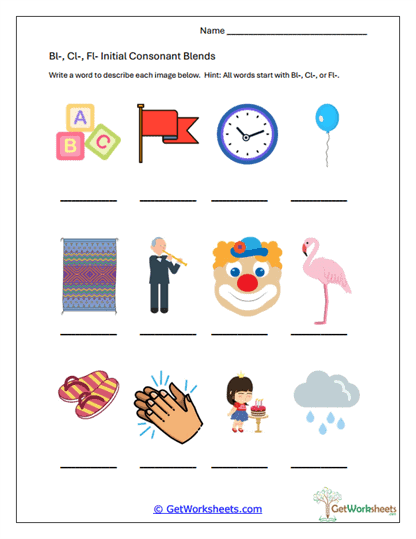
L Consonant Blend (bl, cl, fl, gl, pl, sl)
Learners practice initial l-blends to build smooth sound blending. This supports decoding in early readers as they encounter many everyday l-blend words. It strengthens foundational reading fluency and confidence.
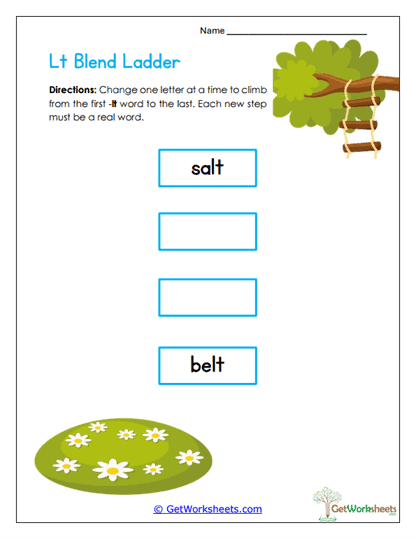
-lt Blends (e.g., felt, salt, melt)
These worksheets focus on the -lt blend in familiar words. This supports visual discrimination and ending-sound fluency. It helps learners read connected text with smoother accuracy.
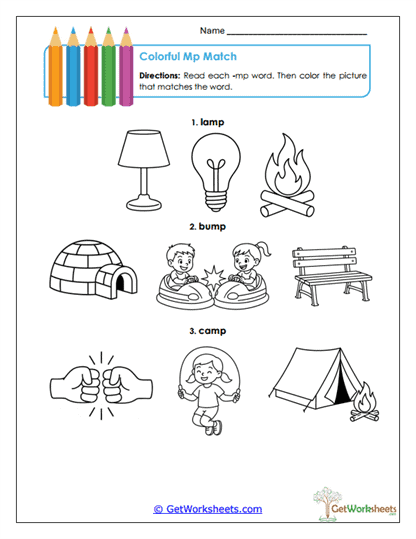
-mp Blends (e.g., jump, camp, lamp)
These worksheets help learners decode nasal blends ending in -mp. This builds phonics automaticity and strengthens orthographic mapping. It makes reading common action words and nouns easier.
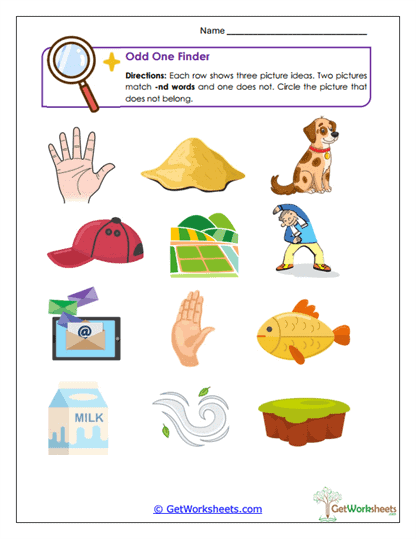
-nd Blends (e.g., hand, band, send)
Learners explore words ending with -nd to develop stronger final-blend recognition. This supports accurate decoding and spelling patterns. It helps students read text more fluidly.
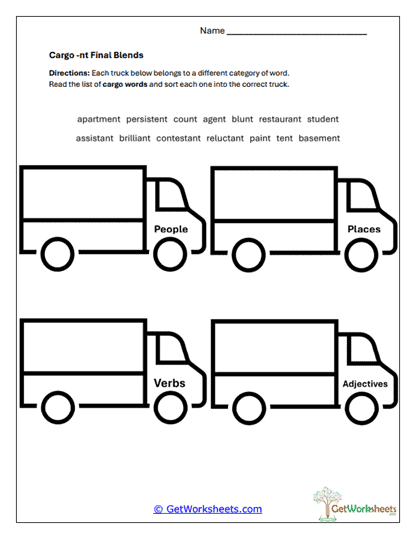
NT Consonant Blend
These worksheets introduce learners to the -nt blend. This enhances awareness of consonant clusters in word endings. It helps children decode high-frequency words containing this pattern.
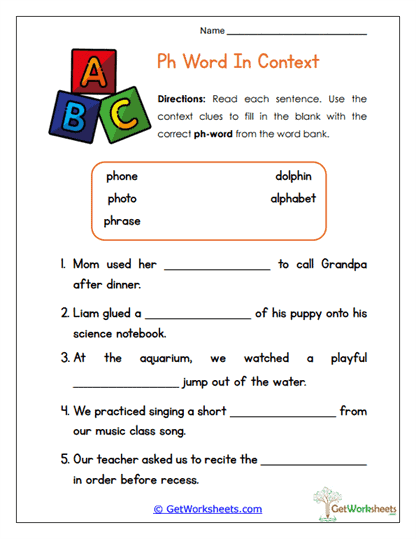
Ph Blends (e.g., phone, phrase)
Learners study the ph = /f/ pattern often found in Greek-based vocabulary. This builds decoding flexibility and pattern recognition. It supports reading accuracy in academic and content-area texts.
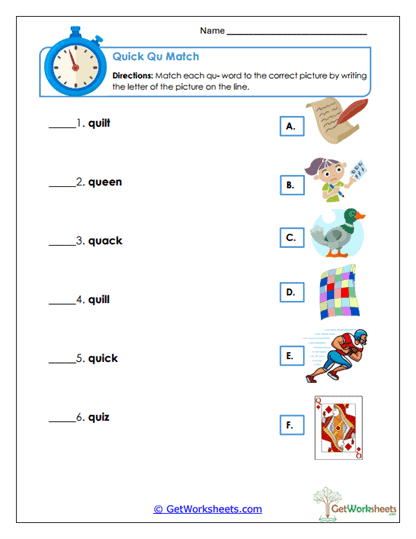
Qu Blends (e.g., queen, quick)
These worksheets teach students to treat "qu" as a single sound unit. This strengthens decoding of many common words. It supports automaticity in both reading and spelling.
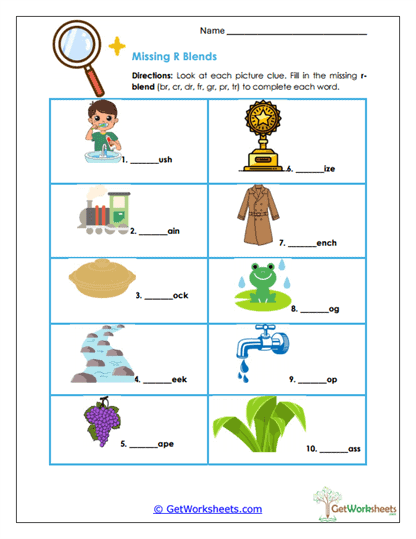
R-Blends (e.g., br, cr, dr, fr, gr, pr, tr)
Learners practice blending consonants with /r/ to form beginning clusters. This builds strong onset fluency and decoding efficiency. It helps students read multisyllabic words with greater ease.
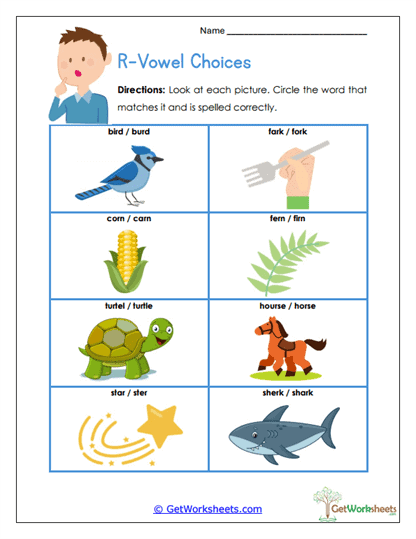
R-Controlled Vowels (ar, or, er, ir, ur)
These worksheets guide learners through the complex vowel sounds affected by "r." This deepens advanced phonics knowledge. It helps learners decode tricky words with greater accuracy.
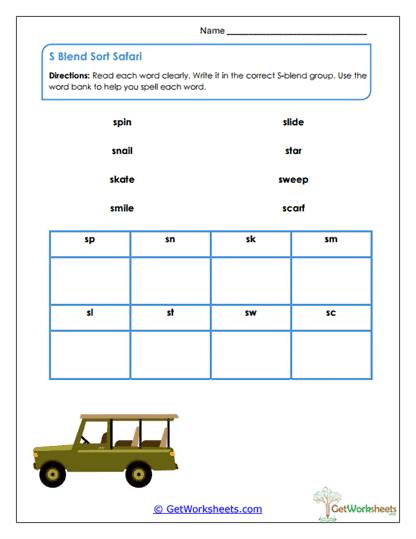
S-Blends (e.g., sc, sk, sl, sm, sn, sp, st, sw)
Learners develop fluency with common s-blends at the beginnings of words. This supports smooth segmenting and blending. It strengthens decoding of early-reader vocabulary.
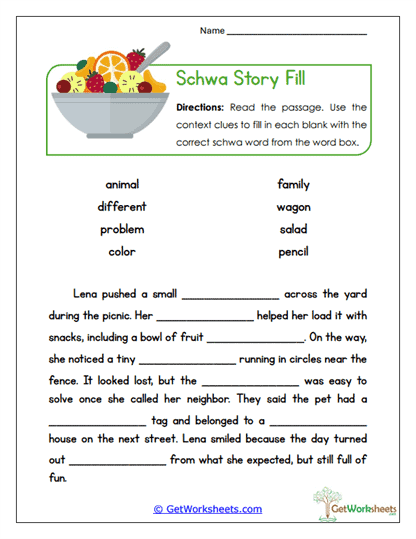
Schwa Sound
These worksheets help students identify the reduced vowel sound heard in many unstressed syllables. This builds decoding flexibility and awareness of syllable stress. It helps learners handle longer, unpredictable words.
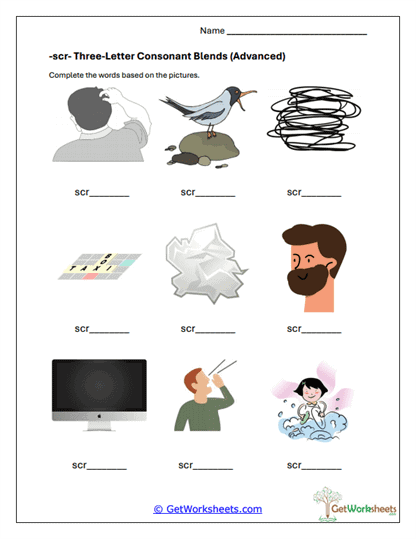
SCR Consonant Blends
Learners practice decoding the scr- blend found in more advanced vocabulary. This builds multi-letter blend fluency. It helps students read complex words with confidence.
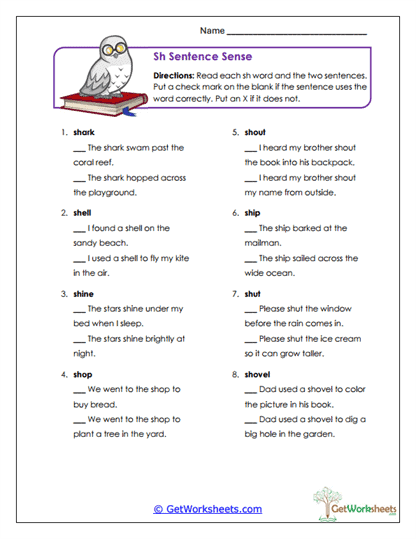
Sh Blends (e.g., ship, shell)
These worksheets strengthen recognition of the /sh/ digraph. This supports smooth blending and decoding of one of the most frequent sound patterns. It helps students read with improved accuracy and speed.
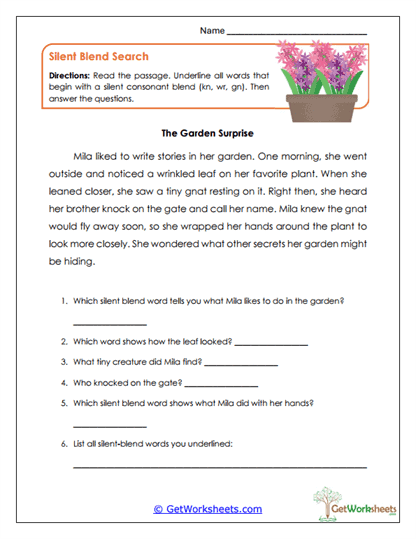
Silent Consonant Blends (e.g., kn, gn, wr)
Learners explore blends where one consonant is silent. This deepens understanding of English spelling irregularities. It helps students decode and spell commonly encountered words correctly.
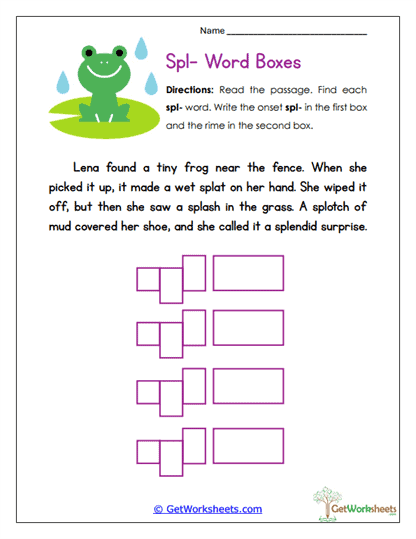
Spl- Blends (e.g., split, splatter)
These worksheets develop fluency in reading words that begin with spl-. This challenges learners to blend three consonants smoothly. It strengthens advanced decoding skills.
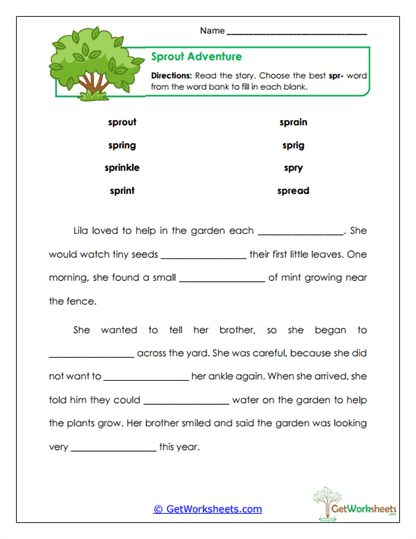
Spr- Blends (e.g., spring, spray)
Learners practice reading spr- words to develop strong multi-consonant blending. This improves phonological flexibility. It helps students read longer onset clusters with ease.
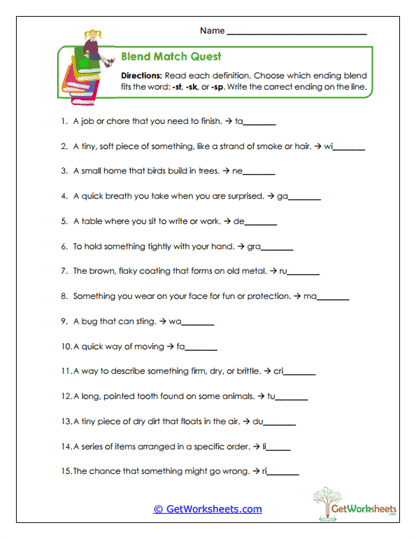
-st Blends (e.g., best, rest, most)
These worksheets focus on ending blends using -st. This builds recognition of subtle final consonant groupings. It strengthens fluency and accuracy in connected text reading.
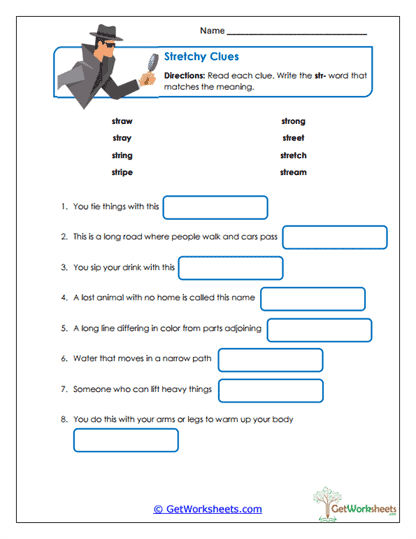
Str- Blends (e.g., string, street)
Learners practice decoding str- blends, one of the more difficult three-letter clusters. This supports fluent blending and advanced phonics competence. It helps students decode longer and more complex vocabulary.
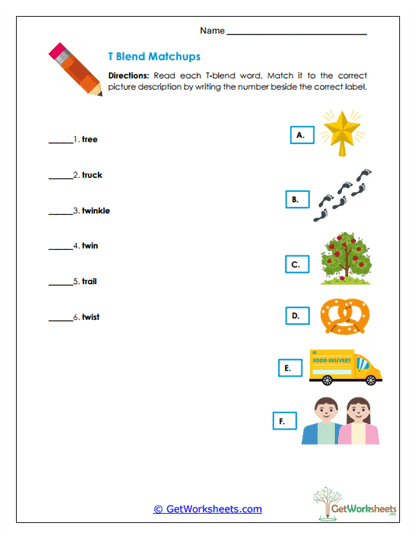
T-Blends (e.g., tr, tw)
These worksheets guide learners through blending consonants with "t." This builds decoding speed and accuracy. It helps students read more challenging onset clusters.
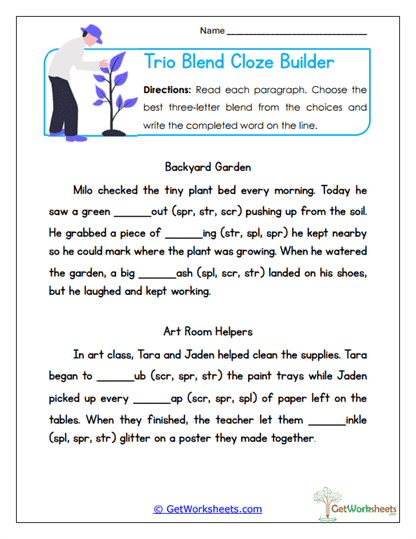
Three-Letter Blends (scr, spl, str, spr)
Learners encounter some of the most advanced consonant clusters in phonics. This strengthens flexible decoding across complex patterns. It prepares students for reading sophisticated academic vocabulary.
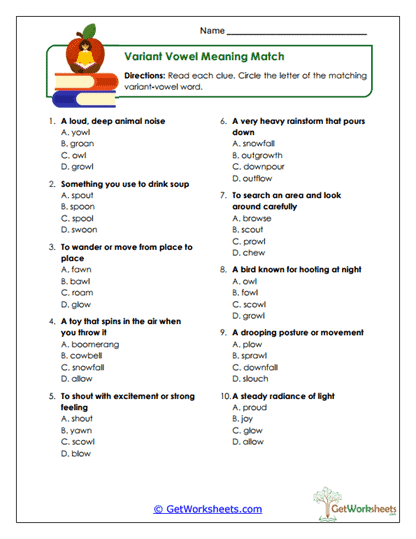
Variant Vowels
These worksheets teach vowel patterns that produce multiple sounds. This builds adaptive decoding and sound-recognition skills. It helps learners navigate unpredictable vowel behaviors.
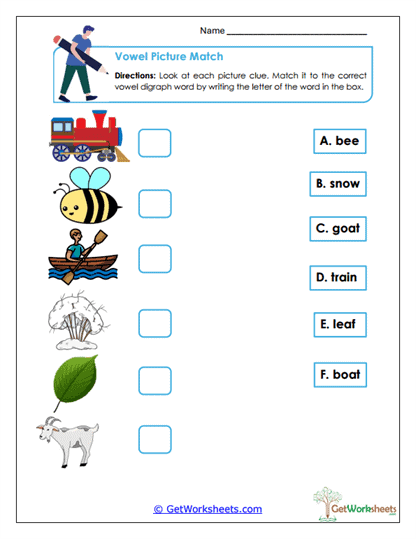
Vowel Digraphs
Learners study vowel pairs that create a single sound. This strengthens long-vowel decoding and spelling. It supports successful reading of many common sight and decodable words.
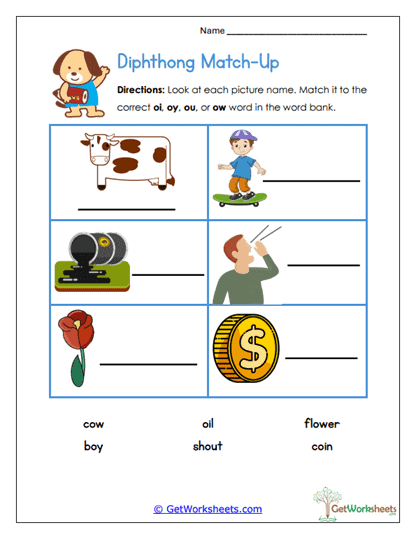
Vowel Diphthongs
These worksheets introduce shifting vowel sounds such as oi, oy, ou, and ow. This develops advanced phonemic awareness. It helps students decode lively, dynamic vowel patterns.
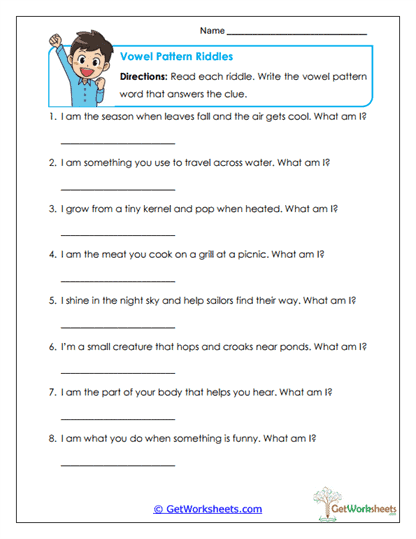
Vowel Patterns
Learners explore common structures (CVCe, CVVC, etc.) to understand how vowels behave in words. This builds analytical decoding skills. It helps learners break apart unfamiliar words logically.
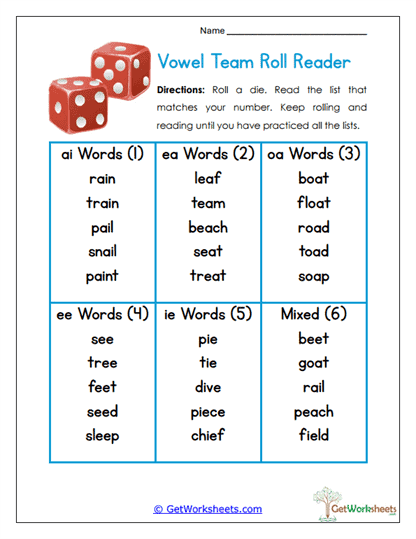
Vowel Teams (ai, ea, oa, ee, ie)
These worksheets teach consistent long-vowel patterns that appear in high-frequency words. This builds strong orthographic mapping and reading fluency. It helps students read smoothly and confidently across texts.
Bookmark Us Now!
New, high-quality worksheets are added every week! Do not miss out!