Even and Odd Number Patterns Worksheets
-
Apple Pair Test
-
Balloon Number Hunt
-
Balloon-to-Buddy Match
-
-
Even Number Search Grid
-
Even-Odd Color Code
-
Fruit Basket Sort
-
Numbered Friends
-
Odd Number Frog Hop
-
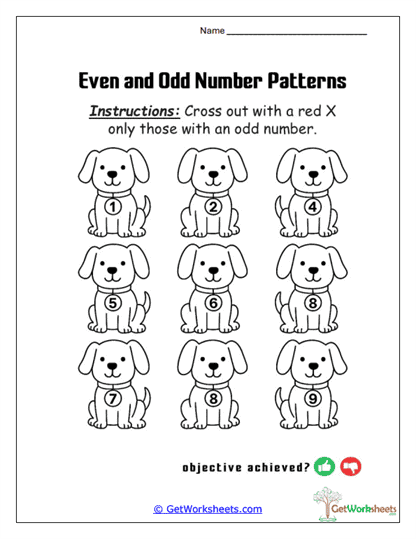
Odd Pup Patrol
-
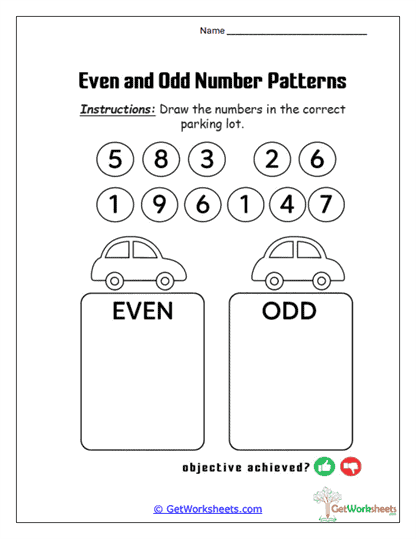
Parking Lot Number Sort
-
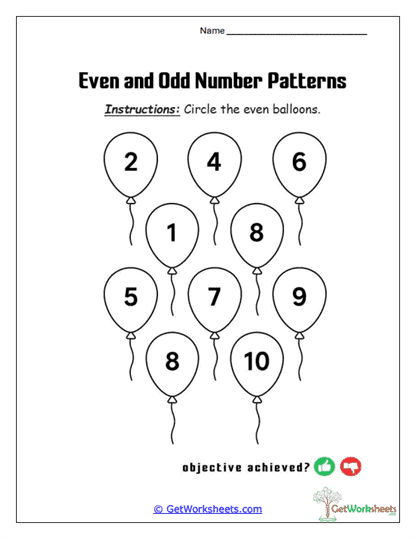
Party Balloon Pairing
-
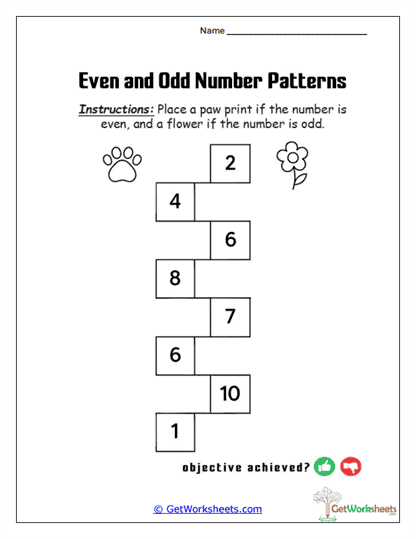
Pawprint and Flower Path
-
Puzzle Piece Number Check
-
Stepping Stone Color Sort
-
Traffic Light Number Signal
About This Worksheet Collection
Even and odd number patterns help young learners see that counting numbers follow a predictable alternating structure. Even numbers can be separated into equal pairs with nothing left over, while odd numbers leave one item without a partner. Recognizing this pattern strengthens early number sense, classification, skip counting, grouping, and later work with addition, multiplication, and number properties.
This collection gives kindergarten and first-grade students many ways to practice identifying, sorting, matching, and comparing even and odd numbers. Activities include color coding, number hunts, sorting numbers into groups, following odd-number paths, marking even values in grids, matching numbers to categories, pairing objects, and using picture symbols to represent number types. The worksheets can be used for classroom centers, morning work, independent practice, homework, intervention, review, or homeschool instruction.
As students complete the collection, they strengthen numeral recognition, pairing concepts, classification, visual scanning, number patterns, and mathematical reasoning. They also practice explaining why a number is even or odd, noticing the alternating pattern in the counting sequence, and connecting written numerals with groups of real objects. These varied activities help learners move from concrete pairing models to faster recognition of even and odd numbers.
Detailed Descriptions Of These Worksheets
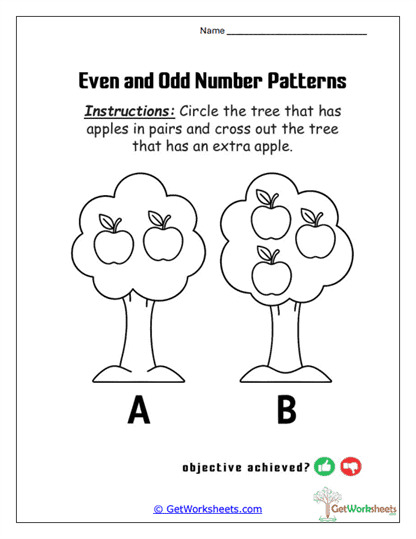
Apple Pair Test
Students compare groups of apples to determine whether every item can be matched into a pair. One group forms complete pairs while another leaves an extra apple, giving learners a concrete picture of even and odd quantities. The activity connects counting and grouping with the meaning behind the number property. It is especially helpful for children who are not yet ready to identify even and odd numbers only from numerals.
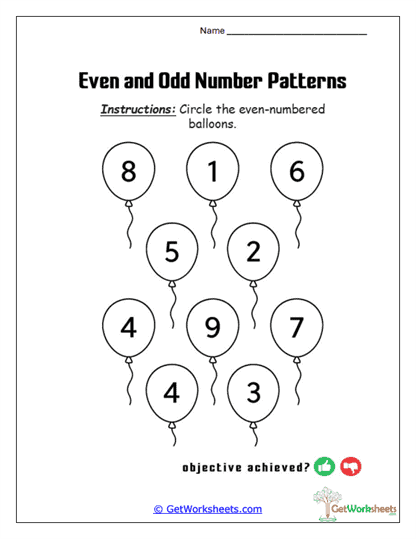
Balloon Number Hunt
Numbered balloons create a simple search activity focused on finding even values. Students scan the mixed numbers and circle only those that can be grouped into equal pairs. Because the values are not necessarily in counting order, learners must recognize the number property rather than rely entirely on a memorized sequence. The activity strengthens number recognition and visual scanning.
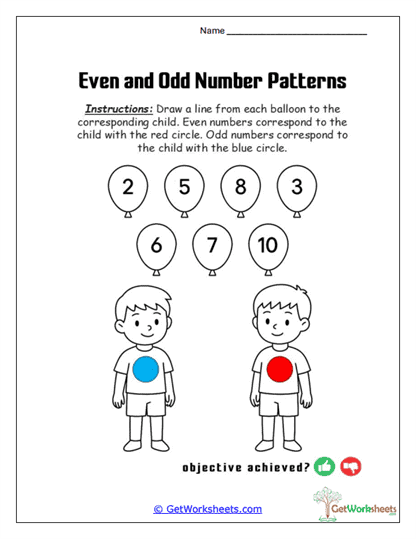
Balloon-to-Buddy Match
Each numbered balloon must be connected to the child representing either the even or odd category. Students classify each value and use the visual coding to determine where it belongs. The matching format adds another layer of decision-making beyond simple circling or coloring. This activity strengthens independent classification and reinforces the difference between the two number groups.
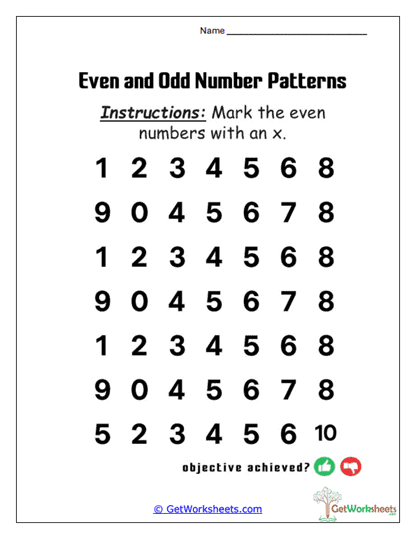
Even Number Search Grid
Students search a grid of mixed numerals and mark every even number they find. The repeated format provides many short opportunities to recognize even values while ignoring odd distractors. Because numbers appear throughout the grid rather than in counting order, the activity builds faster recall. It works especially well for fluency practice and quick skill checks.
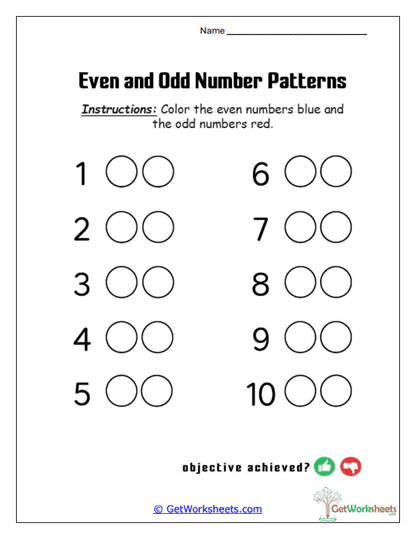
Even-Odd Color Code
Numbers from 1 through 10 are classified using separate colors for even and odd values. The visual contrast makes the alternating pattern easier to notice as students move through the counting sequence. Learners connect the number groups with the idea of complete pairs and one leftover. This worksheet provides a clear introductory activity for children beginning to study even and odd numbers.
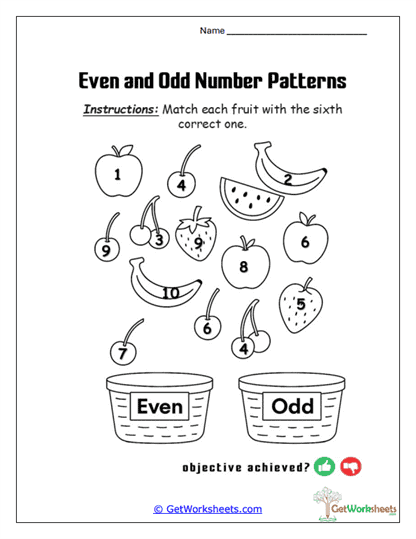
Fruit Basket Sort
Numbered fruit pictures are sorted into even and odd baskets. Students read each numeral, determine its category, and place it with the correct group. The sorting format reinforces the idea that every whole number belongs to one of two categories. It also encourages learners to explain the mathematical rule behind their choices.
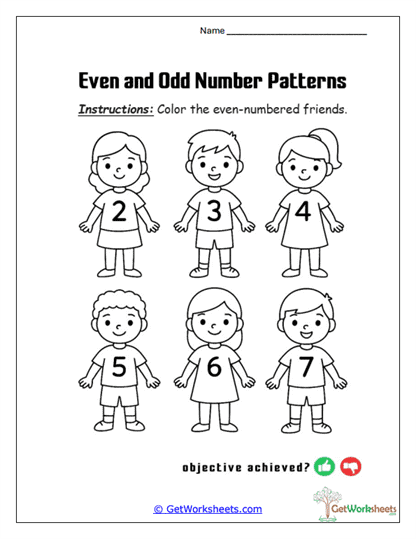
Numbered Friends
Friendly character pictures display mixed numbers for students to classify. Learners color only the friends showing even values while leaving the odd-number examples unmarked. This focused format helps children practice recognizing even numerals without needing to work through an entire sequence. The activity provides a useful bridge from hands-on pairing to quick number recognition.
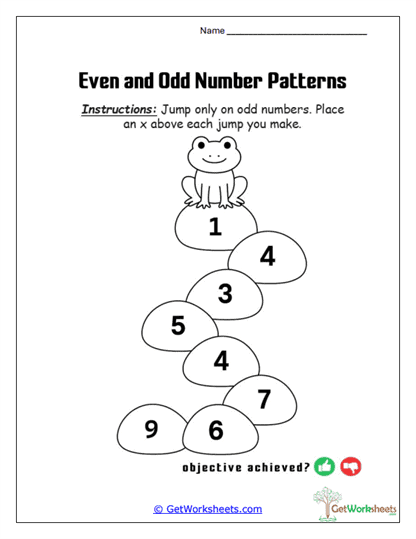
Odd Number Frog Hop
Students help a frog follow a path made only of odd-numbered stepping stones. Each choice requires learners to identify whether a value is odd or even before continuing along the route. The path format turns classification into a simple problem-solving challenge. It also strengthens visual tracking and reinforces the familiar odd-number sequence.
Odd Pup Patrol
Numbered puppy pictures are used to practice recognizing odd values. Students inspect the mixed numerals and mark only those that cannot be divided into complete pairs. The friendly visual format keeps the task approachable while reinforcing the meaning of an odd number. This activity works well for review and quick independent practice.
Parking Lot Number Sort
Mixed numbers are organized into separate even and odd parking areas. Students classify every numeral instead of searching for only one type, which provides balanced practice with both categories. The parking-lot theme gives the sorting task a clear visual structure. It also reinforces mathematical classification and rule-based reasoning.
Party Balloon Pairing
Balloons numbered from 1 through 10 help students practice recognizing common even values. Learners identify 2, 4, 6, 8, and 10 while distinguishing them from the odd numbers in the same range. Working with familiar small numbers allows children to focus on pairing and pattern recognition. This worksheet is especially appropriate for early practice and reinforcement.
Pawprint and Flower Path
Students use one picture symbol for even numbers and another for odd numbers as they work through a number path. The coding system provides a visual memory cue while learners repeatedly classify each value. Using symbols instead of only colors or marks adds variety to the practice. The activity strengthens number recognition and consistent application of the even-odd rule.
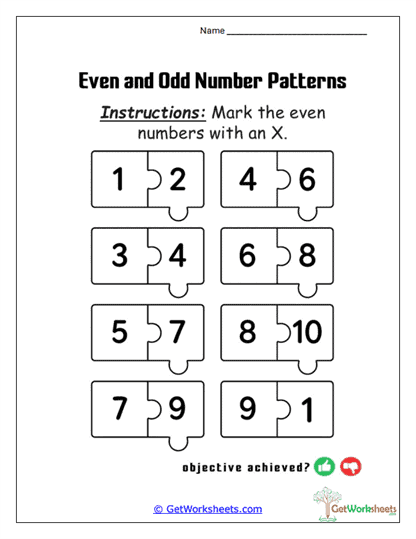
Puzzle Piece Number Check
Pairs of connected puzzle pieces give students small, manageable number comparisons. Learners inspect each pair and mark the even values while considering why the other numbers are odd. Working with only a few choices at a time can reduce visual overload for beginning students. This worksheet reinforces pairing logic and mathematical classification.
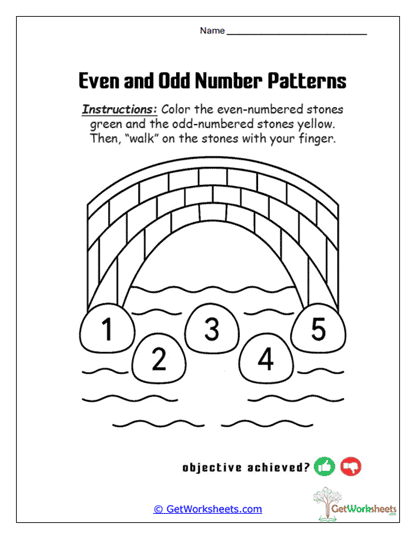
Stepping Stone Color Sort
Students color even and odd stepping stones using different colors and then follow the completed number path. The visual pattern that appears makes the alternating nature of even and odd numbers easier to see. Tracing the path adds a movement component that can reinforce sequencing. The activity combines classification, number order, and pattern recognition.
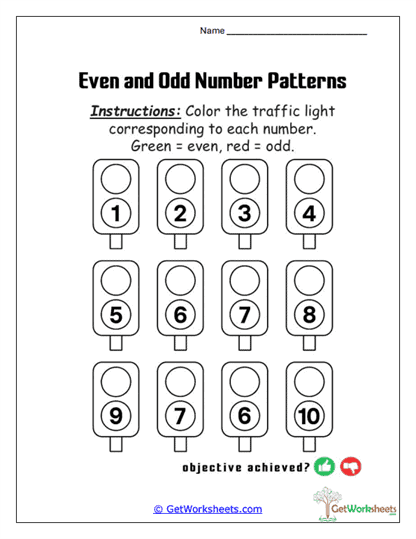
Traffic Light Number Signal
Numbered traffic lights are color coded according to whether each value is even or odd. Students apply one consistent color rule throughout the page while classifying the numbers. The familiar traffic-light theme gives the abstract number property an easy visual structure. This activity reinforces quick decision-making and helps learners remember the two categories.
Bookmark Us Now!
New, high-quality worksheets are added every week! Do not miss out!