Ending Digraphs Worksheets
About This Worksheet Collection
This Ending Digraphs Worksheets Collection supports early readers as they learn to decode and spell words that end with common digraphs such as ck, ng, tch, sh, and ch. Through activities that integrate picture cues, riddles, passages, fill-ins, editing, and sorting tasks, students encounter ending digraphs in multiple formats that build both accuracy and confidence. Each worksheet provides repeated exposure to foundational spelling patterns while also deepening vocabulary understanding.
As learners progress through the set, they practice identifying digraphs in context, applying phonics rules, correcting misspellings, and using digraph words meaningfully in sentences. They strengthen orthographic awareness by distinguishing real words from nonsense forms, explore why certain digraphs occur after specific vowel sounds, and connect definitions to the correct digraph words. Together, these worksheets support decoding fluency, spelling mastery, and overall reading development.
Detailed Descriptions Of These Worksheets
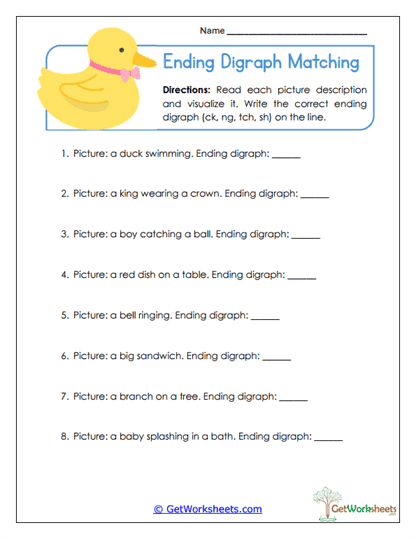
Final Digraph Matching
Students read short picture descriptions to determine the correct ending digraph and complete each word. This helps learners connect meaning with sound while reinforcing accurate spelling patterns. The activity strengthens decoding skills through visualization and purposeful practice. It provides early readers with a clear introduction to common final digraphs.
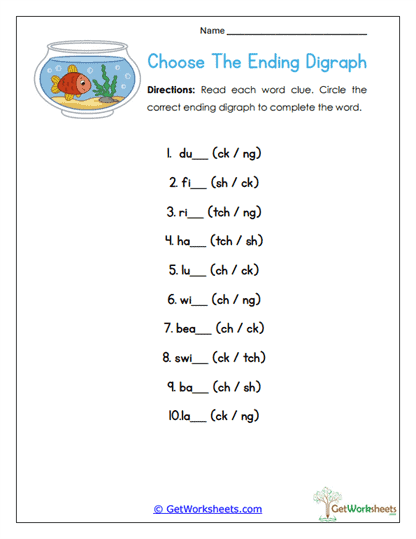
Choose the Ending Pair
Learners choose the correct ending digraph from two options to complete each partial word. This reinforces letter-sound relationships and improves discrimination between similar digraphs. The focused practice builds decoding confidence. It also supports foundational word-recognition skills.
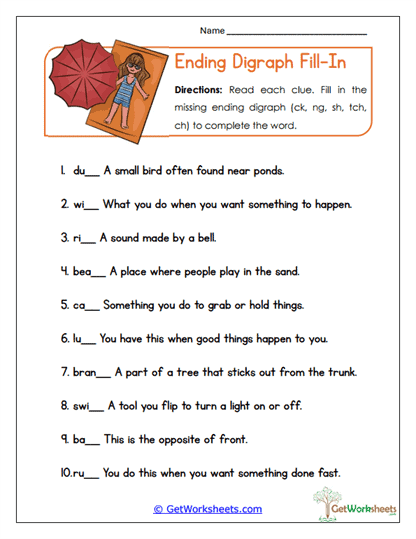
Sound Pair Fill-In
Students fill in missing digraphs based on clues, combining comprehension with phonics. This encourages thoughtful decoding and strengthens vocabulary understanding. The fill-in format helps learners internalize spelling conventions. It promotes accurate encoding as well as reading fluency.
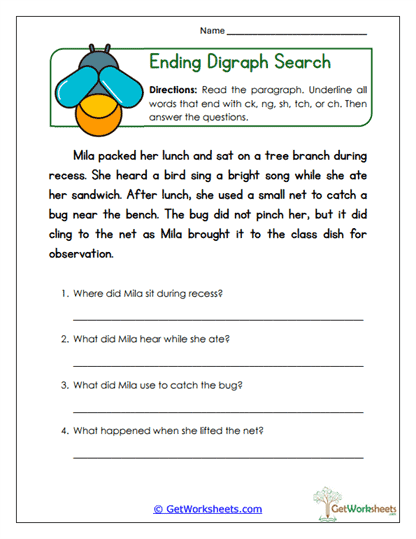
Letter Teams
Learners underline all ending-digraph words in a short passage before answering comprehension questions. This integrates phonics with text analysis. Students practice identifying digraphs in authentic reading situations. It supports stronger decoding and evidence-based comprehension.
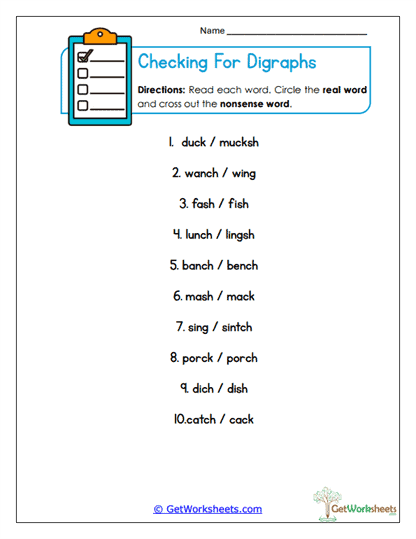
Checking for Digraphs
Students examine pairs of words and circle the real one while crossing out the nonsense word. This contrast-based task sharpens recognition of correct digraph endings. It fosters quick error detection and orthographic precision. The activity provides efficient, purposeful practice.
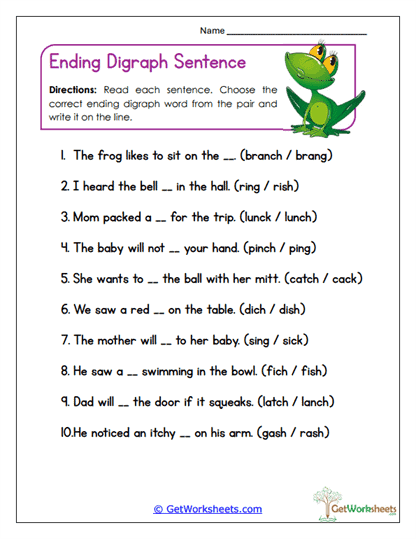
Ending Sentence
Learners choose the correct ending-digraph word to complete each sentence. This requires them to use both phonics knowledge and contextual reasoning. The task builds fluency and reinforces word meaning. It strengthens decoding accuracy within connected text.
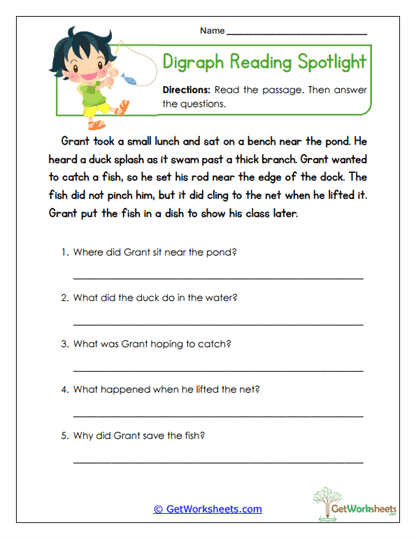
Reading Spotlight
Students read a short narrative filled with ending-digraph words and answer comprehension questions. This helps learners recognize digraphs naturally within stories. It also develops vocabulary awareness and supports text-based reasoning. The activity blends decoding with meaningful comprehension.
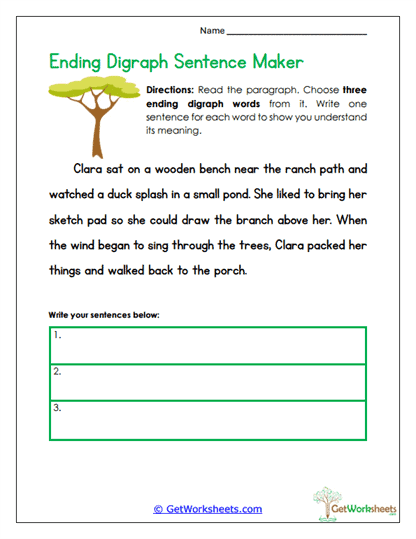
Sentence Maker
Learners select three digraph words from a paragraph and use each in an original sentence. This promotes expressive writing and demonstrates understanding of word meaning. The task strengthens phonics application beyond isolated practice. It also supports vocabulary growth and creative expression.
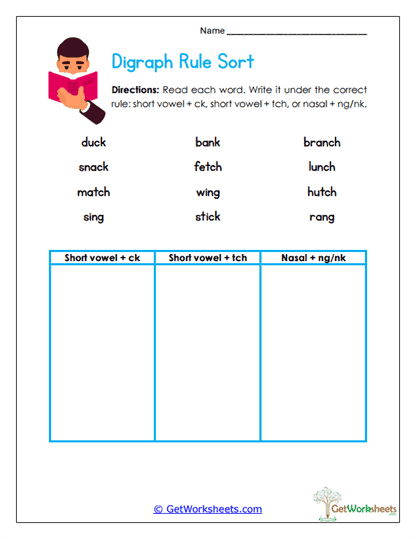
Rule Sort
Students sort words into categories based on specific digraph rules-short vowel + ck, short vowel + tch, or nasal + ng/nk. This teaches why certain endings appear in particular contexts. Sorting deepens orthographic understanding and spelling accuracy. The activity prepares learners for more advanced phonics concepts.
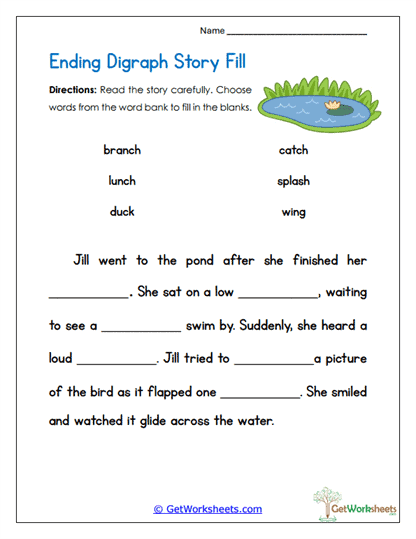
Story Fill
Learners complete a narrative using words from a digraph word bank. This integrates vocabulary, decoding, and comprehension as students choose the correct words based on meaning. It strengthens fluency while reinforcing digraph spelling patterns. The activity offers meaningful practice within a cohesive story.
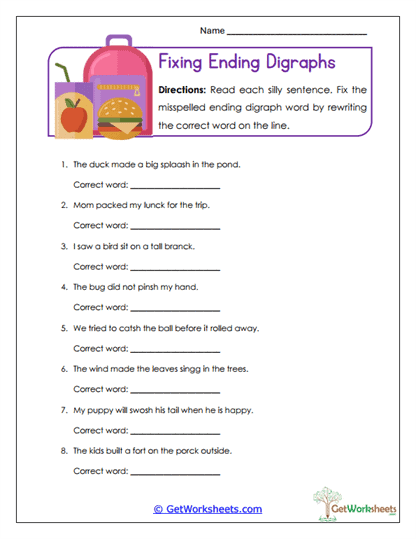
Closing Combo
Students identify incorrectly spelled ending-digraph words within silly sentences and rewrite them correctly. This develops editing skills and reinforces recognition of common digraph spellings. Encountering errors in context promotes attention to detail. It also enhances overall reading accuracy and confidence.
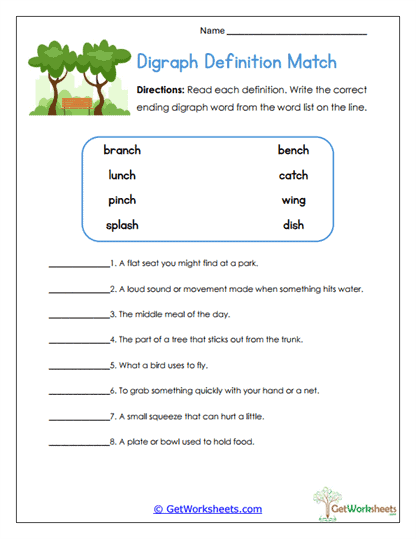
Definition Match
Learners match each kid-friendly definition to the correct digraph word from a word bank. This strengthens vocabulary comprehension and connects meaning to accurate spelling. The process reinforces phonics knowledge and encourages elimination-based reasoning. It provides structured practice ideal for building decoding and word-recognition skills.

Bookmark Us Now!
New, high-quality worksheets are added every week! Do not miss out!