Ending Blends Worksheets
About This Worksheet Collection
This Ending Blends Worksheets Collection provides students with structured, engaging practice using final consonant clusters such as st, mp, nd, nt, lt, lp, and lk. Through tasks that include matching, sorting, editing, riddle solving, cloze-style applications, and connected-text reading, learners encounter ending blends in multiple, meaningful formats. These worksheets help students understand how final consonant combinations influence word structure, sound, and meaning.
As students work through the activities, they strengthen decoding skills, sharpen spelling accuracy, and develop confidence in recognizing and using ending-blend patterns. They correct errors, build new words, identify blends in passages, and apply phonics knowledge to comprehension questions. This collection is ideal for reinforcing foundational reading skills in early elementary grades while also supporting vocabulary growth and fluency.
Detailed Descriptions Of These Worksheets
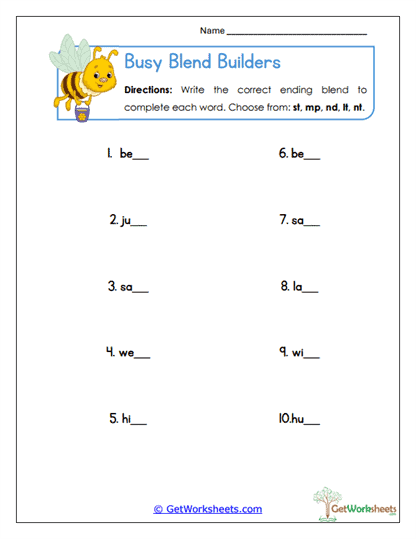
Busy Blend Builders
Students complete each incomplete word by choosing the correct ending blend, reinforcing recognition of clusters such as st, mp, nd, lt, and nt. The activity builds decoding accuracy and strengthens awareness of how final blends change pronunciation and meaning. Repeated practice supports spelling and foundational phonics mastery. It provides a clear structure for learning some of the most common ending patterns.
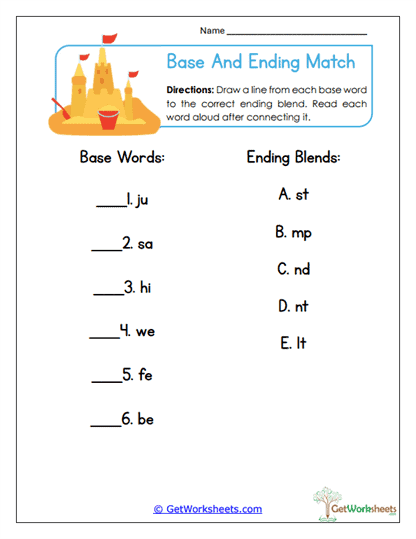
Base and Ending Match
Learners draw lines between base words and appropriate ending blends to form real, readable words. Reading each completed word aloud promotes fluency and accurate pronunciation. This task improves visual discrimination among similar-looking blends. It also supports spelling precision and early word-building skills.
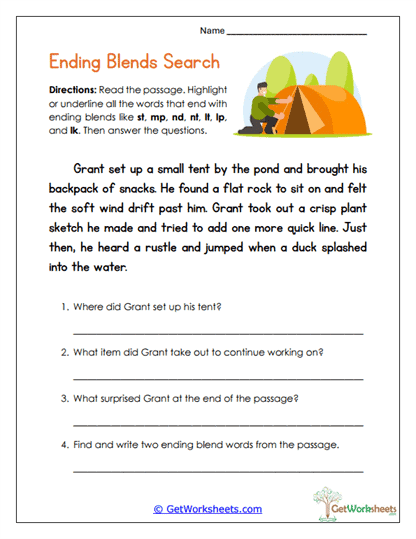
Reading Search
Students highlight ending-blend words within a short passage before answering comprehension questions. This dual approach reinforces phonics understanding while encouraging meaningful reading. Identifying blends in context deepens decoding fluency. The comprehension questions help students focus on story details and vocabulary.
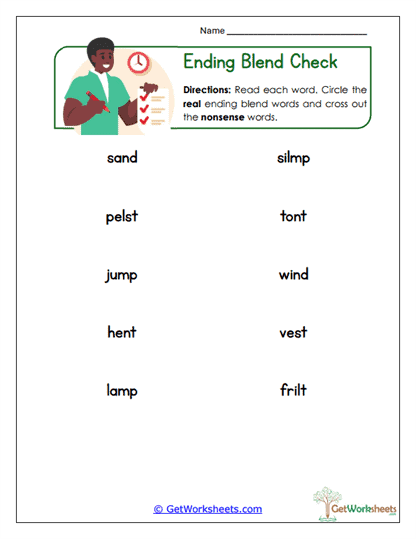
Nonsense Check
Learners decide which listed words are real ending-blend words and which are nonsense. Circling authentic words and crossing out the rest strengthens orthographic awareness. This quick activity boosts decoding accuracy and supports error-detection skills. It reinforces correct spelling conventions for common final blends.
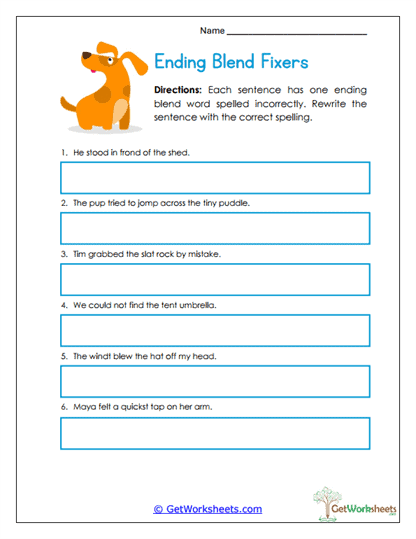
Blend Fixers
Each sentence contains a misspelled ending-blend word that students must correct by rewriting the sentence accurately. This exercise builds editing skills and reinforces consistent spelling of final consonant clusters. Rewriting the full sentence supports fluency, grammar awareness, and comprehension. It provides meaningful practice with blend recognition.
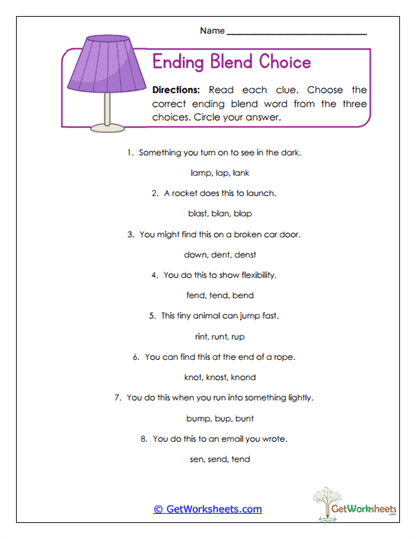
Choice Options
Students choose the correct ending-blend word from three multiple-choice options guided by short, meaning-based clues. This develops contextual reasoning while reinforcing phonics knowledge. Selecting accurate words strengthens decoding and semantic understanding. The clue-driven format encourages thoughtful vocabulary application.
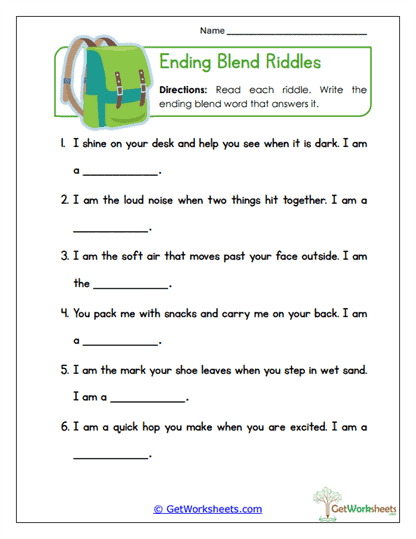
Ending Riddles
Learners solve short riddles by writing the correct ending-blend word. This playful format requires students to use semantic reasoning and phonics recall simultaneously. It promotes deeper thinking about how blend patterns function within real words. The activity strengthens vocabulary development and decoding fluency.
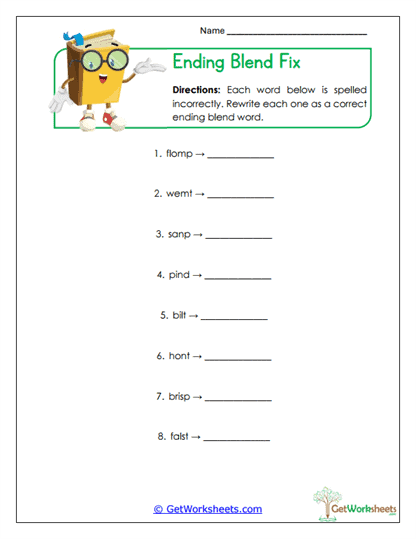
Blenders Fix
Students rewrite incorrectly spelled words that should contain ending blends, reinforcing accurate spelling patterns. This focused practice helps build automaticity with blends such as mp, nd, nt, and lt. The exercise strengthens encoding and phonics application. It also develops confidence in correcting common errors.
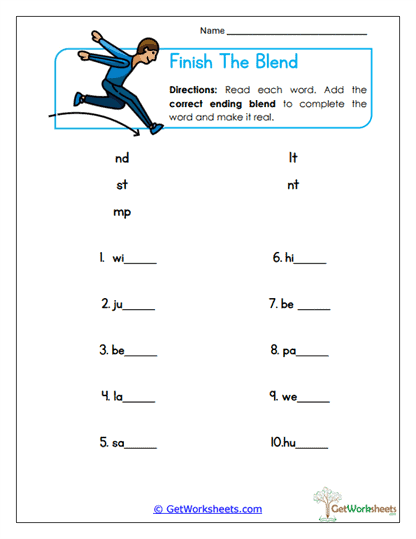
Finish the Blends
Learners add the correct final blend to complete each partial base word. This strengthens decoding accuracy by guiding students to identify which blend makes a meaningful word. Repeated exposure supports orthographic memory. The task builds vocabulary recognition and spelling fluency.
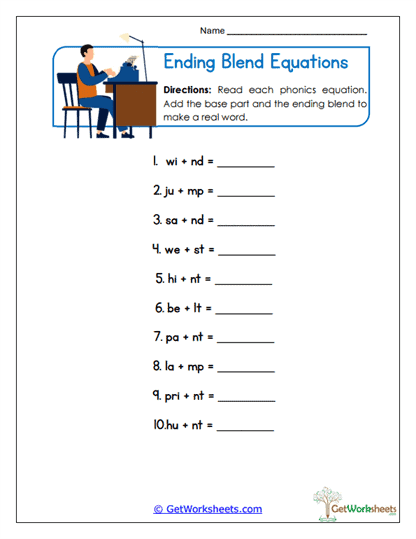
Blender Equations
Students combine base words and ending blends to create complete, meaningful words. This word-building format helps learners see blends as structural components that attach to bases. It strengthens decoding, spelling, and morphological awareness. The analytical approach encourages deeper understanding of word construction.
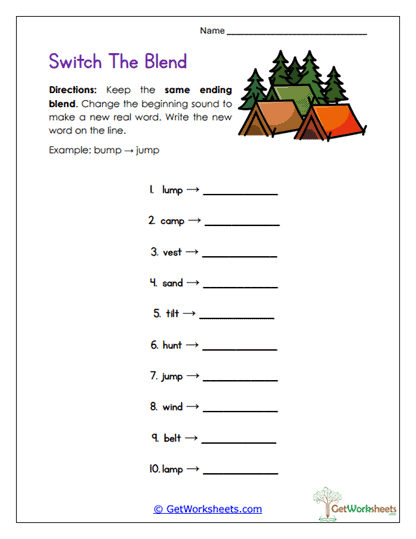
Switch the Blend
Students create new words by keeping the same ending blend while changing the initial sound. This activity promotes phonemic manipulation and decoding flexibility. Learners gain insight into how word families form and function. It builds spelling accuracy and deepens understanding of ending-blend behavior.
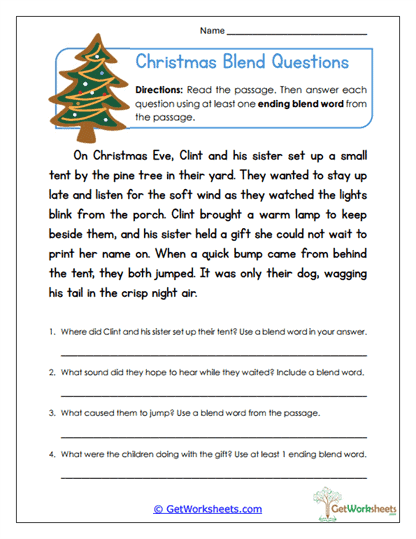
Christmas Questions
Students read a seasonal passage and answer comprehension questions using blend words from the text. The requirement to cite ending-blend words encourages careful reading. This integrated phonics-and-comprehension task supports vocabulary growth and decoding fluency. It helps students apply phonics knowledge in meaningful, text-based responses.

Bookmark Us Now!
New, high-quality worksheets are added every week! Do not miss out!