Common Suffix Patterns Worksheets
About This Worksheet Collection
This collection of Common Suffix Patterns Worksheets guides students through meaningful practice with suffixes that frequently appear in English vocabulary. By working with endings such as -ful, -less, -ness, and -ment, learners see how these meaningful word parts transform base words into new forms with richer or more specific meanings. The worksheets use a wide range of formats-matching tasks, sentence completions, cloze stories, riddles, editing passages, and categorization activities-to reinforce how suffixes shape both meaning and grammatical function.
As students move through the collection, they deepen their morphological awareness, strengthen spelling accuracy, and expand their vocabulary. By underlining, building, analyzing, repairing, and applying suffixed words in context, learners develop a clearer understanding of word structure and become more adept at decoding multisyllabic words. This progression supports reading fluency, writing precision, and overall language comprehension-key skills for success in upper elementary literacy.
Detailed Descriptions Of These Worksheets
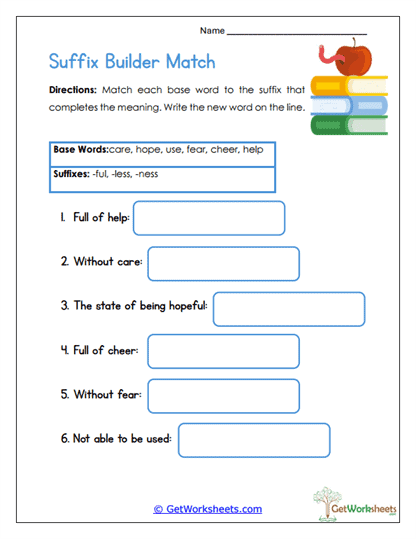
Builder Match
Students pair each base word with a suffix that completes its meaning and then write the newly formed word. They read short clues that help them determine which suffix--ful, -less, or -ness-fits best. This encourages thoughtful vocabulary reasoning and strengthens understanding of how suffixes alter word meaning. The activity also reinforces spelling accuracy and supports comprehension.
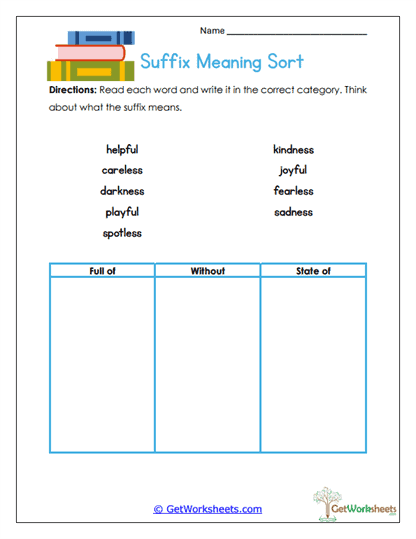
Meaning Sort
Learners sort words containing common suffixes into three meaning categories: "Full of," "Without," and "State of." By analyzing how suffixes convey abundance, absence, or condition, students deepen semantic understanding. Recording words in their appropriate columns reinforces morphology and meaning-based grouping. The activity supports confident decoding of longer words.
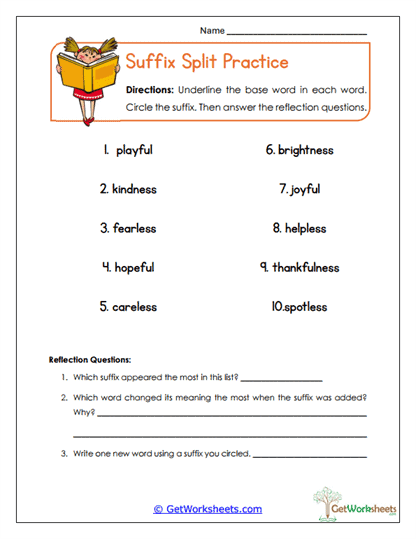
Split Practice
Students underline the base word and circle the suffix in each example, then answer reflective questions about suffix use. This helps them analyze how suffixes shift meaning or part of speech. Breaking words into meaningful chunks supports stronger decoding skills. Reflection questions build metacognitive awareness of word formation.
Switch-Up
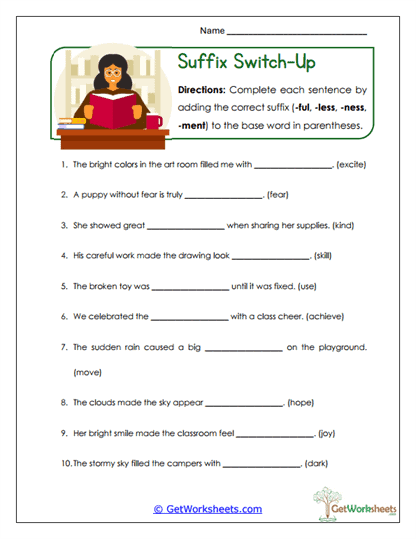
Learners complete sentences by adding the correct suffix to a base word based on contextual clues. This reinforces how suffixes change both meaning and grammatical function. Students gain practice forming accurate words while strengthening spelling and vocabulary. The varied sentences provide rich exposure to multiple suffix types.
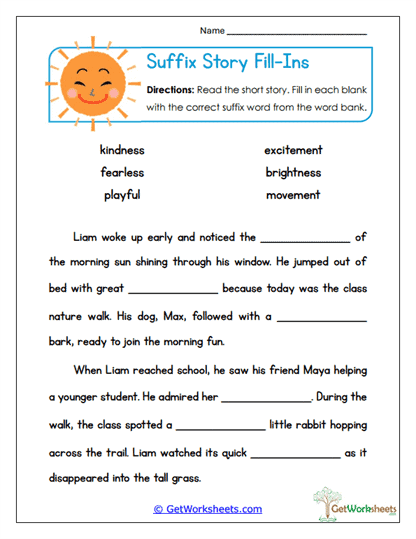
Story Fill-Ins
Students read a short story and choose the correct suffixed word from a word bank to complete each blank. This blends comprehension with morphological reasoning, requiring attention to grammar and meaning. Words like kindness or brightness reinforce how suffixes function in connected text. The activity boosts fluency and decoding through contextual application.
Y-to-I Spelling Rule
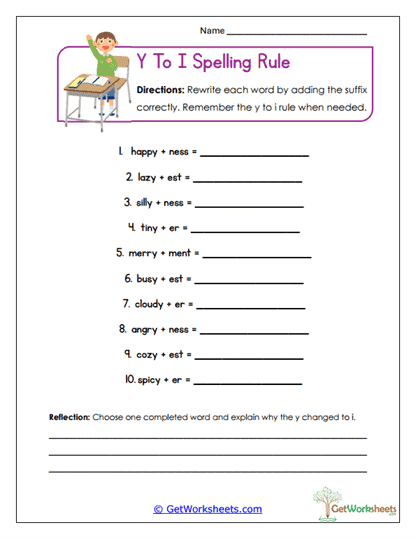
Students apply the y → i spelling rule when adding suffixes to base words ending in -y. They rewrite each word and consider when the rule is required. This strengthens orthographic knowledge and ensures accurate word formation. A reflective question deepens understanding of why the change occurs.
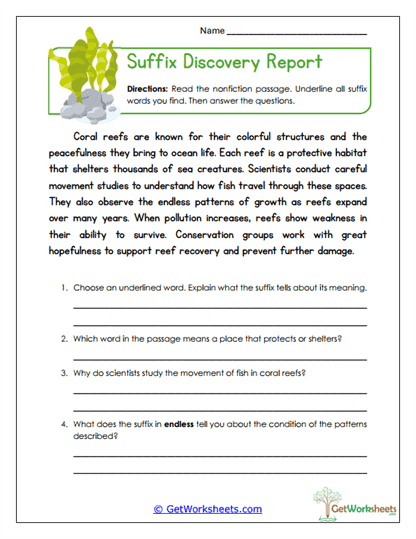
Discovery Report
Learners read an informational passage and underline all words containing suffixes, then answer questions about their meanings. This builds academic vocabulary and demonstrates how suffixes appear in nonfiction text. The activity encourages close reading and analysis of language features. It supports comprehension and morphological insight simultaneously.
Word Picker
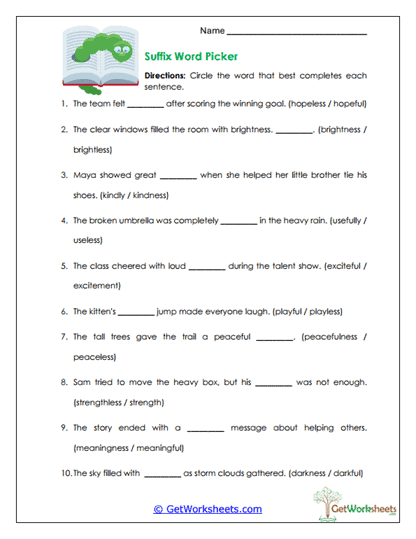
Students select the correct suffixed word to complete each sentence, choosing between two similar options. This promotes precision in vocabulary use and reinforces understanding of how suffixes alter nuance and grammar. Learners strengthen decoding as they compare word endings carefully. The task also supports sentence-level comprehension.
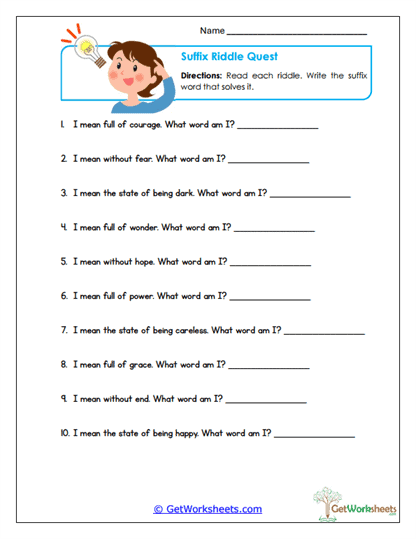
Riddle Quest
Students solve riddles that each point to a word formed with a suffix. This encourages inferential thinking and deep vocabulary reasoning. By generating words like careless or hopefulness, students reinforce how suffixes shape meaning. The riddle format adds engagement while strengthening decoding and word retrieval.
Switch Lab
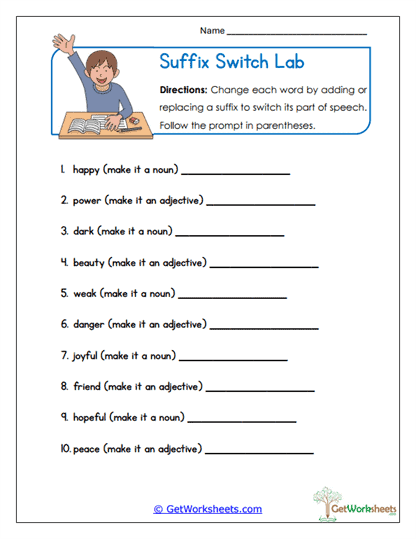
Learners transform words by adding or replacing suffixes to change part of speech, such as turning a noun into an adjective. This shows how suffixes shift grammatical roles and meaning. Students explore word families and expand vocabulary flexibility. The activity also supports spelling accuracy and structural understanding.
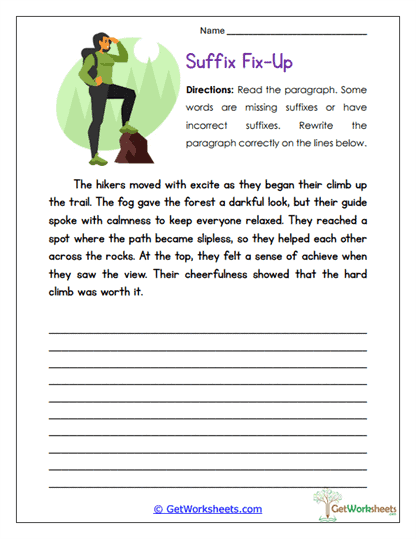
Fix-Up
Students edit a paragraph containing incorrect or missing suffixes and rewrite it correctly. This strengthens editing skills and reinforces accurate suffix application. Learners use context to determine which suffix fits each word, improving comprehension. Rewriting the paragraph promotes fluency, attention to detail, and mastery of writing conventions.
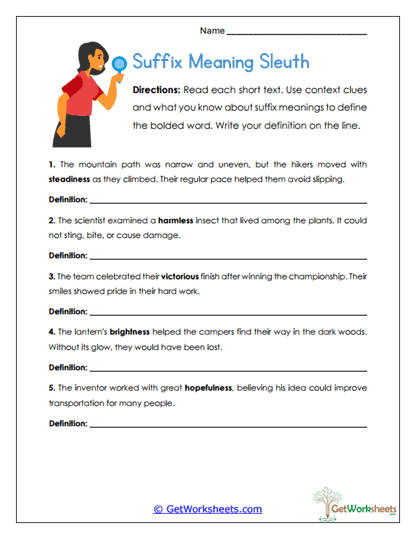
Meaning Sleuth
Students define bolded suffixed words within short texts using context clues and morphological knowledge. This deepens vocabulary understanding and highlights how suffixes modify meaning or intensity. The activity encourages close reading and analysis of academic language. It also improves decoding of multisyllabic words and structural reasoning.
Bookmark Us Now!
New, high-quality worksheets are added every week! Do not miss out!