Common Prefix Patterns Worksheets
About This Worksheet Collection
This collection of Common Prefix Patterns Worksheets introduces students to some of the most frequently used English prefixes and helps them understand how these small but powerful word parts shape meaning. Through matching, sorting, reading passages, cloze tasks, riddles, and editing activities, learners interact with prefixes such as re-, un-, pre-, and dis- in multiple contexts. The varied formats keep the learning process engaging while reinforcing how prefixes modify base words to create clear and meaningful vocabulary.
As students work through the set, they strengthen morphological awareness, improve vocabulary comprehension, and become more confident in decoding and analyzing prefixed words. Many activities require learners to apply prefixes in context, choose between similar word forms, or correct inaccurate uses-building both critical thinking and linguistic precision. This collection supports foundational literacy development and prepares students for more advanced word-study tasks.
Detailed Descriptions Of These Worksheets
Power Match
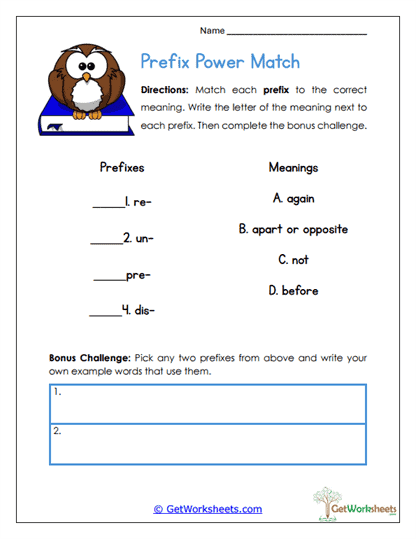
Students connect each prefix to its correct meaning by writing the matching letter beside it. This allows learners to build foundational knowledge of how prefixes such as re-, un-, pre-, and dis- alter meaning. The activity encourages careful analysis and vocabulary reasoning. A bonus challenge invites students to create example words, reinforcing understanding through application.
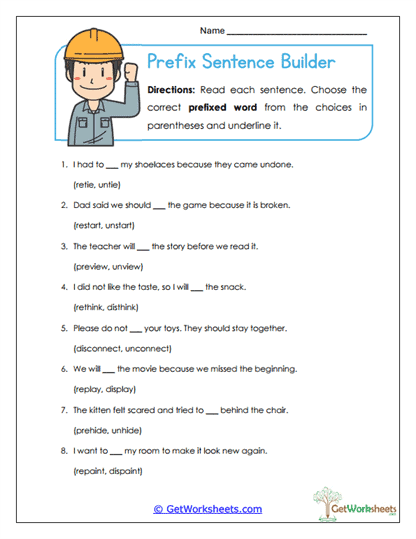
Sentence Builder
Learners read each sentence and pick the correct prefixed word from two options provided in parentheses. They must use contextual meaning and their knowledge of prefix definitions to make the right choice. This strengthens comprehension and supports accurate vocabulary use. Underlining the answer builds attention to detail and confidence in semantic decision-making.
Pattern Search
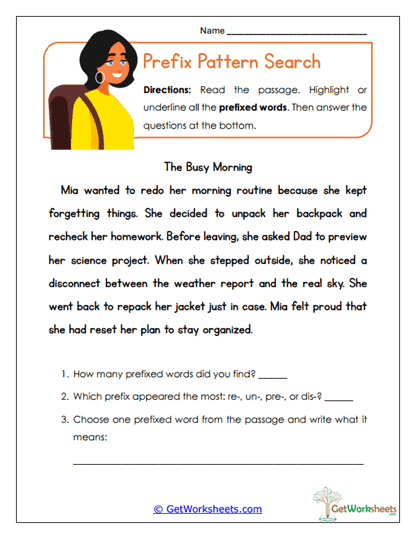
Students highlight or underline all prefixed words in a short passage, then answer questions that prompt deeper analysis. This encourages careful reading and helps learners see prefixes operating within authentic text. By evaluating which prefixes appear most often and defining selected words, students build metalinguistic awareness. The activity blends comprehension and morphology skillfully.
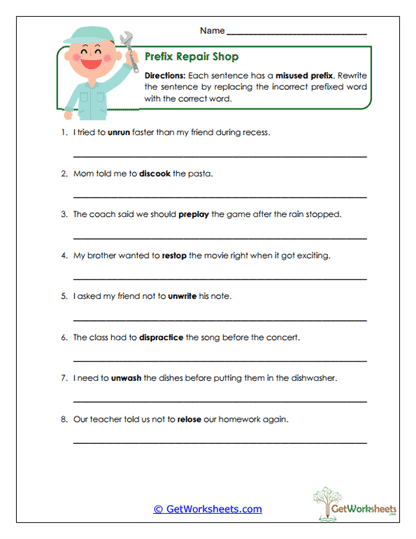
Repair Shop
Learners rewrite sentences containing misused or incorrect prefixes, replacing them with accurate words that make sense. This editing-focused task builds strong proofreading habits and reinforces precise prefix usage. Students must think critically to determine why a word is incorrect and how to revise it. Rewriting strengthens mastery of meaning and structure.
Pattern Meanings
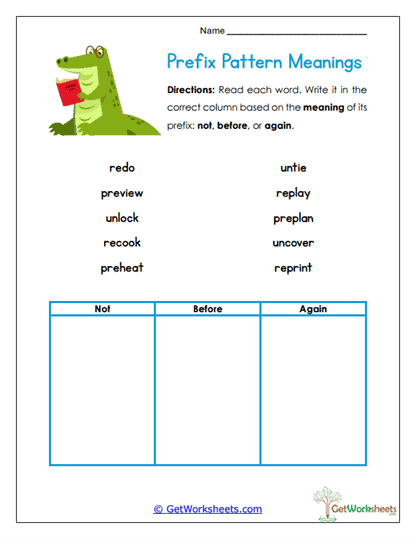
Students sort prefixed words into categories-not, before, or again-based on prefix meaning. This sorting task reinforces morphological understanding and helps learners recognize consistent patterns across vocabulary. Writing the categorized words supports long-term retention. It also deepens knowledge of how prefixes transform root words.
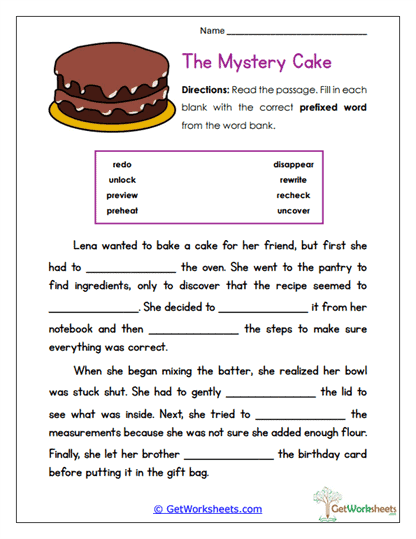
The Mystery Cake
Students complete a passage by selecting the correct prefixed word from a word bank. They must analyze meaning and grammar as they fill each blank, strengthening comprehension. The real-life scenario makes vocabulary more relatable and supports understanding of how prefixes influence meaning. This cloze activity also bolsters decoding and word formation skills.
Pattern Check
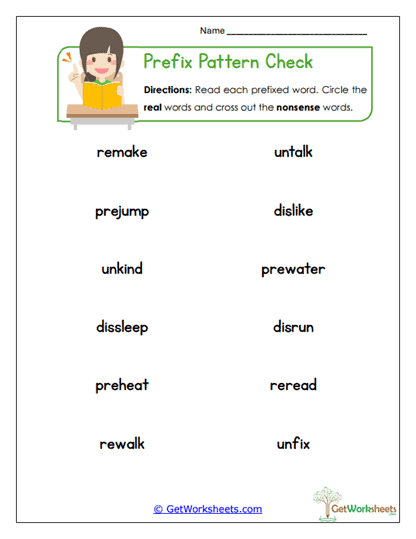
Students evaluate prefixed words to decide whether they are real or nonsense. Circling real words and crossing out incorrect ones promotes clear structural analysis. This encourages learners to think about how prefixes attach to base words meaningfully. It also enhances decoding accuracy and supports spelling development.
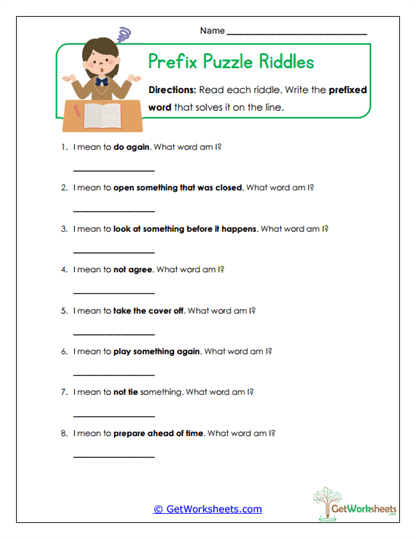
Puzzle Riddles
Learners solve riddles by writing the correct prefixed word that matches each clue. This encourages creative thinking and deep vocabulary reasoning. Students apply their understanding of prefix meanings to form words such as preheat or disagree. The riddle format boosts engagement and strengthens morphological problem-solving.
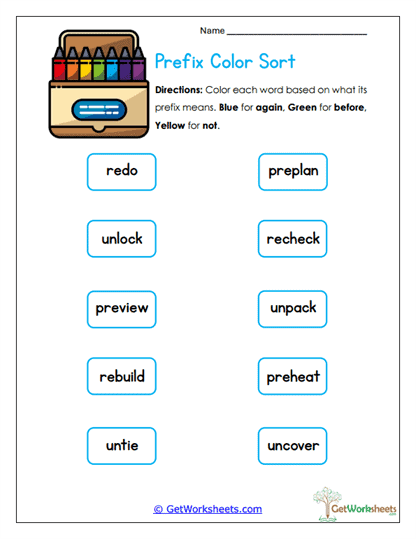
Color Sort
Students color each word according to the meaning of its prefix-blue for again, green for before, and yellow for not. This multisensory approach helps reinforce prefix meanings while boosting memorability. The activity encourages learners to analyze how prefixes shift word meaning. Color-coding also aids vocabulary organization and retention.
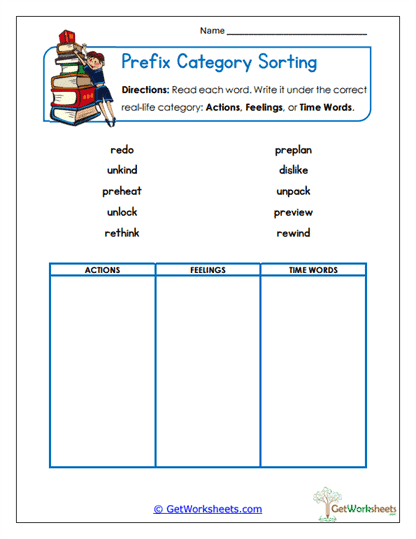
Category Sorting
Learners sort prefixed words into categories based on meaning: Actions, Feelings, or Time Words. This pushes students to consider not just structure but also the semantic function of vocabulary. It promotes comprehension and encourages thoughtful analysis of how prefixes shape meaning. The sorting task supports organization and conceptual understanding.
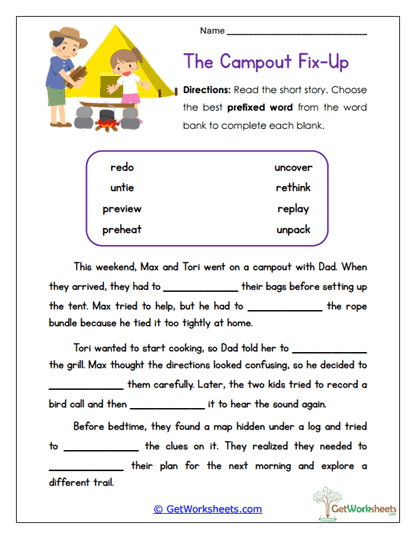
The Campout Fix-Up
Students fill blanks in a narrative passage using the correct prefixed words from a word bank. This requires them to apply morphological knowledge and contextual reasoning simultaneously. The story format keeps engagement high while reinforcing vocabulary patterns. The activity deepens fluency with common prefixes and strengthens comprehension.
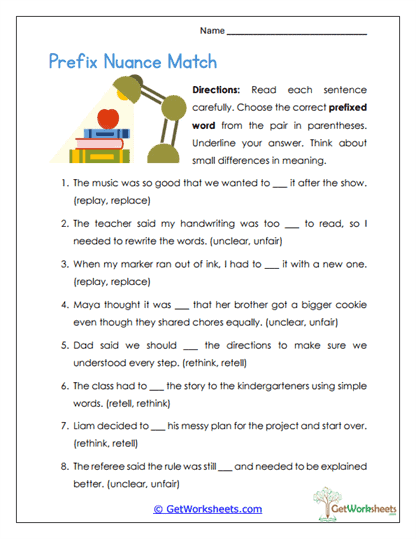
Nuance Match
Learners read each sentence and choose the most precise prefixed word from two options, underlining their choice. This task emphasizes subtle differences in meaning created by prefixes such as un- and re-. Students practice contextual analysis and develop awareness of semantic nuance. The repeated comparisons strengthen vocabulary accuracy and decoding confidence.
Bookmark Us Now!
New, high-quality worksheets are added every week! Do not miss out!