Beginning Digraphs Worksheets
About This Worksheet Collection
This collection of Beginning Digraphs worksheets offers a wide range of playful, skill-building activities designed to help early readers master common digraphs such as sh, ch, wh, th, and ph. The worksheets balance visual, auditory, and hands-on tasks-giving students opportunities to match pictures, complete sentences, hunt for patterns, repair misspellings, build words, and even search their environment for real-world examples. Each activity is crafted to support foundational phonics instruction while keeping learners actively engaged and motivated.
Across the set, students strengthen decoding accuracy, spelling fluency, vocabulary knowledge, and reading comprehension. By encountering digraphs in multiple formats-from structured reading passages to open-ended scavenger hunts-learners gain confidence applying their skills in both controlled and creative contexts. These worksheets build the essential groundwork students need to progress toward fluent, independent reading.
Detailed Descriptions Of These Worksheets
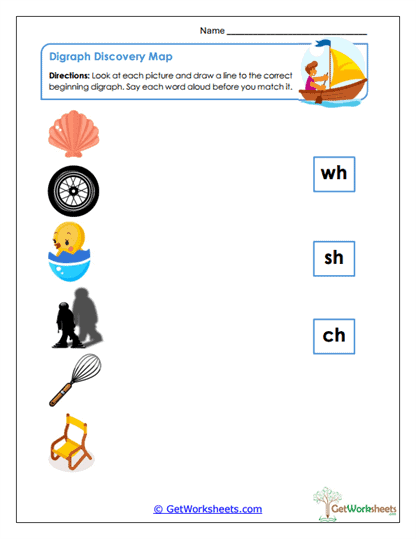
Digraph Picture Match
Students examine each picture and connect it to the correct beginning digraph, reinforcing early sound-symbol awareness. Saying the pictured words aloud helps them match spoken sounds to written forms more accurately. Drawing a line to the correct digraph strengthens visual discrimination and early decoding abilities. Through repeated practice, learners develop confidence identifying sh, ch, and wh at the start of words.
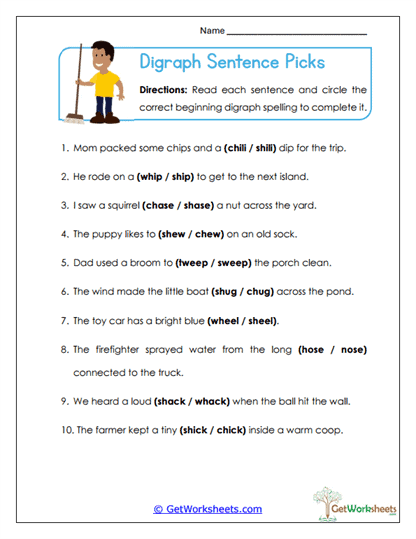
Sentence Picks
Students read short sentences and choose the correctly spelled digraph word from two similar options. By relying on sentence meaning, they sharpen their ability to confirm word recognition through context. This comparison-based task also helps them notice subtle differences in digraph spelling. Over time, learners become more fluent and accurate as they encounter digraphs within real text.
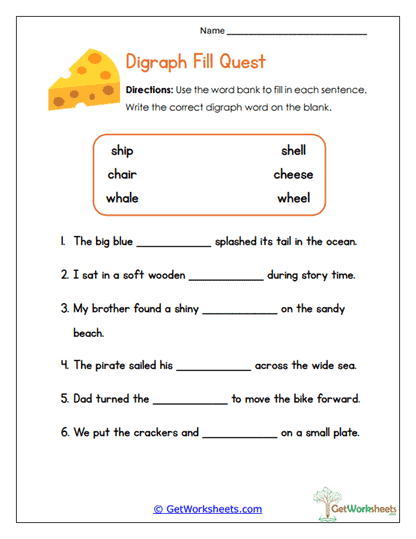
Fill Quest
Learners complete each sentence by selecting the appropriate digraph word from a word bank. They must read for meaning to decide which option fits the sentence structure. The task reinforces vocabulary and strengthens decoding as students match words like ship or chair to context clues. Writing each answer further supports spelling accuracy and fluency.
Word Hunting
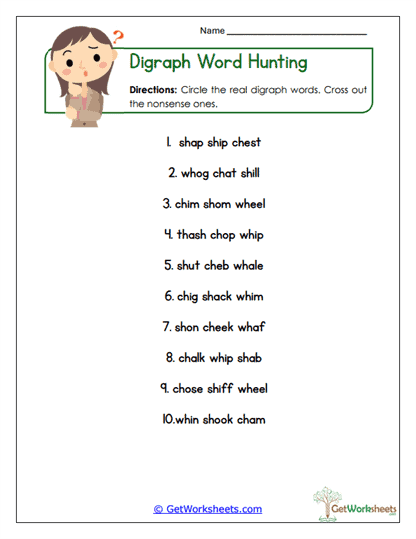
Students circle real digraph words and cross out nonsense ones, training them to evaluate spelling patterns carefully. This analysis helps them determine whether a word follows typical English conventions. Distinguishing real from invented terms boosts decoding confidence, especially with unfamiliar text. The activity encourages students to think critically about how digraphs operate within words.
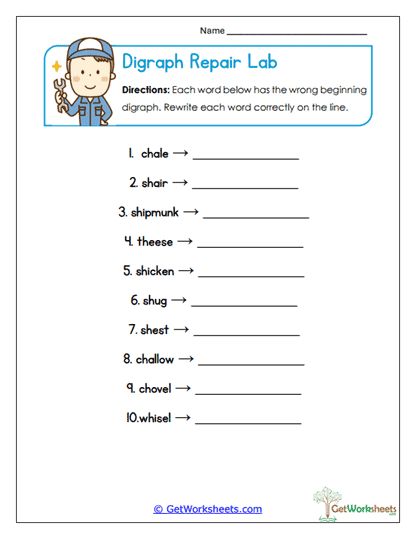
Repair Lab
Students correct misspelled digraph words by rewriting them with the appropriate beginning sound. This editing task strengthens awareness of phoneme-grapheme relationships and builds accuracy in early spelling. As learners transform incorrect forms into real words, they reinforce their understanding of common digraph usage. Rewriting the corrected words supports encoding and handwriting skills.
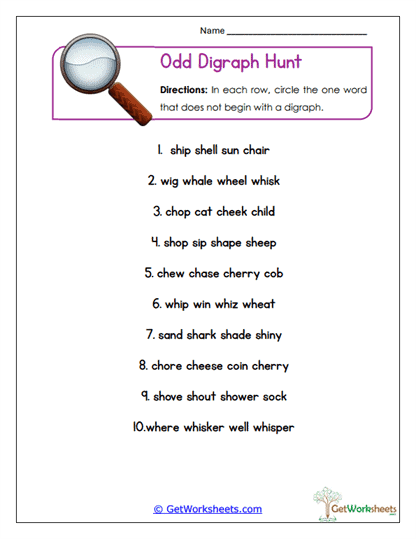
Odd Hunt
Students scan each row of words and circle the one that does not begin with a digraph. This comparison reinforces their understanding of the difference between blends and digraphs. The activity supports visual scanning and pattern recognition as learners analyze multiple words at once. Repeated exposure helps solidify recognition of sh, ch, wh, and th.
Starter Picks
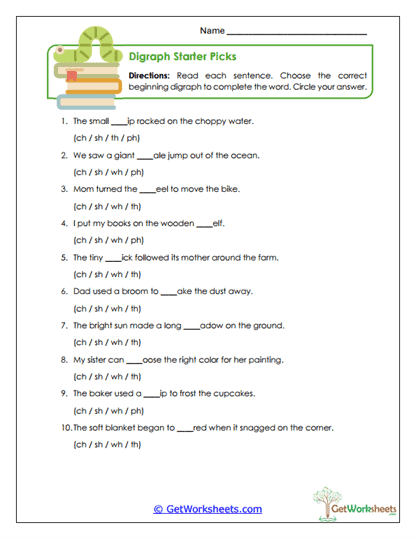
Students complete sentences by choosing the correct beginning digraph from three options. They must consider meaning, pronunciation, and spelling simultaneously. This multi-step reasoning strengthens their decoding skills and improves comprehension. The task also encourages attention to subtle contrasts among frequently confused digraphs.
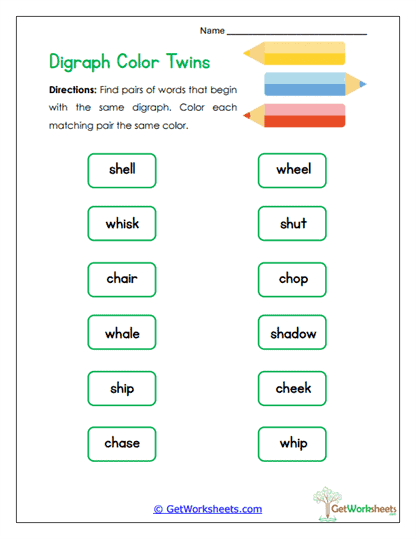
Color Twins
Learners identify pairs of words that begin with the same digraph and color each pair using matching colors. This process reinforces their ability to categorize words based on shared initial patterns. The coloring component adds engagement while supporting fine-motor development. Students gain greater fluency recognizing and grouping digraphs across varied vocabulary.
Sentence Rewrites
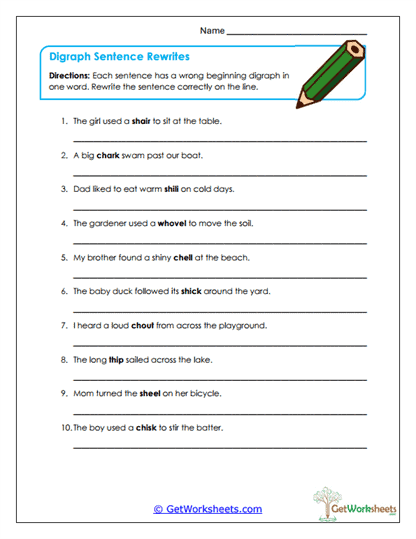
Each sentence contains one word beginning with an incorrect digraph, and students rewrite the full sentence correctly. This editing activity encourages careful attention to meaning, spelling, and sentence conventions. By rewriting complete sentences, learners practice capitalization, punctuation, and accurate encoding of digraphs. The task promotes thoroughness and deeper comprehension.
Vowel Builders
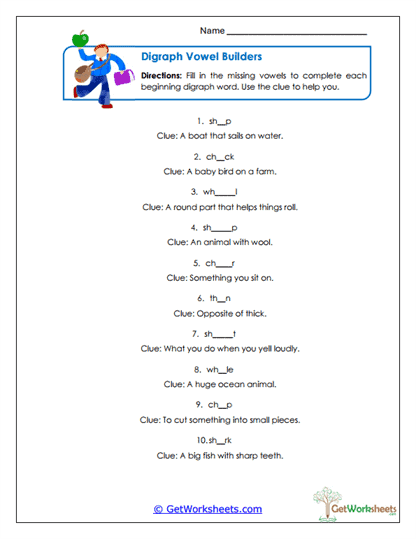
Students complete partially spelled digraph words by adding the correct vowels, guided by short clues. They combine phonics skills with contextual reasoning to finish words like chick or whale accurately. This activity reinforces how vowels and digraphs work together to form complete syllables. Learners gain insight into word structure while strengthening spelling and decoding abilities.
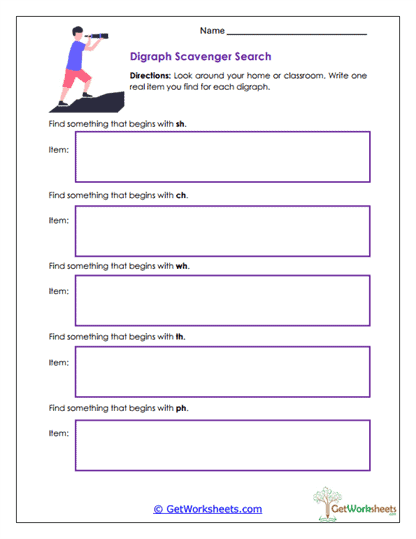
Scavenger Search
Students search their environment for real objects that begin with targeted digraphs such as sh or ch. This active-learning task helps them connect phonics skills to real-life vocabulary and experiences. Listening for beginning sounds strengthens auditory discrimination as they identify matching words. Writing the discovered items reinforces spelling and vocabulary recall.
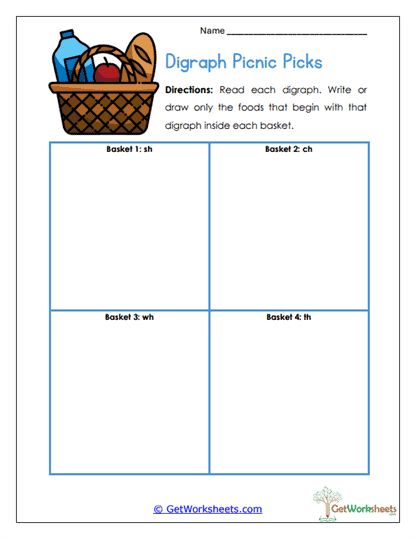
Picnic Picks
Students sort foods into baskets based on their beginning digraphs, choosing either to write or draw each item. This generation-based task deepens phonics understanding by requiring learners to think of examples independently. The creative component supports engagement and fine-motor development. As students classify foods based on sh, ch, wh, and th, they strengthen both vocabulary and print awareness.
Bookmark Us Now!
New, high-quality worksheets are added every week! Do not miss out!