My Space, My Rules
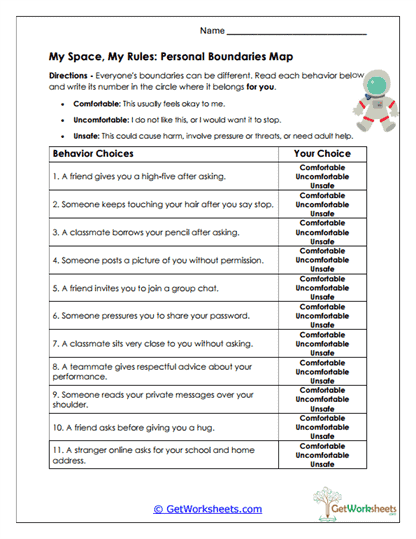
Students read eleven social situations and decide whether each behavior would feel comfortable, uncomfortable, or unsafe for them. The examples cover physical touch, personal belongings, private messages, photographs, passwords, hugs, online contact, and personal information. This special education and social-emotional learning worksheet strengthens boundary awareness, self-advocacy, consent, personal safety, emotional recognition, and decision-making. It is especially useful for upper-elementary and middle school students who need clear practice understanding that different people may have different comfort levels, but unsafe behavior should always be taken seriously.
Learning Goals
- Recognize Personal Boundaries: Students think about what feels acceptable, unwanted, or dangerous in different situations.
- Understand Consent: Learners notice whether someone asked permission before touching, borrowing, posting, or joining.
- Separate Discomfort From Danger: Students learn that some behaviors feel awkward or annoying, while others involve pressure, privacy violations, or real safety risks.
- Communicate a Clear Choice: Children practice naming how a situation feels instead of staying silent or guessing what others expect.
How This Helps
- Respects Individual Differences: The worksheet makes room for students to have different comfort levels without treating every preference as wrong.
- Supports Concrete Learning: Specific examples help children understand boundaries more easily than general rules alone.
- Useful for Family Discussion: Parents can ask what made a situation feel comfortable, uncomfortable, or unsafe.
- Strengthens Self-Advocacy: Students practice noticing their internal warning signs and putting those feelings into words.
- Fits Special Education Settings: The page works well in social skills groups, counseling, behavior support, life-skills instruction, or homeschool lessons.
Many students are taught to be polite but are not always taught that they are allowed to notice discomfort and speak up. This worksheet helps them understand that personal boundaries involve touch, space, belongings, privacy, digital behavior, and personal information. Learners strengthen consent awareness, self-protection, communication, emotional vocabulary, social judgment, and help-seeking while thinking through realistic situations. Parents can reinforce the lesson by explaining that discomfort is worth discussing and that unsafe situations should be brought to a trusted adult right away. In classroom and home settings, this activity can build confidence and help students say no, ask for space, protect private information, and recognize when another person is crossing an important boundary.
Bookmark Us Now!
New, high-quality worksheets are added every week! Do not miss out!