Grade 3 Reading Comprehension Worksheets
About This Worksheet Collection
The Grade 3 Reading Comprehension collection provides engaging short stories, poems, and passages designed to strengthen literacy, analysis, and critical thinking for developing readers. Each worksheet offers structured reading tasks paired with questions or charts that guide students to identify key ideas, cite evidence, and interpret meaning. Themes such as friendship, perseverance, courage, and imagination invite students to make text-to-self connections while building academic reading habits. This collection helps learners move beyond basic recall toward deeper comprehension and interpretation of literary and informational texts.
Throughout these activities, students practice identifying main ideas, analyzing characters, determining cause and effect, recognizing figurative language, and summarizing events. The worksheets balance creativity with structure-combining multiple-choice, written, and visual responses to reach different learning styles. With scaffolded supports like graphic organizers and text-based prompts, this series develops confident readers who can think critically, infer meaning, and express understanding in clear, complete sentences.
Detailed Descriptions Of These Worksheets
Veggie Main Idea
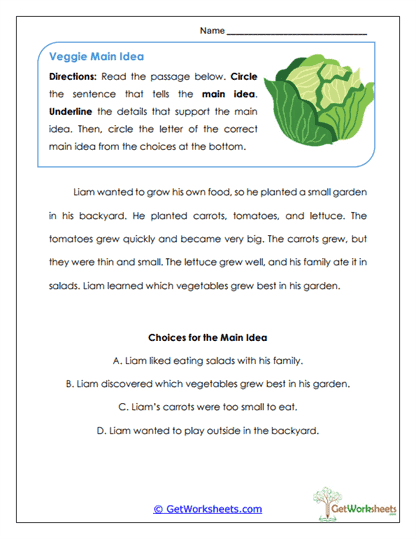
Students read about Liam's garden and determine the passage's main idea by circling the correct choice and underlining supporting details. The task builds comprehension and analytical thinking by helping learners distinguish between central themes and background information. It reinforces close reading and reasoning through text analysis.
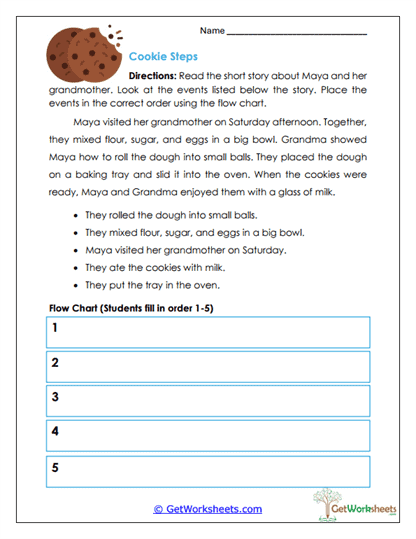
Cookie Steps
Learners read about Maya baking cookies and organize the story's five main events into a flow chart. This sequencing activity enhances understanding of narrative structure and logical order. It promotes summarization and visual organization skills, making storytelling steps easy to follow and remember.
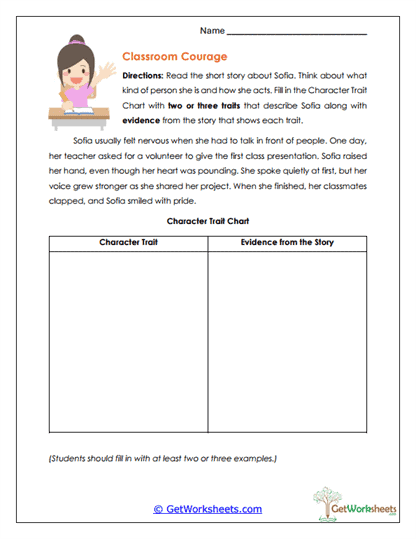
Classroom Courage
Students read about Sofia overcoming her fear of public speaking and identify character traits supported by textual evidence. The activity teaches how actions and dialogue reveal personality, strengthening comprehension and inference. It builds emotional awareness and supports evidence-based reasoning.
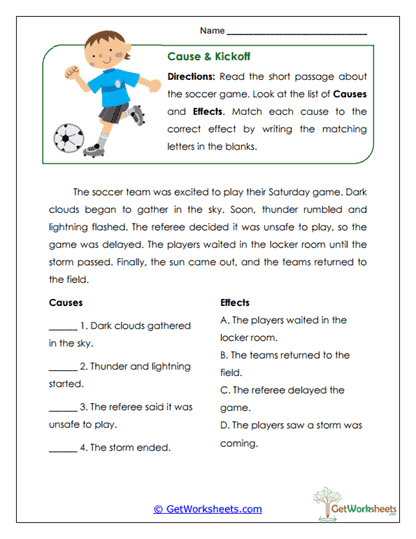
Cause and Kickoff
In this cause-and-effect exercise, students analyze a soccer story interrupted by rain. They match events to their outcomes to understand how one action leads to another. The worksheet develops comprehension, logical connections, and analytical reading using contextual clues.
Read or Watch
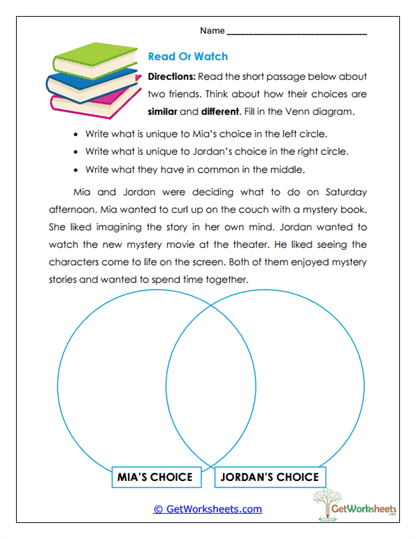
Students compare two friends' weekend choices-reading a book versus watching a movie-using a Venn diagram. The task encourages comparison, perspective-taking, and organization of similarities and differences. It supports visual learning and critical thinking through relatable themes.
Forest Guess
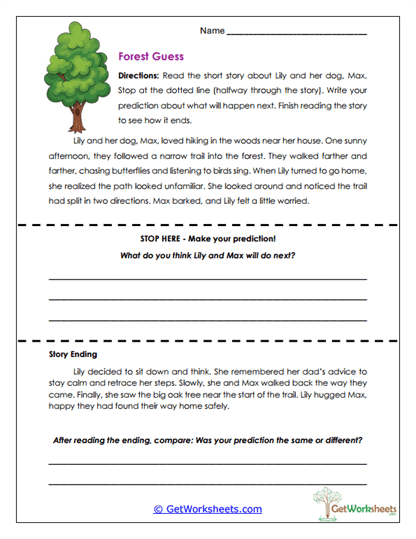
Learners read about Lily and her dog, who get lost in the woods, and pause mid-story to predict what will happen next. They later compare their predictions to the ending. This exercise sharpens inferencing and comprehension while showing how authors use suspense and resolution.
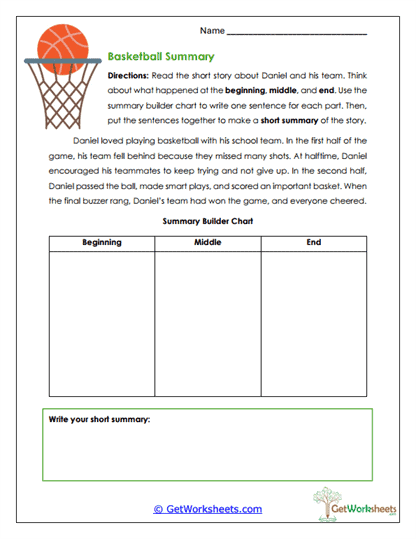
Basketball Summary
Students read a passage about teamwork and perseverance, then use a chart to summarize the beginning, middle, and end. They combine their notes into a full paragraph summary. The task strengthens sequencing, synthesis, and written expression.
Rabbit's Lesson
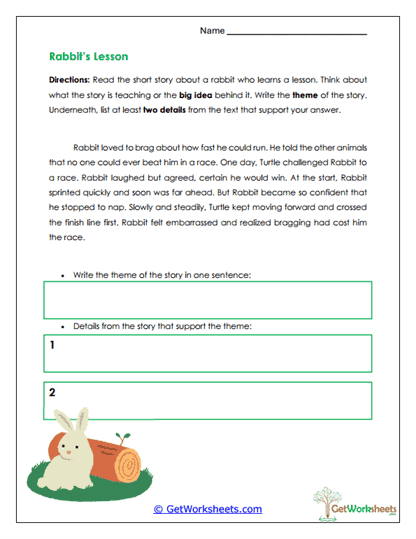
In this fable-inspired story, students identify the moral and support their answer with two pieces of text evidence. The activity builds comprehension and interpretive reasoning, teaching how stories convey lessons through character actions and outcomes. It also reinforces close reading and moral reflection.
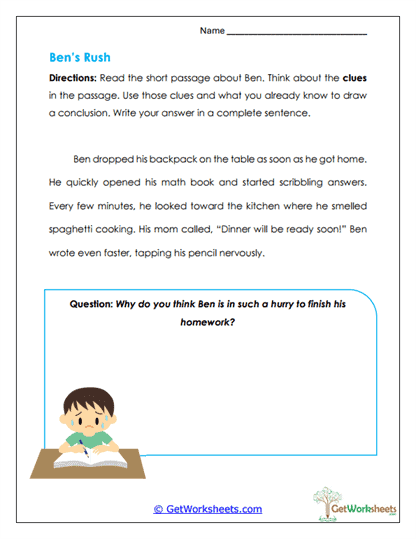
Ben's Rush
Students infer why Ben hurries through his homework using textual clues and prior knowledge. They write a complete-sentence explanation, practicing inference, reasoning, and context-based comprehension. The task encourages thoughtful reading beyond surface details.
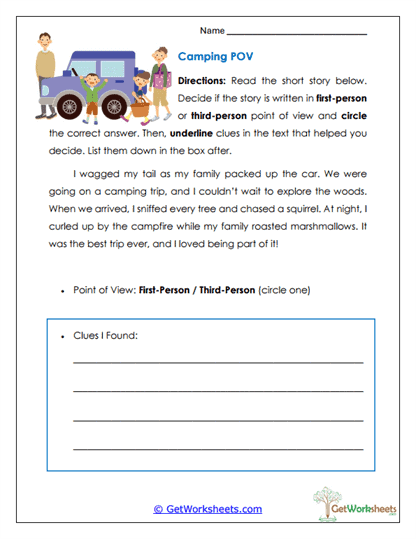
Camping POV
Learners read a camping story told from a dog's perspective and determine whether it's written in first or third person. They identify language clues that reveal point of view. This worksheet builds awareness of narrative voice and how perspective shapes storytelling.
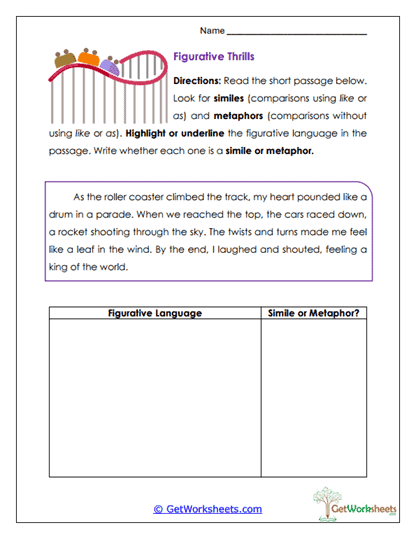
Figurative Thrills
Students explore figurative language through a roller coaster story filled with similes and metaphors. They identify and classify each example, learning how authors use comparisons to create imagery and excitement. The task improves reading fluency, analysis, and appreciation for literary devices.
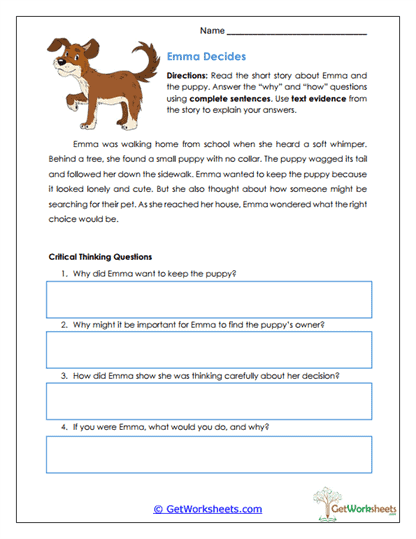
Emma Decides
Students read about Emma's moral choice after finding a lost puppy. They answer reasoning-based questions with text evidence, strengthening critical thinking, empathy, and comprehension. The activity promotes ethical discussion and supports detailed written responses.
Bookmark Us Now!
New, high-quality worksheets are added every week! Do not miss out!