Can vs. Could Worksheets
About This Worksheet Collection
This comprehensive collection of Can vs. Could worksheets helps students develop a deeper understanding of modal verbs by exploring how these common words express ability, permission, politeness, possibility, and tone. Rather than focusing solely on memorization, the activities encourage learners to analyze context, compare meanings, revise conversations, edit mistakes, and create original responses that reflect real-world communication. Through stories, dialogues, role-playing scenarios, classification tasks, editing challenges, and reflective language analysis, students learn how small word choices can significantly affect meaning and social interaction. Teachers, parents, and homeschool educators will appreciate the variety of engaging activities that combine grammar instruction with practical communication skills.
As students complete these worksheets, they strengthen grammar knowledge, reading comprehension, sentence analysis, conversational fluency, editing skills, critical thinking, audience awareness, and written communication. Learners practice distinguishing between ability and permission, recognizing levels of politeness, evaluating tone, interpreting context clues, and revising language for different situations. Many activities also encourage discussion, explanation, and reflection, helping students move beyond simple grammar rules and toward a more sophisticated understanding of language use. Together, these resources help children become more thoughtful communicators, stronger writers, and more confident users of English.
Detailed Descriptions Of These Worksheets
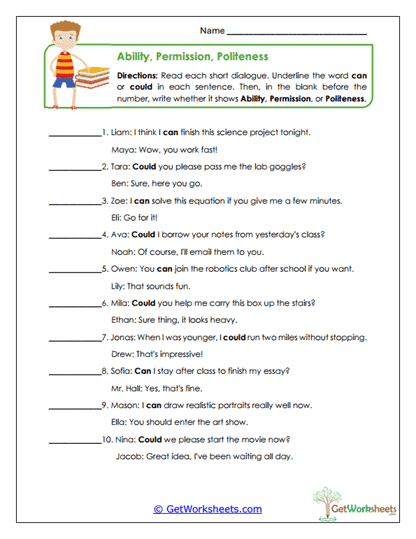
Ability, Permission, or Politeness?
Students analyze short dialogues and determine whether can or could is being used to express ability, permission, or politeness. The activity encourages close reading and careful attention to speaker intent. Learners strengthen modal verb understanding, communication awareness, and grammar reasoning skills. The conversation format also helps connect grammar concepts to realistic situations.
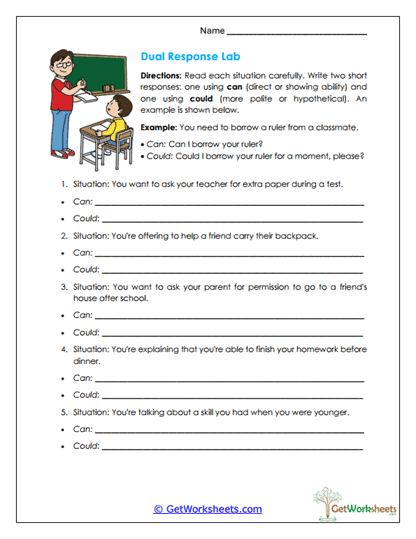
Dual Response Lab
This creative activity asks students to respond to the same scenario twice-once using can and once using could. By comparing the two responses side by side, learners explore differences in tone, certainty, and politeness. The worksheet strengthens audience awareness, sentence construction, and practical grammar application. It also encourages thoughtful discussion about how language choices affect communication.
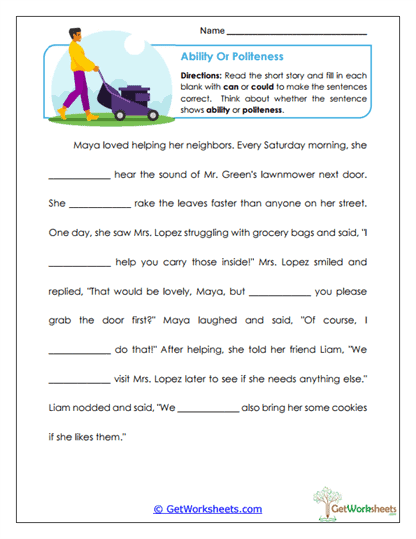
Helping Maya Next Door
Students read a short story about neighbors helping one another and use context clues to choose whether can or could best completes each sentence. The narrative format encourages learners to focus on meaning and purpose rather than isolated grammar rules. Through contextual analysis, students strengthen reading comprehension, modal verb usage, and language interpretation skills. The story-based approach makes grammar practice more engaging and meaningful.
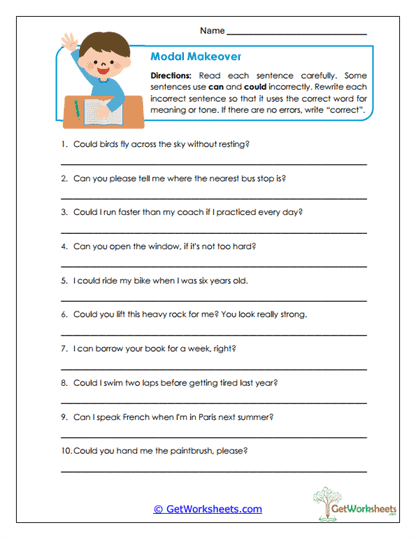
Modal Makeover
Learners become grammar editors by identifying incorrect uses of can and could and revising sentences when necessary. Some corrections involve ability, while others focus on politeness, possibility, or past capability. The worksheet develops proofreading, revision, and critical thinking skills alongside modal verb understanding. It also helps students recognize how word choice affects accuracy and meaning.
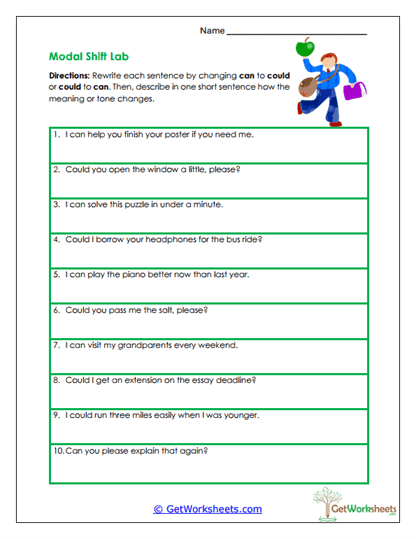
Modal Shift Lab
Students rewrite sentences by changing can to could or could to can and then explain how the meaning changes. The activity encourages deeper analysis of tone, certainty, possibility, and politeness. Learners strengthen revision skills, language reflection, and grammar awareness while experimenting with different forms of expression. It promotes inquiry-based learning and thoughtful discussion about language.
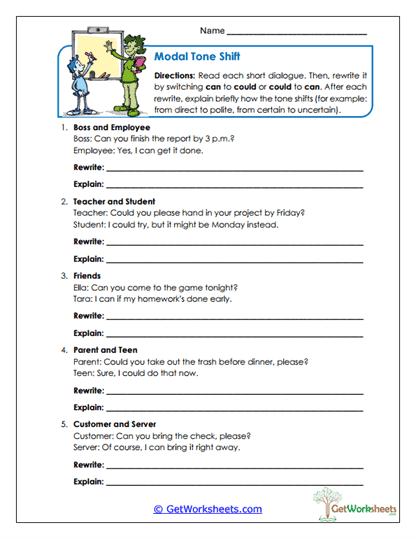
Modal Tone Shift
This advanced worksheet asks students to revise conversations by replacing can with could or vice versa and then analyze how the dialogue changes. Learners consider shifts in confidence, politeness, and conversational tone while maintaining grammatical accuracy. The activity combines dialogue revision with communication analysis and critical thinking. It demonstrates how grammar choices influence real-world interactions.
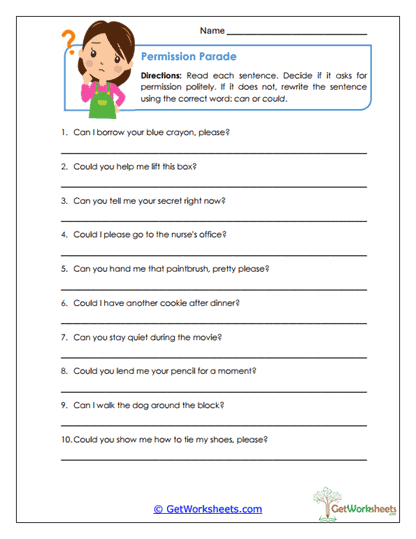
Permission Parade
Students evaluate everyday requests and decide whether can or could is the more appropriate choice. The worksheet introduces the distinction between casual permission requests and more courteous language. Learners strengthen modal verb usage, social communication skills, and sentence revision abilities. It also encourages reflection on respectful language and manners.
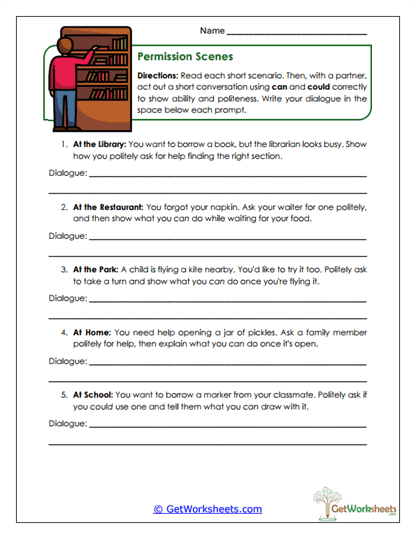
Permission Scenes
This role-playing activity places students in realistic situations where they must create dialogues using can and could appropriately. Scenarios include settings such as classrooms, libraries, parks, and restaurants. Learners strengthen speaking, writing, grammar application, and conversational fluency skills while practicing real-life communication. The open-ended format encourages creativity and meaningful language use.
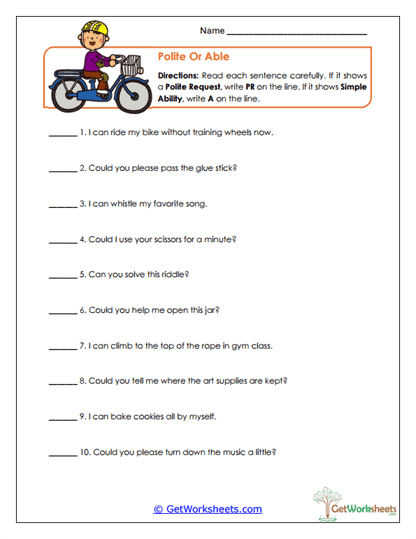
Polite or Able?
Students classify sentences according to whether can or could expresses ability or a polite request. The activity helps learners focus on language function rather than simply identifying the words themselves. Through sorting and categorization, students strengthen grammar comprehension, critical thinking, and communication awareness. It also reinforces the multiple purposes modal verbs can serve.
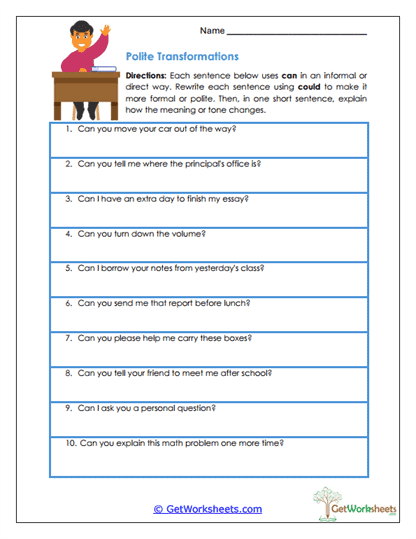
Polite Transformations
Learners rewrite informal requests using could to create more courteous and respectful language. After revising each sentence, students explain how the tone changes. The worksheet emphasizes audience awareness, tone analysis, and practical communication skills while reinforcing modal verb usage. It also demonstrates how grammar supports effective social interactions.
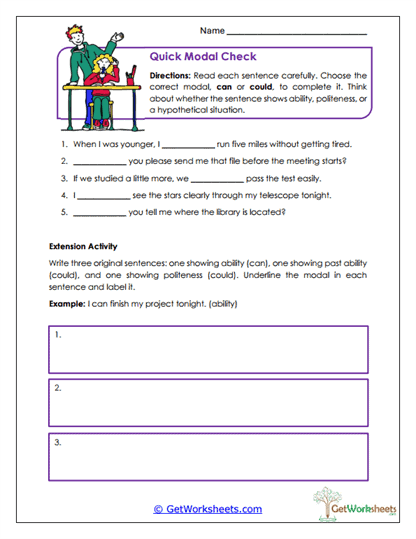
Quick Modal Check
Students complete a variety of sentences by choosing between can and could based on context clues related to ability, politeness, possibility, and past experiences. An extension section invites learners to create original examples of their own. The worksheet strengthens grammar fluency, sentence creation, and contextual reasoning. It serves as both a review activity and a formative assessment tool.
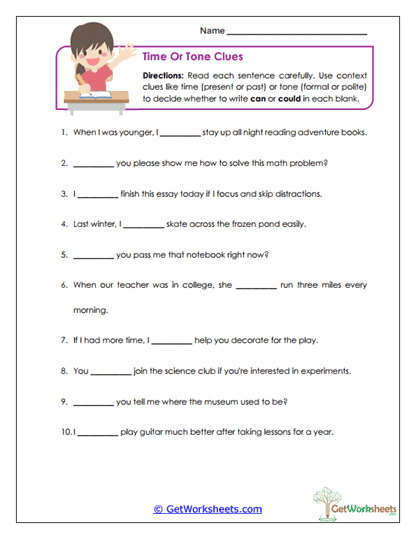
Time or Tone?
This context-clue activity teaches students to analyze sentence hints related to time periods, politeness levels, and speaker intent before selecting can or could. Learners practice using evidence from the sentence to make informed grammar decisions. The worksheet strengthens reading comprehension, inference skills, and modal verb understanding. It encourages students to think about meaning rather than relying on memorized rules.
Bookmark Us Now!
New, high-quality worksheets are added every week! Do not miss out!