Intent Inference
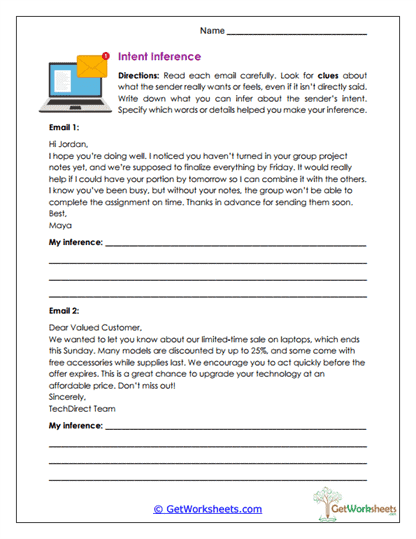
This thoughtful reading and media literacy worksheet helps students in Grades 4, 5, and 6 strengthen inferential reasoning, analytical reading, and evidence-based explanation skills through realistic email examples. By examining messages where the sender’s purpose is implied rather than stated directly, students learn to recognize subtle language cues that reveal feelings, expectations, or unspoken requests.
Learning Goals
- Making Inferences (Grades 4-6): Draw conclusions about a sender’s true intent based on clues in the text.
- Using Text Evidence: Identify specific words, phrases, or details that support an inferred interpretation.
- Understanding Implicit Messages: Recognize how tone, wording, and omissions communicate meaning in emails.
- Analytical Reading Skills: Go beyond surface-level comprehension to interpret deeper intent.
Instructional Benefits
- Teacher-Created Resource: Designed by educators to support upper elementary ELA and media literacy standards.
- Real-World Communication Focus: Builds skills students need to interpret everyday digital messages accurately.
- Structured Reasoning Practice: Prompts students to explain how they know, not just what they think.
- Flexible Classroom Use: Ideal for independent work, discussion, homework, or assessment.
This printable worksheet helps students develop confidence in making inferences, identifying hidden meaning, and supporting conclusions with evidence. By analyzing implicit intent in emails, learners strengthen comprehension, critical thinking, and digital communication awareness. Whether used in a classroom or homeschool setting, this resource provides meaningful practice with inferential reading, media literacy, and thoughtful text-based reasoning.
This worksheet is part of our reading emails worksheets collection.
Bookmark Us Now!
New, high-quality worksheets are added every week! Do not miss out!