Figurative Language Devices
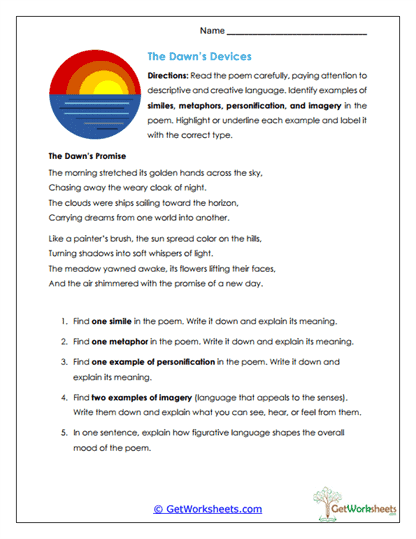
This in-depth poetry worksheet helps students in Grades 4, 5, and 6 strengthen their ability to recognize, interpret, and explain figurative language within a poem. As students read, they identify examples of similes, metaphors, personification, and imagery, then label and explain how each device contributes to the poem’s tone, mood, and overall meaning.
Learning Goals
- Identifying Figurative Language (Grades 4-6): Locate and correctly label similes, metaphors, personification, and imagery.
- Interpreting Meaning: Explain what each figurative device suggests beyond its literal meaning.
- Analyzing Tone & Mood: Describe how figurative language shapes the poem’s emotional impact.
- Critical Explanation: Write clear explanations connecting language choices to poetic effect.
Instructional Benefits
- Teacher-Created Resource: Designed by educators to align with upper elementary ELA poetry standards.
- Hands-On Text Annotation: Highlighting and underlining keep students actively engaged in close reading.
- Builds Literary Awareness: Helps students see how poets intentionally use language to create imagery and feeling.
- Flexible Classroom Use: Ideal for poetry units, guided reading, homework, or assessment.
This printable worksheet supports deeper appreciation and understanding of poetic language by guiding students through both identification and explanation of figurative devices. By analyzing how imagery, metaphor, and personification affect tone and mood, learners strengthen comprehension, critical thinking, and expressive language skills. Whether used in a classroom or homeschool setting, this resource provides meaningful practice with figurative language, poetry analysis, and thoughtful written explanation.
This worksheet is part of our poetry comprehension worksheets collection.
Bookmark Us Now!
New, high-quality worksheets are added every week! Do not miss out!