What is Artificial Intelligence Worksheets
About This Worksheet Collection
The What Is AI? collection introduces students to the fundamental ideas behind Artificial Intelligence through engaging, literacy-rich activities. Designed for clarity and accessibility, these worksheets guide learners to explore what AI is, how it works, and where it appears in everyday life. From reading comprehension passages to data analysis challenges, the series helps students build foundational knowledge about automation, algorithms, and machine learning. Each lesson bridges science, technology, and language arts to ensure that students not only learn about AI but also practice critical communication and reasoning skills.
Across the collection, learners engage in hands-on inquiry, analysis, and creative expression as they compare, categorize, and evaluate real-world AI examples. They explore cause-and-effect relationships, debunk myths, interpret data, and reflect on the ethical and societal impact of emerging technologies. These activities promote digital awareness and responsible curiosity while reinforcing key academic skills in reading, writing, and critical thinking. By connecting abstract concepts to familiar technologies, the collection equips students with the understanding needed to navigate-and question-the intelligent systems shaping their world.
Detailed Descriptions Of These Worksheets
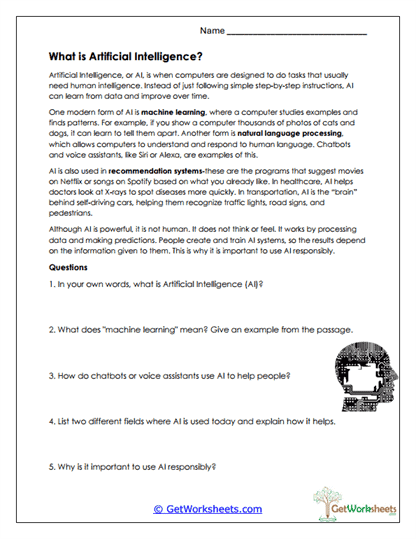
Understanding Artificial Intelligence
Students read an introductory passage explaining what AI is and how it operates in daily life. They learn key terms like machine learning and natural language processing while exploring real-world examples such as chatbots and self-driving cars. Comprehension questions prompt summarizing, defining, and analyzing, reinforcing understanding of how AI connects science to practical use.
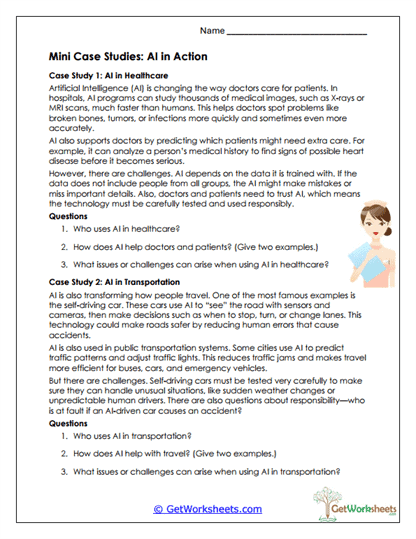
AI in Action
Learners read short case studies showing AI at work in healthcare, transportation, and other real-world contexts. Afterward, they answer questions that prompt analysis of benefits, challenges, and ethics. This activity strengthens reading comprehension, critical reasoning, and awareness of responsible technology use in society.
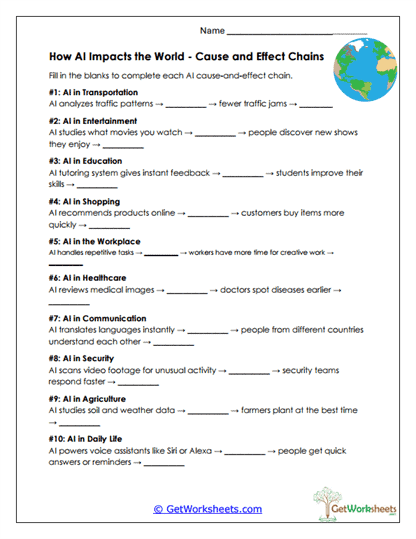
AI Cause and Effect
In this logical reasoning worksheet, students complete cause-and-effect chains that show how AI impacts different fields. They connect innovations to outcomes in education, entertainment, and healthcare. The exercise builds contextual reasoning, comprehension, and vocabulary while deepening understanding of technology's broad influence.
AI Sorting Challenge
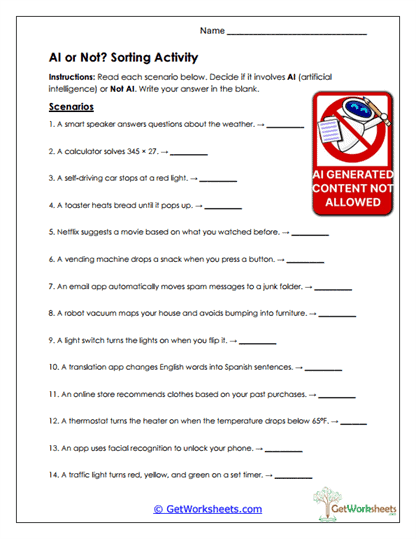
Students determine whether everyday scenarios involve AI or traditional automation. By distinguishing between systems that simply follow instructions and those that learn or predict, learners sharpen classification and inference skills. The task clarifies misconceptions and strengthens conceptual understanding through relatable, real-world examples.
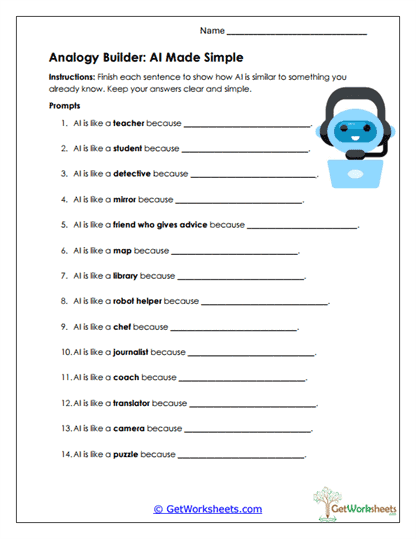
AI Analogies
Through creative analogy prompts such as "AI is like a teacher" or "AI is like a detective," students compare human and machine functions. The worksheet encourages imaginative thinking and expression while solidifying conceptual understanding. It develops figurative reasoning and language precision in describing abstract technology.
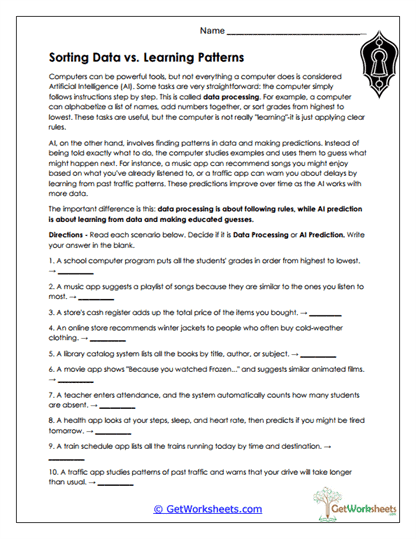
Data vs Prediction
Learners read examples that contrast rule-based data processing with AI-driven prediction. They analyze how machines learn from patterns rather than fixed rules. This exercise builds comprehension, comparison, and foundational computer science awareness in accessible, age-appropriate language.
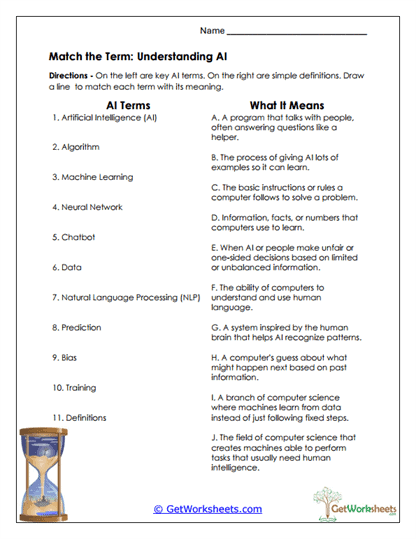
Understanding AI Terms
Students match essential AI vocabulary-like algorithm, chatbot, and bias-to their definitions. This structured activity supports word recognition and concept mastery. It builds a strong foundation for future discussions about AI systems and fosters confidence with technical terminology.
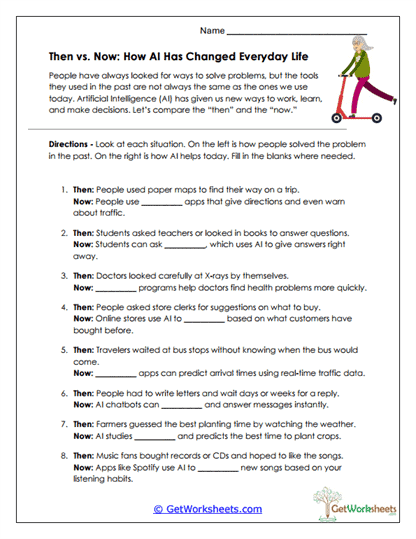
Then and Now
By comparing "Then" and "Now" examples, learners discover how AI has modernized everyday tasks such as communication and navigation. The fill-in-the-blank format reinforces contextual reasoning and comprehension of technological progress. Students reflect on how innovation continually reshapes daily life.
AI Misconceptions
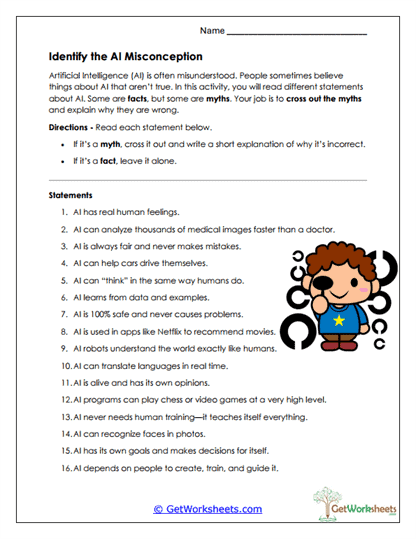
In this myth-versus-fact activity, students evaluate common beliefs about AI and determine which are false. They explain their reasoning to correct misunderstandings and strengthen analytical reading. The worksheet builds scientific literacy and critical evaluation of media information.
Data Detective
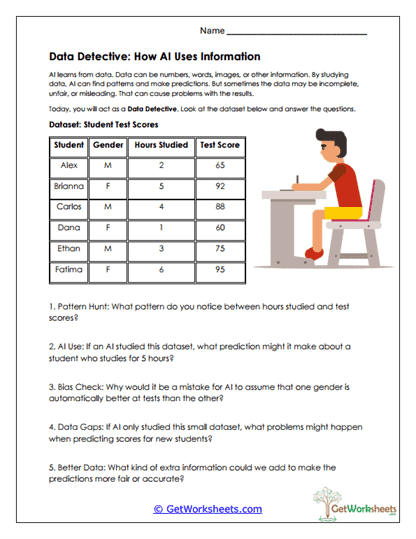
Students investigate a small dataset to uncover patterns, make predictions, and identify bias or gaps. Acting as "data detectives," they learn how AI systems interpret and sometimes misread information. This inquiry-based task promotes numeracy, critical thinking, and ethical awareness about data-driven decisions.
Ask an AI Expert
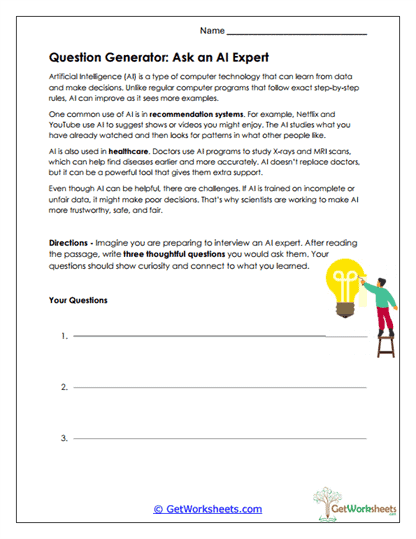
Learners imagine interviewing an AI expert after reading a short informational passage. They write three thoughtful questions showing comprehension and curiosity about AI's uses and challenges. The exercise promotes question formation, critical thinking, and synthesis of ideas from text.
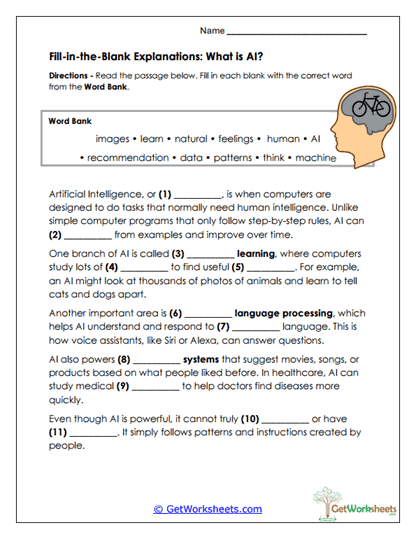
AI Fill-in-the-Blank
In this guided reading activity, students complete sentences with key vocabulary from a word bank. The passage introduces foundational AI ideas such as learning from data and recognizing patterns. It reinforces comprehension, fluency, and conceptual vocabulary through structured reading practice.
Bookmark Us Now!
New, high-quality worksheets are added every week! Do not miss out!