The Cold War Worksheets
About This Worksheet Collection
This Cold War worksheet collection helps students understand a complex period of global tension through clear, structured, and engaging activities. Each worksheet focuses on key events, ideas, and relationships, making it easier for learners to break down long-term conflict into manageable pieces. With a mix of sequencing, reading, writing, and analysis tasks, students stay actively involved while building a strong foundation in modern history. These resources are designed for easy use in both classroom and homeschool settings, giving educators flexible tools to support meaningful learning.
As students work through the collection, they develop important skills such as reading comprehension, critical thinking, and evidence-based writing. Many activities encourage learners to analyze cause-and-effect relationships, evaluate global strategies, and reflect on the impact of historical decisions. Students also strengthen their ability to summarize complex events and organize information clearly. Altogether, these worksheets support both a deeper understanding of the Cold War and the development of essential academic skills across subjects.
Detailed Descriptions Of These Worksheets
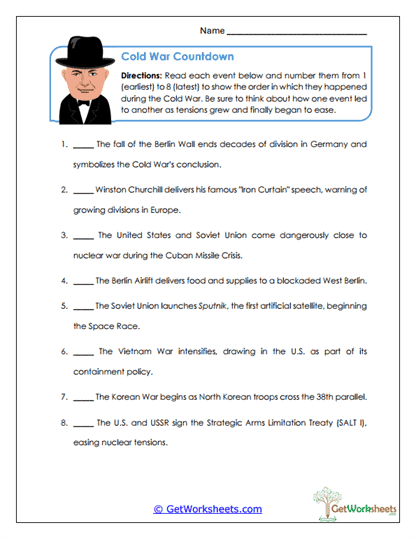
Cold War Countdown - Sequencing Major Events
Students organize important Cold War events in chronological order to better understand how the conflict developed. This activity helps learners see how one event led to another over time. It strengthens sequencing and comprehension skills through careful reading. It also builds a clearer picture of the overall timeline.
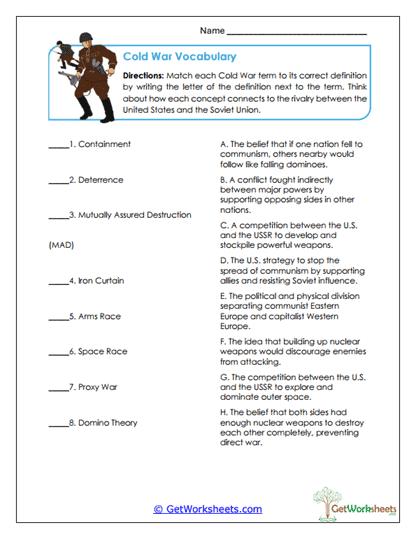
Cold War Vocabulary - Matching Terms and Definitions
Students match key Cold War terms with their correct meanings. This activity builds a strong foundation in vocabulary and concept understanding. Learners improve reading comprehension as they analyze definitions. It also helps them better follow discussions about the Cold War.
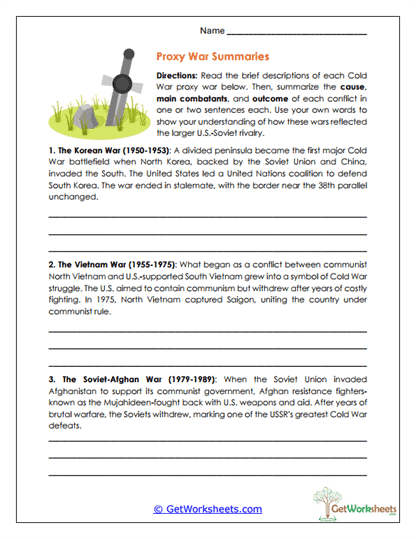
Proxy War Summaries - Analyzing Conflict and Outcomes
Students read about major proxy wars and summarize their causes and results. This helps them understand how global tensions played out in different regions. The activity builds summarization and critical thinking skills. It also connects individual conflicts to the larger Cold War.
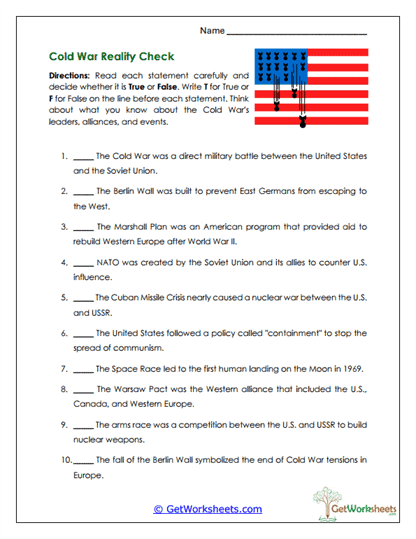
Cold War Reality Check - True or False Analysis
Students evaluate statements about the Cold War and determine whether they are true or false. This encourages careful reading and thoughtful analysis. Learners apply their knowledge to make accurate decisions. It also helps correct common misunderstandings.
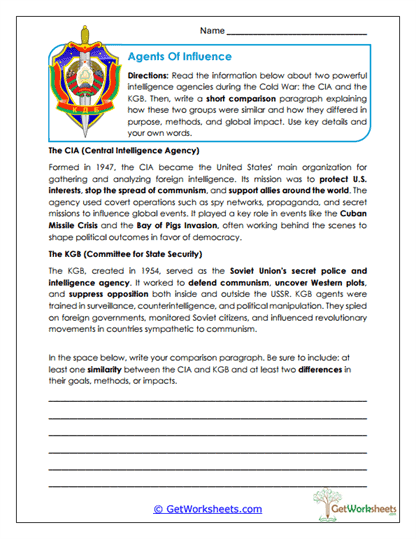
Agents of Influence - Comparing Intelligence Agencies
Students compare the CIA and KGB by analyzing their roles and strategies. This activity builds comprehension and analytical thinking skills. Learners write about similarities and differences using evidence. It also helps them understand behind-the-scenes actions during the Cold War.
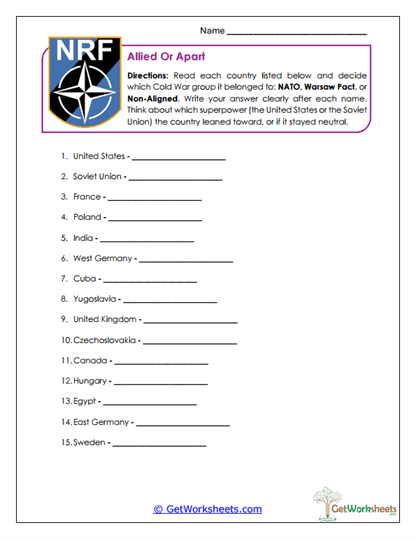
Allied or Apart - Identifying Cold War Alliances
Students sort countries into different Cold War alliances such as NATO or the Warsaw Pact. This activity helps them understand how the world was divided. It strengthens categorization and global awareness. It also reinforces knowledge of international relationships.
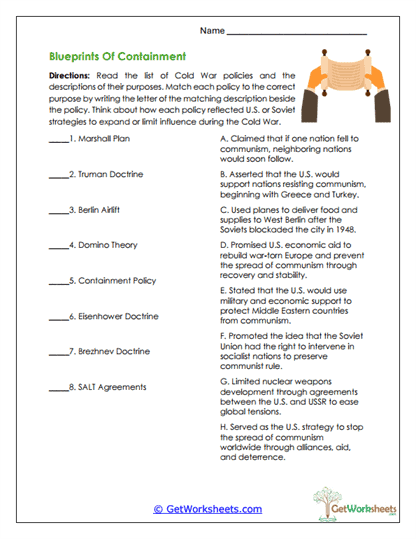
Blueprints of Containment - Matching Policies to Purpose
Students match key Cold War policies with their goals and outcomes. This helps them understand how governments tried to control global influence. The activity builds cause-and-effect reasoning and comprehension. It also simplifies complex political strategies.
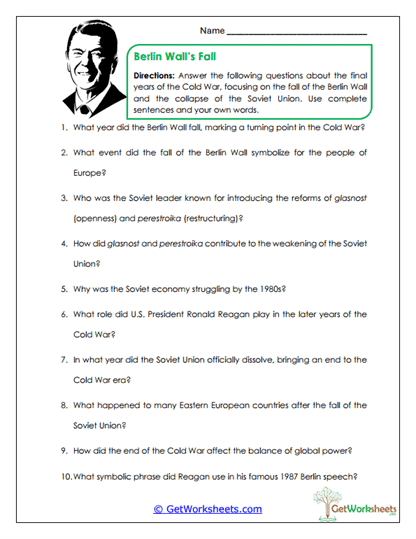
Berlin Wall's Fall - Short Answer and Historical Reflection
Students answer questions about the fall of the Berlin Wall and its significance. This activity encourages deeper thinking about why the Cold War ended. It strengthens writing and comprehension skills. It also connects leadership decisions to historical change.
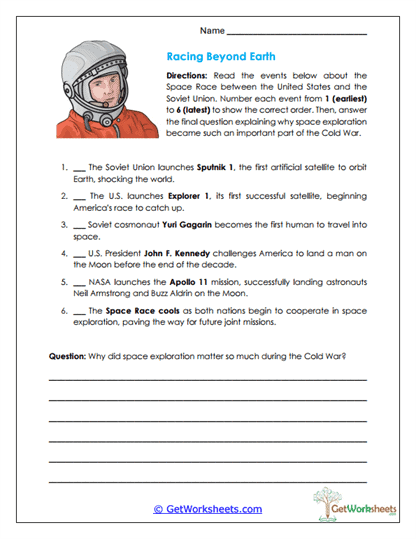
Racing Beyond Earth - Sequencing the Space Race
Students place major Space Race events in order to understand scientific competition during the Cold War. This activity connects history with innovation and discovery. It builds sequencing and comprehension skills. It also highlights the role of technology in global rivalry.
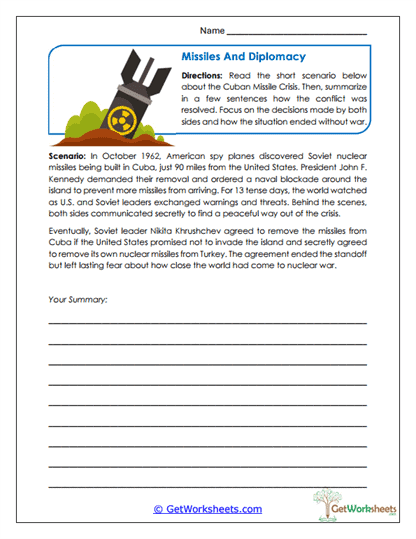
Missiles and Diplomacy - Crisis Summary Writing
Students summarize the Cuban Missile Crisis by explaining key events and decisions. This activity builds writing clarity and critical thinking. Learners analyze how leaders handled a dangerous situation. It also helps them understand the importance of diplomacy.
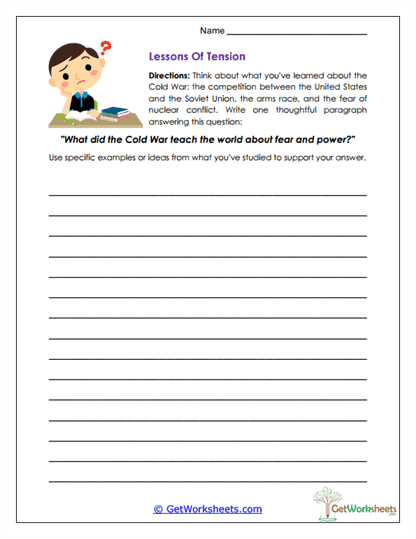
Lessons of Tension - Reflective Writing on Power and Fear
Students reflect on the broader lessons of the Cold War through writing. This encourages deeper thinking about themes like conflict and power. It strengthens written expression and reasoning skills. It also helps students connect history to real-world ideas.
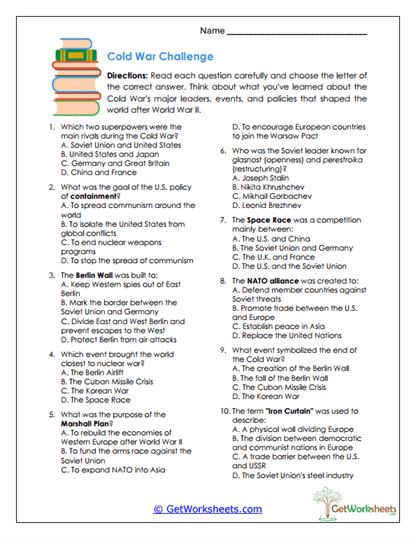
Cold War Challenge - Multiple Choice Review and Assessment
Students answer multiple-choice questions that review key Cold War topics. This activity strengthens comprehension and test-taking skills. Learners practice recalling important facts and concepts. It also helps prepare them for assessments.
Bookmark Us Now!
New, high-quality worksheets are added every week! Do not miss out!